Work Gloves for Cold Weather: Best Fit by Task
For cold-shop woodworking, choose insulated work gloves with grippy palms, close-fitting fingers, and enough dexterity to measure, fasten, and set machines. Use heavier insulation only for layout breaks, not fine control. Poor gloves make you drop tools, read tape marks badly, and slow setup in a cold shop. This guide covers the best glove features by task, warmth level, grip, and moisture protection.
Choosing the right pair for your tasks



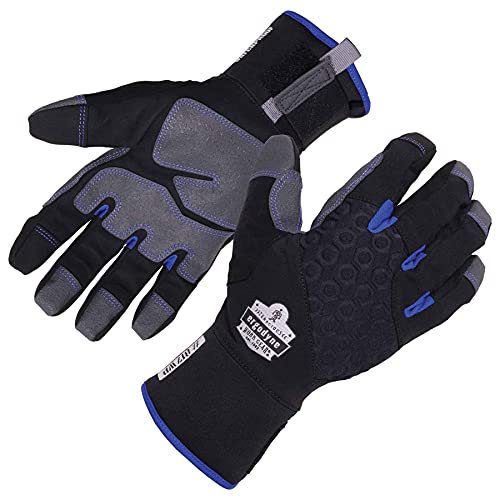
Top pick for mixed shop and outdoor tasks
A hybrid glove with a leather or deerskin shell, a textured palm, and moderate insulation is the safest all-around starting point. It gives you abrasion resistance for lumber handling, enough warmth for short cold bursts, and less bulk than a heavy snow glove when you need to hold a square or tighten a clamp.
Best option for fine tool control
For sanding, marking, drilling, and machine setup, look for thin insulation, flexible fingers, and a palm that does not fight your grip. Thin insulation is the better fit when you need warmth without losing trigger control or the feel of a pencil line.
Best option for wet or slushy conditions
If wet snow, slush, or damp lumber are part of the job, move toward a water-resistant or waterproof shell with a grippy coated palm. Rubber gloves are waterproof for wet conditions, but that does not make them ideal for every shop task. Use the weatherproof pair for moisture control, not fine layout.
Quick picks by woodworking task
- Sanding and hand finishing: thin insulated gloves with close fingers, textured palms, and minimal bulk.
- Measuring, marking, and clamp work: dexterity-first gloves with flexible fingertips and wrist coverage.
- Lumber handling and brief outdoor moves: leather or hybrid shells with abrasion resistance and grippy palms.
What gloves fit your woodworking task?
The right glove depends on motion, moisture, and how long your hands stay exposed. A glove that is fine for carrying lumber can be clumsy for marking a cut line, and a glove that feels perfect for setup may be too light for wet boards or a cold concrete floor.
Glue-up and clamp adjustments
Choose a slim glove with flexible fingers, a textured or coated palm, and enough cuff coverage to keep glue drips off your wrist. For glue-up, you need grip on clamp handles and enough finger feel to align jaws without fumbling the workpiece.
Garage startup and cold tool setup
For startup tasks, prioritize dexterity over maximum insulation. Turning on dust collection, checking fences, and plugging in tools require fingertip control. For feeding stock on rotating machinery such as a drill press or lathe, keep gloves off because they can catch and pull the hand in. A medium-insulation glove works better for non-rotating setup tasks than a heavy winter model, because bulky insulation can slow trigger control and small adjustments.
Brief outdoor breaks and material runs
Short trips outside are where warmth matters most, but the exposure window is still limited. A warmer glove or mitten can make sense for carrying sheet goods, clearing snow, or crossing a yard, then you can switch back to a thinner shop glove once you return inside.
Say your shop sits in an unheated garage and the first task is a roughly 20-minute glue-up at about 35°F. A thin insulated glove with a textured palm keeps clamps workable. A thick snow glove would warm the hand more, but the extra bulk makes clamp jaws and glue squeeze-out harder to manage.
Suppose you need to carry boards from a driveway stack through wet slush, then set a table saw fence indoors. A waterproof or water-resistant outer shell helps on the walk, but a lighter, more flexible glove is the better choice once you move to the saw because you need cleaner control than a wet-weather glove usually gives.
Cold gloves decision table
| Woodworking task | Hand-mobility need | Moisture exposure | Recommended glove traits | Avoid-this-failure mode |
|---|---|---|---|---|
| Glue-up | High finger control for clamps and squeeze-out | Light glue smears, damp surfaces | Thin insulation, textured palm, flexible fingers, wrist coverage | Bulky insulation that makes clamp latches and fasteners hard to reach |
| Lumber handling | Moderate control for grip and balance | Possible damp boards, cold air | Leather or hybrid shell, abrasion resistance, grippy palm | Slippery shell that twists on wet boards |
| Garage startup | High control for switches, cords, and fences | Low to moderate condensation on tools | Close-fitting fingers, moderate warmth, non-bulky palm | Overinsulated glove that blunts trigger and dial control |
| Brief outdoor breaks | Low to moderate control | Wind, wet snow, slush | Water-resistant or waterproof shell, extended cuff, cinch strap | Open wrist that lets snow and meltwater wick in |
| Sanding and hand finishing | Very high control for surface feel | Usually low, but cold air and dust | Thin insulation, close fit, textured palm, good finger mobility | Thick glove that reduces feel and pad pressure |
Which materials balance warmth and control?
Material choice changes both warmth and tool feel. Leather usually wins on abrasion resistance, while knit and synthetic shells can feel lighter and move better. For woodworking, the best material is the one that matches your task intensity and moisture exposure, not the warmest fabric on the shelf.
Leather and hybrid leather shells
Leather is a strong choice when you handle rough lumber, carry sheet goods, or work around sharp edges. Cowhide is more durable but stiffer than deerskin, so deerskin often feels easier for light shop tasks. Goatskin sits between those extremes for many buyers.
Nylon, latex rubber, and PVC shells
Nylon can help keep weight down and can be paired with insulation for general cold-weather work. Latex rubber and PVC make more sense where wetness is the bigger problem, such as snow removal or hauling damp material. Those shells are usually less pleasant for fine layout because they can feel less natural in the fingers.
Deerskin, goatskin, and cowhide choices
Deerskin is a good fit when you want supple feel, goatskin when you want a balance of flexibility and wear, and cowhide when abrasion resistance matters most. For a woodworker, that tradeoff often means deerskin or goatskin for shop work, cowhide for rougher outdoor handling.
What insulation and cuff details matter?
Insulation determines how long your hands stay comfortable, but it also affects how easily you can close your fingers around tools. For woodworking, the best insulation is warm enough for the task and still thin enough for clamp work, measurement, and safe machine setup.
Thinsulate, fleece, foam, and pile linings
Thinsulate is a well-known low-bulk option for tool use, and it is often thin enough for tool use. Fleece lining adds comfort and can work well for moderate cold. Foam insulation and pile lining add warmth, but they can also increase bulk and reduce fingertip precision.
Waterproof membrane versus water-resistant shell
A waterproof membrane helps when you face wet snow, slush, or damp lumber, but it can also reduce breathability. A water-resistant shell is usually enough for light moisture and short outdoor moves. Neither one should be treated as permission to work submerged or saturated for long periods.
Extended wrist coverage and cinch cuffs
A cuff should do more than cover the wrist. Extended wrist coverage helps block drafts, a cinch strap seals the opening, and a snug cuff keeps snow, sawdust, and condensation from migrating inside. That matters in a cold garage because open wrists pull warmth out fast.
How do you keep your hands warm without losing grip on tools?
Use the lightest glove that still matches the temperature tier and the task. Keep a warm pair for breaks or outdoor carries, then switch to a thinner glove for measuring, fastening, and machine setup. Grip treatment matters too; a textured or coated palm can help more than extra padding.
Grip treatments that help in a shop
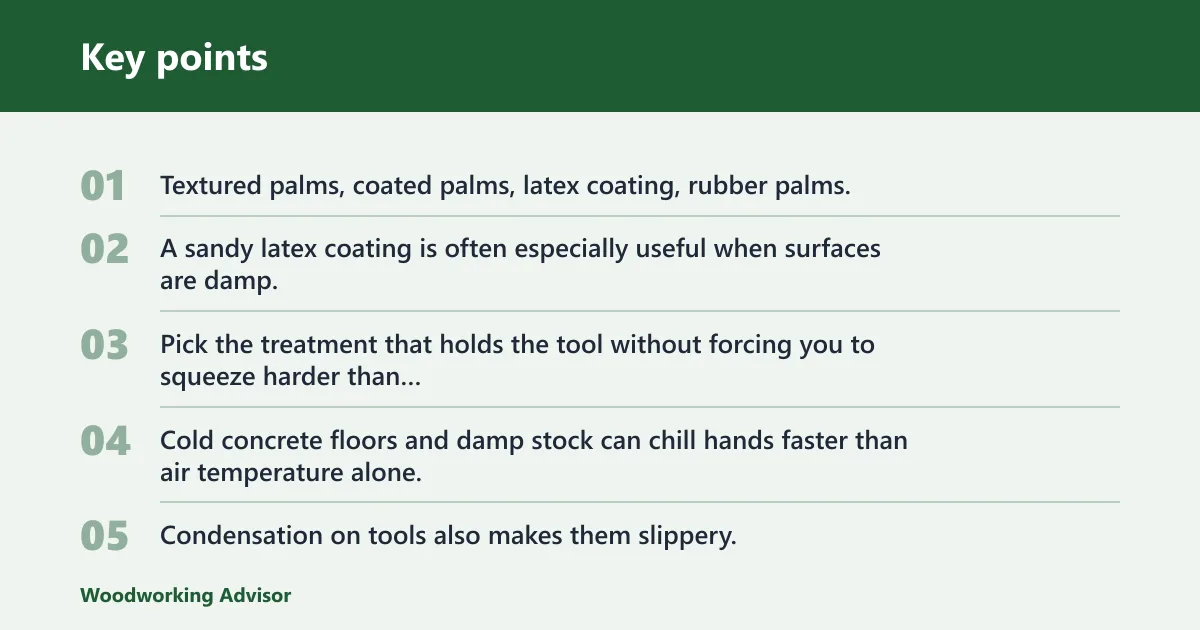
Textured palms, coated palms, latex coating, rubber palms, and sandy latex coating all improve purchase on handles, lumber, and cold metal. A sandy latex coating is often especially useful when surfaces are damp. Pick the treatment that holds the tool without forcing you to squeeze harder than necessary.
Condensation, damp lumber, and cold concrete
Cold concrete floors and damp stock can chill hands faster than air temperature alone. Condensation on tools also makes them slippery. That is why a glove can feel warm enough in the air and still fail in a garage: the hand loses heat through contact, moisture, and repeated gripping.
A common first-timer mistake is buying a very warm glove for a shop that sits near freezing, then trying to drill pilot holes or adjust a fence with it on. The hand stays warmer, but the extra bulk can make the trigger feel vague and the bit placement less certain.
What are the best work gloves for cold weather and dexterity?
The best cold-weather work gloves for dexterity are thin insulated gloves with close-fitting fingers, a grippy palm, and a shell that bends easily at the knuckles. Choose this setup when you need to measure, fasten, sand, or make machine adjustments more often than you need heavy outdoor protection.
For woodworkers, dexterity should come before maximum warmth in most shop tasks. Mittens are warmer because they group the fingers, but the finger separation in gloves gives you better control for small fasteners, pencil marks, and trigger work.
Are insulated work gloves waterproof enough for snow or wet tools?
Some insulated gloves handle wet snow, slush, and damp tools well, but waterproof does not mean they are ideal for fully soaked work or repeated immersion. For short wet jobs, a waterproof or water-resistant shell is useful; for long exposure, you still need to check fit, cuff sealing, and grip.
Wet snow, slush, and damp tools
Rubber gloves are the clearest waterproof option among the materials covered here, and rubber gloves are waterproof for wet conditions. That helps during snow removal or brief outdoor hauling. For woodworking, the better choice is often a water-resistant leather or hybrid glove with grippy palms, unless the job is very wet.
When waterproof is not enough
If the glove soaks through at the cuff or traps moisture inside, your hands can still cool down quickly. Wet tools also become slippery, which defeats the purpose of insulation. The safer rule is simple: use waterproofing for moisture control, but do not count on it to replace fit and dexterity.
Should I choose mittens or gloves for winter shop work?
Choose gloves for most winter shop work. Mittens are warmer because they keep the fingers together, but that same design lowers dexterity. Use mittens only for very short exposure, like walking outside for materials or clearing snow before you return to a more precise glove.
For clamp work, layout, machine setup, and fastener changes, gloves are the better tool. Mittens separate less cleanly by task, and that difference matters in a woodshop where your hands need to open, pinch, twist, and feel small parts.
What glove material is warmest for cold-weather work?
There is no single warmest material for every cold-weather job. Thick insulation raises warmth, but shell material and fit matter too. For wet jobs, waterproof rubber or a membrane-backed shell can feel warmer in practice because it blocks wind and moisture better than a breathable glove that gets damp.
Warmth versus activity level
High-activity work like hauling lumber creates more body heat, so you can often wear a lighter glove. Low-activity tasks like waiting for glue to tack or standing near an open garage door need more insulation. That is why warmth must be matched to motion, not just temperature.
Thermal ratings and what they mean
Some makers use CLO as a general cold-comfort baseline. C40 Thinsulate is 0.7 CLO, C100 Thinsulate is 1.3 CLO, and C200 is for extreme temperatures. Treat those labels as relative warmth markers, not universal standards, because glove fit, wind, and task type still change the result.
What insulation level do I need for freezing temperatures?
For freezing temperatures, start with moderate insulation if you still need hand motion, and move heavier only when exposure is long or the job is mostly outdoor handling. C100-level warmth may suit many freezing tasks, while C200 is generally used for very cold, low-motion work and longer exposure.
Cool, cold, freezing, and extreme tiers
- Cool temperatures: light insulation, high dexterity, short exposure.
- Cold temperatures: moderate insulation, grippy palm, still suitable for tool use.
- Freezing temperatures: more insulation, tighter cuff, better moisture control.
- Extreme temperatures: heavier insulation, less dexterity, best for limited tool handling and long outdoor exposure.
C200 suits lower temperatures like North Dakota and Alaska. Those examples help frame the upper end of the range, but they do not replace task judgment. If you still need to set a fence or align a bit, too much bulk becomes a safety issue.
How do you choose for cold-shop woodworking?
Match the glove to the task first, then to the temperature. If you move between indoors and outdoors, choose dexterity for the shop side and keep a warmer pair for exposure during breaks or material runs. For wet conditions, add moisture protection only as much as the job needs.
Use-case segments that help narrow the choice
Construction and farm chores usually demand more abrasion resistance than fine shop work. Snow removal and warehouse or freezer work put moisture and long exposure higher on the list. Delivery and logistics often need grip, wrist sealing, and repeated on-off use. Winter driving needs less bulk than snow removal but more wind protection than a garage-only glove.
Touch-screen compatibility can help, but it should stay a minor feature. For woodworkers, fit, grip, insulation, and wrist sealing matter more than phone use. A glove that works on a screen but slips on a pencil is the wrong priority for a cold shop.
Frequently asked questions
Are leather work gloves good for cold weather?
Yes. Leather work gloves can work well in cold weather, especially as a shell material for abrasion resistance and grip. Deerskin or goatskin often feels better when you need more finger movement in a shop.
How do I keep my hands warm without losing grip on tools?
Choose the thinnest insulated glove that still fits the temperature and exposure time. Use textured or coated palms for grip, and reserve heavier gloves for breaks or outdoor carrying. A snug cuff also helps keep warm air in and keeps snow or sawdust out.
What are the best gloves for cold weather and touch screen use?
Touch-screen fingertips are useful, but they should not drive the purchase. For cold woodworking, a glove that handles pencils, clamps, screws, and tool triggers matters more. If screen use is important, treat it as a secondary feature on a glove that already has good fit, warmth, and grip.
Sponsored / affiliate links. As an Amazon Associate I earn from qualifying purchases. I may earn additional commission from eligible campaigns.