Table Saw Push Block Plans You Can Build In One Afternoon
A table saw push block is one of the simplest safety upgrades in the shop, and unlike most safety gear it comes with an afternoon-sized project attached to it. It’s a small handled block – a few dollars of scrap hardwood and a scrap of rubber – but it does the one job that matters most at a table saw: keeping your hand pushing the wood instead of touching it as it passes the blade.
The whole build guides wood through the blade while keeping your hands well clear of it, typically 3 to 6 inches back from the point of cut depending on the block’s height and handle design. With a piece of hardwood scrap, a short length of 1×2 for the handle, a few wood screws, and a scrap of rubber or an old mousepad for grip, you can build one that works as well as anything sold commercially, in under two hours.
A table saw push block is a tool that helps you guide wood through your table saw. It keeps your hands further away from the blade. This makes cutting safer and more accurate. You can build a useful one in about an afternoon with basic materials and tools.
What is a Table Saw Push Block?
Skip The Build, Buy Instead
 |
MICROJIG GRR-RIPPER GR-100 3D Pushblock – $30.99 If an afternoon build isn’t in the cards, this is the commercial pushblock woodworkers reach for instead — it applies downward, inward, and forward pressure all at once.
|
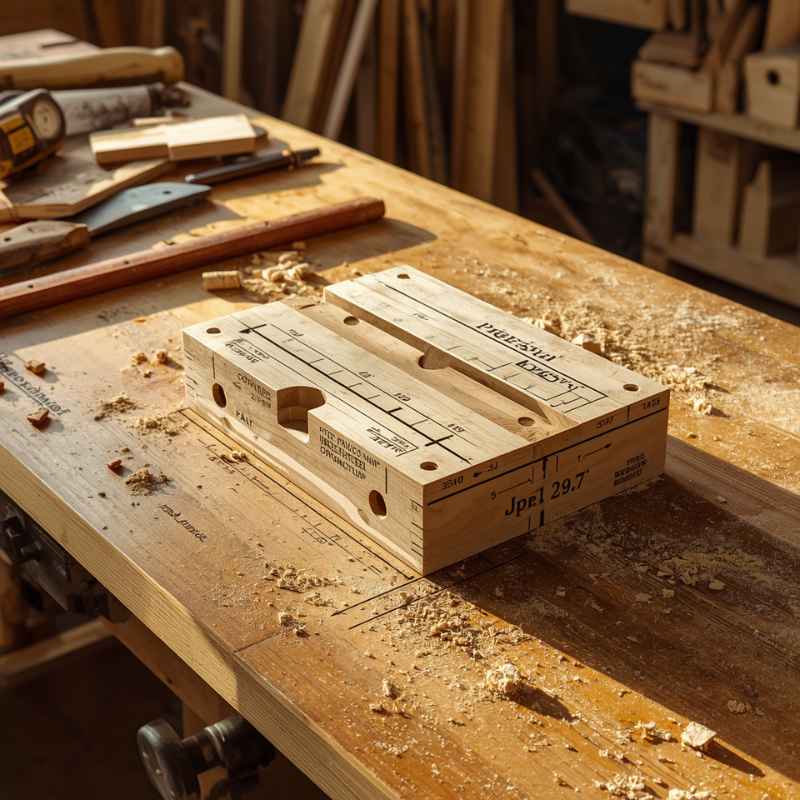
A push block is about as simple as shop-made tools get: a shaped block of wood with a handle mounted on top and a grippy pad on the bottom. You press down and forward on the handle, the pad’s friction keeps the block from sliding off the workpiece, and the block takes the place of your fingers for the last several inches of the cut – right where a hand would otherwise be closest to a spinning blade.
That last stretch of a rip cut is exactly where most table saw injuries happen, and it’s also where kickback, one of the most common causes of serious shop injuries, is most likely to catch a hand off guard. Kickback happens when the workpiece binds against the blade or fence and gets thrown back toward the operator, and a push block’s flat, controlled downward pressure helps keep the stock from lifting or twisting into the blade the way an unevenly pressing hand sometimes does.
Building your own instead of buying one isn’t really about saving a few dollars, though a shop-made block from scrap costs next to nothing next to a commercial one. It’s that you can size the handle to your own hand, match the grip height to how you actually stand at the saw, and make it exactly as long or short as the cuts you do most – a block built to fit your grip stays comfortable through a long session in a way an off-the-shelf one-size model sometimes doesn’t.
When You Actually Need One
A push block earns its keep in a specific situation: ripping a stack of narrow or thin pieces where a flat hand or a scrap offcut can’t keep steady, even pressure on the workpiece. Thin plywood strips, narrow trim, and repeat cuts on the same width are exactly where a bare hand starts drifting too close to the blade without you noticing.
A scrap 2×4 held flat against the wood works in a pinch, but it slides on smooth material and doesn’t grip well — which is the whole reason a dedicated push block with a textured base exists. Build one before your next batch of narrow rips, not after a close call.
Why Not Just Buy One?
Cost Savings: DIY push blocks can be made for a fraction of the price. Especially compared to high-end models.
Customization: Build it to fit your hand and your typical cuts. Get the perfect grip and height.
Skill Building: It’s a simple project. It helps you practice basic woodworking skills.
Satisfaction: There’s pride in using a tool you made yourself. It shows you can solve problems with your own hands.
Materials You Will Need
Most of what a push block needs is already sitting in a scrap bin. For the body, use a piece of hardwood about 1 inch thick – oak, maple, or walnut all hold up well to years of use, while pine works but dents and wears faster under repeated pressure. A good scrap of 3/4-inch Baltic birch plywood is a solid alternative if you don’t have solid hardwood on hand; cut it to roughly 6 inches long by 3 inches wide as a starting size, though the exact dimensions depend on the cuts you do most.
For the handle, a piece of 1×2 or 2×2 lumber cut to 4-6 inches long gives you enough length to get a full, comfortable grip without straining your hand. Attach it with wood screws long enough to bite solidly into the main block – 1 1/4 to 1 1/2 inch screws are the right length for a 1-inch-thick block without poking through the bottom – and a thin bead of wood glue under the handle adds real shear strength to the screwed joint.
The bottom needs something with real friction: a sheet of rubber, sold by the foot at most hardware stores, or even a cut section of an old mousepad grips a workpiece far better than bare wood, which tends to slide once the surface picks up any sawdust or finish residue. Round out the build with 120-grit sandpaper for shaping the handle and block, 220-grit for a final smoothing pass, and an optional coat of wood finish or paste wax – mostly for looks and a bit of glide, since it’s not required for the block to function.
Essential Tools Checklist
- Table Saw: For making cuts.
- Drill: For pilot holes and driving screws.
- Saw (Hand or Jigsaw): For cutting handle shape or rubber.
- Screwdriver Bit: To match your screws.
- Clamps: To hold pieces while glue dries.
- Measuring Tape: For accurate sizing.
- Pencil: For marking lines.
- Safety Glasses: Always wear them.
- Hearing Protection: Table saws are loud.
Designing Your Push Block
A basic rectangular block works fine, but a few design choices make a real difference in comfort and effectiveness. Start with a body around 6 inches long, 3 inches wide, and 1 inch thick, then mount the handle 4 inches long by roughly 1 1/2 inches wide, rounding its top edges so it doesn’t dig into your palm during a long ripping session.
A slight bevel – about 5 to 10 degrees, cut on the table saw or planed by hand – on the leading edge of the block’s bottom helps it grip the workpiece as you start pushing, without being steep enough to lift the trailing edge off the wood. Height matters too: aim for roughly 3 to 4 inches from the table to the top of the handle, tall enough that your fingers stay well clear of the blade path, but not so tall that the block feels top-heavy or tips as you push.
Some builders add a small notch or hook at the back edge of the block to help catch and pull the tail end of a workpiece through the cut, which matters more on longer rips where the far end needs steady forward pressure. For a first build, skip it – a plain flat-bottomed block handles the vast majority of cuts fine.
The grip pad on the bottom should cover most of the block’s underside but stop an inch or so short of the front edge – dragging rubber right up to the leading edge can snag as you start a cut, so cutting the pad slightly smaller than the block’s footprint keeps that leading edge clean.
Design Tip: Ergonomics
Handle Comfort: Round the edges of the handle. Use a wood that feels good in your hand. A slightly curved handle can fit your grip better.
Grip Area: Ensure the part that touches the wood is flat and smooth. This allows for steady contact.
Height Balance: The handle should feel balanced. Not too high to be unstable. Not too low to offer little protection.
Weight: A solid block feels more stable. But don’t make it so heavy it’s tiring to use.
Step-by-Step Build Process
Now for the fun part. Let’s build this thing. Take your time.
Measure twice, cut once. Safety first, always.
1. Cut the Main Block
Start with your hardwood blank and cut it to size on the table saw – about 6 inches long by 3 inches wide for a standard block – keeping the edges square. If you want the bevel on the bottom leading edge, set the blade to roughly 5 degrees and make that cut now, or leave it for a block plane pass later. Sand the bottom smooth if the wood is rough; a smoother bottom slides more predictably once the grip pad goes on.
2. Prepare the Handle
Cut your handle stock – a piece of 1×2 works well – to about 4 inches long, then round over the top edges with a router or by hand-sanding until it feels comfortable rather than sharp-cornered. A slight curve planed or sanded into the handle’s bottom edge lets it seat more solidly against the main block, giving you a stronger glued and screwed joint.
3. Attach the Handle
Set the handle on top of the block, positioned slightly back from the front edge so you have room to push, and check that it sits straight before marking its outline in pencil. Drill two or three pilot holes through the handle into the block, sized slightly smaller than your screws, to keep the wood from splitting as you drive them in. If you’re using glue, spread a thin, even layer on the handle’s underside, clamp it to the block, then drive the screws home and wipe away any glue squeeze-out before it sets.
4. Add the Grip Material
Cut your rubber sheet or mousepad material slightly smaller than the block’s bottom, leaving roughly a 1/4-inch margin on the sides and back and stopping short of the front edge entirely. Attach it with contact cement rated for both rubber and wood, or with small brads or staples driven flush enough that nothing can snag a workpiece. Let any adhesive cure fully before using the block – this pad is what actually keeps the wood from sliding, so it’s worth getting a solid bond here rather than rushing it.
5. Finishing Touches
Go over the whole block and sand any rough spots, paying particular attention to the handle and any edge your hand will contact. Check that every screw is driven fully flush and that nothing – a proud screw head, a sharp edge, a staple – could catch on a workpiece or the blade guard. A light coat of wood finish or paste wax is optional, mostly there to help the block glide smoothly and protect the wood over years of use; let it dry fully before the block’s first real cut.
Quick Check Before First Use
- Smoothness: Run your hand over all surfaces. Nothing should feel rough or sharp.
- Grip Strength: Does the rubber feel securely attached?
- Screw Security: Are all screws driven in fully? No sharp points?
- Handle Stability: Does the handle feel solid? No wobble?
- Balance: Does it feel comfortable and balanced when you pick it up?
Real-World Use and Scenarios
A push block earns its place on cabinet work especially: ripping a stack of 1-inch drawer-front strips by hand puts your fingers close enough to the blade that most experienced woodworkers won’t do it without one, and the repeat nature of the cuts means you’re making that risky pass over and over rather than just once. The same logic applies to small-parts work like wooden toys, where the pieces themselves are often too small to guide safely with a flat hand at all. The same small-stock caution applies beyond the table saw too – see our guide on how to plane short pieces of wood safely for the push-block and sled techniques that keep your hands clear of a planer or jointer cutterhead.
On longer boards, a push block’s downward pressure keeps the far end of the stock from lifting off the table as it clears the blade, which helps produce a straighter cut and less tear-out – the splintering along the cut edge that happens when wood fibers get torn rather than sliced cleanly. Plywood benefits from the same steady pressure: even downward force reduces the chance of veneer chipping or peeling along the cut edge compared with uneven hand pressure.
Dado cuts and specialty jigs sometimes call for a dedicated push block shaped for that specific setup, but for standard ripping and cross-cutting, one well-made general-purpose block covers the vast majority of situations where your hands would otherwise be working uncomfortably close to a spinning blade.
When to Use Your Push Block
Ripping narrow boards: Any cut where your hand would be less than 6 inches from the blade.
Cutting thin stock: Plywood or veneers can be tricky. A push block offers control.
Repeat cuts: For consistent sizing across many pieces.
Cross-cutting small pieces: When the offcut piece is very small.
Reducing tear-out: Applying steady pressure can lead to cleaner cuts.
What This Means For You
The real value of a push block isn’t the tool itself so much as what it changes about how you work at the saw: with your hand a safe distance from the blade, you can focus on feed rate and cut line instead of hand position, which in practice means straighter, more consistent cuts. That matters most on the situations that trip up less experienced woodworkers – narrow rips, small parts, repeat cuts – exactly where a bare hand is both least controlled and closest to the blade.
For anyone newer to table saw work, building and using a push block from the start is a good habit to form early, alongside a splitter or riving knife and a blade guard when your setup allows it. Experienced woodworkers tend to keep more than one on hand for different jobs precisely because the tool works quietly in the background rather than because it’s exciting – it’s cheap insurance against the kind of accident a table saw doesn’t give second warnings for.
Your Push Block: A Safety Upgrade
Increased Confidence: Feel more secure when operating your table saw.
Improved Accuracy: Guide wood more steadily for cleaner, straighter cuts.
Reduced Risk: Significantly lowers the chance of hand injuries and kickback.
Project Versatility: Enables safe work on smaller or thinner stock.
Cost-Effective: A highly valuable tool built on a budget.
Simple Tips for Better Push Blocks
A few refinements are worth trying once you’ve built a first block and know what you’d change. Handle shape is personal – some woodworkers prefer a straight handle, others shape a slight curve into it with sanding or a rasp, and it’s worth trying both before settling on a design you’ll build multiples of. For narrow or thin stock that tends to twist under pressure, a second, smaller grip pad mounted on the side of the block, rather than just the bottom, adds lateral control a bottom-only pad can’t provide.
It’s worth building more than one size: a smaller, lighter block for delicate parts and a larger, heavier one for wide stock gives you the right tool for a wider range of cuts than a single one-size block can. For the grip pad itself, rubber sheeting is the standard choice, but shelf liner or even a section of an old bicycle inner tube works fine too – the requirement is just consistent friction against wood without marring the surface.
Because a push block’s grip pad and screws see real wear, check it before each use: press on the pad to confirm it’s still firmly attached, run a finger over the screw heads to catch anything backing out, and wipe down a dirty or resin-coated surface, since grime on either the pad or the block’s contact face reduces the friction that makes the tool work in the first place. A block that’s lost its grip is worse than no block at all, because it gives a false sense of control.
Elevate Your Push Block Game
- Ergonomic Handle: Shape it to fit your hand perfectly.
- Multiple Grip Pads: Add side grips for tricky cuts.
- Size Variety: Build blocks for different tasks.
- Material Choice: Explore different non-slip options.
- Maintenance Routine: Keep it clean and inspect regularly.
Frequently Asked Questions
Can I make a push block from just one piece of wood?
Yes, you can. Some simple designs use a single block of wood with a finger notch carved out. You can then add a separate gripping material to the bottom.
It’s less ergonomic than a two-piece design, but it works.
What kind of wood is best for a push block?
Hardwoods like maple, oak, or walnut are ideal. They are dense and durable. They will withstand repeated use better than softwoods like pine.
Plywood can also be a good option if it’s high quality.
How do I make sure the push block grips the wood?
The key is the material you put on the bottom. Rubber sheeting, a grippy shelf liner, or even a piece of a textured mousepad works well. Make sure it’s attached securely and provides good friction.
Is it really that much safer than using my hands?
Absolutely. A push block keeps your hands a safe distance from the spinning blade. It also helps you guide the wood more steadily.
This reduces the risk of kickback and cuts. Safety is paramount when using a table saw.
Can I make a push block without a table saw?
Yes, you can. You can use a hand saw to cut the basic block shape. A jigsaw can be used for the handle.
And for cutting the grip material. You’ll need to be precise with your cuts. Sanding will be important for smoothing edges.
How do I attach the handle securely?
The best way is to use wood glue and wood screws. Drill pilot holes first to prevent splitting. Ensure the screws are the right length.
They should go through the handle and well into the main block, but not all the way through.
What if my wood isn’t perfectly flat?
If your wood has a slight warp, try to orient it so the push block still makes good contact with the table saw bed. The grip material helps compensate for minor surface imperfections. For significant warps, it’s best to flatten the wood first.
Conclusion
Building a table saw push block is a rewarding project. It takes just a few hours. You end up with a tool that boosts safety.
And improves your cutting accuracy. It’s proof that simple things can be powerful. Now you can get back to making.
With more confidence and control.
Sponsored / affiliate links. As an Amazon Associate I earn from qualifying purchases. I may earn additional commission from eligible campaigns.