How to Sand Wood Flat: Techniques, Tools, and Limits
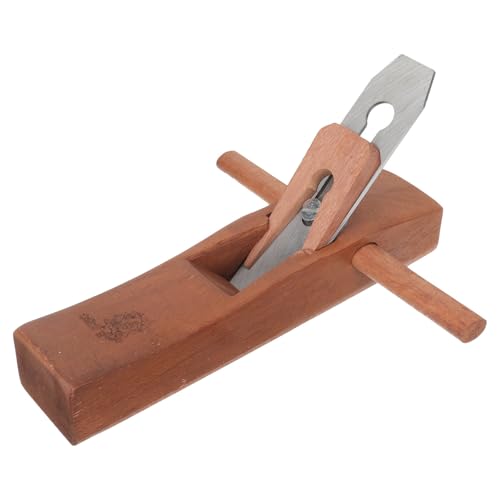
Sanding can flatten wood, but only within limits: it works well for smoothing minor high spots, leveling proud glue-up seams, and finishing a surface that’s already close to flat, but it cannot correct real warp, cup, or twist – that requires a cutting method like a hand plane, jointer, or router sled first.
That distinction matters because a random-orbit sander or a hand-held sanding block rides on top of whatever shape the board already has. If a board is cupped or twisted, the sander follows that shape instead of correcting it, so pressing harder on the low spots just wears a groove into the surrounding wood without ever bringing the low spots up to level. Understanding when sanding is the right tool – and when it’s the wrong one – is the difference between a genuinely flat tabletop and one that still rocks on the bench after an hour of work.
Can Sanding Really Flatten Wood?
Sanding removes material wherever the abrasive touches, and a flexible sanding pad or hand-held block simply follows the existing surface contour rather than referencing off two fixed points the way a hand plane sole or a jointer table does. That’s the core mechanical difference: a plane or jointer cuts a straight line because the tool’s own flat bottom rides across the high spots and ignores the low ones, while a sander conforms to whatever is underneath it. On a board that’s already flat to within a millimeter or two, that’s fine – sanding will happily knock down small ridges and blend a glue line. On a board with real cup, bow, or twist measured in multiple millimeters across its width, sanding alone will wear the high edges down over hours of work while never touching the low spots, and the board will still be out of true when you’re finished.
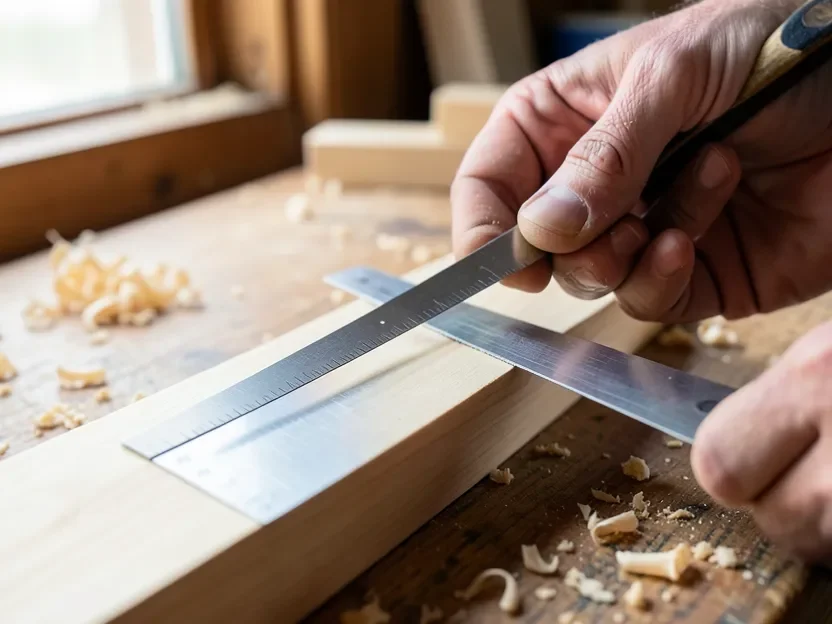
The practical dividing line most furniture makers use: lay a straightedge across the board on the diagonal and check for light underneath. If you can slide a business card under the straightedge at the center but the ends touch, or vice versa, you’re looking at genuine warp that sanding won’t fix – it needs a jointer/planer pass or hand-plane work first. If the gaps are hairline and inconsistent (a raised glue seam here, a slightly proud knot there), sanding is exactly the right tool.
Best Belt Sander For Flattening Panels
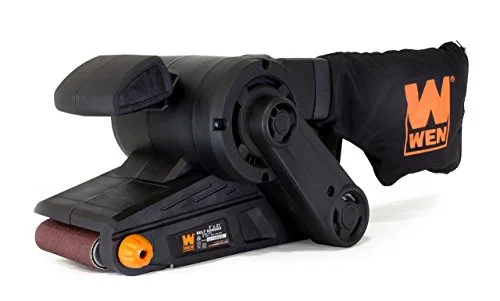 |
WEN 6321 7-Amp 3×21 In. Belt Sander – $38.79 The tool most people reach for when a panel is too big for a sanding block but doesn’t justify a jointer purchase – useful for exactly the glue-up-seam and high-spot leveling this guide covers.
|
When Sanding-Only Flattening Actually Works
Three situations cover almost every real case where sanding alone is the right call. The first is a glued-up panel where the individual boards were close in thickness but not perfectly flush – a common result even with cauls and even clamping pressure, since wood movement between glue-up and cure can shift a seam by a fraction of a millimeter. A belt sander or a random-orbit sander with 60-80 grit knocks that seam flush in a few passes. The second is correcting minor cupping on thin stock, roughly ⅛ inch or less, where the cup is shallow enough that coarse-grit sanding can remove the high edges without thinning the board unevenly. The third is the finishing pass after real flattening has already happened by another method – running progressively finer grits over a board that was already flattened on a jointer or with a router sled to erase the machine or router-bit marks before finishing.
If your board is genuinely warped or twisted rather than just slightly uneven, sanding will cost you hours and still leave a board that’s out of true. That’s a job for a jointer and planer if you have shop access to them, or for hand tools if you don’t – our guide to squaring rough lumber with a jointer and planer covers the power-tool method, and squaring wood by hand walks through doing the same thing with a hand plane and winding sticks when you don’t have machines.
Tools You Need
- Sanding block – a firm rubber or cork-faced block for hand work; a shop-made block cut from scrap 2×4 works just as well as a store-bought one.
- Random-orbit sander – the right choice for most panels; its random pattern hides swirl marks better than a straight-line palm sander.
- Belt sander – only needed for stubborn glue seams or larger surfaces where a random-orbit sander would take too long to remove material.
- Metal straightedge (24”–48”) – for checking flatness before and during sanding; a good level works in a pinch but a dedicated straightedge is flatter.
- Sandpaper in 60, 80, 120, 150, and 220 grit – you rarely need every grit on one project, but having the range on hand avoids a mid-project supply run.
- Dust mask or respirator – fine sanding dust from hardwoods like oak and walnut is a documented respiratory irritant; a basic dust mask is the minimum, a half-face respirator is better for extended sessions.
Step-By-Step: Flattening A Panel Or Glue-Up By Sanding
Start by checking the panel with a straightedge in several directions – lengthwise, across the width, and both diagonals – and mark any high spots lightly in pencil so you can see your progress as you sand them down. Clamp the panel to the bench so it can’t shift; a moving workpiece is both a safety issue and the fastest way to sand a groove instead of a flat surface.
Begin with 60 or 80 grit on the marked high spots only, checking the straightedge every few passes so you don’t remove more than necessary. Once the pencil marks are gone and the straightedge shows even contact across the whole panel, move to 120 grit and sand the entire surface – not just the areas you just corrected – to blend the repaired spots into the surrounding wood. Finish with 150 and then 220 grit, sanding with the grain the whole time; a coarse-grit scratch pattern left under a finer grit will telegraph through stain even though it’s invisible in raw wood.
Keep the sander (or your hand, with a block) moving in overlapping passes rather than dwelling in one place. A random-orbit sander held stationary for even a few seconds will cut a shallow dish into softer woods like pine or poplar, which defeats the entire point of the exercise.
Using A Belt Sander To Flatten A Larger Surface
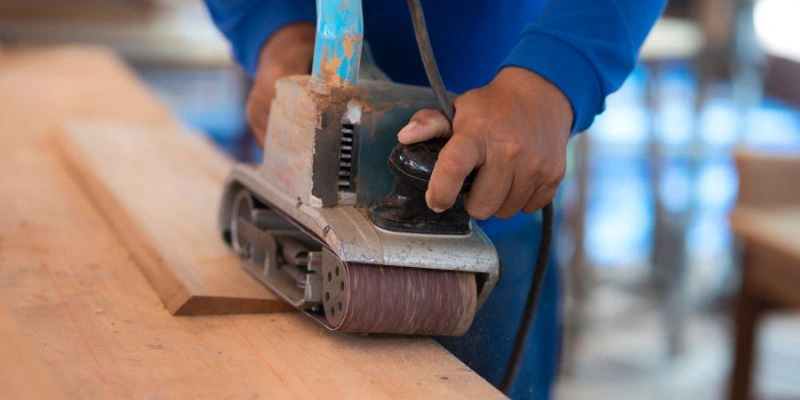
For a glue-up seam or a wider panel, a belt sander removes material far faster than a random-orbit sander – which is exactly why it’s also the easiest way to sand a visible dip into a board if you’re not careful. The standard technique: make the first pass or two at roughly a 15-30 degree angle across the grain instead of straight along it, which levels high spots faster without the sander tracking straight into a low area and digging in. Once the panel reads flat on the straightedge, switch to passes running straight with the grain to remove the diagonal scratch marks the angled passes left behind, then move to a random-orbit sander with 120+ grit to finish.
Never rest a running belt sander on the wood before it’s moving, and never stop it while it’s still touching the surface – both habits are the most common way a belt sander leaves a visible low spot exactly where you started or stopped.
A Simple DIY Sanding Sled For Wide Panels
For a panel too wide to sand evenly by eye – a wide tabletop or a live-edge slab – woodworkers commonly build a flattening sled: two straight rails clamped or screwed to the bench on either side of the workpiece, tall enough that a router or a sanding block riding across them stays at a consistent height regardless of dips in the panel below. It’s the same principle as a router sled used for slab flattening, except the cutting bit is swapped for sandpaper wrapped around a wood block sized to slide smoothly along the rails. This only works for correcting shallow variation – the same millimeter-or-two limit that applies to hand sanding – because the sled’s rails, not the sandpaper, are what create the flat reference plane. For anything with real cup or twist, a router sled with an actual cutting bit (or a jointer, if the slab is narrow enough to fit one) removes material far faster and more predictably.
Common Mistakes That Ruin A “Flat” Sanded Surface
- Skipping the straightedge check. Sanding a warped board by eye alone almost always results in a board that looks flat under shop lighting but rocks on a level surface once you’re finished – check with a straightedge before you start and again halfway through.
- Sanding only the low-looking areas. A sander only removes material where it touches, so aggressive spot-sanding on what looks like a low area, without checking the whole panel, often creates a new dip that’s lower than the original problem.
- Letting a random-orbit or belt sander sit in one place. Even a light-duty sander will cut a visible dish into soft wood in under 10 seconds of dwell time.
- Skipping grits. Jumping from 80 straight to 220 leaves deep 80-grit scratches that finer paper can’t remove without hours of extra work – work up through the grits in order.
- Assuming sanding will fix a genuinely warped board. If a straightedge shows daylight of more than a couple millimeters end to end, that’s a job for a jointer, planer, or hand plane – not more sanding.
Frequently Asked Questions
Can you sand a warped board flat?
Not reliably. Sanding removes material wherever the abrasive touches, so it follows the existing shape of a warped board rather than correcting it. For real warp, cup, or twist, flatten the board first with a jointer and planer, a hand plane and winding sticks, or a router sled, then use sanding only for the final smoothing pass.
What grit should I start with to flatten a glue-up seam?
Start with 60 or 80 grit on the raised seam itself, checking progress with a straightedge every few passes. Once the seam is level with the surrounding wood, move to 120 grit over the full panel to blend it in, then finish with 150 and 220.
Is a belt sander or a random-orbit sander better for flattening?
A belt sander removes material faster and is the better choice for leveling a raised glue seam or a wider panel, but it’s also easier to gouge with. A random-orbit sander is slower but far more forgiving, making it the safer choice for a beginner or for a panel that’s already close to flat.
How do I check if a board is actually flat?
Lay a metal straightedge across the board lengthwise, across its width, and along both diagonals, and look for light gaps underneath. Consistent hairline gaps mean minor unevenness that sanding can fix. A gap you can slide a business card or shim under at one point, with the straightedge touching solidly elsewhere, means real warp that needs a cutting method instead.
Can I sand a tabletop flat by hand without power tools?
Yes, for minor unevenness – a sanding block with 80 to 220 grit sandpaper, checked regularly with a straightedge, can level small high spots and glue seams on a panel by hand. It takes longer than power sanding and isn’t practical for correcting real warp or flattening a large slab from scratch.
Conclusion
Sanding is the right tool for leveling glue-up seams, knocking down minor high spots, and putting a final smooth surface on a board that’s already been flattened by cutting. It’s the wrong tool for correcting real warp, cup, or twist – that job belongs to a jointer and planer, a hand plane, or a router sled. Check with a straightedge before you commit to a method, and you’ll know which situation you’re actually in before you start removing material.
Sponsored / affiliate links. As an Amazon Associate I earn from qualifying purchases. I may earn additional commission from eligible campaigns.