How to Treat MDF: Expert Tips for Perfect Results
Treating MDF is the finishing side of the process: priming it correctly, choosing and applying the right paint or protective coating, and sealing it against moisture so it holds up for years instead of swelling at the first spill. This assumes the board is already cut, sanded, and edge-treated — if you haven’t done that yet, our MDF prep guide covers cutting, sanding, and edge sealing before you get to this stage.
The single most important thing to know about treating MDF: it absorbs moisture and coatings differently than solid wood, which means both the primer choice and the water-protection strategy need to account for that, not just copy standard wood-finishing advice.
Priming: Oil-Based Or Shellac, Not Water-Based
Best Topcoat Paint For MDF Furniture
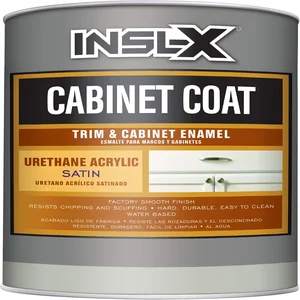 |
INSL-X Cabinet Coat Satin Enamel – $26.99 A self-leveling urethane acrylic enamel built for cabinets, which levels out brush marks better than standard wall paint and cures to a hard, wipeable surface.
|
This is the detail that trips up the most people: a straight water-based primer can cause MDF’s compressed wood fibers to swell slightly as they absorb moisture from the wet coating, leaving a faintly rough, raised-grain texture even after it dries. Oil-based and shellac-based primers don’t carry that same water content into the fibers, so they’re the safer default for MDF specifically, even though water-based primers are perfectly fine on solid wood or plywood.
| Primer Type | Why It Works On MDF |
|---|---|
| Shellac-based | Dries fast, seals absorbency completely, blocks stains through |
| Oil-based | Durable seal, no water content to raise fibers |
| Water-based (use with caution) | Can raise fiber texture slightly; fine for light-duty projects if you accept a light scuff-sand after |
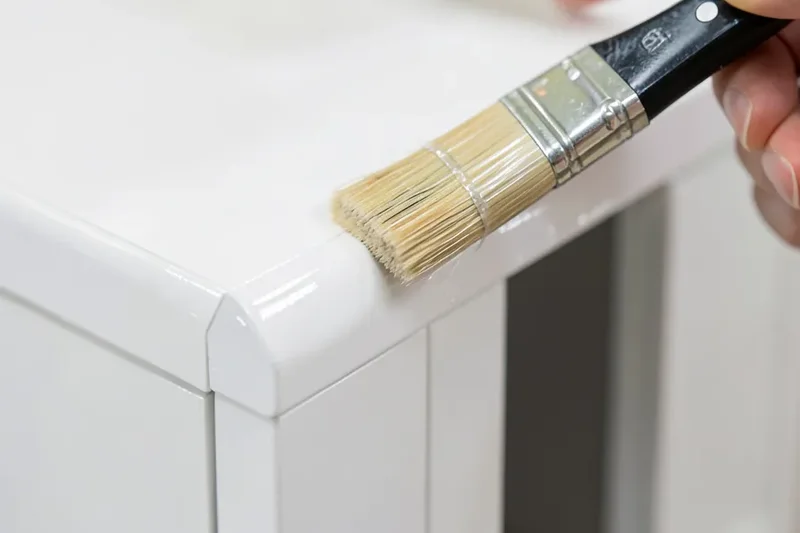
Apply with a brush or roller in even strokes, get full coverage into corners and edges, and let it dry completely before deciding if a second coat is needed — MDF’s absorbency often means the first coat looks a little thin or uneven straight off the roller, and that’s normal, not a sign of doing it wrong.
Choosing And Applying Paint
Acrylic (latex) paint is the easiest to work with day-to-day and cleans up with water, but always goes over a proper primer first, never directly onto bare MDF. Oil-based paint gives a harder, more durable final surface and is worth the longer dry time for anything that’ll see regular handling, like cabinet doors or tabletops. Spray paint is genuinely useful for MDF specifically because it lays down an even coat without brush marks, which matters more on MDF’s smooth factory faces than it does on textured solid wood.
Apply in thin coats — two thin coats consistently beat one thick one, since a heavy wet coat is more likely to show brush marks or take noticeably longer to cure. Lightly scuff-sand between coats with a fine grit to knock down any raised texture and help the next coat bond.
Sealing Against Moisture
This is the step that actually determines whether MDF furniture lasts. Unsealed MDF that gets wet doesn’t just stain — it swells permanently at the point of contact, and that swelling doesn’t reverse when it dries out. A full seal (primer, then a protective topcoat over the paint) is what prevents this, not just the paint color coat alone.
| Sealer/Topcoat | Best For |
|---|---|
| Polyurethane | General durability, moderate moisture exposure (kitchens, bathrooms with ventilation) |
| Shellac | Fast-drying protective layer, good stain-blocking |
| Lacquer | Glossy, hard-wearing finish for furniture-grade pieces |
| Marine varnish | Best moisture resistance if the piece is near a sink, tub, or high humidity daily |
For anything genuinely wet-prone — a bathroom vanity side panel, a laundry room shelf — treat every exposed edge and face, not just the visible top surface. Water finds the one unsealed spot, usually a bottom edge or a cutout for hardware, and swelling starts there even if the rest of the piece looks perfectly finished.
Long-Term Care
Dust with a dry or barely damp soft cloth; skip soaking or heavy wet-wiping even on well-sealed MDF, since seams and hardware cutouts are still vulnerable points. Use coasters and placemats on painted MDF surfaces that see daily use — the finish protects against moisture, but repeated direct contact with wet glasses will eventually wear even a good topcoat thin at that one spot. For small chips or scratches, wood filler blends cleanly under a matching paint touch-up; deeper structural damage (a swollen, crumbling edge from water exposure) usually needs the damaged section cut out and rebuilt rather than patched.
Frequently Asked Questions
What Is The Best Treatment For MDF?
An oil-based or shellac primer first (not straight water-based, which can raise the fiber texture), followed by paint in thin coats, then a protective topcoat like polyurethane or varnish sized to how much moisture the piece will see.
What Can I Put On MDF To Seal It?
A shellac or oil-based primer seals the surface and absorbency; polyurethane, lacquer, or marine varnish over the paint layer adds the actual moisture protection. Use marine varnish for anything near consistent water exposure.
Do You Need To Seal MDF?
Yes, for anything that isn’t purely decorative and out of moisture’s way. Unsealed MDF swells permanently where it gets wet, and that damage doesn’t reverse — sealing is what prevents it, not just paint alone.
What Is The Best Coating For MDF In A Kitchen Or Bathroom?
A shellac or oil-based primer, paint suited to the look you want, and a polyurethane or marine varnish topcoat on every exposed face and edge — not just the visible surfaces, since water reaches hidden edges and cutouts too.
Bottom Line
Treating MDF well comes down to two choices: an oil-based or shellac primer instead of straight water-based, and a topcoat matched to how much real moisture the piece will face. Get those right on top of proper prep, and MDF holds up far better than its reputation suggests.
Sponsored / affiliate links. As an Amazon Associate I earn from qualifying purchases. I may earn additional commission from eligible campaigns.