Can MDF Board Get Wet? Water Damage Risks & How to Seal It
Standard MDF cannot get wet and stay intact — it swells, softens, and permanently crumbles at the edges within hours of standing water contact, because it’s compressed wood fiber held together with glue that has no natural water resistance. Moisture-resistant “green board” MDF handles occasional dampness but still isn’t a true outdoor or submerged material.
The damage is permanent, not cosmetic: unlike solid wood, which can sometimes be dried and sanded back into shape, swollen MDF fiber doesn’t spring back once it delaminates. That makes prevention (sealing edges, choosing the right board type) far more important than any after-the-fact fix.
MDF Board Composition
MDF (medium-density fiberboard) is made by breaking wood down into fine fibers, mixing them with resin (usually urea-formaldehyde) and wax, then pressing the mixture under heat into dense, uniform sheets. That manufacturing process is exactly what makes MDF vulnerable to water: the fibers themselves absorb moisture readily, and the resin binding them isn’t waterproof — it just holds dry fibers together.
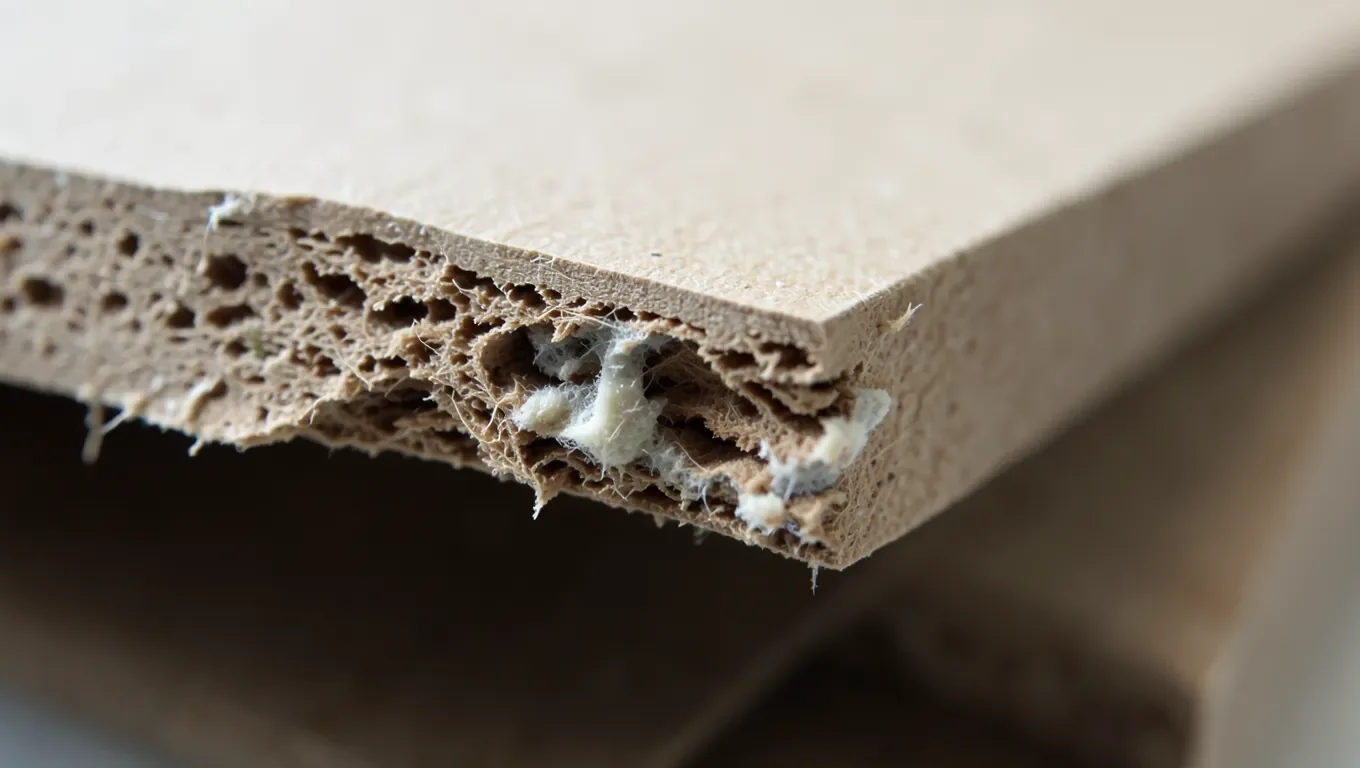
The cut edges are the weak point on every MDF panel, sealed or not. A factory-laminated MDF sheet has a moisture-resistant surface layer on its faces, but any edge you cut exposes raw, unsealed fiber that will wick up water fastest — which is why edge sealing matters more than face sealing on most projects.
Best For Sealing MDF Edges
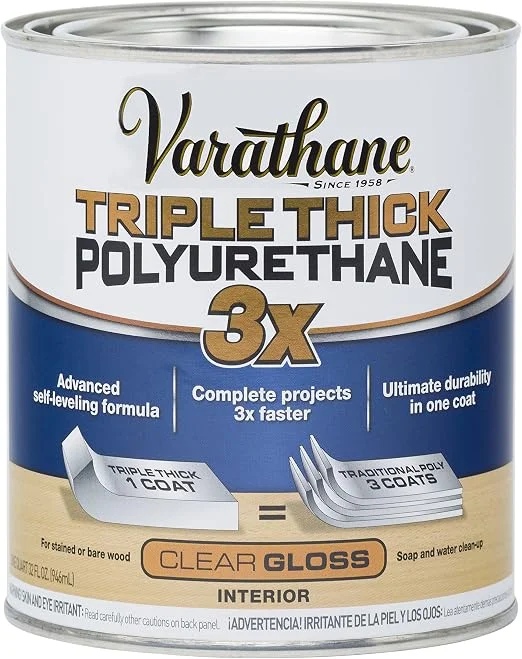 |
Varathane Triple Thick Polyurethane Gloss – $25.29 A self-leveling one-coat formula that seals raw MDF edges thick enough to actually resist moisture wicking.
|
What Happens When MDF Gets Wet
MDF fiber swells as it absorbs water, and that swelling is irreversible — the compressed fibers expand and the resin bond breaks down, so the board doesn’t return to its original density or shape once it dries out. A swollen edge typically looks puffy, feels soft or spongy to the touch, and often shows visible separation between fiber layers.
Standard MDF can start showing visible swelling in as little as 1-2 hours of direct standing water contact, though brief incidental splashes that are wiped up immediately (within minutes) on a sealed, painted surface usually cause no lasting damage. Sustained humidity is slower but still cumulative — MDF in a consistently damp room (an unventilated bathroom, a basement) will absorb ambient moisture over weeks even without a direct spill.
Common Risks Of Wet MDF
Beyond the visible swelling, wet MDF loses structural strength fast — screws and hardware that were snug in dry MDF can pull loose entirely once the surrounding fiber softens, which is a real failure risk for wall-mounted shelving or cabinet hardware. Mold growth is the other major risk: MDF’s fiber structure and the moisture it retains create good conditions for mold if a wet panel isn’t dried out within 24-48 hours.
Paint and laminate finishes will bubble or peel away from the substrate once the MDF underneath swells, since the swelling changes the panel’s dimensions faster than a rigid finish layer can flex to match.
Waterproofing Techniques
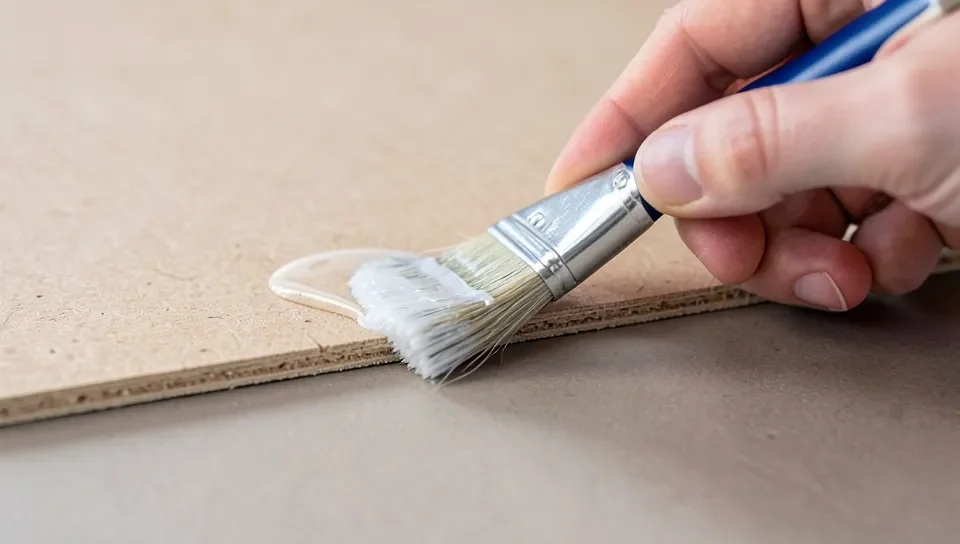
Seal every cut edge with 2-3 coats of oil-based or polyurethane sealer before the piece is ever exposed to moisture — this is the single highest-leverage step, since edges absorb water far faster than sealed faces. Let each coat cure fully before the next; a rushed second coat over a still-tacky first coat traps solvent and weakens the seal.
For surfaces that will see regular moisture (a bathroom vanity, a kitchen cabinet interior), a full wraparound seal — faces and edges both, not just the cut edges — with a marine-grade or exterior-rated polyurethane gives meaningfully more protection than a standard interior wood finish, though no sealer makes MDF safe for standing water or submersion.
Choosing Waterproof MDF Options
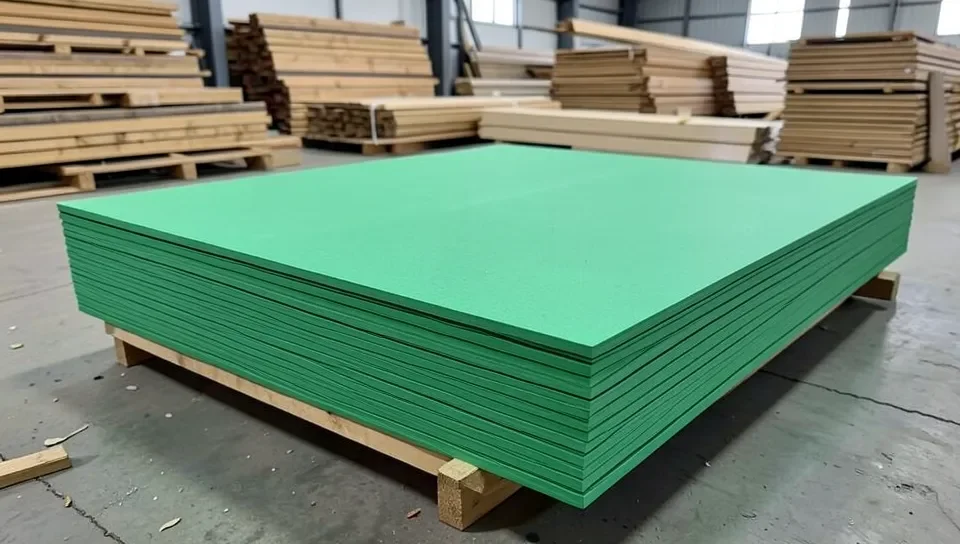
Moisture-resistant MDF (often called “green board” for its tinted color, similar naming to moisture-resistant drywall) uses a wax additive and a different resin formulation that slows water absorption significantly compared to standard MDF — it’s the right upgrade for a bathroom vanity or kitchen cabinet base, but it is still not rated for direct, sustained water contact the way marine plywood or PVC board is.
For genuinely wet locations — a mudroom bench, a laundry room cabinet, anything near a floor drain — marine-grade plywood or PVC/cellular composite board are the actual water-safe choices; moisture-resistant MDF is a step up from standard MDF, not a substitute for a truly waterproof material.
Preventive Measures And DIY Fixes
Wipe up any spill on MDF immediately — the difference between “no damage” and “swollen edge” is usually measured in minutes, not hours. Keep MDF furniture and cabinetry away from direct floor contact in rooms prone to flooding or condensation, and run a dehumidifier in consistently damp spaces where MDF is installed.
Once MDF has actually swollen, there’s no real fix — sanding down a swollen edge removes the puffiness but leaves porous, weakened fiber that will absorb water even faster next time. The practical DIY solution for a swollen edge is cutting it off and re-sealing a fresh edge if the piece allows, or replacing the panel outright if it doesn’t.
Cost Considerations
Standard MDF runs cheaper per sheet than moisture-resistant MDF, which typically costs 20-40% more due to its wax additive and different resin. Both cost less than marine plywood or PVC composite board, which can run 2-4x the price of standard MDF but are the only options actually rated for sustained wet-location use.
Sealing standard MDF with a quality polyurethane adds a modest material cost (a quart covers several average-sized panels) but is far cheaper than replacing a swollen, delaminated piece — treat edge sealing as a mandatory line item on any MDF project near moisture, not an optional upgrade.
Frequently Asked Questions
Can MDF Get Wet And Still Be Used?
Standard MDF that has swollen from water contact should not be reused in that section — the damage is permanent. Sealed MDF that gets a brief, quickly-wiped splash usually survives fine, since the sealer prevented actual fiber absorption.
How Long Can MDF Be Wet Before It’s Ruined?
Standing water on unsealed MDF can cause visible swelling in as little as 1-2 hours. A quick spill wiped up within a few minutes on a sealed surface typically causes no lasting damage.
Is Moisture-Resistant MDF Actually Waterproof?
No. Moisture-resistant “green board” MDF resists occasional dampness and humidity better than standard MDF, but it is not waterproof and will still swell under sustained standing water or submersion.
What Should I Use Instead Of MDF In Wet Areas?
Marine-grade plywood or PVC/cellular composite board are the actual waterproof choices for genuinely wet locations like mudrooms, laundry rooms, or areas near floor drains, at roughly 2-4x the cost of standard MDF.
Conclusion
Standard MDF and water don’t mix — swelling starts within hours and can’t be undone once it happens. Sealing every cut edge before installation, choosing moisture-resistant MDF for damp (not wet) locations, and switching to marine plywood or PVC board for genuinely wet spots covers the real range of situations you’ll run into.
Prevention is the only real strategy here — there’s no reliable way to restore MDF once it’s actually swollen, so the sealing step at the start of a project matters more than any fix afterward.
Sponsored / affiliate links. As an Amazon Associate I earn from qualifying purchases. I may earn additional commission from eligible campaigns.