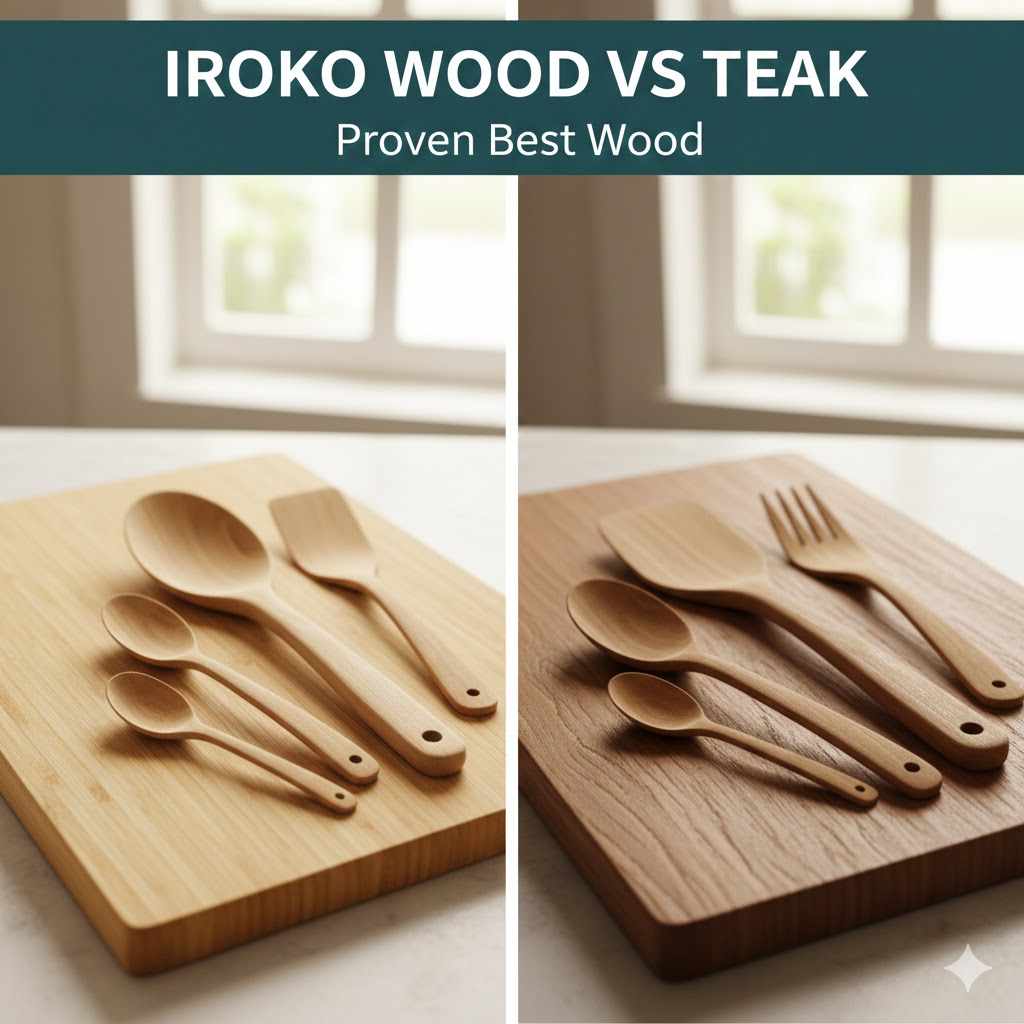
Iroko Wood Vs Teak: Proven Best Wood
Teak is the overall winner for extreme durability and low maintenance, especially outdoors. Iroko is a fantastic, often more budget-friendly alternative that looks similar and is also very strong, but it requires slightly more upkeep to maintain its color and longevity.
Hello there! I’m Md Meraj, and I know that picking the right wood for your project can feel overwhelming. Especially when you see two amazing options like Iroko and Teak staring back at you from the lumber yard. They both look beautiful, they both promise toughness, but which one is truly the “best” for your backyard deck, patio furniture, or next big build?
You want something that lasts a lifetime without constantly needing repairs, right? Don’t worry! We are going to break down these two giants of the timber world in simple terms. We’ll compare their costs, how they handle the weather, and what makes them special, so you can pick the winner for your workshop today.
Iroko Wood Vs Teak: The Ultimate Showdown for Durability and Value
When seasoned woodworkers talk about premium exterior lumber, Teak usually steals the spotlight. But don’t count Iroko out! For years, I’ve worked with both, and I’ve learned that the “best” wood truly depends on your budget and your willingness to perform a little upkeep. This guide will compare Iroko wood vs Teak, focusing on the practical aspects that matter most to DIYers.
Understanding the Contenders: Where Do These Woods Come From?
Both Iroko and Teak are classified as hardwoods, which immediately means they are tough, dense, and fantastic for projects exposed to the elements—sun, rain, or heavy use. Knowing their origins helps us understand why they behave the way they do.
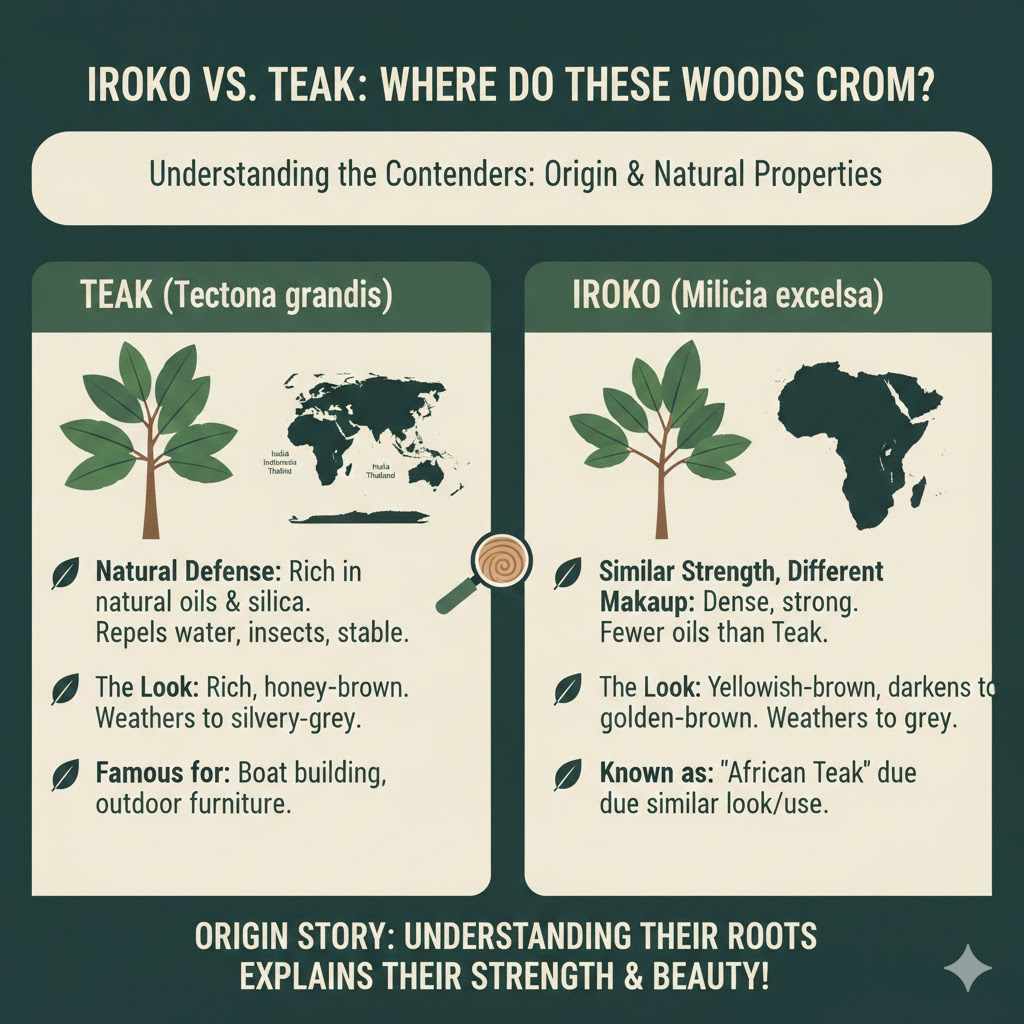
Teak (Tectona grandis)
Teak is famous worldwide, often called the “Gold Standard” for outdoor furniture and boat building. It primarily grows in South and Southeast Asia (like India, Indonesia, and Thailand).
- Natural Defense: Teak is loaded with natural oils and silica. These oils are the magic ingredient. They repel water, resist insects, and make the wood incredibly stable against shrinking or swelling with temperature changes.
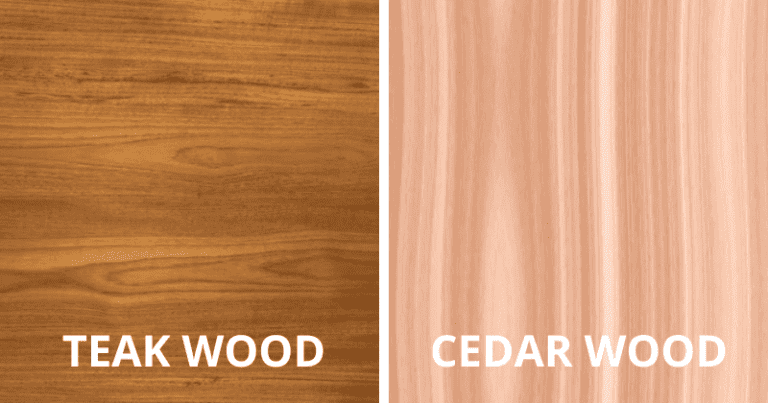
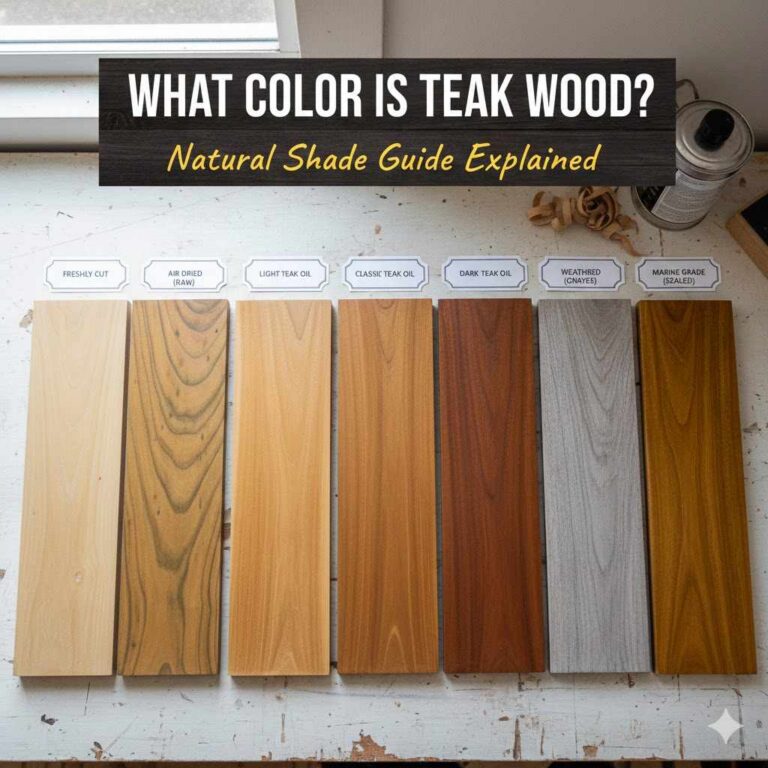
- The Look: Freshly cut Teak has a rich, honey-brown color. Left untreated outside, it fades slowly to a beautiful, soft silvery-grey patina over many years.
Iroko (Milicia excelsa)
Iroko is sometimes nicknamed “African Teak,” which immediately tells you a lot about its visual appeal and strength. It comes from West and Central Africa. While it shares many characteristics with true Teak, it is biologically different.
- Similar Strength, Different Makeup: Iroko is extremely dense and strong. It also contains natural oils, but generally fewer than premium Teak. This slight difference impacts its long-term maintenance needs.
- The Look: Iroko usually starts as a yellowish-brown and can darken slightly to a rich golden or medium brown over time. It also weathers to a grey, similar to Teak.
Head-to-Head Comparison: Key Characteristics
To make this choice easier, let’s stack their most important features side-by-side. As a woodworker, I always look at density, hardness, and maintenance.
Durability and Rot Resistance
This is where outdoor projects sink or swim. You need wood that laughs in the face of rain and termites.
- Teak: Simply put, Teak’s high silica and oil content create an almost impenetrable barrier against moisture and decay. It’s rated highly for exterior use, often lasting 50 years or more outdoors without much fuss. Many maritime organizations rely on it because it handles constant wetting and drying cycles better than almost anything else. For best practices in boat construction, you can read more about durable woods recognized by marine standards organizations.
- Iroko: Iroko is also very rot-resistant and great outdoors. However, because it has slightly less natural oil, it sometimes needs an initial sealant or needs its natural oils replenished more often if you want to preserve that original warm color year after year. It’s tough, but it isn’t quite as “bulletproof” as the highest grades of Teak.
Workability: How Easy Is It to Cut and Shape?
For us DIYers, how the wood behaves when you run it through a planer or table saw is crucial. Tear-out and dulling blades can ruin a weekend!
- Teak: Working with Teak is generally pleasant. It machines well, finishes nicely, and holds screws securely. However, be warned: the high silica content acts like tiny glass shards embedded in the wood. This means it dulls cutting tools (saws, plane blades) much faster than standard lumber. Keep your blades sharp!
- Iroko: Iroko is generally a little easier on your tools than Teak is. It’s dense, so feed rates need to be cautious, but it often yields a cleaner cut with less tendency to “gum up” bits and blades.
Cost and Availability
Let’s be honest: your budget matters. Is the superior performance of Teak worth the extra cost?
- Teak: Teak is consistently one of the most expensive hardwoods available globally. Prices are high due to high demand, slow growth rates, and increasing environmental scrutiny over old-growth forests (though plantation-grown Teak is common now). You are paying a premium for guaranteed, long-term performance.
- Iroko: Iroko is almost always the more economical choice. It often costs 30% to 50% less than comparable high-grade Teak lumber. This price difference makes Iroko an incredibly popular choice when you want that high-end look for a fraction of the investment.
Appearance and Color Matching
While function is key, aesthetics are what people see every day.
- Teak: Deep, warm golden-brown. It ages slowly and gracefully to silver-grey.
- Iroko: Lighter golden or yellowish-brown. It also ages to silver-grey, often a bit faster than Teak in harsh sunlight. Sometimes, freshly cut Iroko has a slightly interlocking grain pattern that can make it shimmer differently than Teak.
Side-by-Side Summary Table
Here is a quick reference to help you decide. Think about which factors you value most!
| Feature | Teak Wood (Tectona grandis) | Iroko Wood (Milicia excelsa) |
|---|---|---|
| Natural Oil Content | Very High | Moderate to High |
| Cost Index | High (Premium) | Medium (Excellent Value) |
| Tool Wear (Silica) | High (Dulls blades quickly) | Medium (Easier on tools than Teak) |
| Outdoor Longevity | Exceptional (Decades) | Very Good (Excellent, but may need light sealing) |
| Maintenance (to keep color) | Low to Medium | Medium (More susceptible to surface cracking if left completely untreated) |
Making the Practical Choice: Which Wood is Proven Best for You?
The “proven best” really comes down to balancing three main questions: How much maintenance are you willing to do? What is your budget? And how long do you need it to last?
When Teak is the Unquestionable Winner
Choose Teak when budget is less of a concern and maintenance needs to be absolutely minimal. This is the choice for:
- High-End Marine Applications: Where wood is constantly wet or exposed to salt spray.
- Heirloom Furniture: If you are building something you want future generations to inherit with zero sealant touch-ups.
- Zero-Maintenance Goals: If you want to set it, forget it, and let it turn beautiful silver-grey naturally over decades.
When you buy Teak, you are buying insurance against rot and stability issues. That reliability is why the price tag is so high.
When Iroko Becomes Your Best Friend (The Value Choice)
Iroko shines when you need high performance that closely mimics Teak but without the massive cost increase. It’s fantastic for:
- Decking and Patio Furniture: It looks premium, holds up well against the rain, and saves you significant money upfront.
- Interior Paneling or Trim: Where you want the dense, stable feel of a tropical hardwood but don’t need the extreme water repellency of Teak.
- DIY Woodworkers on a Budget: It’s strong, it machines acceptably, and it provides excellent results for skilled hobbyists.
Many professionals who use Iroko advise applying a good quality penetrating oil finish (like a tung oil or specialized deck sealer) every one to two years. This simple step maintains the beautiful color and locks in the wood’s defenses, keeping it looking sharp and lasting very long.
Beginner Safety Tip: Handling Iroko and Teak Dust
Both woods are fantastic but being tropical hardwoods, they carry irritants. Always prioritize safety in your shop. Dust from tropical woods can irritate skin, eyes, and respiratory systems.
- Ventilation is Key: Always work with these woods with good airflow or using dust collection systems attached directly to your tools (table saw, router, etc.).
- PPE is Non-Negotiable: Always wear a good quality dust mask or respirator (P95 or higher) and wear long sleeves and safety glasses. When sanding, fine dust particles can enter your lungs easily if you are not protected.
You can find reliable Personal Protective Equipment (PPE) guidelines and recommendations from safety organizations dedicated to construction and woodworking standards, helping you stay safe while crafting.
Finishing and Sealing Comparison
How you treat the wood after construction determines how long it stays looking the way you want it.
Finishing Teak
The easiest approach to Teak is doing nothing. If you leave it bare, it will silver beautifully. If you want to keep the golden color:
- Clean the surface well (sometimes a gentle oxalic acid wash helps bring back the gold if it’s started to grey).
- Apply multiple thin coats of high-quality Teak oil or outdoor penetrating oil finish.
- Reapply once a year, or when water no longer beads nicely on the surface.
Finishing Iroko
Iroko can handle the same treatments, but because its natural oils are slightly less concentrated than Teak’s, it often benefits more from sealing if you want to maintain the original look.
- If Iroko will be completely soaked often (like outdoor bench legs resting on wet ground), applying a good, penetrating epoxy or oil-based sealant to the bottom side before assembly provides superior protection.
- For surfaces, use outdoor stains or oils specified for dense tropical hardwoods. This prevents the surface from developing minor surface checks (small cracks) that can sometimes occur in Iroko when drying out rapidly after heavy wetting.
No matter which wood you choose, using an appropriate exterior finish helps maintain the integrity and appearance of your beautiful craftsmanship!
Understanding Wood Hardness Scales (Janka)
One excellent way woodworkers judge strength is the Janka Hardness Test. This measures the force needed to embed a steel ball halfway into a piece of wood. Harder wood equals better dent resistance!
While precise numbers vary slightly depending on the specific source and moisture content, here is a general comparison:
| Wood Type | Average Janka Hardness (Lbs.) | What This Means for You |
|---|---|---|
| Teak | About 1,070 lbs. | Excellent dent resistance, very hard surface. |
| Iroko | About 1,200 lbs. | Slightly harder and denser than Teak on average! |
| Red Oak (For Reference) | About 1,290 lbs. | Slightly harder than Iroko, but significantly less rot-resistant. |
My Takeaway: Look at that table! Iroko actually scores slightly higher on the Janka scale than many common grades of Teak. This tells us that Iroko is exceptionally dense and might resist those accidental dings and dents slightly better than Teak. This reinforces the idea that Iroko is a champion in its own right.
Common Applications for Both Woods
Both Teak and Iroko excel where others fail. Their shared strength makes them perfect for high-exposure areas.
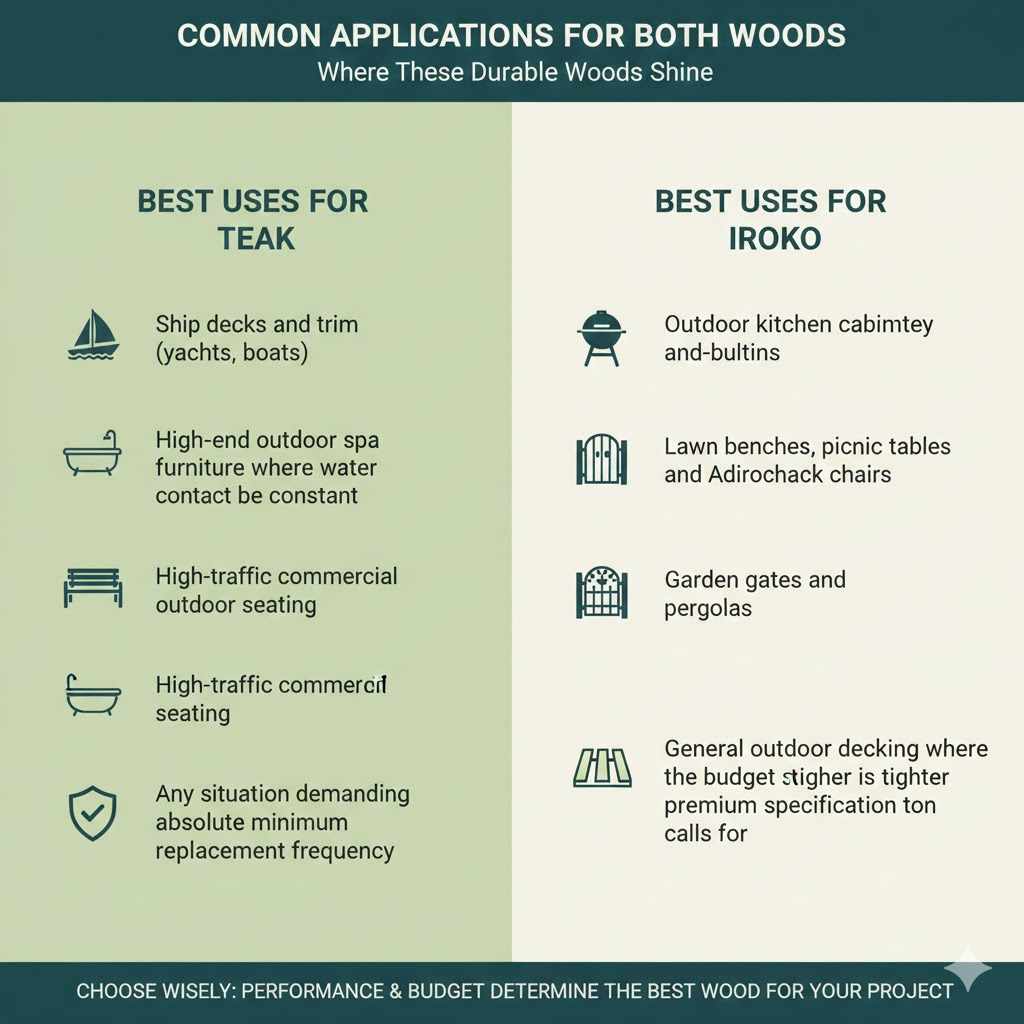
Best Uses for Teak
Due to its supreme reputation and historical use:
- Ship decks and trim (yachts, boats).
- High-end outdoor spa furniture where water contact is constant.
- High-traffic commercial outdoor seating.
- Any situation demanding absolute minimum replacement frequency.
Best Uses for Iroko
Because of its great performance and better price point:
- Outdoor kitchen cabinetry and built-ins.
- Lawn benches, picnic tables, and Adirondack chairs.
- Garden gates and pergolas.
- General outdoor decking where the budget is tighter than premium specification calls for.
Frequently Asked Questions (FAQ)
Q1: Is Iroko actually a type of Teak?
No. Iroko and Teak come from entirely different tree species and different continents. Iroko is called “African Teak” simply because its color, density, and usage properties are very similar to true Teak wood. They are substitutes, not siblings.
Q2: Which wood shrinks or warps less in humidity changes?
Teak is generally considered slightly more dimensionally stable than Iroko. Teak’s very high natural oil content stabilizes it incredibly well against fluctuations in moisture content, making it a safer bet if your climate swings wildly between very wet and very dry.
Q3: If I leave both woods unfinished, what color will they become?
Both woods will eventually turn a soft, beautiful silvery-grey patina. Teak usually maintains a more consistent tone during this transition, while Iroko might show some initial blotchiness before settling into the grey.
Q4: Can I use Iroko for indoor furniture if I don’t like the silvery-grey look?
Yes! If used indoors, Iroko is a beautiful hardwood that takes finishes very well. If properly sealed and maintained indoors, it will retain its warm, golden-brown tone indefinitely and will be wonderfully durable for floors or cabinets.
Q5: Are there any restrictions on sourcing Iroko due to sustainability?
Sustainability rules vary by region. Like many tropical hardwoods, sourcing Iroko requires careful checking. Always look for suppliers who provide documentation proving their wood comes from sustainably managed or certified forests. Responsible purchasing ensures long-term availability for future projects.
Q6: Which wood requires more sanding preparation before oiling?
Both benefit from good sanding, but Iroko, having a potentially faster weathering process when left totally bare, sometimes benefits from a slightly higher grit finish (like 180 or 220) before sealing to minimize any small surface checks caused by drying.
Conclusion: Finding Your Workshop Champion
Deciding between Iroko wood vs Teak isn’t about finding a single “better” wood; it’s about matching the material to the mission. As your woodworking mentor, I want you to walk away confident in your choice.
If you are building a masterpiece that absolutely cannot fail, where cost is secondary to guaranteed, long-term, hands-off performance, then Teak is your champion. It is the proven original for a reason.
However, if you are a DIYer looking for incredible durability, high density, beautiful looks, and significant savings on lumber for decks, railings, or furniture that gets regular use, Iroko is your proven best value winner. With simple annual maintenance, Iroko will provide years of rewarding use, looking just as sharp as its more expensive cousin.
No matter which hard worker you bring home to the shop, remember to treat your wood well—keep your tools sharp, wear your PPE, and enjoy the process of turning raw material into something strong and beautiful that will last. Happy crafting!