What Color Is Teak Wood? Golden Brown, Then Silver-Gray
Teak heartwood is a golden to medium brown that darkens with age, but outdoors it weathers to silver-gray unless you oil or seal it. The color you see depends on heartwood versus sapwood, where the teak grew, and the finish. This guide covers each of those, how fast teak changes color, and whether to oil it or let it age.
The Natural Colors of Teak Wood
Best Golden Teak Oil Pick
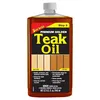 |
Star brite Premium Golden Teak Oil, 32 fl oz ($27.40) This is the keep-it-golden route described in the maintenance section below: the bottle is labeled “Step 3” and “final step in teak restoration”, so it goes on after the wood is clean.
|
As an Amazon Associate we earn from qualifying purchases.
According to the Wood Database, teak heartwood tends to be a golden or medium brown, with the color darkening with age. That is the baseline. Look closely and you will usually also see darker brown or near-black streaks running with the grain, and the grain itself is typically straight, sometimes wavy.
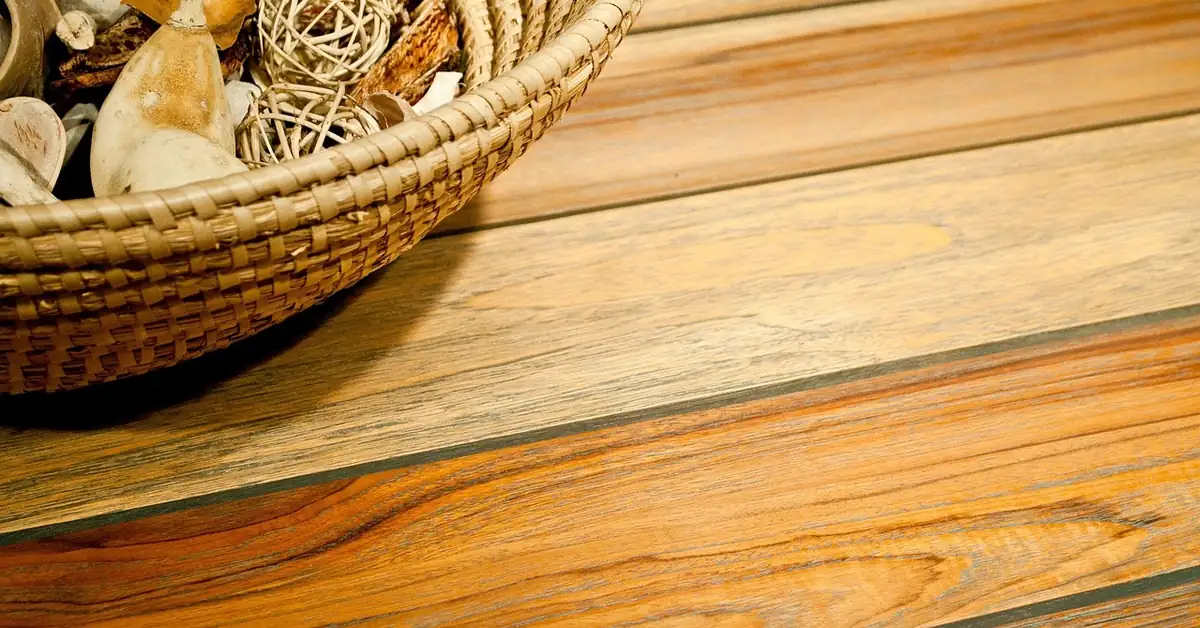
Teak also changes shade from the moment it is cut. Freshly milled boards can look dark and splotchy, with mineral streaks of different colors. Exposure to light and air evens that out into the tawny gold or honey brown most people picture when they say “teak color”.
Teak Wood’s Core Hues
Teak does not have one color so much as a few stages. This table puts them side by side.
| Stage | What you see | What drives it |
|---|---|---|
| Freshly milled | Dark, splotchy, with mineral streaks | Natural oils and extractives not yet settled |
| Finished or in sun | Golden to honey brown | Light and air reacting with the oils and waxes in the wood |
| Aged indoors | Medium to deeper brown | Heartwood darkens with age (Wood Database) |
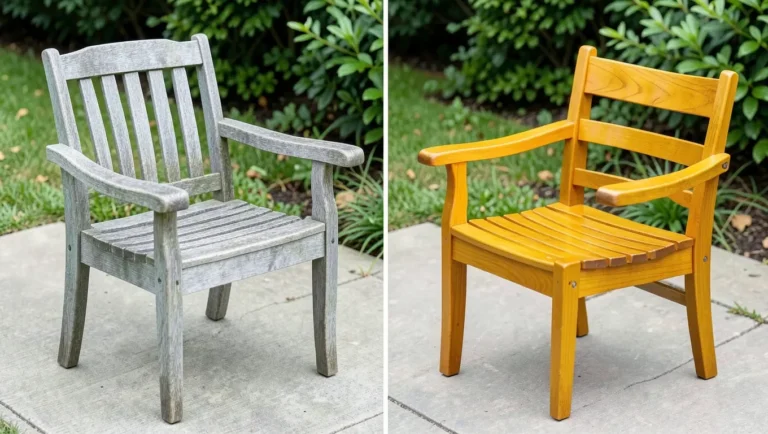
| Weathered outdoors | Silver-gray | Sun and rain on unprotected wood over months to years |
One timing detail most guides skip: the shift to honey brown is fast on exposed wood, perhaps days or weeks on a deck, according to Vermont Woods Studios. A board kept in a closet can hold its dark blotches for months or years. If a new teak table looks blotchy, give it light before judging the color.
Factors Impacting Teak Wood Color
- Heartwood versus sapwood: heartwood is the golden to medium brown core; sapwood is the lighter outer layer. Lower grades include more of it, so the boards look patchier.
- Grade: one lumber supplier describes select grade as varied, with darker streaks and lighter patches, while premium and marine grades are more uniform golden brown.
- Age: the Wood Database notes that teak color darkens with age.
- Light exposure: sun brings out honey tones at first, then bleaches unprotected surfaces to gray.
- Finish: oil or sealer holds the warm tone longer; bare wood weathers.
Heartwood vs Sapwood: Why One Board Shows Two Colors
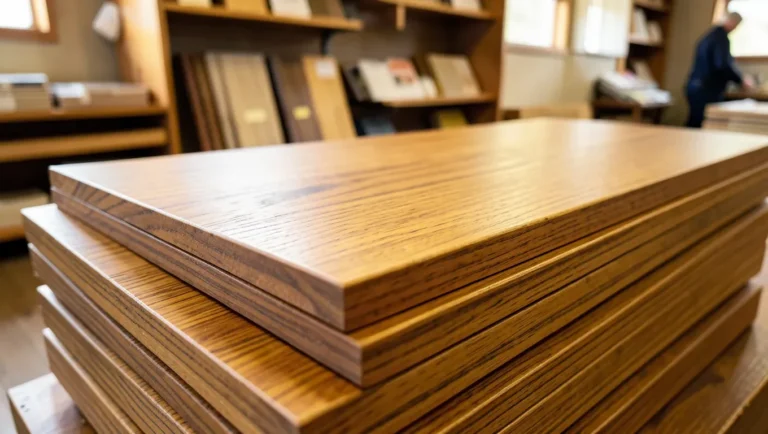
If you have seen a teak board with a pale stripe along one edge, that is sapwood. It is the lighter outer part of the tree, and it is the main reason cheaper teak looks uneven. Boards cut for furniture and decking in premium grades are selected to keep it to a minimum.
For buyers this is the practical color question: not “what shade is teak” but “how much of the board is heartwood”. Ask for the grade, and check the stack in daylight rather than under shop lights.
Plantation vs Burmese Teak Color
Burmese teak is the name for naturally grown teak, typically from Myanmar, used to tell it apart from plantation-grown teak, as the Wood Database explains. Plantation teak is now grown across Africa, Asia and Latin America. One retailer guide describes Burma teak as golden brown and Indonesian teak as light brown, but none of the sources I read set out a strict color rule, so treat origin as a hint rather than a guarantee. Judge the actual board.
Origin matters for price and sourcing too. The Wood Database notes that sanctions on Myanmar teak followed the February 2021 military takeover there. For more on why teak costs what it does, see why teak wood is so expensive.
How to Tell Real Teak From Teak-Colored Wood
Color alone will not prove a board is teak. The name has been attached to many unrelated woods: the Wood Database points out that cumaru is sometimes sold as Brazilian teak, and Rhodesian teak is barely related to real teak (Tectona grandis). Burmese teak, by contrast, means genuine teak.
- Feel: raw, unfinished teak has a slightly oily or greasy feel from its natural oils.
- Smell: freshly milled teak can smell like leather.
- Grain: typically straight, with a coarse, uneven texture and only moderate to low natural luster.
Our guide to spotting real teak in Danish furniture goes deeper on identification, and the natural teak wood texture page shows how the grain looks up close.
The Color Change in Teak Over Time
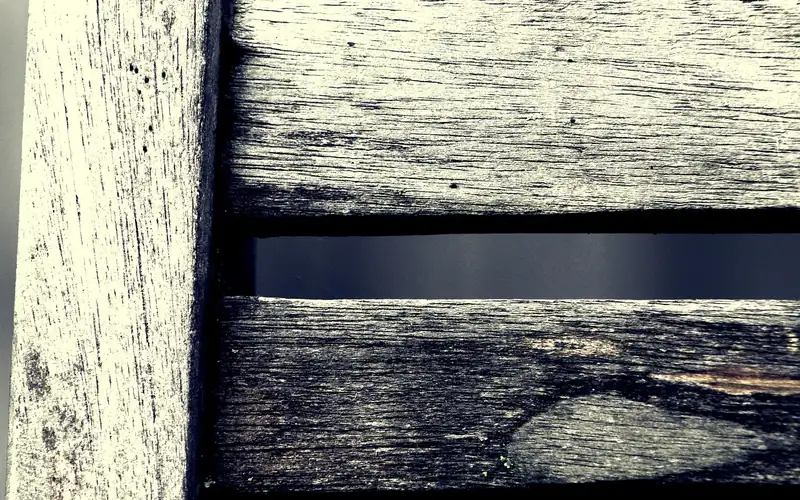
Teak goes from golden brown to silver-gray when it is left outdoors without a finish. Terra Outdoor Living reports that weathering begins within the first few months and can take several years to fully gray, depending on how much sun and moisture the piece sees.
The Weathering Process
Weathering is surface change. Sun and rain act on the outer layer of unprotected wood, the natural oils release, and the surface lightens toward gray. Vermont Woods Studios describes the oils and waxes in teak as extractives that react with air and sunlight. Gray teak is not rotted teak; the Wood Database rates the heartwood as very durable regardless of surface color.
How to Maintain Teak Wood Color
Your two options are to keep the golden tone or accept the gray. Neither is wrong, and the table shows what each one costs you in upkeep.
| Goal | What to do | Upkeep |
|---|---|---|
| Keep it golden | Clean and brighten the wood, then apply a sealer or teak oil | Reapply when the color starts to fade, following the product label |
| Let it go silver-gray | Leave it unfinished and clean it occasionally | Almost none; it keeps graying evenly |
| Bring gray teak back | Clean with a two-part teak cleaner and a soft brush and hose, then oil | One restoration, then the keep-it-golden routine |
Here is the part that trips people up. Oil does not restore gray teak by itself. The listing for our Star brite pick tells you to pre-treat dirty, gray or stained wood with a teak cleaner and brightener first, and the bottle I viewed is printed “Step 3” with “Final step in teak restoration”. Oiling gray wood without cleaning mostly seals the gray in. For the full process, see how to renew teak wood and how to treat outdoor teak furniture.
Teak’s Janka hardness is 1,070 lbf, with a density of about 40.9 lb/ft3 and up to 1.4% silica that dulls cutting edges. Source: Wood Database.
Reading the actual label was useful: it describes the product as sealing, protecting and finishing teak, penetrating for UV protection and drying quickly, and carries a “danger: combustible” warning. Follow the label instructions for handling oil-soaked rags.
Stains are a separate matter. Our guide on removing stains from teak furniture covers water rings and spills without changing the base color.
Different Applications and the Colors of Teak
Teak ends up on patios, boat decks, and dining rooms, and the color expectation changes with each.
Teak Wood in Furniture
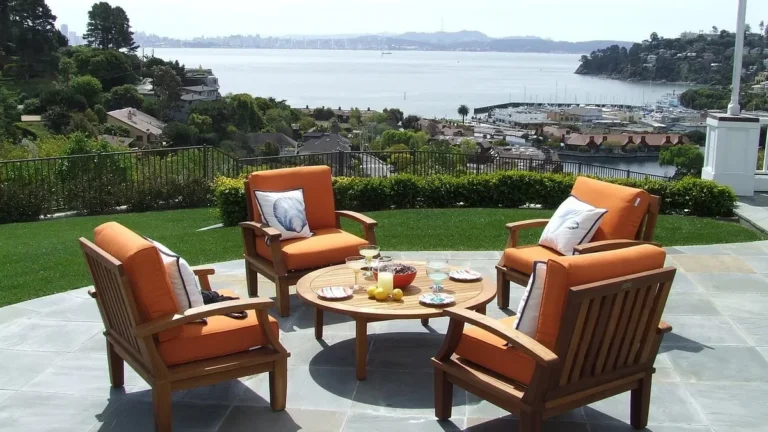
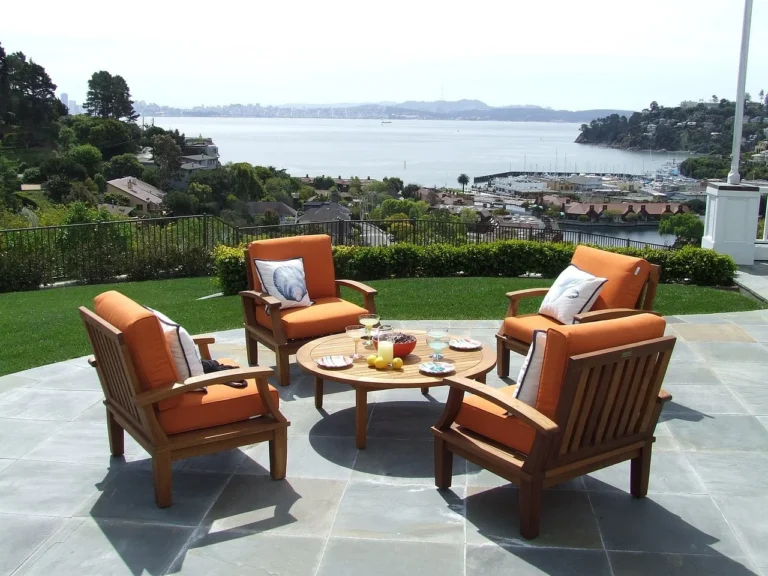
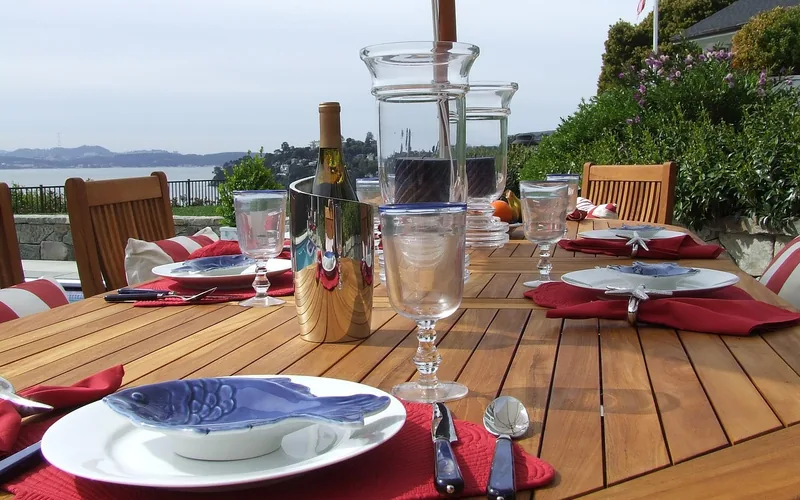
Indoors, teak furniture usually stays in the golden to medium brown range and slowly deepens with age. Outdoors, the same piece goes gray unless you maintain it, which is why many people buy outdoor teak expecting the gray. If you are weighing teak against another warm furniture wood, mango wood pros and cons is a useful comparison.
Teak for Outdoor Decking
Teak is a common decking and marine wood because the heartwood is rated very durable and resistant to termites. Marine and premium grades give the most uniform golden brown. Whether you want that color to last is the same oil-or-weather decision above; on decks, sun exposure makes the gray arrive sooner.
Comparing Teak With Other Woods
If you are choosing a wood by color, these pages cover the other common options: what color walnut wood is, what color oak is (red and white), and the wood grain comparison chart for grain, pores and color side by side.
Frequently Asked Questions
What color is teak wood when freshly cut?
Freshly cut teak is often dark and splotchy, with mineral streaks of varying colors. With light exposure it settles into the honey or golden brown it is known for. On a sunny deck that can take days or weeks, while a board stored in a closet can stay blotchy for months or years.
Does teak always turn gray outdoors?
Left unprotected outdoors, yes: teak weathers to silver-gray, starting within the first few months and taking several years to fully gray. It is not inevitable, though. A sealer or oil slows the change, and a teak cleaner can bring gray wood back toward its original color.
Does teak oil change the color of teak?
Yes, a little. A golden teak oil brings out the grain and gives teak a warmer golden-brown tone, and it slows graying. How much color it adds depends on the product’s tint, so test on a hidden spot first. It will not remove existing gray, so clean the wood before oiling.
What is the difference between teak heartwood and sapwood color?
Teak heartwood, the core of the trunk, is golden to medium brown and darkens with age. Sapwood is the lighter outer layer, which is why lower grades show pale patches. Higher grades are cut to leave little or no sapwood so the color looks even.
Can you stain teak wood?
Yes. Teak usually finishes well, though its natural oils sometimes mean the surface needs a wipe with solvent before finishing. For outdoor pieces use a stain or finish rated for exterior use. A clear golden oil is the simpler way to adjust the tone without hiding the grain.
Sponsored / affiliate links. As an Amazon Associate I earn from qualifying purchases. I may earn additional commission from eligible campaigns.