7 Chainsaw Tachometers Compared: RPM Range & Price (2026)
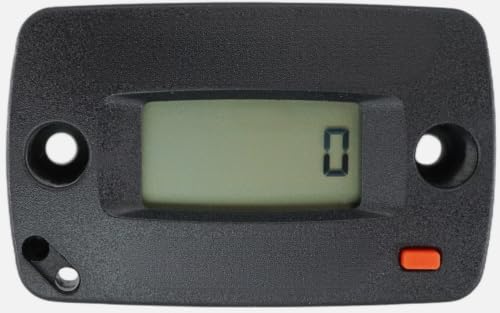
The best overall chainsaw tachometer is the Hardline EDT9 ($39.99) — a direct OEM replacement for the STIHL 5910-850-1100 with a disclosed IP68 waterproof rating, a built-in hour meter, and inductive readings up to 16,000 RPM. We compared 7 currently-available chainsaw tachometers by measurement type, RPM range, waterproof rating, hour-meter function and price — and found that only 4 of the 7 actually publish a real IP waterproof number.
A tachometer tells you whether your saw’s carburetor is tuned to the engine manufacturer’s spec — idle too low and it stalls or fouls a plug; max RPM too high and you risk engine damage. Below is the full spec comparison, followed by a detailed look at each pick, a buying guide, and a reference table of factory idle/max RPM specs for common saws so you know what number you’re actually tuning toward.
Why Chainsaw RPM Matters
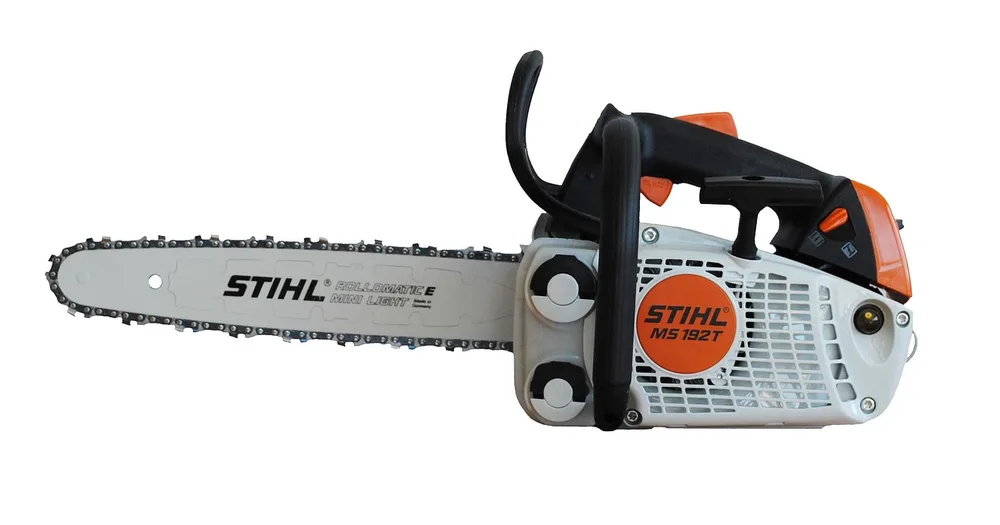
A two-stroke chainsaw engine doesn’t have a factory-set carburetor the way a modern fuel-injected engine does — altitude, fuel mix, air filter condition and even ambient temperature shift the ideal jetting slightly, which is why nearly every gas chainsaw ships with adjustable idle (LA) and high-speed (H) carburetor screws. A tachometer is what tells you whether those screws are actually set correctly, instead of guessing by ear.
Run the idle screw too low and the saw stalls or fouls a plug at low throttle; too high and the chain moves at idle, which is a real safety problem, not just an annoyance. Run the high-speed screw too lean (RPM too high past the factory max) and the engine can seize from lack of lubrication within minutes of sustained wide-open-throttle cutting — a mistake a $12–$40 tachometer would have caught before it happened.
Chainsaw Tachometer Comparison: RPM Range, Waterproofing & Price
Every number below comes from each product’s own Amazon listing or manufacturer copy, pulled live. Where a spec wasn’t disclosed anywhere we could find it, the cell says not disclosed instead of a guess.
| Tachometer | Measurement Type | RPM Range | Hour Meter | Disclosed Waterproof Rating | Battery | Price | Verdict |
|---|---|---|---|---|---|---|---|
| Hardline EDT9 (STIHL Replacement) | Inductive clip/wrap | Up to 16,000 RPM | Yes – auto RPM/hour switch + Max RPM recall | IP68 | 10-yr sealed lithium (no replacement) | $39.99 | #1 Best Overall |
| Neiko 20713A | Non-contact laser | 2.5–99,999 RPM | No | Not disclosed | 9V (included) | $18.99 | Best Non-Contact / Laser |
| Hardline HR-8061-2 | Inductive clip | Up to 16,000 RPM | Yes – auto RPM/hour switch | IP68 | 10-yr sealed lithium | $30.15 | Best for Multi-Brand Small Engines |
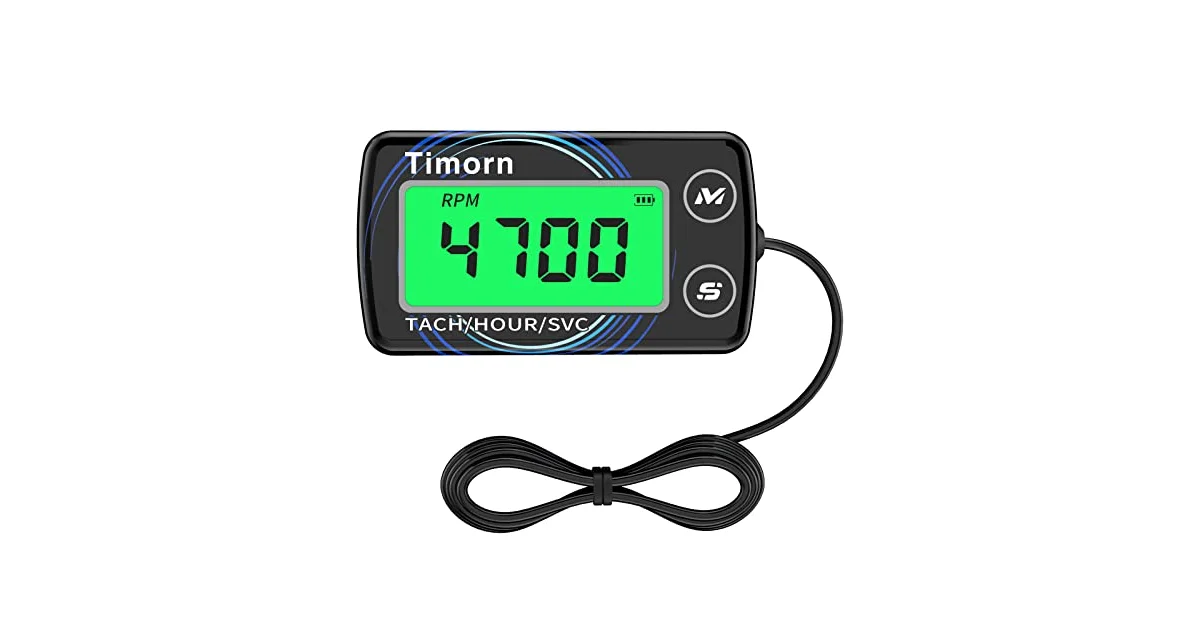
| Timorn RPM/Hour Meter | Inductive wrap (5-coil) | 0–25,000 RPM | Yes – dual-engine job tracking | IP67 | Replaceable (type not disclosed) | $23.99 | Best Waterproof-Rated / Two-Engine Tracking |
| Runleader RL-HM011E | Inductive clip | 0–20,000 RPM | Yes – 0–99,999h, service alerts | IP65 | CR2450 (replaceable) | $11.99 | Best Budget |
| Bohisen Gesture Tach | Inductive clip | Up to 99,999 RPM display (30,000+ RPM engines) | Yes – resets at 10,000h | Not disclosed | CR2450 (implied) | $16.99 | Best for Beginners |
| Gexmil Handheld | Clip / wrap / handheld (3 modes) | Not confirmed – listing conflates hour and RPM specs | No dedicated hour meter stated | Not disclosed | CR2450 | $22.99 | Best Handheld / Most Mounting Flexibility |
The one-line takeaway: only the two Hardline units and the Timorn meter publish an actual IP rating (IP68, IP68 and IP67). The Neiko, Bohisen and Gexmil listings all use the word “waterproof” somewhere in their marketing copy with no measured number behind it — that’s a real, checkable gap between what’s claimed and what’s documented, not a knock on whether they work.
Best Chainsaw Tachometers
1. Hardline EDT9 (STIHL 5910-850-1100 Replacement) — #1 Best Overall
Price: $39.99 · View on Amazon
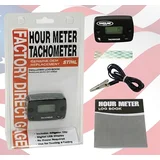
The EDT9 is a purpose-built OEM replacement for the STIHL 5910-850-1100 tach/hour meter, and it’s the only pick here engineered specifically around chainsaw service intervals rather than adapted from a generic small-engine gauge. It’s compatible with Husqvarna, Echo, Ryobi and other 1- and 2-cylinder gas engines too, not just Stihl saws.
Key specs:
- OEM replacement for STIHL 5910-850-1100
- Inductive pickup, up to 16,000 RPM
- Auto-switches between RPM (running) and hours (off), plus Max RPM recall
- IP68 waterproof – 100% epoxy-encapsulated electronics
- 10-year sealed lithium battery, never replaced
- Peel-and-stick or alligator-clip install, 48" pickup wire
Pros:
- Highest disclosed waterproof rating of the 7 (IP68)
- Genuine OEM fitment on Stihl saws, still works on other brands’ 1-2 cyl engines
- Dual RPM + hour function replaces two separate tools
- Sealed 10-year battery means no coin-cell swaps
Cons:
- Most expensive of the 7 at $39.99
- Inductive-only – no laser/non-contact mode for saws with tight wire access
This is the pick for someone who owns a Stihl saw (or a Husqvarna/Echo/Ryobi 1-2 cylinder model) and wants to install a tachometer once, leave it mounted, and never think about the battery again. If you tune carburetors on more than one saw a season, the sealed 10-year battery and IP68 rating are worth the extra $10-20 over the budget picks.
Main drawback: No laser or non-contact mode. On a compact top-handle saw where the spark plug boot is buried under a cover, getting the pickup wire onto the plug wire takes an extra minute the laser-based Neiko doesn’t need.
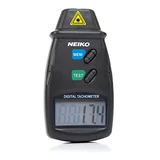
2. Neiko 20713A Digital Laser Tachometer — Best Non-Contact / Laser Tachometer
Price: $18.99 · View on Amazon
The Neiko is the only non-contact pick in this lineup — instead of clipping onto a wire, you stick a strip of reflective tape on the rotating part and aim the laser at it from a few inches away. That makes it useful well beyond chainsaws: any visible rotating shaft on small engines, motors or fans.
Key specs:
- Non-contact laser photo sensor, 2.5–99,999 RPM
- ±0.05% accuracy per the manufacturer spec
- Reads from 2"–20" away
- 9V battery included
- No hour meter
Pros:
- Widest RPM range of the 7 by a large margin
- No wiring or clipping — point and read
- Works on any visible rotating shaft with reflective tape, not limited to spark-plug-wire engines
Cons:
- Needs a direct line of sight and a strip of reflective tape on the target
- No hour meter
This is the right pick if you already own multiple small engines beyond just a chainsaw — generators, go-karts, lawn equipment with an exposed flywheel — and want one tachometer that works across all of them without fabricating a wiring adapter for each. For a chainsaw specifically, expect to spend a few extra minutes exposing a taped rotating point that an inductive clip wouldn’t need.
Main drawback: Chainsaws hide the flywheel behind the clutch cover, so using this on a saw usually means partial disassembly to expose a taped rotating point — it’s a better fit for open-shaft small engines than a buttoned-up saw unless you’re comfortable pulling the cover.
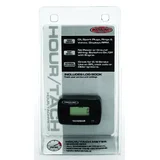
3. Hardline Products HR-8061-2 — Best for Multi-Brand Small Engines
Price: $30.15 · View on Amazon
This is essentially the same hardware platform as the EDT9 — same IP68 rating, same 10-year sealed battery, same auto RPM/hour switching — just without the Stihl-specific branding or the Max RPM recall function. It’s built for any 1- or 2-cylinder gas engine.
Key specs:
- Inductive 1-wire pickup wraps around the spark plug wire
- Up to 16,000 RPM
- Auto RPM/hour switching
- IP68 waterproof, epoxy-encapsulated
- 10-year sealed lithium battery
- Peel-and-stick install, includes a printed maintenance log book
Pros:
- Same waterproofing and battery life as the EDT9
- Includes a physical log book for service records
- Works identically across brands, not tied to Stihl part numbers
Cons:
- No Max RPM recall (the EDT9 has it)
- Costs $10 more than the Runleader budget pick for similar core function
Choose this over the EDT9 if you run a mixed fleet of brands (say a Husqvarna saw and a Honda-powered generator) and don’t want a tachometer branded for a specific manufacturer’s part number, or if you find it priced below the EDT9 at the time you’re buying.
Main drawback: Unless you specifically want the Stihl-branded fitment, the EDT9 is the better $40 buy at the same price bracket — this one only makes sense if you find it discounted below the EDT9’s price.
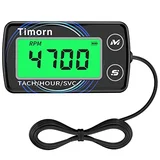
4. Timorn Digital RPM & Hour Meter — Best Waterproof-Rated / Two-Engine Tracking
Price: $23.99 · View on Amazon
The Timorn uses a 5-wrap inductive coil instead of a simple clip, and it’s the only pick besides the two Hardline units to publish a real IP number. It also tracks job time on two separate engines with one meter, which is useful if you rotate the same tachometer between two saws.
Key specs:
- 5-wrap inductive coil pickup
- 0–25,000 RPM – widest inductive range of the 7
- Hour meter, 0–6,000h at 0.1h accuracy
- IP67 waterproof (disclosed)
- Rev-limiter alert plus Max RPM recall
- Tracks job time on two engines separately
Pros:
- Disclosed IP67 rating – one of only 3 picks with a published number
- Widest inductive RPM ceiling here (25,000 vs. 16,000–20,000 on the others)
- Two-engine tracking is genuinely useful for multi-saw owners
Cons:
- IP67 is a notch below the Hardline pair’s IP68 (splash/temporary immersion vs. continuous)
- 5-wrap coil install is fiddlier than a simple clip
This is the pick for someone who splits time between two saws (or a saw and another 1-2 cylinder engine) and wants a single meter to track hours on both without buying two units. The IP67 rating also makes it a reasonable middle ground if IP68 feels like overkill but you still want a documented number, not just a marketing claim.
Main drawback: The two-engine tracking feature only pays off if you actually rotate the meter between two saws. A single-saw owner is paying for a feature they’ll never use.
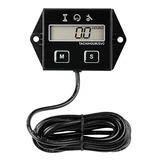
5. Runleader RL-HM011E Digital Hour Meter & Tachometer — Best Budget
Price: $11.99 · View on Amazon
At $11.99 the RL-HM011E is less than a third of the price of the EDT9, and it still discloses a real IP65 waterproof rating and a full hour meter with configurable service-interval alerts — nothing else at this price publishes a real waterproof number.
Key specs:
- Inductive clip, 0–20,000 RPM
- Hour meter 0–99,999h at 0.1h accuracy
- Configurable service-interval alerts
- IP65 waterproof (disclosed)
- CR2450 coin battery
- One-click manual shutdown to save battery
Pros:
- Cheapest of the 7 by a wide margin
- Still has a disclosed IP65 rating and a full hour meter with service alerts
Cons:
- IP65 is the lowest of the three disclosed ratings (protects against water jets, not immersion)
- CR2450 coin battery isn’t sealed/permanent like the Hardline pair’s 10-year lithium
This is the pick for an occasional chainsaw owner who tunes a carburetor once or twice a season and doesn’t want to spend $30-40 on a tool that will sit in a drawer most of the year. It’s also a reasonable second tachometer to keep in a truck toolbox as a backup to a more expensive primary unit.
Main drawback: You’ll eventually swap the CR2450 battery yourself — budget $2–3 every year or two of regular use, unlike the Hardline units you install once and never touch again.
6. Bohisen Digital Chainsaw Tachometer — Best for Beginners
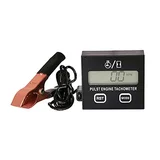
Price: $16.99 · View on Amazon
The Bohisen has the simplest physical setup of the 7: clip the alligator sensor onto the spark plug wire and read the large LCD. There’s nothing to wrap or calibrate, which makes it a reasonable first tachometer if you’ve never tuned a carburetor before.
Key specs:
- Alligator-clip induction sensor
- Display reads up to 99,999 RPM (rated for 30,000+ RPM small engines)
- Hour meter resets automatically at 10,000h
- Large, uncluttered LCD
- CR2450 battery (implied by listing, not explicitly stated)
Pros:
- Simplest physical setup of the 7 – clip and read
- Large display
- Inexpensive enough to not worry about damaging while learning
Cons:
- No disclosed waterproof rating at all
- No published accuracy tolerance or confirmed battery type, unlike the Hardline/Runleader/Timorn listings
This is the pick for someone who has never used a tachometer before and just wants to confirm their saw’s idle isn’t dangerously high without a learning curve. If you’re planning to store it in an unheated shed or use it outdoors in wet conditions regularly, one of the IP-rated picks above is the safer bet since Bohisen doesn’t document a rating either way.
Main drawback: Bohisen doesn’t publish an IP rating, an accuracy tolerance, or a confirmed battery type in its own listing. Fine for a first tachometer used in a dry garage, but it’s the least-documented spec sheet of the 7 if you need numbers for a shop record.
7. Gexmil Handheld Digital Induction Tachometer — Best Handheld / Most Mounting Flexibility
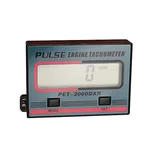
Price: $22.99 · View on Amazon
Gexmil is the only pick offering three different ways to take a reading: clip it to the spark plug wire, wrap the pickup wire around it, or hold the sensor 3–5cm from the wire’s sheath. That flexibility matters when a saw’s wire access is too tight for a permanent clip.
Key specs:
- Three measurement modes: clip, coil-wrap, or handheld proximity (3–5cm)
- Rated for engines up to 8 cylinders
- CR2450 battery
- LCD display
- RPM ceiling and waterproof rating not confirmed in the manufacturer’s own listing
Pros:
- Only pick with three separate measurement modes
- Useful when a saw’s spark-plug-wire access is too tight for a fixed clip
Cons:
- Manufacturer’s own listing conflates its hour-meter timing range with its RPM capability – the actual RPM ceiling isn’t clearly stated
- No disclosed waterproof rating
This is worth considering only if the other six picks’ mounting methods genuinely don’t fit your saw — for example a chainsaw with an unusually short or shrouded spark plug boot where neither a clip nor a coil-wrap seats reliably. For a first tachometer purchase, one of the picks with a fully disclosed spec sheet above is the safer choice.
Main drawback: This is the thinnest published spec sheet of the 7. Treat the RPM range as unconfirmed rather than assuming it matches the others, and check a reading against a known-RPM source before trusting it for precision carburetor work.
How We Picked These
We did not physically test these seven tachometers ourselves this session — be clear-eyed about that. What we did: identified 7 real, currently-purchasable models spanning the two measurement technologies (inductive clip/wrap vs. non-contact laser), pulled their live buy-box prices and availability from Amazon’s Creators API, and cross-checked every RPM range, waterproof rating, hour-meter capability and battery type against each product’s own manufacturer or listing copy.
Every spec in the comparison table above is either the number the manufacturer explicitly states, or it’s marked “not disclosed” when we couldn’t confirm one — we didn’t invent a number to fill a gap. Amazon’s review data returned no usable star ratings or review counts for any of these seven listings at the time of research, so this article doesn’t cite star ratings or review counts anywhere; that’s an honest gap, not a number copied from a competitor.
If you’ve run one of these units yourself and your real-world reading disagreed with the published spec, that’s genuinely useful information — manufacturer specs and field performance don’t always match exactly, especially on the budget imports that don’t publish an accuracy tolerance at all.
What to Consider When Buying a Chainsaw Tachometer
RPM Range
Chainsaws idle around 2,700–3,000 RPM and redline anywhere from 9,000 RPM (some Husqvarna homeowner models, rated at peak power) to 12,500–16,000+ RPM wide-open-throttle on many Stihl and Echo saws. Pick a tachometer whose stated range comfortably clears your saw’s ceiling — every pick here covers at least 16,000 RPM except the Gexmil, whose ceiling isn’t clearly published (see the table above). Buying a meter with headroom above your saw’s factory max also matters if you ever tune a second, larger-displacement saw later — a 20,000 RPM ceiling on the Runleader covers most homeowner and semi-pro saws with room to spare, while the Neiko’s 99,999 RPM ceiling is really aimed at high-revving small engines well beyond chainsaw range.
Contact Type: Inductive Clip vs. Non-Contact Laser
An inductive clip wraps or clips onto the spark plug wire and reads the ignition pulses — no line of sight needed, but you need physical access to the wire. A non-contact laser tachometer (like the Neiko) reads a strip of reflective tape on a visible rotating part from a few inches away — no wiring, but you need an exposed, visible rotating point, which most assembled chainsaws don’t offer without partial disassembly. For a chainsaw specifically, an inductive clip is almost always the more practical choice for that reason; the laser style earns its keep on engines where the flywheel or shaft is already exposed, like generators, mowers or go-karts.
Hour Meter Function
A built-in hour meter tracks total engine runtime, which is what 2-stroke maintenance intervals (air filter, fuel filter, spark plug, gearbox grease on some models) are actually specified against — not calendar time. Five of the seven picks here include one; the Neiko and Gexmil do not. If you already log hours manually in a notebook or app, this feature matters less; if you don’t, it’s the difference between guessing when a filter is due and actually knowing.
Waterproof Rating
IP65 protects against low-pressure water jets from any direction. IP67 adds protection against temporary immersion (up to 1 meter, briefly). IP68 is rated for continuous immersion beyond that. Only three of the seven picks here publish an actual IP number — the rest use the word “waterproof” in their marketing copy without a measured rating to back it up. That distinction matters more for a permanently-mounted unit exposed to rain, sap and bar oil mist every time the saw runs than for a clip-on meter you use for a few minutes and put away in a dry toolbox.
Battery Type & Life
The two Hardline units and the EDT9 use a sealed internal lithium battery rated for roughly 10 years and never need replacing. The Runleader, Timorn, Bohisen and Gexmil use a replaceable CR2450 coin cell, which you’ll swap every year or two of regular use — cheaper upfront, more maintenance over time.
Brand & Cylinder Compatibility
Most of these units are rated for 1- or 2-cylinder 2-stroke or 4-stroke gas engines, which covers essentially every consumer and semi-pro chainsaw. The EDT9 is a direct OEM replacement for a specific Stihl part number but still works on Husqvarna, Echo and Ryobi saws in the same displacement class.
Installation Method
Peel-and-stick mounting (the two Hardline units and the EDT9) is meant to be semi-permanent — you leave it on the saw. A simple alligator clip (Bohisen, Timorn, Runleader) is meant to go on and off between uses, which suits someone tuning multiple saws rather than monitoring one continuously.
Price vs. Feature Set
The pattern in the data above is consistent: the budget picks that skip a disclosed IP rating (Neiko, Bohisen, Gexmil) also tend to skip other documented specs — accuracy tolerance, confirmed battery type, or a clear RPM ceiling. That’s not necessarily a functional problem, but it does mean you’re trusting the listing copy more and the published spec sheet less.
Caring for Your Chainsaw Tachometer
Even the IP68-rated units in this comparison last longer with basic care. Wipe bar oil and sawdust off the housing after each use rather than letting it bake on in a hot truck bed — oil residue can gum up the buttons on the clip-style units over time. If you’re using a peel-and-stick mount (the two Hardline units and the EDT9), clean and dry the mounting surface fully before applying the adhesive; a film of bar oil under the tape is the most common reason these mounts fail early.
For the coin-cell-powered picks (Runleader, Timorn, Bohisen, Gexmil), a dimming or flickering display is almost always a low CR2450 battery, not a sensor fault — swap the battery before assuming the unit is defective. Store any tachometer you’re not using semi-permanently in a dry toolbox rather than left clipped to a saw in an unheated shed over winter, regardless of its disclosed IP rating; condensation from temperature swings is a different failure mode than the water-jet or immersion resistance an IP rating actually measures.
What RPM Should a Chainsaw Idle At? Factory Specs by Model
Once your tachometer is on the saw, you need a real number to tune toward. Here are the official idle and max-speed specs for four common models, pulled from each manufacturer’s own published documentation. Note the “spec type” column carefully — Stihl and Echo publish a maximum no-load / wide-open-throttle RPM, while Husqvarna publishes a maximum power speed (the RPM at peak rated horsepower per ISO 8893), which is a different measurement and reads lower. Treating those two spec types as directly comparable would be a real error — they aren’t measuring the same thing.
| Chainsaw Model | Idle RPM (factory spec) | Max/Rated RPM (factory spec) | Spec Type | Source |
|---|---|---|---|---|
| Stihl MS 250 | 2,800 ±200 RPM | 12,500 ±500 RPM (no-load ceiling can reach ~14,000) | Max no-load / WOT | Stihl dealer spec sheet |
| Echo CS-590 | 2,800 RPM | 12,500 RPM | Max no-load / WOT (official) | Echo USA support page |
| Husqvarna 455 Rancher | 2,700 RPM | 9,000 RPM | Max power speed (ISO 8893 rated-power point, not WOT) | Husqvarna official site |
| Stihl MS 170 | 2,800 RPM | 8,500 RPM rated power (official); WOT not officially published, third-party field estimates ~12,000–14,000 RPM (unconfirmed) | Rated power (official) / WOT (unconfirmed) | Stihl spec sheet; WOT figure per arboristsite.com forum estimate |
If your saw’s model isn’t listed here, check your owner’s manual or the manufacturer’s own spec sheet before tuning — and confirm whether the published number is a no-load/WOT figure or a rated-power figure before you compare it to a tachometer reading taken at full throttle with no cutting load.
How to Use a Chainsaw Tachometer
The process is the same across every inductive pick in this comparison, whether it’s the $11.99 Runleader or the $39.99 EDT9 — the differences are in build quality and waterproofing, not in how you actually take a reading. Here’s the full sequence from mounting the sensor to confirming the tune.
- Locate the spark plug wire (inductive models) or an exposed rotating point with a clear line of sight (laser models).
- Attach the sensor — clip or wrap the inductive pickup around the spark plug wire, or apply reflective tape and aim the laser unit at the target for non-contact models.
- Start the engine and let it warm up for 1–2 minutes at idle before taking any reading.
- Read and record idle RPM, then compare it to your saw’s factory idle spec (see the table above).
- Squeeze the throttle to full and read the max/WOT RPM. Don’t hold wide-open throttle with no cutting load for more than a few seconds — it’s hard on the engine.
- Adjust the carburetor’s idle (LA) and high-speed (H) screws in small increments, re-testing RPM after each adjustment, until both idle and max RPM fall within the manufacturer’s specified range. If you haven’t adjusted a chainsaw carburetor before, our chainsaw carburetor tuning guide walks through the LA/H screw process step by step.
- Log the reading. If your tachometer has an hour meter, note the total engine hours alongside the RPM reading for your maintenance record.
A properly tuned saw also depends on chain tension and bar condition, not RPM alone — see our guide on correct chainsaw blade direction if you’ve just installed or flipped the chain before tuning.
Frequently Asked Questions
What is a chainsaw tachometer?
A chainsaw tachometer is a handheld or clip-on device that measures the engine’s RPM (revolutions per minute) in real time. Most models built for chainsaws also double as an hour meter, tracking total engine runtime for maintenance scheduling.
How does an inductive chainsaw tachometer work?
An inductive tachometer clips or wraps a pickup wire around the spark plug wire and reads the ignition pulses generated each time the spark plug fires. Since each pulse corresponds to a specific point in the engine’s cycle, the meter converts pulse frequency into an RPM reading without needing direct electrical contact with the ignition system.
What’s the difference between an inductive and a laser tachometer?
An inductive tachometer reads ignition pulses off the spark plug wire and needs physical wire access but no line of sight. A non-contact laser tachometer reads a strip of reflective tape on a visible rotating part from a few inches away and needs a clear line of sight but no wiring — which is harder to get on an assembled chainsaw since the flywheel is enclosed.
What RPM should a chainsaw idle at?
Most gas chainsaws idle between 2,700 and 3,000 RPM at the factory spec. Stihl’s MS 250, MS 170 and Echo’s CS-590 all specify roughly 2,800 RPM; Husqvarna’s 455 Rancher specifies 2,700 RPM. Check your specific model’s owner’s manual, since idle spec varies slightly by displacement and model year.
Do chainsaws have a built-in tachometer?
No — almost no consumer or semi-pro gas chainsaw ships with a built-in RPM readout. A separate clip-on or handheld tachometer is the standard way to check RPM for carburetor tuning, which is why aftermarket units like the ones compared above exist.
Are chainsaw tachometers waterproof?
Some are, but not all of them say so with a real number. Of the seven tachometers compared above, only three publish an actual IP waterproof rating (IP65, IP67 and IP68) — the rest describe themselves as “waterproof” in marketing copy without a measured rating to back it up.
Can a chainsaw tachometer be used on other small engines?
Yes. Every inductive tachometer in this comparison works on any 1- or 2-cylinder 2-stroke or 4-stroke gas engine — lawn mowers, generators, ATVs, outboards, dirt bikes and similar equipment — not just chainsaws.
How much does a chainsaw tachometer cost?
The seven models compared above range from $11.99 (Runleader RL-HM011E) to $39.99 (Hardline EDT9). In general, price here tracks disclosed documentation more than it tracks core function — the more expensive picks publish a real IP waterproof rating and a sealed long-life battery, while the cheaper ones still measure RPM accurately but disclose fewer verified specs.
Why does my tachometer reading not match my chainsaw’s factory spec?
A few possibilities: the engine wasn’t fully warmed up before the reading, the pickup wire isn’t seated tightly enough on the spark plug wire for a clean signal, or the carburetor genuinely needs adjustment. Take the reading again after a 1-2 minute warm-up and confirm the sensor is properly attached before adjusting the carburetor screws based on a single reading.
Related Chainsaw Guides
- How to Tune a Chainsaw Carburetor
- How to Adjust a Chainsaw Carburetor
- Is Porting a Chainsaw Worth It?
- Do Drive Links Matter on a Chainsaw?
- Best Battery-Powered Chainsaws
- More Chainsaw Guides
Final Thoughts
For most chainsaw owners, the Hardline EDT9 is the pick worth the extra money: it’s the only tachometer here purpose-built around Stihl’s own part number, it carries the highest disclosed waterproof rating of the seven (IP68), and its 10-year sealed battery means you install it once and never think about a coin cell again. If budget matters more than that, the Runleader RL-HM011E is the only sub-$12 option that still discloses a real waterproof rating instead of just claiming one.
The single fact worth remembering from this comparison: only 4 of the 7 chainsaw tachometers we checked publish an actual IP waterproof number. Before you buy on a “waterproof” claim alone, check whether the listing backs it up with a rating — most of the ones that don’t are also thinner on every other spec, from accuracy tolerance to confirmed battery type.
Sponsored / affiliate links. As an Amazon Associate I earn from qualifying purchases. I may earn additional commission from eligible campaigns.