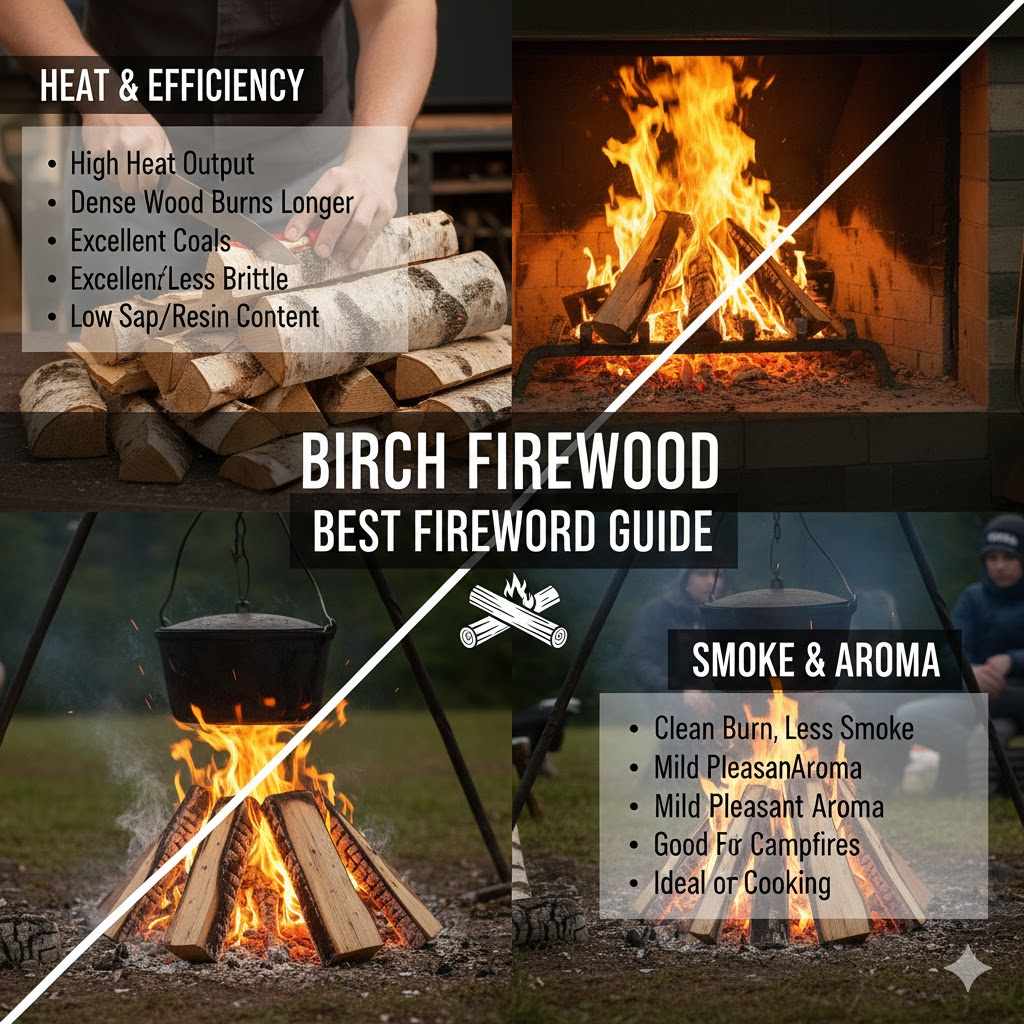
Is Birch Wood Good for Burning Best Firewood Guide
Figuring out what wood burns best can feel a bit tricky when you’re new to fireplaces or wood stoves. People often wonder, Is Birch Wood Good for Burning? Best Firewood Guide.
This question pops up a lot because birch is common, but its burning qualities are a bit different from other woods. Don’t worry though, we’ll make it super simple to know if birch is the right choice for your cozy fire. We will walk you through everything you need to know to get a warm, safe, and pleasant burn.
Understanding Birch Wood for Burning
Birch wood is a popular choice for fireplaces and wood stoves, but its performance can be a mixed bag. It’s known for its quick ignition and bright, lively flame, which is great for starting a fire or for a quick burst of heat. However, it burns faster and hotter than some other hardwoods, meaning you’ll need to add more wood to keep the fire going for a long time.
This is a key point for anyone looking to maintain a steady burn throughout the evening.
The attractiveness of birch wood also plays a role in its popularity. Its clean, bright flames and relatively low smoke output make it a pleasant choice for indoor use. Many people appreciate the aesthetic of a birch fire.
However, understanding its characteristics, like its tendency to burn quickly and its need for proper seasoning, is essential for optimal use.
Birch is a hardwood, but it falls on the lighter side compared to dense woods like oak or hickory. This means it gives off a good amount of heat, but it doesn’t have the long-lasting, smoldering burn of denser hardwoods. Think of it as a firecracker compared to a slow-burning log.
This rapid burn can be an advantage if you need heat quickly, but a disadvantage if you want a fire that lasts for hours with minimal tending.
Types of Birch Wood
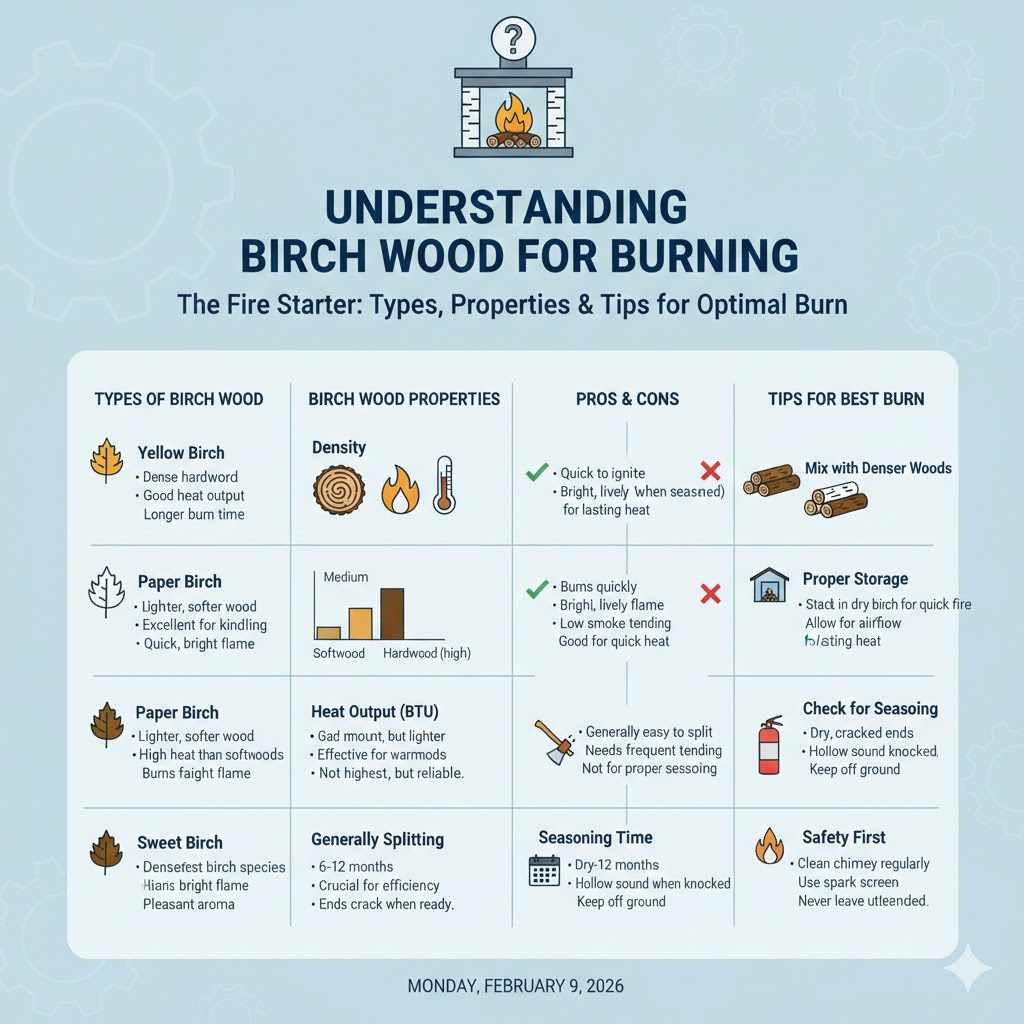
There are several types of birch trees, and their wood can have slight variations in burning characteristics. The most common species in North America are yellow birch, paper birch, and sweet birch. While they share many similarities, subtle differences exist that might influence your choice.
- Yellow Birch (Betula alleghaniensis)
Yellow birch is a dense hardwood that burns well and produces good heat. It’s often considered one of the better burning birches, offering a decent burn time for its type. It ignites easily and produces a bright flame.
Its wood is also attractive and can be used for furniture, but for firewood, it’s a solid choice.
- Paper Birch (Betula papyrifera)
Paper birch, also known as canoe birch, is lighter in color and a bit softer than yellow birch. It burns quickly and is excellent for kindling or starting a fire due to its easy ignition. However, its rapid burn means it’s not ideal for a long-lasting fire.
It produces a bright, cheerful flame and is widely available in many regions.
- Sweet Birch (Betula lenta)
Sweet birch, also called black birch or cherry birch, is the densest of the common birch species. It’s considered one of the best hardwoods for firewood, offering a good balance of heat output and burn time. It burns with a good flame and is a more sustainable option for prolonged fires compared to other birches.
Its aroma when burning is also pleasant.
Birch Wood Properties for Fire
When considering firewood, several properties are important. For birch, these include its density, heat output (BTUs), ease of splitting, and seasoning time. Understanding these will help you know what to expect when burning it.
Density is a key factor in how long a wood will burn and how much heat it produces. Denser woods have more energy packed into the same volume. Birch, being a hardwood, is denser than softwoods like pine or fir, which means it produces more heat and burns longer than softwoods.
However, it’s not as dense as oak or maple, which are known for their extended burn times.
Heat output, often measured in British Thermal Units (BTUs), indicates how much heat a cord of wood will produce. Birch wood generally provides a good amount of heat, making it effective for warming a space. While not the highest BTU producer, it’s certainly a strong contender compared to many other woods.
Ease of splitting is another practical consideration. Birch is generally considered easy to split, especially when seasoned properly. This makes processing firewood a less strenuous task.
The bark also peels off easily, which can be helpful. However, some very dry pieces might be harder to break down. This is a big plus for people who prepare their own firewood.
Seasoning time refers to how long wood needs to dry out to burn efficiently. Unseasoned wood contains a high moisture content, which reduces heat output and increases smoke. Birch typically needs about 6-12 months to season properly, depending on the climate and how it’s stored.
Properly seasoned birch will have cracks at the ends and sound hollow when knocked.
Is Birch Wood Good for Burning Key Factors
The question of whether birch wood is good for burning depends on what you prioritize in your fire. It excels in some areas while being less ideal in others. Knowing these specifics helps you make the best decision for your heating needs.
Birch wood ignites easily and produces a bright, attractive flame. This makes it an excellent choice for getting a fire started quickly. If you need to warm up a room fast or just want to see a cheerful fire quickly, birch is a great option.
Its flame can be mesmerizing to watch, adding to the ambiance.
However, birch burns relatively quickly compared to denser hardwoods like oak or hickory. This means you’ll likely need to add more wood to your fire more often to maintain a consistent heat. If you’re looking for a wood that will smolder for many hours without much attention, birch might not be your top choice.
This is important for overnight burning or when you’re away from the fire for extended periods.
The amount of ash produced is also a consideration. Birch wood produces a moderate amount of ash. This means you’ll need to clean out your fireplace or stove regularly.
While not excessively high, it’s something to keep in mind for routine maintenance. The ash is usually fine and powdery, making it easy to remove.
- Heat Output
Birch wood offers a good heat output. It’s a hardwood and provides a decent amount of warmth. While it may not match the sustained heat of oak, it’s effective for providing a comfortable level of warmth.
A cord of seasoned birch can provide significant BTUs, making it a viable heating option, especially for smaller spaces or shorter periods.
The BTUs per cord for birch are generally in the mid-20 million range, which is respectable. For comparison, oak might be in the 28-30 million BTU range, and pine might be around 15-20 million BTU. This places birch in a good middle ground for heat generation.
Its quick burn means you feel the heat rapidly, which is a plus.
- Burn Time
As mentioned, birch burns relatively fast. This is a trade-off for its quick ignition and bright flames. If you’re having a short evening fire, birch is excellent.
If you’re looking for a fire to last all night, you might need to supplement it with a denser wood or reload frequently.
The shorter burn time is a result of birch’s cellular structure and moisture content when seasoned. It releases its energy more rapidly. This can be a positive if you want a quick warm-up, but requires more tending for continuous heat.
- Smoke Production
Seasoned birch wood produces a moderate amount of smoke. It’s not as smoky as some very dense hardwoods, but it’s also not as clean-burning as a perfectly seasoned piece of maple or oak. Proper seasoning is crucial to minimize smoke.
Unseasoned birch will create a lot of smoke and creosote buildup.
The bark of birch, particularly paper birch, can be quite flammable and burn rapidly. While this helps with ignition, it also means the bark burns away quickly. This can lead to a higher proportion of smoke if the wood is not fully seasoned or if you’re burning bark alone.
Seasoning Birch Wood Correctly
Properly seasoning firewood is the most critical step to ensure a good burn. For birch, this means letting it dry for at least six months to a year. You want the moisture content to be below 20%.
Unseasoned wood is inefficient, produces a lot of smoke, and can lead to creosote buildup in your chimney, which is a fire hazard.
To season birch, stack the logs off the ground to allow air circulation. Keep the stack in a sunny, windy location. Covering the top of the stack with a tarp will protect it from rain, but leave the sides open for airflow.
You can test if wood is seasoned by checking for cracks on the ends of the logs and by its weight; seasoned wood is lighter than green wood. It should also make a hollow, ringing sound when two pieces are banged together.
Here are the signs of well-seasoned birch:
- Cracks or checks on the ends of the logs.
- A lighter weight compared to unseasoned wood of the same size.
- A hollow, ringing sound when two pieces are struck together.
- Peeling bark that easily separates from the wood.
These indicators help ensure you are burning efficient fuel. Burning green wood is like trying to cook with a wet sponge; it doesn’t work well and creates problems.
Real-Life Scenario: The Speedy Start
Imagine it’s a chilly evening, and you’ve just gotten home. You want to get the fi
After about an hour, you notice the birch logs have burned down significantly. You decide to add a denser hardwood, like oak, to the fire. The oak logs catch fire from the embers of the birch, and now you have a longer-lasting, steady burn that will keep the room warm for the rest of the evening.
This combination approach leverages the strengths of both wood types.
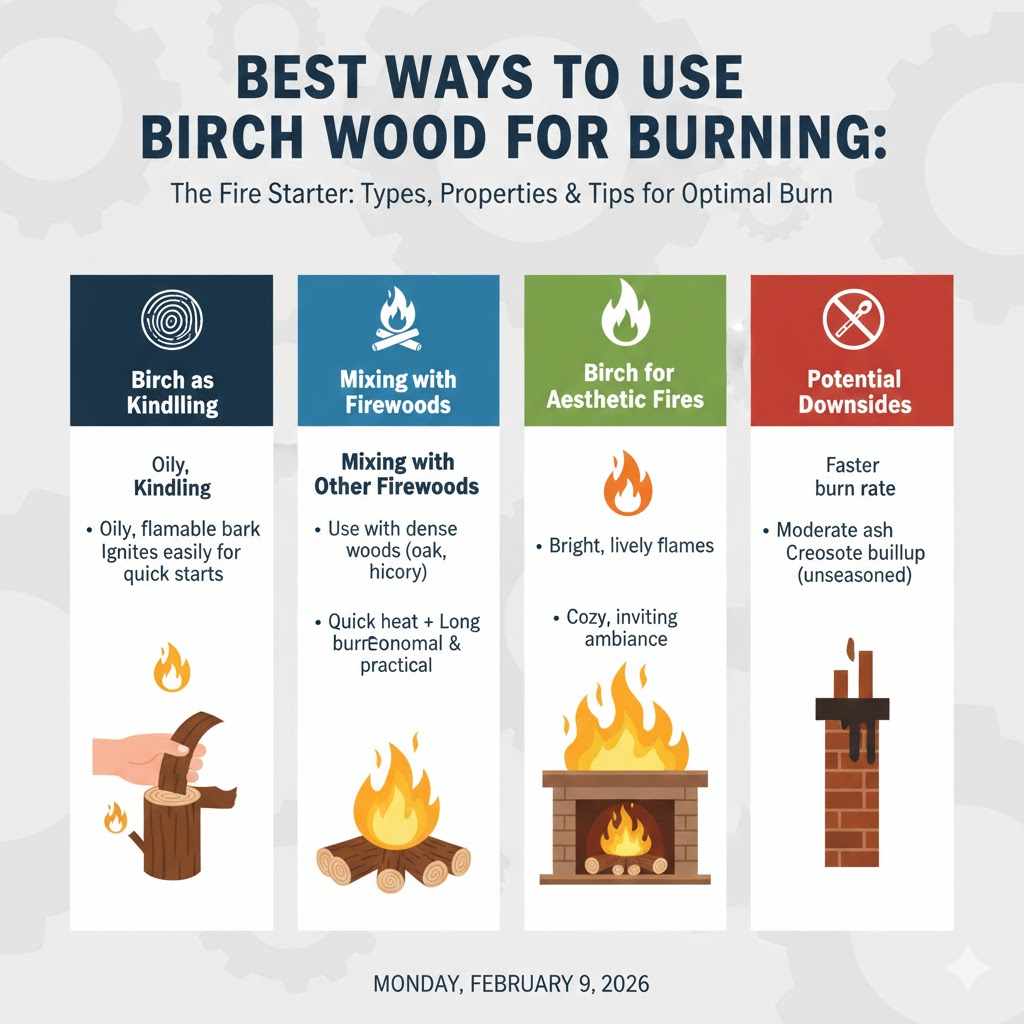
Best Ways to Use Birch Wood for Burning
Knowing how to best utilize birch wood can significantly enhance your fire experience. It’s not just about tossing logs into the fire; it’s about understanding its strengths and weaknesses.
Birch is excellent as a starter wood. Its quick ignition makes it perfect for getting your fire going. You can use smaller pieces of birch, often referred to as kindling, to build up a strong ember bed.
Once you have a good base of coals, you can then add larger, slower-burning logs.
Another great use for birch is for shorter, more casual fires. If you’re just looking for some ambiance for an hour or two, or a quick burst of heat, birch is ideal. It burns hot and bright, providing a lively flame that’s perfect for these occasions.
- Birch as Kindling
The bark of birch is naturally oily and flammable. This makes it incredibly effective as kindling. Thin strips of birch bark can be lit with a single match and will burn hot enough to ignite larger pieces of wood.
This is a natural advantage that many other woods don’t offer as readily. Even the wood itself, when split into small pieces, acts as excellent kindling.
When using birch bark as kindling, ensure it is dry. While it has natural oils, moisture will still hinder its ability to ignite. You can collect dry bark from fallen trees or from your seasoned birch wood pile.
Be careful not to damage living trees when collecting bark.
- Mixing Birch with Other Firewoods
A common and effective strategy is to mix birch with denser hardwoods like oak, maple, or hickory. Start your fire with birch for quick ignition and heat. Once the fire is established, add your denser woods.
This combination provides the best of both worlds: the quick warmth and bright flame of birch, and the long-lasting, steady burn of denser hardwoods.
This approach is economical and practical. You can use up your birch wood for starting fires or for shorter burns, and rely on your denser woods for sustained heat. It also helps manage your firewood inventory more effectively.
Many experienced wood burners swear by this combination method.
- Birch for Aesthetic Fires
The bright, lively flames produced by birch wood make it a visually appealing choice for fires. If you’re looking to create a cozy and inviting atmosphere, birch contributes significantly to the visual enjoyment of a fire. Its flames are often described as cheerful and energetic, adding a dynamic element to your hearth.
When guests are over or during special occasions, a fire primarily made of birch can be a delightful centerpiece. It’s less about the long-lasting heat and more about the sensory experience. The crackling sounds and bright light create a memorable ambiance.
Case Study: The Cabin Retreat
A small cabin owner, located in a region with abundant birch trees, relies heavily on birch for their winter heating. They learned that by collecting and seasoning birch wood properly, they could achieve a decent level of warmth. The strategy involves using birch bark and small birch splits for kindling to get a fire going quickly after returning from a day out in the cold.
Once the main fire is established, they supplement it with larger, well-seasoned birch logs. While they do need to reload the fire more frequently than if they were using oak, the quick heat and availability of birch make it a practical solution for their needs. They also find that the wood splits easily, which saves them time and effort during firewood preparation.
Birch Wood vs. Other Firewoods
Comparing birch to other common firewood types highlights its unique position in the world of burning wood. Understanding these differences helps you choose the best wood for your specific needs.
Compared to softwoods like pine or fir, birch burns hotter and longer. Softwoods ignite very easily and burn quickly with lots of sparks. They are excellent for kindling but provide less sustained heat and can cause more creosote buildup due to their resinous nature.
Birch is a hardwood, offering a more substantial burn.
Compared to denser hardwoods like oak or hickory, birch burns faster and produces less sustained heat. Oak and hickory are known for their long burn times and high heat output. They are often considered the gold standard for firewood, but they can be harder to ignite and may require more effort to split.
Birch offers a quicker start and brighter flame.
Sweet gum is another wood that is often debated as firewood. It can be a decent burner when well-seasoned, but it often has a higher moisture content and can be more difficult to split than birch. Some users report a slightly unpleasant odor when burning sweet gum, which is generally not an issue with birch.
| Firewood Type | Ignition Ease | Heat Output | Burn Time | Smoke Production | Ash Content |
|---|---|---|---|---|---|
| Birch | Very Easy | Good | Medium-Fast | Medium | Medium |
| Oak | Medium | Very High | Very Long | Low | Low |
| Pine | Very Easy | Medium-Low | Fast | High | Medium |
| Maple | Easy | High | Long | Low-Medium | Medium |
This table provides a quick comparison of how birch stacks up. As you can see, birch offers a good balance, making it versatile. It’s not the absolute best in any single category, but it performs well across the board, especially for its ease of use.
Sample Scenario: The Camping Trip Fire
You’re on a camping trip and need to get a campfire going for cooking and warmth. You have a mix of wood with you. You find some dry birch pieces.
These ignite very quickly, and you can soon have a decent flame going. You use some of this birch to get a bed of coals. Then, you add some denser, slower-burning logs you brought to ensure the fire lasts throughout the evening without constant tending.
The birch was perfect for the initial stage, providing that rapid heat and flame needed to get the main fuel burning effectively.
Potential Downsides of Burning Birch Wood
While birch wood has many advantages, it’s important to be aware of its potential drawbacks. Understanding these helps manage expectations and ensures you use the wood safely and effectively.
The most significant downside is its shorter burn time. If you are used to the long, smoldering burn of denser hardwoods, you might find yourself constantly feeding the fire. This means you’ll go through your birch supply faster, which can be less economical if you’re not supplementing it with other woods.
Another consideration is the potential for creosote buildup. While not as prone to creosote as very resinous softwoods, birch can still contribute to it if burned unseasoned or if the fire is smoldering too much. Regular chimney cleaning is always recommended, regardless of the wood type.
- Faster Burn Rate
As already discussed, birch burns quickly. This is a direct consequence of its wood structure and density. For some, this is a benefit for quick heat, but for sustained warmth, it requires more frequent reloading.
This can be a drawback if you prefer a “set it and forget it” type of fire.
Imagine wanting to keep your home warm through a cold night without getting out of bed to add wood. Birch alone wouldn’t be the best choice for this. You would wake up to cold ashes long before morning.
This is why mixing it with other woods is often recommended.
- Ash Production
Birch wood produces a moderate amount of ash. While not excessively high, it’s more than some other hardwoods. This means you’ll need to ash out your stove or fireplace more frequently.
Leaving too much ash can impede airflow and reduce the efficiency of your fire.
A common guideline is to remove ash when it builds up to about an inch deep in a wood stove. In a fireplace, you might want to remove it more often to ensure good airflow to the logs. This is a small maintenance task, but it’s part of burning any wood.
- Potential for Creosote
Burning unseasoned or damp wood of any kind will lead to creosote. Birch is no exception. The moisture in the wood doesn’t burn off completely, and the resulting gases combine with soot to form creosote, a tar-like substance that coats the inside of your chimney.
If enough creosote builds up, it can ignite, causing a dangerous chimney fire.
To mitigate this, always burn well-seasoned birch. Ensure your fire is burning hot enough to achieve complete combustion. If you notice black, tarry deposits in your chimney, it’s a sign that you need to clean it.
Regular chimney inspections and sweeping are essential safety practices.
Statistical Insight: Seasoning Matters
Studies show that burning firewood with a moisture content above 20% can increase creosote buildup by as much as 300% compared to seasoned wood. This highlights the critical importance of proper seasoning for all firewood types, including birch. Failing to season your wood properly not only reduces the heat output and increases smoke but also significantly raises the risk of a chimney fire.
Frequently Asked Questions
Question: Is birch wood safe to burn in a fireplace?
Answer: Yes, seasoned birch wood is safe to burn in a fireplace. It ignites easily and produces bright flames. Always ensure the wood is properly seasoned and that your chimney is clean to prevent fire hazards.
Question: How long does a seasoned birch log typically burn?
Answer: A seasoned birch log will typically burn for about 45 minutes to 1.5 hours, depending on its size, the fire’s intensity, and how it’s seasoned. It burns faster than denser hardwoods.
Question: Can I use birch bark as kindling?
Answer: Absolutely. Birch bark is excellent kindling due to its natural oils and flammability. It ignites easily and burns hot, making it perfect for starting fires.
Question: Does birch wood produce a lot of smoke?
Answer: Seasoned birch wood produces a moderate amount of smoke. It is not excessively smoky, but unseasoned birch will create significantly more smoke. Proper seasoning is key to minimizing smoke.
Question: Is birch wood good for overnight burning?
Answer: Birch wood is generally not the best choice for overnight burning because it burns too quickly. For sustained heat throughout the night, denser hardwoods like oak or hickory are more suitable.
Conclusion
Birch wood is a versatile and accessible firewood option that offers quick ignition and bright, lively flames. It excels as kindling and for shorter, aesthetic fires. For sustained warmth, mixing it with denser hardwoods is highly recommended.
Always prioritize properly seasoned birch to maximize heat and minimize smoke and creosote for a safe, enjoyable fire.