Is Wood Ash Good For Blueberries? Essential Guide
While wood ash can benefit blueberries by raising soil pH, it must be used sparingly and correctly. Uncontrolled application can harm your plants. Always test your soil and use ash from untreated wood only, applying it lightly in the fall or early spring. This guide will show you how.
Is Wood Ash Good For Blueberries?
As a DIY enthusiast and woodworking mentor, I know how tempting it is to find uses for common materials around your home––after all, sustainability and resourcefulness are key! Many of you have asked if the ash from your fireplace or wood stove can be a helpful addition to your blueberry patch. It’s a great question because blueberries are a bit finicky, and we all want to give them the best care possible for juicy, abundant harvests. If you’ve ever wondered about this, you’re in the right place. We’ll break down exactly how and when wood ash can help, and just as importantly, when it can hurt your precious plants. Let’s dig in and learn how to make sure your blueberry bushes thrive!
Understanding Blueberry Soil Needs
Blueberries are unique. Unlike many garden plants that prefer neutral or slightly alkaline soil, blueberries are acid-lovers. They thrive in soil with a pH between 4.5 and 5.5. This acidic environment is crucial for them to absorb the nutrients they need to grow strong and produce lots of delicious berries. When the soil pH is too high (alkaline), blueberries can struggle to take up essential elements like iron, leading to stunted growth and yellowing leaves (a condition called chlorosis).
This specialized need for acidic soil is why gardeners often use amendments like sulfur or peat moss to lower the pH. So, when we consider adding something like wood ash, which is known to be alkaline, it’s natural to pause and ask, “Is this a good idea?” The answer, like many things in gardening, is: it depends.
What is Wood Ash?
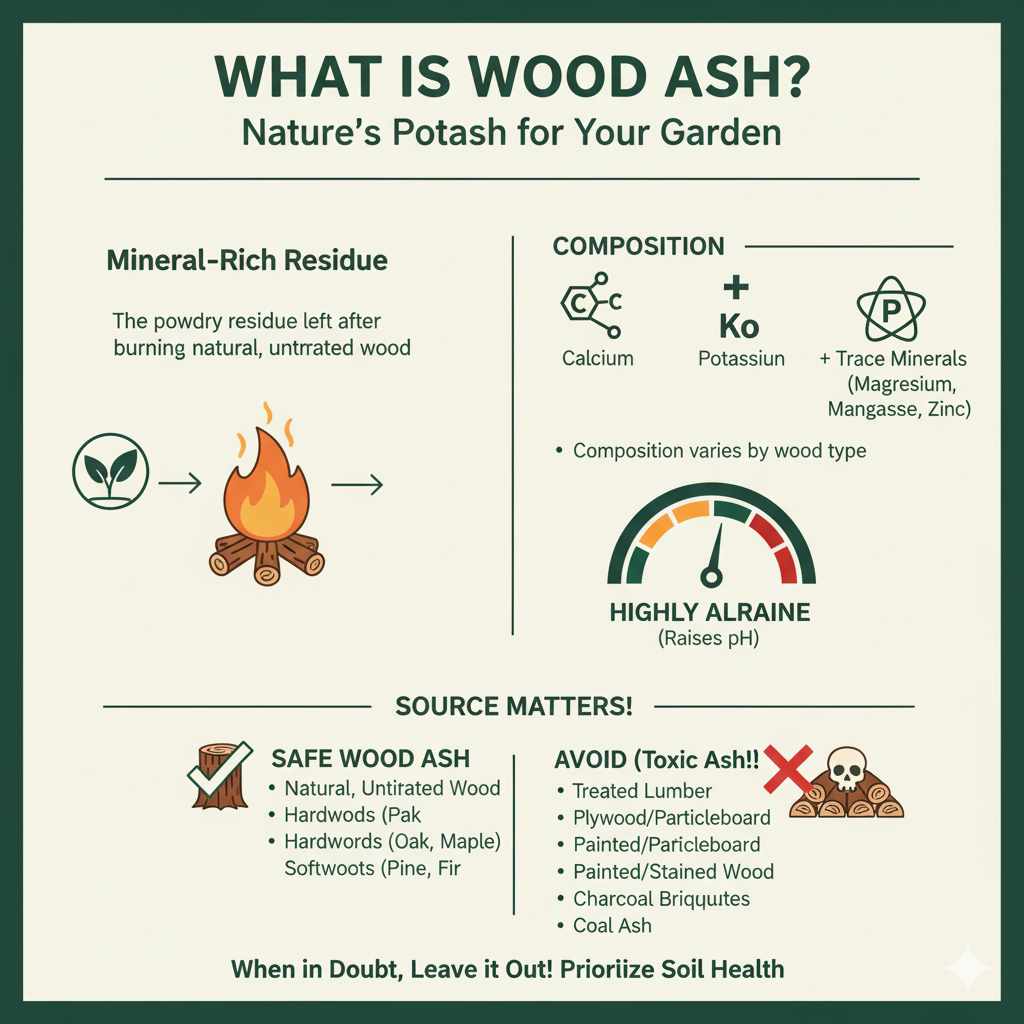
Wood ash is the powdery residue left behind after burning wood. When wood burns, its organic compounds are converted into minerals and inorganic compounds. These minerals are what give wood ash its potential value in the garden. The exact composition of wood ash can vary depending on the type of wood burned (hardwood versus softwood, treated versus untreated), how completely it was burned, and even where the tree grew. However, generally, wood ash is rich in nutrients like calcium, phosphorus, and potassium. It also contains smaller amounts of magnesium, manganese, and zinc. Crucially, it is also highly alkaline, primarily due to the presence of calcium carbonate.
For those of us who work with wood, understanding the source of the ash is important. Ash from untreated, natural wood is what we’ll focus on. Ash from treated lumber, painted wood, or particleboard can contain harmful chemicals that you absolutely do not want in your garden soil.
The Pros of Using Wood Ash for Blueberries
While being alkaline, wood ash does offer some potential benefits for blueberry plants, but these benefits are most effectively realized when the soil is already too acidic for the blueberries. If your soil is already in the ideal range or is too alkaline, wood ash will likely do more harm than good.
- Raises Soil pH: As mentioned, blueberries need acidic soil. Often, homeowners have soil that is too acidic, and wood ash is a simple, natural liming agent that can raise the pH. If a soil test reveals your soil pH is below 4.5, a small amount of wood ash can bring it up into the desired range. This is its primary benefit.
- Provides Nutrients: Wood ash contains essential nutrients that plants need, such as potassium (K) and phosphorus (P). These are vital for flower and fruit production. It also provides calcium, which is important for cell wall development in plants.
- Improves Soil Structure: Small amounts of ash can sometimes help improve soil aeration and drainage. The fine particles can bind together in clay soils, helping to break them up.
It’s important to reiterate that the benefit of raising pH is only a benefit if your soil is too acidic. For most gardening situations, especially with acid-loving plants like blueberries, this is the most significant consideration.
The Cons and Risks of Using Wood Ash for Blueberries
This is where we need to be extra cautious. While wood ash has benefits, the risks, particularly for blueberries, are substantial if not managed properly.
- Raises Soil pH Too High: This is the biggest risk for blueberries. If your soil pH is already in the acceptable range (4.5-5.5) or is too alkaline, adding wood ash will raise the pH even further. This makes it very difficult for blueberries to absorb nutrients, leading to nutrient deficiencies.
- Can Burn Plants: Applying wood ash too heavily or too close to the base of a plant can burn the roots or foliage due to its high salt content and alkaline nature.
- Introduction of Weeds or Diseases: If the wood burned was not completely combusted, or if it contained seeds from weeds, you might be introducing unwanted plants into your garden. Ash from diseased wood could potentially spread pathogens.
- Heavy Metal Contamination: If you burn treated wood, painted wood, or composite materials (like particleboard or pressed wood), the ash can contain toxic substances like arsenic, lead, or chromium, which are harmful to both plants and humans.
- Alters Soil Structure Negatively: While small amounts can improve structure, larger applications, especially in certain soil types, can lead to compaction or create a crusty layer on the soil surface, hindering water and air penetration.
Given that blueberries are so specific about their soil pH, overriding their needs with an alkaline amendment is something to approach with extreme care. It’s like trying to give a glass of water to someone who’s already very hydrated – it’s not going to help and could potentially cause issues.
When is Wood Ash Safe (or Beneficial) for Blueberries?
The key to safely using wood ash around blueberries lies in understanding your soil and the ash itself. Here’s when it might be a good idea:
- Soil Test is Essential: The absolute first step is to get your soil tested. You can buy DIY soil testing kits or send a sample to your local cooperative extension office (often a .gov resource). A test will tell you your soil’s pH and nutrient levels.
- Only if Soil is Too Acidic: If your soil test shows a pH significantly below 4.5, then a light application of wood ash might be beneficial to bring the pH up.
- Use Ash from Untreated Hardwood: Always use ash from plain, natural hardwood (like oak, maple, or ash trees). Avoid softwoods (like pine or fir) as they can decompose faster, release more resins, and may not be as beneficial or consistent in their mineral content. Never use ash from treated, painted, or composite wood products.
- Apply in Fall or Early Spring: Applying ash in the fall allows it time to break down and integrate into the soil before the growing season starts. Early spring is also an option, but it needs to be done well before significant growth begins.
- Apply Lightly and Evenly: This cannot be stressed enough. A little goes a very long way.
Think of it as a carefully measured pinch of salt rather than dumping the whole shaker. The goal is a subtle adjustment, not a drastic change.
How to Apply Wood Ash to Blueberry Bushes (Safely and Effectively)
If your soil test indicates that your soil is too acidic for blueberries (pH below 4.5) and you’ve confirmed you have ash from untreated hardwood, here’s how to apply it cautiously:
Step-by-Step Guide:
- Wait for the Right Time: The best times are in the fall after the leaves have dropped or in the very early spring, before new growth appears. Avoid applying it when the soil is very wet or frozen, as this can cause clumping and uneven distribution.
- Ensure Ash is Fully Cooled: Make sure the ash is completely cold and doesn’t contain any hot embers.
- Sift the Ash: It’s a good idea to sift the wood ash through a screen (a fine mesh sieve or screen, similar to what you might use for sifting flour or for woodworking dust collection) to remove any larger chunks of unburned wood or debris. This will help ensure a more even application.
- Light, Even Spread: This is the most critical step. Scatter a very thin layer of the sifted ash around the base of the blueberry bush, extending out to the drip line (the edge of the canopy where the branches end). Do NOT pile it up around the trunk. A guideline often cited is no more than 1 pound of ash per 100 square feet, which translates to roughly a light dusting. For an individual bush, this might be just a couple of tablespoons to a quarter cup of ash, depending on its size.
- Avoid Direct Contact: Try not to let the ash come into direct contact with the leaves or stems of the plant. A light scattering on the soil surface is best.
- Lightly Incorporate (Optional): Some gardeners choose to lightly scratch the ash into the top inch of soil with a garden fork or hand trowel. This helps it start to break down and integrate, but be careful not to disturb the shallow blueberry roots. Alternatively, you can let rain and natural soil activity work it in.
- Water Lightly: After application, a light watering can help settle the ash into the soil and begin the process of pH adjustment.
- Monitor Your Plants: After applying ash, keep a close eye on your blueberry bushes. Look for any signs of stress, such as wilting, leaf burn, or unusual discoloration. If you notice any negative changes, stop using ash immediately and consider adding acidic mulch like pine needles or peat moss.
- Re-test Soil: Six months to a year after application, re-test your soil pH to see if the adjustment was effective and if further application is needed (which is unlikely if done correctly).
It’s far better to err on the side of caution and use too little ash than too much. You can always add a tiny bit more later if subsequent soil tests indicate it’s necessary and safe.
Alternatives to Wood Ash for Amending Blueberry Soil
Given the potential risks and specific needs of blueberries, many gardeners prefer to use more conventional methods to manage their soil pH. Here are some reliable alternatives:
- Elemental Sulfur: This is the most common and effective way to lower soil pH for acid-loving plants. It works slowly as soil microbes convert it to sulfuric acid. Apply according to soil test recommendations, typically in the fall.
- Peat Moss: Incorporating peat moss into the soil can help lower pH and improve soil structure and moisture retention. Ensure you use sphagnum peat moss, which is more acidic.
- Pine Needles or Pine Bark Mulch: These natural materials are acidic and break down slowly, helping to maintain an acidic soil environment over time. They also help retain moisture and suppress weeds.
- Commercial Acidifying Fertilizers: Fertilizers formulated for acid-loving plants often contain sulfur or ammonium sulfate, which help lower pH.
- Compost (Caution): While compost is excellent for most plants, its pH can vary. Some composts can be neutral or even alkaline. If you use compost, ensure it’s specifically made for acid-loving plants or that your soil test confirms it won’t raise the pH too high.
For consistent and predictable results, especially for beginners, these alternatives are generally recommended over wood ash for amending blueberry soil pH.
What is the Ideal Soil pH for Blueberries?
As we’ve emphasized, blueberries are unique in their pH preference. The ideal soil pH range for blueberries is quite narrow: 4.5 to 5.5.
Within this range, they can most effectively absorb the nutrients they need for healthy growth and abundant fruiting. If the pH strays too far outside this range, several problems can arise:
- pH too low (too acidic, below 4.5): While blueberries like acid, extremely low pH can sometimes inhibit nutrient uptake, though this is less common than the problem of high pH.
- pH too high (too alkaline, above 5.5): This is the most frequent issue. When soil is not acidic enough, blueberries suffer from iron and manganese deficiencies. This leads to yellowing leaves (chlorosis), stunted growth, poor flowering, and reduced fruit production.
Therefore, maintaining this specific pH level is a cornerstone of successful blueberry cultivation. Soil testing is the only reliable way to know your current pH and determine if any amendments are needed.
Comparing Wood Ash to Other Garden Amendments
It’s helpful to compare wood ash to other common garden amendments to understand its place (or lack thereof) in a blueberry garden.
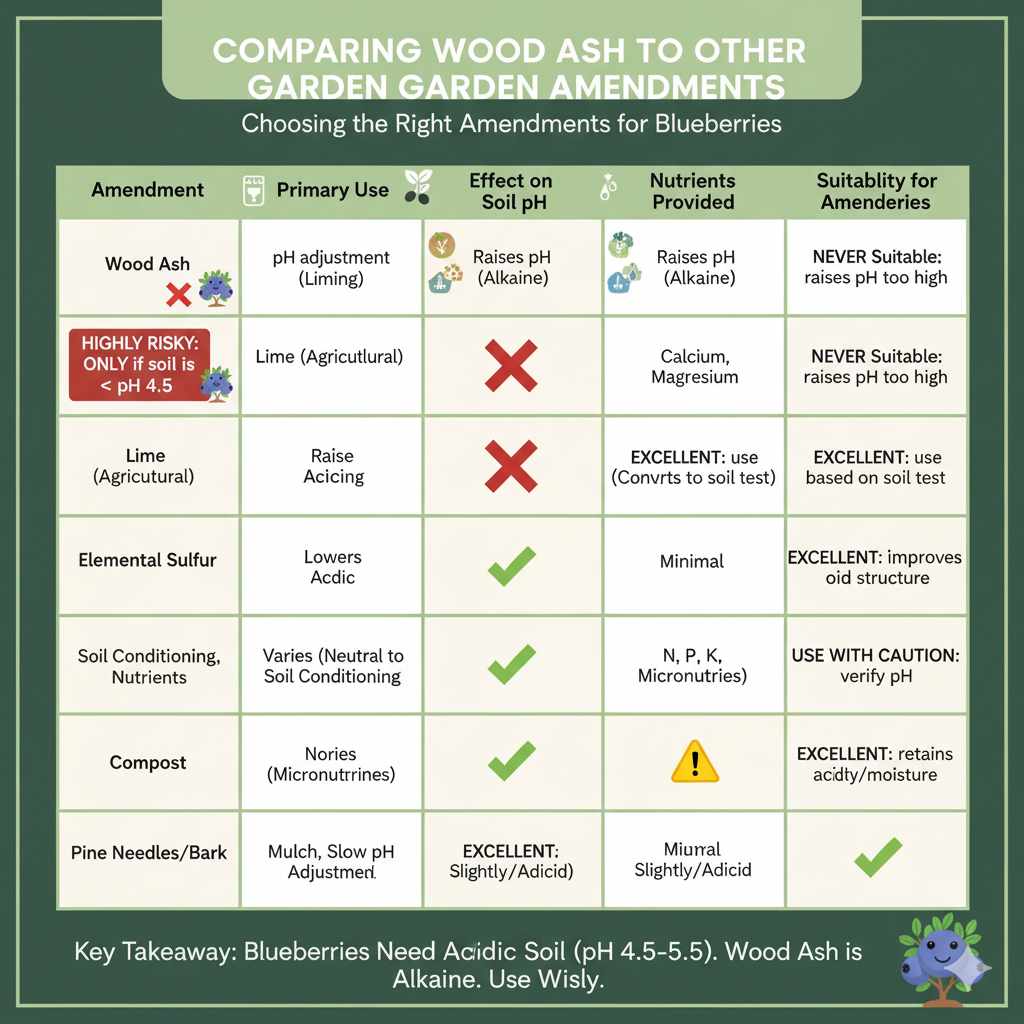
| Amendment | Primary Use | Effect on Soil pH | Nutrients Provided | Suitability for Blueberries |
|---|---|---|---|---|
| Wood Ash | pH adjustment (liming), nutrient source | Raises pH (alkaline) | Potassium, Calcium, Phosphorus | Beneficial ONLY if soil is too acidic (pH < 4.5); HIGHLY RISKY otherwise. |
| Lime (Agricultural) | pH adjustment (liming) | Raises pH (alkaline) | Calcium, Magnesium | NEVER suitable for blueberries; will raise pH too high. |
| Elemental Sulfur | pH adjustment (acidifying) | Lowers pH (acidic) | None (converts to sulfate) | EXCELLENT for blueberries; use based on soil test. |
| Peat Moss | pH adjustment, soil conditioning, moisture retention | Lowers pH (acidic) | Minimal | EXCELLENT for blueberries; improves soil structure. |
| Compost | Soil conditioning, organic matter, nutrients | Varies (often neutral to slightly acidic/alkaline) | Nitrogen, Phosphorus, Potassium, micronutrients | USE WITH CAUTION for blueberries; ensure pH is appropriate. |
| Pine Needles/Bark | Mulch, slow pH adjustment | Lowers pH slightly (acidic) | Minimal | EXCELLENT for blueberries; helps retain acidity and moisture. |
As you can see from the table, wood ash’s primary characteristic—raising pH—directly conflicts with the core requirement for blueberries, which need acidic soil. This makes it a less suitable amendment compared to sulfur, peat moss, or pine-based materials unless specific, tested conditions (namely, overly acidic soil) are met.
Frequently Asked Questions About Wood Ash and Blueberries
Q1: Can I just throw wood ash around my blueberry bushes?
A1: No, absolutely not. Throwing ash around without knowing your soil pH or without an even application can cause serious harm by making the soil too alkaline and potentially burning the plants.
Q2: My soil test says my soil is alkaline. Can I use wood ash to help?
A2: Definitely not. If your soil is alkaline, you need to lower the pH. Wood ash will only make it more alkaline, which is detrimental to blueberries. Use elemental sulfur or peat moss instead.
Q3: What kind of wood should I burn if I want to use the ash?
A3: For garden use in general (and with extreme caution for blueberries), only use ash from completely natural, untreated hardwood. Never use ash from particleboard, pressure-treated wood, painted wood, or processed wood products.
Q4: How much wood ash can I use?
A4: For blueberries, if you absolutely must use it because your soil is too acidic (<4.5 pH), use it very sparingly. Imagine a light dusting. A common guideline for general liming is 1-2 pounds per 100 square feet per year, but for blueberries, you’d use significantly less, and only if testing confirms it’s needed.
Q5: My blueberry leaves are turning yellow. Is it because of wood ash?
A5: Yellowing leaves on blueberries (chlorosis) are usually a sign of iron deficiency, which is often caused by the soil pH being too high (not acidic enough). If you have been applying wood ash, high pH is a very likely culprit. Stop applying ash and consider using an iron supplement or a product to lower soil pH.
Q6: When should I apply wood ash if I decide to try it?
A6: If your soil test indicates a need and you’re proceeding with extreme caution, apply a light dusting in the fall after leaf drop or in the very early spring before new growth emerges. This gives it time to integrate into the soil.
Q7: Is it safer to just use my fireplace ash for something else?
A7: For blueberry plants, it is generally much safer and more effective to use alternatives like elemental sulfur, peat moss, or pine needle mulch to manage soil pH.