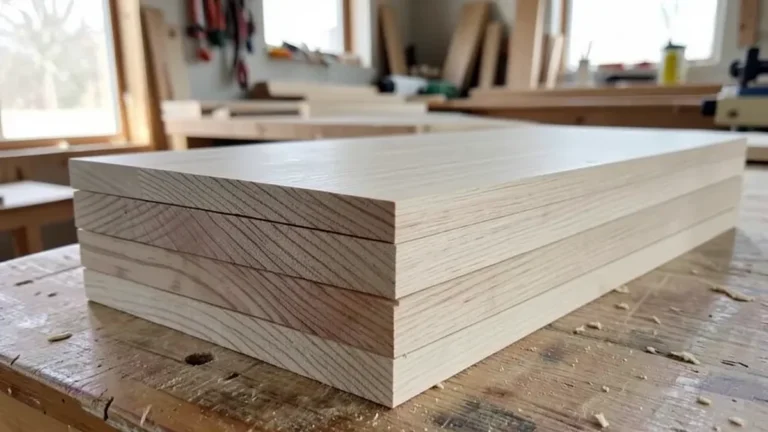
Ash Wood at Menards: What They Actually Stock in 2026
Short answer: no, Menards does not carry ash as a regular stocked hardwood lumber species in 2026. Checking Menards.com’s own hardwood-lumber category and species filter turns up Acacia, Alder, Aspen, Black Walnut, Cherry, Hickory, Mahogany, Maple, Poplar, Red Oak, Walnut, and White Oak – but no Ash.
If you’ve walked a Menards lumber aisle or searched their site looking for ash boards and come up empty, you haven’t missed anything. It isn’t a stocking gap at your specific store; ash simply isn’t part of the chain’s regular hardwood lineup right now. Below is exactly what Menards does stock, why ash has fallen off the list at big-box retailers generally, and where to actually find real ash lumber if your project calls for it.
Does Menards Sell Ash Wood? Here’s What’s Actually on the Shelf
Best Topcoat for Ash You Source Elsewhere
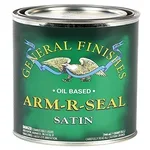 |
General Finishes Arm-R-Seal Oil-Based Topcoat, Satin, 1 Quart – $45.00 Since Menards won’t be where you buy the ash itself, this is what protects it once you’ve sourced boards from a sawmill, specialty yard, or another retailer – a wipe-on oil topcoat built for open-grain hardwoods like ash.
|
That species list isn’t a one-off snapshot either – it reflects Menards’ regular hardwood-boards and Mastercraft-brand dimensional lumber program as sold through their own site, and it’s been consistent across the hardwood-lumber category pages checked for this guide. Individual stores occasionally carry regional overstock or clearance items that never show up online, so it’s still worth a quick call to your local store before assuming it’s a dead end. But as a standing, ship-to-store, order-online option, ash is not one of Menards’ current hardwood species.
Why Ash Isn’t Part of Menards’ Regular Hardwood Lineup
It isn’t that Menards overlooked ash. Big-box retailers build their hardwood programs around species a national distributor can supply in consistent volume, grade, and price, year-round, across hundreds of stores. Oak, maple, poplar, walnut, and cherry all fit that model – mills and distributors can guarantee steady supply. Ash increasingly can’t. A retailer that commits shelf space to a species also commits to a supply contract, and right now no major hardwood distributor is positioned to promise Menards a steady, evenly-priced stream of ash the way they can with those other species.
That’s a genuinely different situation from Lowe’s and Home Depot, which do list ash – but only in small trim-size appearance boards through a third-party millwork brand (Ornamental Mouldings), not as bulk dimensional lumber. Menards hasn’t picked up even that smaller specialty line. For a deeper look at how inconsistent that specialty-board availability actually is store to store, see our guide to ash boards at Lowe’s.
The Real Reason Ash Lumber Is Getting Harder to Find Anywhere
The bigger story behind Menards’ shelf isn’t a Menards-specific decision at all – it’s the emerald ash borer. Since the beetle reached the Detroit area in 2002, it has killed hundreds of millions of ash trees across North America, and healthy standing ash has become genuinely scarce in large parts of its former range, including much of the Midwest where Menards is headquartered and most heavily concentrated. In the years right after an infestation moves through a region, salvage logging from dead and dying trees can briefly flood local markets with cheap ash, which is part of why some woodworkers remember ash being easy and inexpensive to find not that long ago. That salvage wave passes, though, and what’s left behind is a shrinking population of mature, harvestable trees. Current 2026 pricing for kiln-dried ash runs roughly $4 to $8 per board foot at the lumberyards that still carry it, noticeably higher than a decade ago and higher than stable species like poplar or red oak.
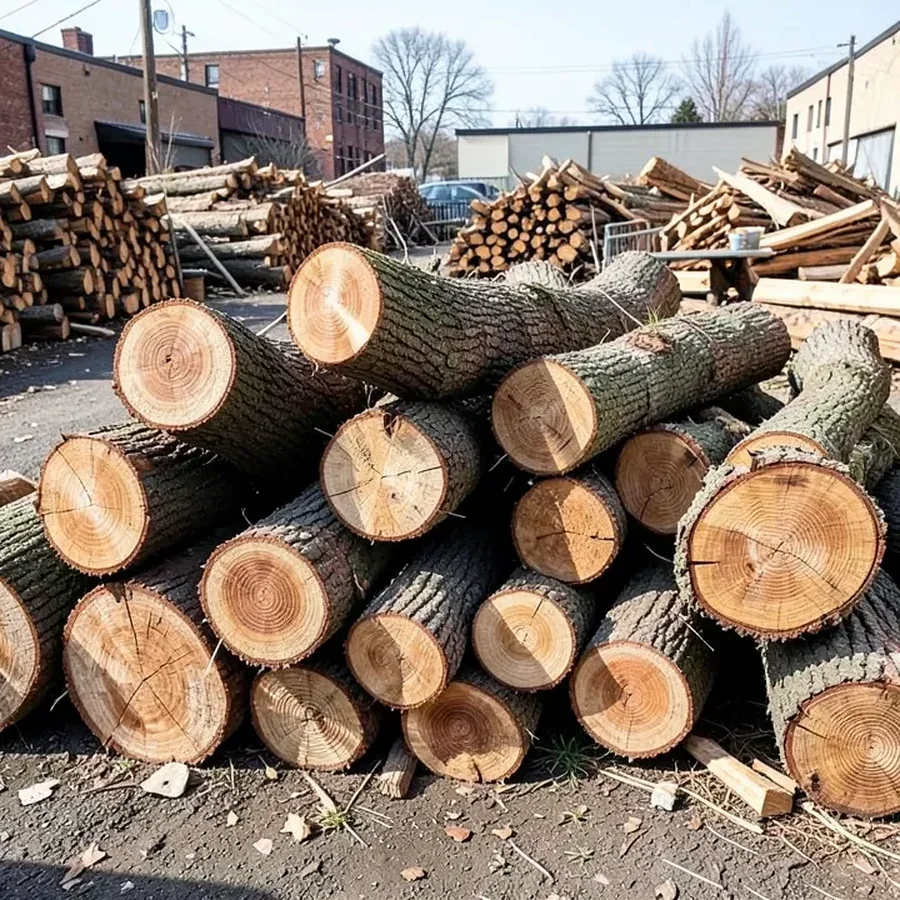
That supply picture is also why so much of the ash reaching the market right now is coming out of urban and municipal tree removal rather than managed timber stands – cities and utility companies across the Midwest have been taking down dead and dying street ash by the thousands, and a fair amount of that wood ends up at small sawmills instead of the landfill. It’s a real, current source worth knowing about if you’re near a Menards store in ash’s historical range.
Where to Actually Buy Ash Lumber If Menards Doesn’t Have It
A few real options, roughly in order of what’s easiest for most people to use:
- Local specialty hardwood yards and sawmills. This is the strongest option in Menards’ own Midwest footprint precisely because of the urban-salvage situation above – a regional sawmill or hardwood specialist is far more likely to have kiln-dried ash on hand than a national big-box chain, and often at a better price per board foot.
- Online hardwood suppliers that ship dimensional lumber, such as Bell Forest Products, Woodworkers Source, or Hearne Hardwoods. Expect to pay for freight on anything beyond a few boards, but this is a reliable way to get graded ash when nothing local pans out.
- Lowe’s or Home Depot, for small trim-size pieces only. Their Ornamental Mouldings ash line covers boards up to about 8 feet long and a handful of standard widths – fine for a small accent piece or a cutting board, not enough for furniture-scale projects.
- Local classifieds and urban-salvage networks. With so much ash coming down to EAB removals, it’s increasingly common to find rough-sawn or even kiln-dried ash listed locally by small operators working through municipal takedowns.
What to Buy at Menards Instead If You Need an Ash-Like Hardwood
If your project needs to happen this weekend and a special order isn’t practical, hickory is the closest match Menards actually stocks. It’s harder and heavier than ash, but shares a similar light color, comparable strength for tool handles and structural small parts, and Menards carries it as a regular species. White oak is the other reasonable substitute if you’re after something in ash’s paler color family for furniture or flooring-adjacent work; it’s more moisture-resistant than ash and widely available, though the grain pattern reads differently once finished. For a closer look at how it compares once it’s on a floor, see our white oak flooring photo guide. Neither is a perfect stand-in – ash has a workability and shock-resistance combination that’s genuinely hard to duplicate, which is part of what makes losing easy access to it frustrating – but both will get a Menards-only trip finished without waiting on a special order.
Finishing Ash Once You Have It
Wherever you end up sourcing your ash, it’s worth knowing what it does once you start working it. Ash has an open, straight grain that takes stain and clear finishes well, but that same open grain means it can look uneven with a thin or rushed finish – it benefits from a wipe-on oil or an initial sanding sealer coat before a topcoat, rather than a single heavy coat straight from the can. Our full walkthrough on how to finish ash wood covers surface prep and stain choices in more depth if you’re planning a furniture or cabinetry project rather than something structural.
Frequently Asked Questions
Does Menards sell ash wood boards?
Not as a regular stocked species. Checking Menards’ own hardwood-lumber and boards category as of September 2026 shows Acacia, Alder, Aspen, Black Walnut, Cherry, Hickory, Mahogany, Maple, Poplar, Red Oak, Walnut, and White Oak, but no ash. Individual stores can occasionally carry regional overstock that isn’t listed online, so a quick call to your local store is worth it, but there’s no standing online or ship-to-store ash option.
Why doesn’t Menards carry ash lumber?
Big-box hardwood programs depend on distributors who can guarantee steady volume and pricing across hundreds of stores. The emerald ash borer has made that kind of consistent supply difficult for ash specifically, even though the beetle’s damage is heaviest in the Midwest where Menards operates. That makes ash a much harder species for a national chain to commit shelf space to compared with steadier options like oak, maple, or poplar.
Where can you buy real ash lumber if Menards doesn’t have it?
Local specialty hardwood yards and sawmills are the strongest option, especially in the Midwest, where emerald ash borer removals have pushed a lot of ash into urban salvage rather than commercial timber programs. Online suppliers like Bell Forest Products, Woodworkers Source, or Hearne Hardwoods are a reliable backup that ship dimensional lumber. Lowe’s and Home Depot carry small trim-size ash boards through their Ornamental Mouldings line, but only up to about 8 feet, so that route works for accents and cutting boards, not furniture-scale projects.
What wood does Menards sell that works like ash?
Hickory is the closest match Menards regularly stocks – it’s harder and heavier than ash but shares a similar pale color and holds up well for tool handles and small structural parts. White oak is a reasonable second option for furniture-style projects in a similar light color family, though its grain and moisture resistance differ from ash once finished.
Is ash wood getting harder to find everywhere, not just at Menards?
Yes. The emerald ash borer has killed hundreds of millions of ash trees across North America since 2002, and mature, harvestable ash has become genuinely scarce in large parts of its former range. Kiln-dried ash currently runs roughly $4 to $8 per board foot at lumberyards that still carry it, up substantially from a decade ago. It’s a supply issue upstream of any single retailer, which is why ash availability is inconsistent chain to chain and store to store right now.
Sponsored / affiliate links. As an Amazon Associate I earn from qualifying purchases. I may earn additional commission from eligible campaigns.