Kitchen Cabinets Maple Wood: The Genius, Best Designs
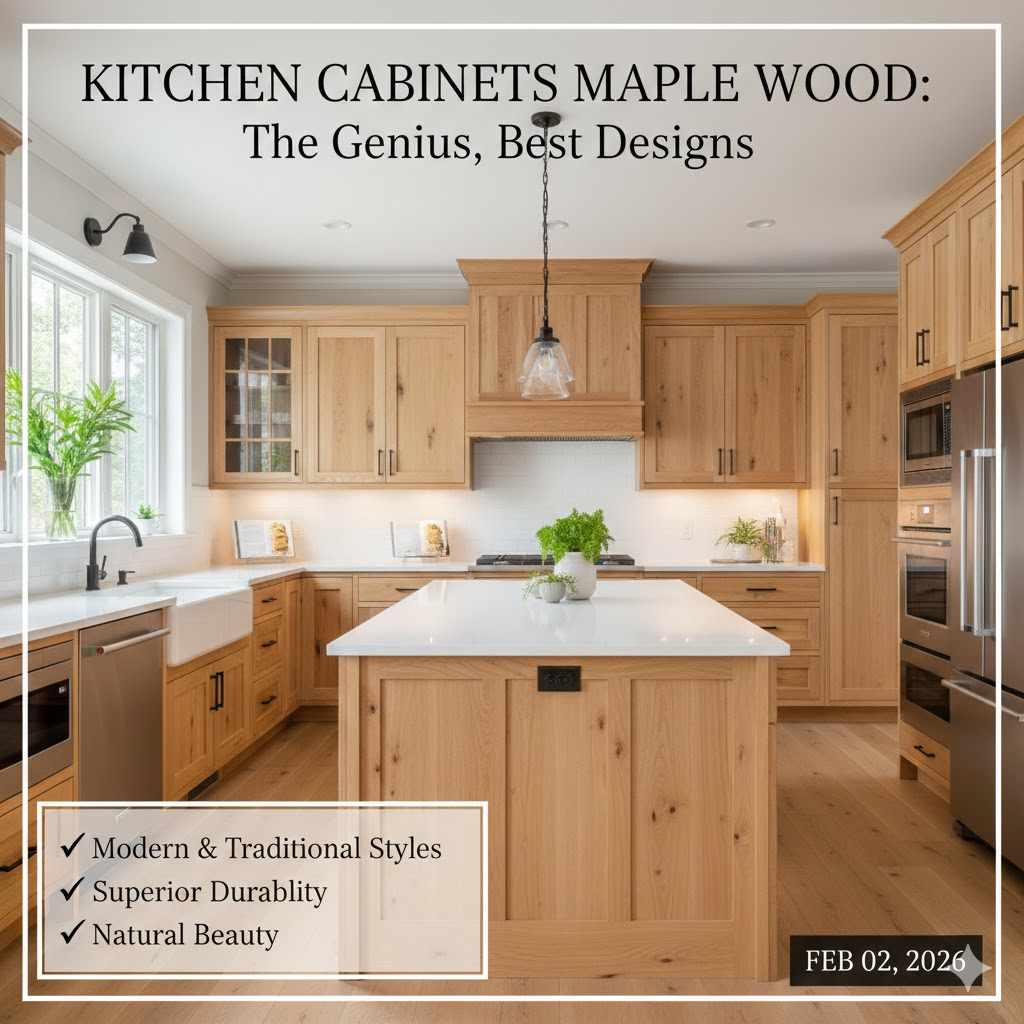
Maple wood is a genius choice for kitchen cabinets due to its exceptional durability, smooth grain that’s perfect for painting or staining, and incredible versatility. Its bright, clean appearance fits every style from modern to traditional, making it a reliable and beautiful foundation for any kitchen design and a smart, long-lasting investment for your home.
Thinking about a kitchen remodel? The choices can feel overwhelming, especially when it comes to cabinets. You want something strong, beautiful, and timeless. So many homeowners feel the same way, and that’s often why they turn to maple wood. It’s a classic for a reason!
Maple is one of the most reliable and attractive woods you can choose for your kitchen. It’s tough enough to handle daily life and has a simple beauty that works with almost any design you can dream up. In this guide, I’ll walk you through exactly why maple is such a smart pick. We’ll look at the best designs, finishes, and tips to help you create a kitchen you’ll love for years. Let’s get started on building that dream kitchen together.
What Makes Maple Wood a Genius Choice for Kitchens?
When I’m in the workshop, I always appreciate materials that are strong, predictable, and beautiful. Maple checks all those boxes, which is why it’s a favorite among woodworkers and homeowners alike for kitchen cabinets. It’s not just popular by chance; it has real, practical advantages that make it a truly genius choice for the heart of your home.
Let’s break down the simple reasons why maple stands out from the crowd.
The Amazing Benefits of Maple Cabinets
Maple isn’t just a pretty face. It brings a lot of strength and versatility to the table, making it one of the best long-term investments for your kitchen.
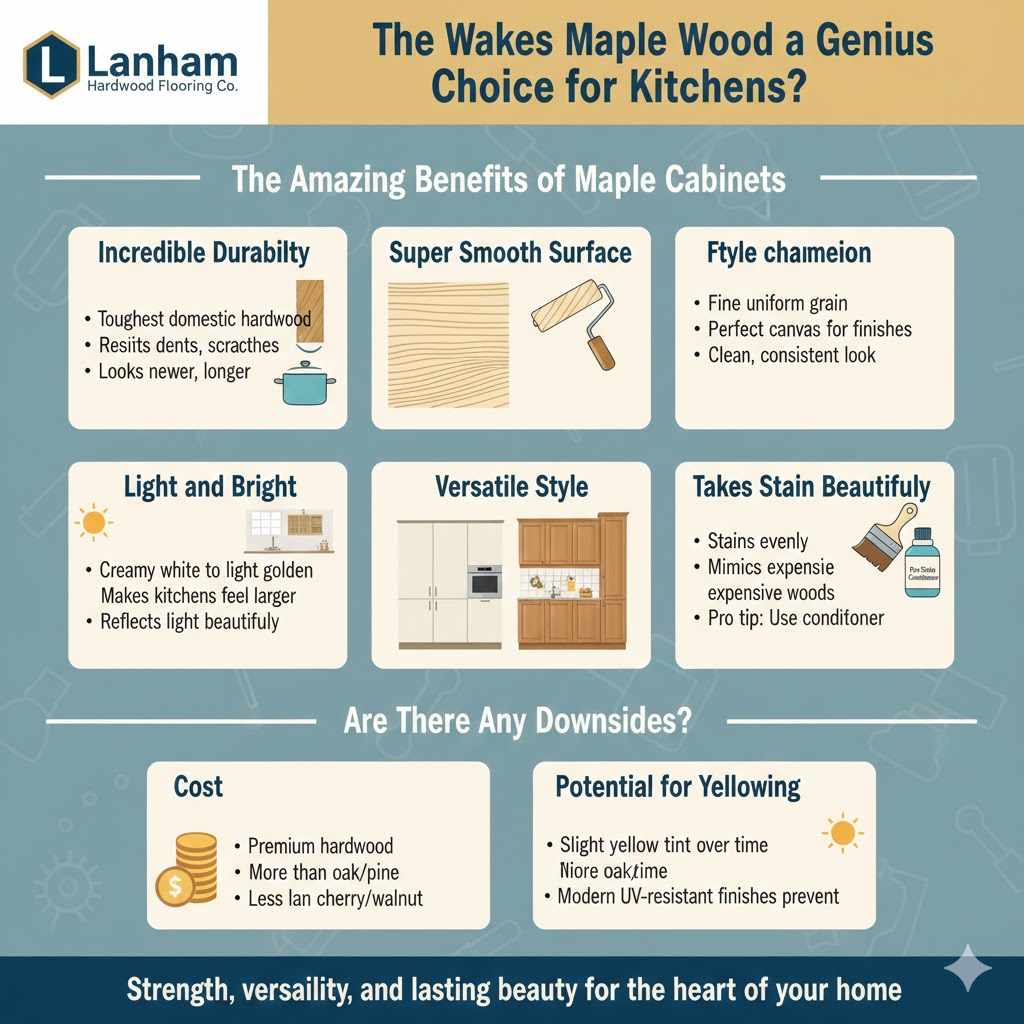
- Incredible Durability: Hard maple is one of the toughest domestic hardwoods available. It resists dents, scratches, and dings far better than softer woods like pine or even some oaks. This is a huge plus in a high-traffic area like a kitchen, where bumps from pots, pans, and kids are just part of daily life. Your cabinets will look newer for longer.
- Super Smooth Surface: Maple has a fine, uniform grain. What does that mean for you? It creates an incredibly smooth surface. This makes it a perfect canvas for finishes. Whether you choose paint, stain, or a clear coat, the result is clean and consistent without a heavy wood grain pattern showing through.
- Versatile Style: Because of its clean look, maple is a style chameleon. It fits seamlessly into almost any kitchen design. Want a sleek, modern look? Go for flat-panel maple cabinets. Dreaming of a cozy, traditional kitchen? Raised-panel maple is perfect. It adapts to your vision.
- Light and Bright: The natural color of maple is creamy white to light golden brown. This brightness can make your kitchen feel larger, more open, and more inviting. It reflects light beautifully, which is a great advantage in smaller kitchens or spaces that don’t get a lot of natural light.
- Takes Stain Beautifully (With One Small Trick): Maple can be stained to mimic more expensive woods like cherry or mahogany. It absorbs stain evenly, but I’ll share a pro tip later: always use a pre-stain conditioner to avoid any hint of blotchiness. This ensures a rich, even color every time.
Are There Any Downsides?
Every material has its own character, and it’s good to know the full picture. Maple is fantastic, but here are a couple of things to keep in mind.
- Cost: Maple is a premium hardwood, so it typically costs more than oak or pine. However, it’s generally more affordable than cherry or walnut. Think of it as a mid-to-high-range option that pays you back in durability and longevity.
- Potential for Yellowing: Like many light-colored woods, maple can develop a slight yellowish tint over time, especially when exposed to direct sunlight. However, this is easily managed. Modern UV-resistant finishes do an excellent job of preventing this, so just make sure a high-quality topcoat is used.
Understanding Maple: Not All Wood Is Created Equal
When you hear “maple,” you might just picture one type of wood. But in the woodworking world, we know there are a few variations. Understanding the basics will help you have a better conversation with your cabinet maker or home improvement store. Don’t worry, this is simple stuff!
Hard Maple vs. Soft Maple: What’s the Difference for Cabinets?
The two main categories you’ll encounter are hard maple and soft maple. For kitchen cabinets, you’ll almost always be looking at hard maple, and for good reason.
Hard Maple (also called Sugar Maple or Rock Maple) is the star of the show for cabinetry. It’s incredibly dense and strong. This is the wood that bowling alleys and butcher blocks are made from, so you know it can handle your kitchen!
Soft Maple is still a hardwood, but it’s just not as dense as hard maple. It’s a bit more prone to denting, so it’s more commonly used for decorative items or furniture that won’t see as much action. When you’re investing in kitchen cabinets, you want the toughness of hard maple.
Here’s a quick comparison to make it crystal clear:
| Feature | Hard Maple | Soft Maple |
|---|---|---|
| Durability | Exceptional. Very resistant to dents and scratches. | Good, but about 25% softer. Dents more easily. |
| Grain Pattern | Very fine, straight, and uniform grain. | Slightly wider grain pattern, can be less uniform. |
| Best Use in Kitchens | Cabinet doors, drawers, frames—the whole package! | Best for decorative elements like trim or molding, not main doors. |
| Cost | Higher, due to its superior density and desirability. | More affordable, but not recommended for high-impact surfaces. |
The Beauty of Maple’s Grain and Color
One of the biggest reasons people fall in love with maple is its quiet elegance. It doesn’t shout for attention with a loud, busy grain like oak. Instead, its grain is subtle, smooth, and consistent. This creates a calm, clean backdrop for your kitchen.
The natural color is typically a pale, creamy white. Some pieces might have a slight reddish or golden hue. This light color is perfect for creating a bright and airy feel. While most maple has a straight grain, you can occasionally find special pieces with unique patterns like:
- Bird’s-eye Maple: Features small, swirling patterns that look like tiny eyes.
- Curly Maple (or Flame Maple): Has wavy lines that seem to ripple across the wood.
These figured maples are more expensive and often used as special accents, but they show the amazing natural artistry found in this wonderful wood.
The Best Kitchen Cabinet Designs for Maple Wood
Because maple is so versatile, it looks incredible in a variety of cabinet styles. Whether your home is modern, traditional, or something in between, there’s a maple cabinet design that will feel right at home. Here are four of the most popular and best-looking designs.
1. The Timeless Shaker Style
If there’s one cabinet style that never goes out of fashion, it’s the Shaker. You’ve definitely seen it before: it has a simple, clean design with a five-piece door featuring a flat recessed center panel and four pieces forming a frame around it.
Why it works with maple: The clean lines of Shaker doors perfectly complement the clean, smooth grain of maple wood. There are no complicated details to distract from the wood’s simple beauty. This combination is a go-to for designers because it’s so flexible. Paint it white for a classic farmhouse look, stain it dark for a sophisticated transitional feel, or use a clear coat for a warm, Scandinavian vibe. It just always works.
2. The Sleek and Modern Slab (Flat-Panel) Style
For those who love a minimalist aesthetic, slab doors are the perfect choice. As the name suggests, a slab door is just one solid, flat piece. There are no frames, panels, or decorative details.
Why it works with maple: This style is all about clean, uninterrupted surfaces, and maple’s fine, uniform grain is the ideal material. Woods with heavy grains, like oak, can make slab doors look busy and dated. But with maple, the surface is smooth and serene. It creates a high-end, contemporary look that is easy to clean and feels effortlessly chic. A natural or light stain on maple slab cabinets is a hallmark of modern kitchen design.
3. The Classic and Elegant Raised Panel Style
For a more traditional or formal kitchen, raised panel doors add depth and architectural detail. The center panel of the door is raised to be flush with the frame, and the edges are often decoratively shaped.
Why it works with maple: Maple provides a smooth, perfect surface for the intricate carving and routing that goes into creating raised panels. The fine grain ensures that the details look crisp and clean, not grainy or rough. When stained, maple raised panel doors have a rich, luxurious look that can rival more expensive woods like cherry. This style is perfect for creating a warm, inviting kitchen with a timeless, formal feel.
4. The Charming Beadboard Style
Beadboard brings a touch of cottage, coastal, or farmhouse charm to a kitchen. This design features vertical grooves, or “beads,” milled into the center panel of the cabinet door.
Why it works with maple: The stability and uniform texture of maple make it an excellent choice for beadboard. The grooves come out clean and precise, creating that classic, charming texture. Painted beadboard cabinets are especially popular, and maple’s smooth surface is the best base for a flawless paint job. A set of white or light-blue painted maple beadboard cabinets can instantly make a kitchen feel cozy and welcoming.
Finishing Your Maple Cabinets: Stains, Paints, and More
Choosing your cabinet style is just the first step. The finish is what truly brings your kitchen’s personality to life. Maple is like a perfectly primed artist’s canvas—it’s ready for almost any finish you can imagine, and the results are stunning.
Natural & Clear Finishes: Let the Wood Shine
If you love the creamy, bright look of natural maple, a clear finish is the way to go. This involves applying a protective topcoat, like a water-based polyurethane, that lets the wood’s natural color and subtle grain show through.
Why choose this? It creates a light, airy, and natural look that’s very popular in Scandinavian and modern design. It makes your kitchen feel bigger and brighter. Remember to use a finish with a UV inhibitor to prevent that slight yellowing over time.
Staining Maple: From Light and Warm to Dark and Dramatic
Staining can change the entire mood of your kitchen. Maple’s tight grain absorbs stain well, but it needs one small bit of prep for perfect results. Because it’s so dense, it can sometimes absorb stain unevenly, leading to a “blotchy” look. But don’t worry, the fix is easy!
The Pro Tip: Always, always use a pre-stain wood conditioner before applying stain. You simply wipe it on, let it sit for a few minutes, and then wipe it off. It partially seals the wood, allowing the stain to go on smoothly and evenly for a professional-looking finish. You can learn more about preparing wood for finishing from resources like the Purdue University Extension.
- Light Stains: Honey, golden oak, or light cherry stains can add warmth to maple without hiding its grain. This is a great way to get a cozy, inviting look.
- Medium to Dark Stains: Stains like espresso, dark walnut, or mahogany can give maple a rich, sophisticated, and dramatic look. This is a great way to make maple look like a more exotic wood while retaining its superior durability.
Painting Maple: The Perfect Smooth Surface
If you’re dreaming of a classic white kitchen, or perhaps a trendy navy blue or sage green one, maple is arguably the best hardwood for the job. Why? Its fine, closed grain.
Unlike oak, which has a very deep, open grain, maple’s surface is incredibly smooth. When you paint maple, you get a clean, even, almost glass-like finish. You won’t see the texture of the wood grain telegraphing through the paint. This gives you a durable, solid wood cabinet with a flawless, high-end painted look that will last for years.
Choosing the Right Hardware for Your Maple Cabinets
Hardware—the knobs and pulls—is the jewelry of your kitchen. The right hardware can tie the whole look together, while the wrong choice can feel out of place. Here’s a handy guide to pairing hardware with your beautiful maple cabinets.
| Maple Cabinet Finish | Recommended Hardware Finishes | Best For This Design Style |
|---|---|---|
| Natural or Light Stain | Brushed Nickel, Polished Chrome, Matte Black | Modern, Scandinavian, Transitional |
| Medium Stain (e.g., Honey, Cherry) | Satin Brass, Oil-Rubbed Bronze, Polished Nickel | Transitional, Traditional, Farmhouse |
| Dark Stain (e.g., Espresso) | Satin Brass, Polished Nickel, Stainless Steel | Traditional, Contemporary, Luxurious |
| White Paint | Matte Black, Satin Brass, Polished Chrome, Oil-Rubbed Bronze | Virtually Any Style! (Modern, Farmhouse, Traditional) |
| Gray or Blue Paint | Brushed Gold/Brass, Polished Nickel, Matte Black | Modern, Transitional, Coastal |
Don’t be afraid to bring a sample of your cabinet door with you when you go shopping for hardware. Seeing them together in person is the best way to make sure you love the combination.
How to Keep Your Maple Cabinets Looking Brand New
You’ve invested in beautiful, durable maple cabinets—now let’s make sure they stay that way! The good news is that caring for them is incredibly simple. You don’t need any harsh chemicals or complicated routines.
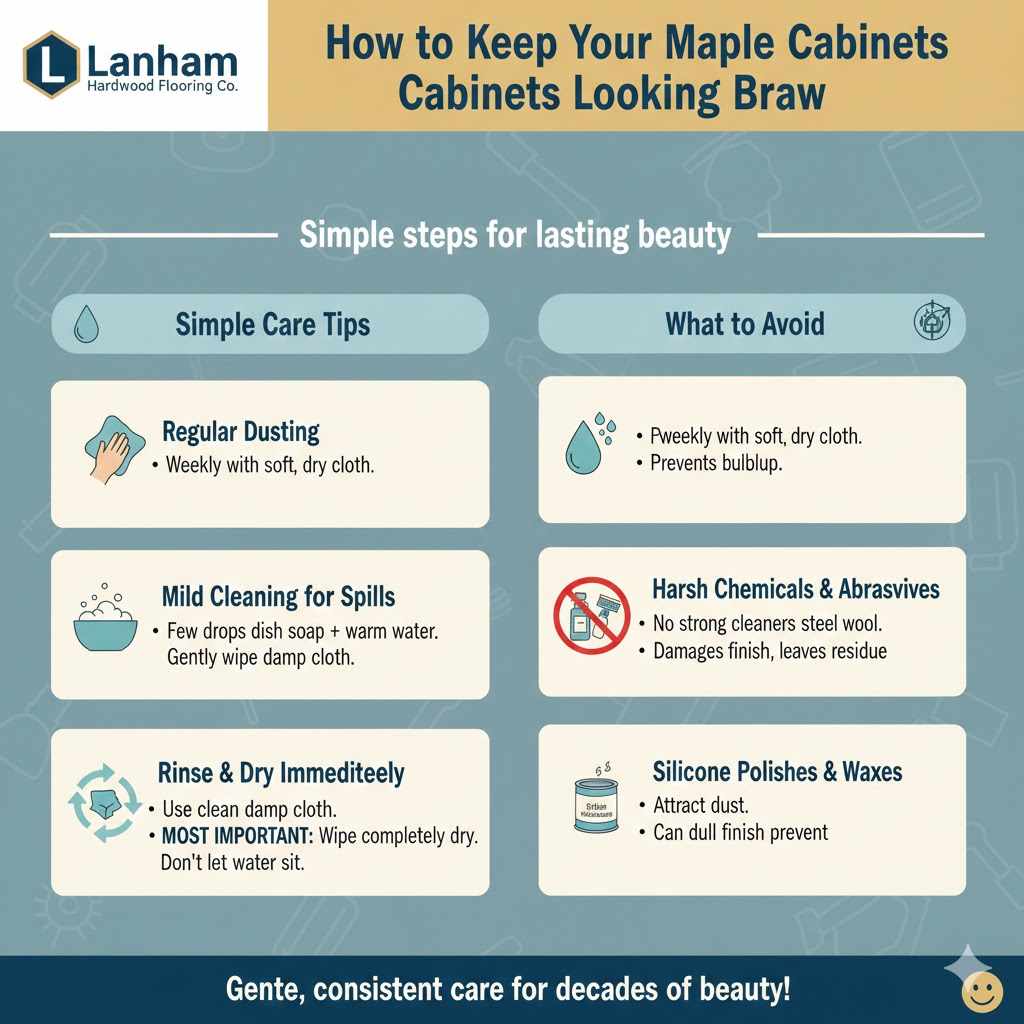
- Regular Dusting: Just like any other surface in your home, cabinets collect dust. Once a week, wipe them down with a soft, dry microfiber cloth. This prevents any buildup.
- Mild Cleaning for Spills: For food spills or fingerprints, use a simple, gentle cleaner. Mix a few drops of mild dish soap into a bowl of warm water. Dampen a soft cloth in the soapy water, wring it out well, and gently wipe the cabinet surface.
- Rinse and Dry Immediately: After cleaning with the damp cloth, go over the area with another clean cloth dampened with just plain water. Finally, and this is the most important step, wipe the cabinet completely dry with a third clean, dry cloth. Never let water sit on the wood surface.
- What to Avoid: Steer clear of harsh chemical cleaners, abrasive scrubbers (like steel wool or scouring pads), and silicone-based polishes or waxes. These can damage the protective finish on your cabinets and leave a residue that attracts dust.
That’s it! A little bit of gentle, consistent care is all it takes to keep your maple cabinets looking gorgeous for decades.
Frequently Asked Questions About Maple Kitchen Cabinets
It’s natural to have questions when making a big decision like choosing kitchen cabinets. Here are some of the most common ones I hear from folks, with simple, straightforward answers.
Is maple an expensive wood for cabinets?
Maple is considered a premium hardwood, so it costs more than common options like oak but is generally more affordable than luxury woods like cherry or walnut. Think of it as a smart, mid-to-high-range investment. Its incredible durability means it often provides better long-term value than cheaper, less durable options.
Does maple wood darken or change color over time?
Natural maple wood can develop a slightly warmer, yellowish hue over many years, especially when exposed to a lot of direct sunlight. This is a natural aging process. However, high-quality modern finishes contain UV inhibitors that significantly slow down and minimize this color change, keeping your cabinets looking truer to their original color for much longer.
Is maple more durable than oak for kitchen cabinets?
Yes, hard maple is generally harder and more dent-resistant than red oak, which is a common choice for cabinets. Maple’s dense, fine grain structure makes it exceptionally tough. While both are excellent, durable woods, maple has a slight edge in resisting dents and scratches from everyday use.
Can you paint over stained maple cabinets?
Absolutely! Maple is one of the best woods to paint, even if it’s already stained. The key is proper preparation. You’ll need to clean the surface thoroughly, lightly sand it to scuff up the old finish, apply a high-quality bonding primer, and then you can paint. Because of maple’s smooth grain, the final painted finish will be beautifully uniform.
Why does my stained maple look blotchy?
This is a common issue with dense, tight-grained woods like maple. Some areas of the wood are slightly more porous than others, causing them to soak up more stain and appear darker. The easy solution is to apply a pre-stain wood conditioner before staining. This product evens out the wood’s porosity, ensuring the stain is absorbed evenly for a beautiful, consistent color.
Are maple cabinets outdated?
Not at all! Maple is a timeless material. What can make it look dated is the door style or the finish. For example, the “honey-stained” maple look from the 1990s might feel dated today. However, maple itself is a classic. When used in modern styles like Shaker or slab doors with a contemporary stain or paint color, maple cabinets look fresh, high-end, and completely on-trend.
A Beautiful, Durable Kitchen Starts with Maple
Choosing the right cabinets can feel like a huge task, but it doesn’t have to be complicated. As we’ve seen, maple wood is a fantastic all-arounder that delivers on everything that matters: strength, beauty, and flexibility. It’s tough enough to stand up to the busiest of family kitchens and has a simple elegance that allows your personal style to shine through.
Whether you dream of a bright and modern kitchen with sleek white cabinets or a warm and traditional space with rich, dark wood tones, maple is a reliable foundation you can build on. It’s a choice that offers both timeless appeal and practical, everyday performance. By selecting a classic style and a finish you love, you’re not just buying cabinets; you’re making a wise investment in the heart of your home, creating a space you and your family will enjoy for many years to come.