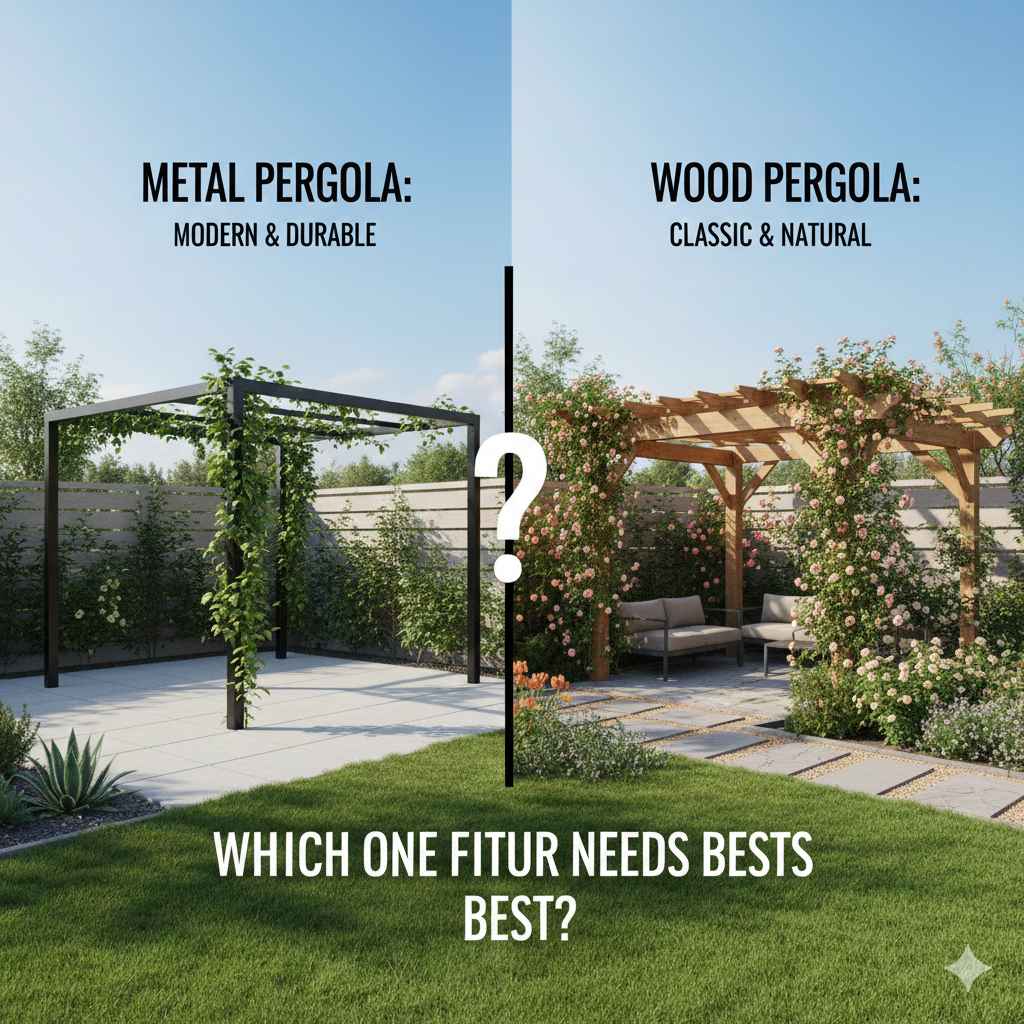
Metal Versus Wood Pergola: Choosing the Right One
Choosing between a Metal vs Wood Pergola: Pros and Cons can be a tricky decision, especially if you’re just starting out. There are so many things to think about, like how long it will last, how it looks, and how much it will cost. This guide will explore the details, breaking down everything you need to know in a clear, easy-to-follow way. We’ll simplify the whole process, making sure you feel confident in making your choice. Let’s explore the key differences to help you decide which material is best for your outdoor space!
Metal Pergolas: Examining the Advantages
Metal pergolas offer a range of benefits that make them attractive choices for many homeowners. Their strength and durability are often key factors, providing a long-lasting structure with minimal maintenance. Metal pergolas come in a variety of styles and finishes, allowing for customization to match different outdoor aesthetics. From sleek, modern designs to more traditional looks, there’s a metal pergola to suit almost any home.
Moreover, metal pergolas can be easier to assemble than their wood counterparts, potentially saving you time and effort. This section will closely consider the many benefits of choosing a metal pergola.
Strength and Longevity: Metal’s Staying Power
One of the most appealing features of a metal pergola is its strength and durability. Metal, particularly materials like aluminum, steel, and wrought iron, is incredibly resistant to the elements. This means it can withstand wind, rain, and other weather conditions without significantly deteriorating. Unlike wood, metal is not susceptible to rot, insect infestations, or warping over time.
Choosing a metal pergola can represent a sound investment, as they can last for decades with the right care. This long lifespan can be a significant cost-saving factor over the years, as you won’t need to replace it as frequently as a wooden structure.
Weather Resistance: Metal pergolas are generally more resistant to harsh weather conditions. They don’t typically warp or rot, which extends their life significantly, especially in areas with a lot of rain, snow, or intense sunlight.
The resistance to weather makes a significant impact on long-term costs. For example, a homeowner in a region with heavy snowfall will likely face higher maintenance costs for a wooden pergola, which could need frequent repairs to prevent rot or damage. A metal pergola significantly reduces these long-term maintenance needs.
Durability: Metal pergolas are also tough and can handle wear and tear well. This is because metals are engineered to resist damage. A well-constructed metal pergola can withstand the test of time, including unexpected weather events like storms.
The durability of metal translates directly into reduced maintenance and repair expenses. Consider a scenario where a strong wind damages part of your pergola. If it’s made of metal, the likelihood of a simple repair is higher than if it were made of wood, where you might need to replace an entire section or the whole structure.
Low Maintenance: Compared to wood, metal pergolas demand little upkeep. This means less time spent on tasks like painting, staining, or sealing. This also means you don’t need to worry about insects eating away at the structure.
Low maintenance is a critical factor for people who like to spend their weekends relaxing instead of working on home projects. It also saves you money on things like paint, stain, and the time and effort of upkeep.
Design Flexibility and Style Choices
Metal pergolas offer a great degree of design versatility. They can be created in a vast array of styles, from minimalist, modern designs to more ornate, classic looks. This means there’s often a perfect metal pergola available to suit a wide range of aesthetic preferences and home styles. Manufacturers can shape metal into almost any form, letting you customize the pergola’s size, shape, and even the details, like decorative elements.
This design flexibility makes it easy to integrate the pergola seamlessly into the existing landscape and create a specific look. Also, different finishes are available, which adds more opportunities for personalization.
Various Styles: Metal pergolas come in different styles. This means you can get one that perfectly suits your home’s look. You can find everything from straight, modern lines to fancy, curvier designs.
This broad range allows you to match the pergola to your house or yard. If you have a modern house, a sleek metal pergola might look best. If your place has a classic design, an ornamental metal pergola could be just right.
Customization Options: Metal pergolas can be designed to your needs. This means you can choose the size, shape, and even add unique details. It is easy to make a pergola fit your exact space and desires.
For instance, you might want a pergola that’s wide enough for a dining area or a smaller one for a cozy sitting space. With metal, it is simpler to get these custom features than with wood.
Finish Choices: You can pick different finishes for your metal pergola. You can have it painted in any color, powder-coated for extra protection, or even have a metallic finish that gives it a special look.
These finish options make the metal pergola look appealing and also shield it from damage. A powder coat can keep it safe from rust and fading, so your pergola will look great for years.
Ease of Assembly and Installation
Metal pergolas often have an advantage when it comes to installation. Many come in pre-fabricated kits, which can simplify the assembly process. This makes it easier for homeowners to assemble the structure themselves or to hire someone without extensive construction experience. Manufacturers design these kits with straightforward instructions, which leads to less time and labor compared to building a wooden pergola from scratch.
Metal’s lighter weight compared to wood can also make handling parts easier during installation. Some metal pergolas have designs that allow for adjustments, simplifying leveling and ensuring a stable structure.
Pre-Fabricated Kits: Many metal pergolas come in pre-built kits. This is helpful because it takes away the need to measure and cut materials. Everything you need is already there, ready to be put together.
Pre-fabricated kits speed up the setup process, saving time and costs. Instead of spending days measuring and assembling pieces, you can have your pergola ready in a fraction of the time.
Simplified Instructions: The instructions that come with metal pergola kits are usually clear and simple to follow. Even if you’re not an expert, you can often put together a metal pergola.
The easy-to-understand instructions reduce the chance of making mistakes during assembly. You can quickly grasp how the pieces come together, ensuring a smooth process.
Lighter Materials: Metal, such as aluminum, can be lighter than wood. This is good because it makes the parts easier to handle and move during installation.
The lighter weight helps make the installation smoother. You won’t need as many people to lift and position the components. This makes the job less hard and reduces the risk of injury.

Wood Pergolas: Examining the Advantages
Wood pergolas continue to be popular choices for outdoor spaces. The natural beauty and warmth of wood can provide a welcoming and aesthetically pleasing addition to any yard or garden. Wood pergolas offer the chance to create unique designs and a customized look, as the material is readily shaped and crafted. While wood requires more upkeep than metal, the classic charm and timeless appeal of a wooden pergola make it an attractive option for many homeowners. Let’s explore the key advantages that make wood pergolas a compelling choice.
Aesthetic Appeal and Natural Beauty
Wood pergolas are admired for their natural beauty and the inviting atmosphere they create in outdoor spaces. The warm tones and unique grain patterns of wood bring a sense of natural charm that can enhance the aesthetics of a yard or garden. Wood has a unique look and feel that metal can’t replicate. The organic texture blends well with the surrounding environment, making a pergola feel like it’s a part of the natural landscape. The versatility of wood allows for different staining or painting options, which can further customize the look to match the home’s style.
Warm Appearance: Wood pergolas have a cozy and warm appearance. This is because of the natural wood grain and colors, which add a welcoming feel to any outdoor setting.
The warm and inviting look of a wood pergola makes your outdoor space more appealing. This creates a place for relaxation and enjoyment.
Natural Texture: Wood offers a natural texture that is pleasing to touch and look at. It has a unique look that can add character to the design.
The unique texture of wood makes each pergola different. You can feel the character of the material, making your outdoor space a place to be at peace with nature.
Versatile Finishes: You can stain or paint wood pergolas in many ways. This makes it simple to match the pergola to your home’s style or to personalize it according to your preference.
The ability to change the color and finish gives you great flexibility in how the pergola looks. You can opt for a finish that complements your house or one that stands out as a focal point in your yard.
Design Flexibility and Customization
Wood pergolas offer a high degree of design flexibility, letting you create a structure that exactly matches your needs and aesthetic preferences. Wood is an easy material to shape, carve, and customize, which provides many design opportunities. Builders and homeowners can design wooden pergolas in any size, shape, and style, from simple, classic designs to more elaborate, custom structures.
This flexibility makes wood a great choice for those seeking a unique outdoor feature that blends seamlessly with the existing landscape and architecture. Wood can also be used with other materials, such as metal accents, to make a distinct look.
Easy to Cut and Shape: Wood is simple to cut, shape, and carve. This makes it possible to create many unique designs.
This flexibility lets you have a pergola that has just the right look and shape for your outdoor space. It’s a great choice if you want to make a special, personalized structure.
Custom Sizes and Styles: You can build wood pergolas in any size or style. Whether you want a simple design or something fancy, wood can adapt.
If you have a small backyard or a large garden, you can adjust the pergola to suit. You can get exactly what you need to meet your needs.
Integration with Other Materials: Wood blends well with other materials, like metal or stone. This adds to the design possibilities.
By mixing wood with other materials, you can come up with a one-of-a-kind design. This way, you can create a structure that is both beautiful and functional.
Cost-Effectiveness and Material Choices
The cost of a wood pergola can vary, based on the type of wood and the design complexity. In some cases, wood pergolas can be more affordable than metal options. Some types of wood, such as pressure-treated pine, are generally less expensive than metal alternatives. The availability of wood as a material also contributes to its cost-effectiveness. The choice of wood can also impact the long-term maintenance costs.
For instance, selecting durable, naturally resistant wood can cut down the need for frequent maintenance and extend the pergola’s life. The price can vary depending on where you are, but the initial cost can still be a deciding factor for people on a budget.
Various Wood Types: You can pick from different kinds of wood for your pergola. Some types are more budget-friendly than others, such as pressure-treated pine.
The wide range of wood options provides a range of choices that can work with your budget. You can decide if you want to prioritize cost or specific features, like natural weather resistance.
Potential for DIY: Wood pergolas can be ideal for do-it-yourself projects. This lets you save money on labor costs, especially if you have experience building.
If you want to handle the project yourself, a wood pergola can be a great way to save on costs. You’ll gain a customized outdoor space while also cutting down on the expense of hiring someone to do the job.
Cost of Materials: The cost of wood can fluctuate depending on where you live and the types of wood you choose. Prices can go up or down based on factors like the area’s availability of the wood and the demand.
It is helpful to shop around and compare costs when selecting wood for your pergola. You can find the best materials for the price.
Comparing Metal and Wood Pergolas
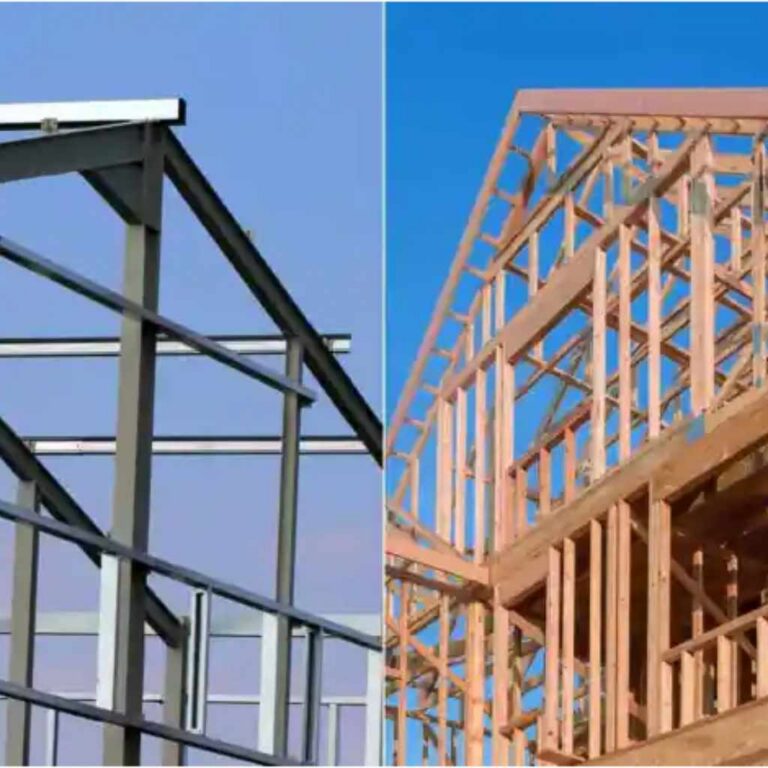
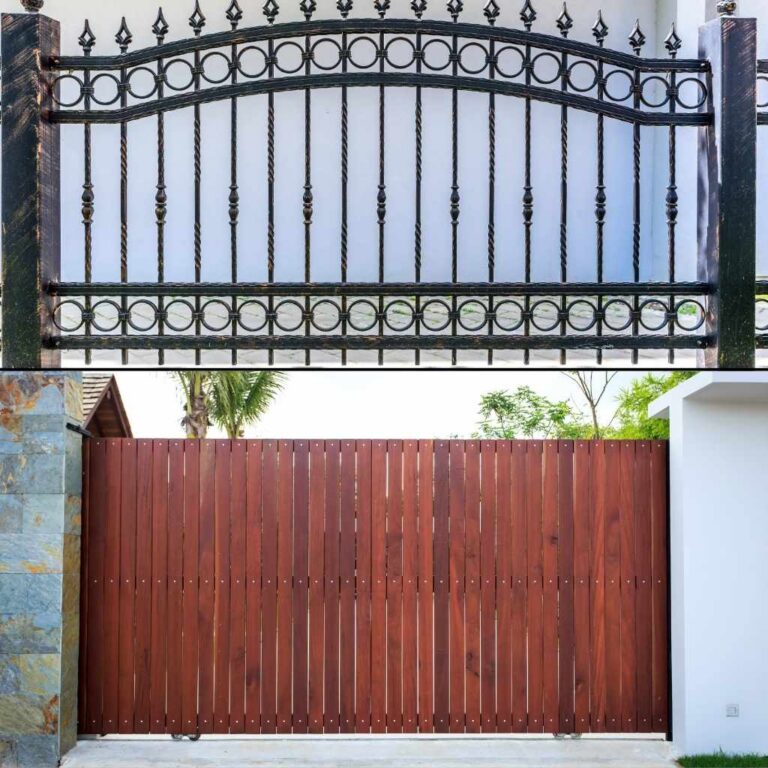
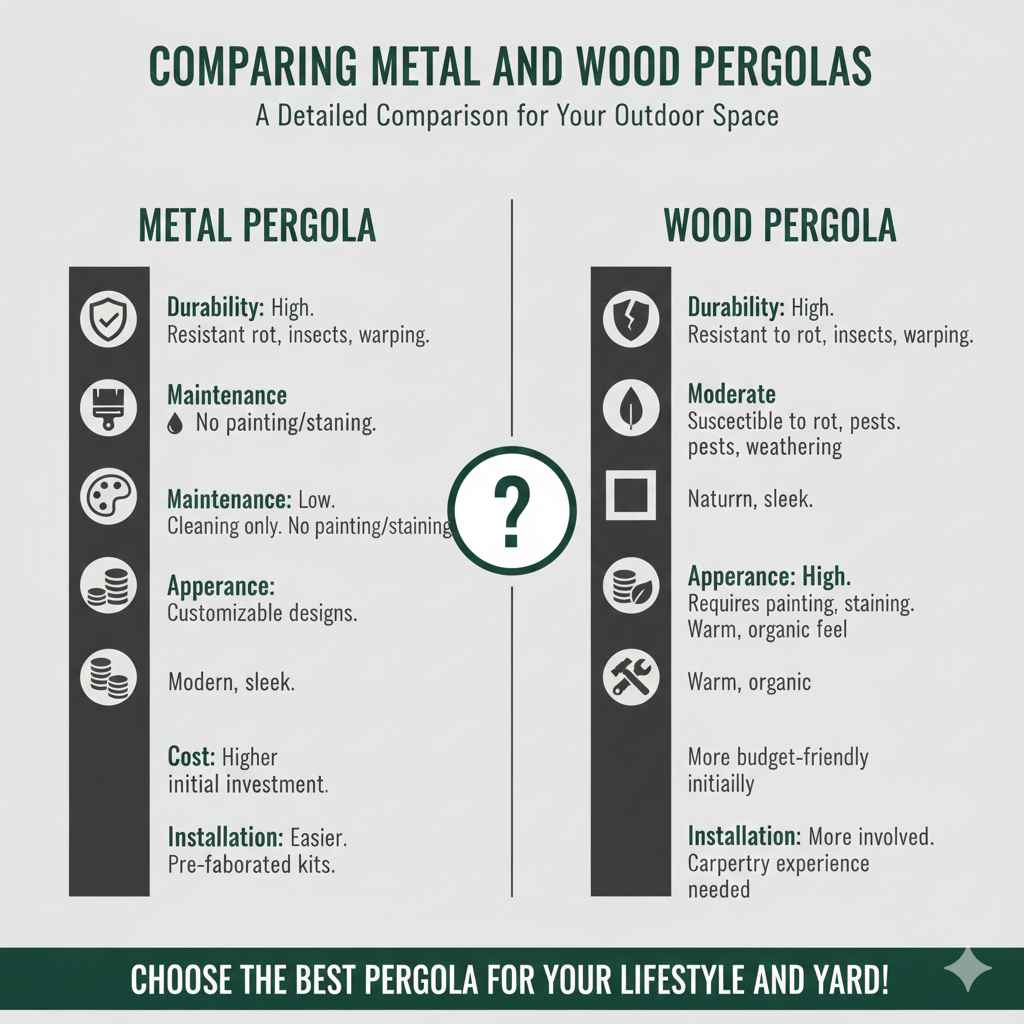
When picking between a metal and wood pergola, considering specific aspects helps with making the best choice for your unique needs. A detailed comparison of several main factors will help you make a fully informed decision. This will include examining their costs, maintenance demands, appearance, durability, and the overall value provided by each material. Weighing the advantages and disadvantages of each type is important to determine which option aligns best with your outdoor area and lifestyle. Here’s a quick side-by-side view to assist with this process:
| Feature | Metal Pergola | Wood Pergola |
|---|---|---|
| Durability | Generally higher; resistant to rot, insects, and warping | Can be durable, but susceptible to rot, pests, and weathering |
| Maintenance | Low; requires minimal upkeep, usually just cleaning | Higher; requires painting, staining, sealing to protect from the elements |
| Appearance | Modern or contemporary looks, can be customized | Natural and warm appearance, with a classic charm |
| Cost | Can be higher initially, depending on material and customization | Varies; can be more budget-friendly, depends on wood type |
| Design Flexibility | Excellent, offers a wide range of designs and finishes | High; easy to cut, shape, and customize; can be classic or unique |
| Installation | Often easier, comes in pre-fabricated kits | More involved, usually needs carpentry experience |
| Longevity | Long lifespan, resistant to many forms of damage | Depends on wood type and maintenance practices |
Durability and Lifespan: A Battle of the Ages
The durability and lifespan of a pergola are key elements to consider. Metal pergolas, particularly those made from aluminum or steel, are famous for their remarkable strength. These materials resist rot, insect damage, and warping, ensuring they stay solid for years, even in changing weather. Wood pergolas, on the other hand, can be durable, but their lifespan often depends on the type of wood and the care it receives.
Wood is vulnerable to the elements and pests. Regular treatment, such as sealing and staining, is needed to prevent rotting and preserve its structure. The extra work needed can add to the long-term upkeep expenses, whereas metal demands less maintenance, saving money and time. This makes metal a more appealing choice for those who value minimal upkeep.
Metal: Metal pergolas generally have a longer lifespan, often lasting for decades with little maintenance. This long lifespan results from metals’ strong resistance to rot and pests.
This long lifespan gives metal pergolas an edge in terms of value. A metal pergola demands very little in the way of repairs and replacements over its lifetime, which can lead to significant cost savings.
Wood: Wood pergolas demand more care to maintain their durability. You need to keep up with staining or painting regularly.
The need for more attention can mean that wood pergolas might be less convenient for some. It can add to the overall expenses because you will need to buy products for upkeep and spend your time working on the pergola.
Weather Conditions: The climate where you live is important. Metal pergolas handle harsh weather better than wood.
If you live in a place with heavy rain, snow, or lots of sunlight, a metal pergola might be a better choice. Wood needs more protection in these environments to prevent damage.
Maintenance Requirements: The Time Commitment
The amount of work needed to maintain a pergola is a key factor. Metal pergolas have a clear edge when it comes to maintenance. They usually only need occasional cleaning to stay in good shape. Because metal does not rot, warp, or attract pests, it will not require regular painting or staining like wood. This frees up time and effort for other activities. Wood pergolas need more attention to keep them looking their best.
Periodic painting, staining, or sealing are necessary to protect the wood from the elements and avoid rot or insect damage. The cost of materials, like paint or stain, and the time spent on upkeep should be factored into the overall expense. When your time is worth a lot to you, the low-maintenance nature of metal is very appealing.
Metal: Metal pergolas are simple to keep up. Most of the time, all you have to do is clean them. This is because metal won’t rot or attract bugs.
Low maintenance means less work and more free time. You won’t have to spend your weekends staining or sealing.
Wood: Wood pergolas demand more effort. You need to stain or paint them regularly to protect them from weather and bugs.
The extra care can take up your time, and you’ll have to buy paint or stain. This is something to consider if you’d rather enjoy your outdoor space instead of fixing it.
Cleaning: You should regularly clean both types of pergolas.
For metal, a quick wash with soap and water usually does the trick. For wood, you may need to use a special cleaner and give it more care.
Aesthetics and Design: Matching Your Style
The look of your pergola is a critical factor, as it can greatly impact the overall aesthetic of your outdoor space. Metal pergolas provide an array of design options, which makes it simple to match your home’s style. They often present a clean, modern look, with choices that range from simple lines to sophisticated, customized designs. Wood pergolas offer classic beauty and a warm, inviting feel.
The natural texture and grain of wood create a connection to nature, which is difficult for other materials to match. Wood also lets you stain or paint your pergola to match any color scheme. The right choice depends on your design goals.
Metal: Metal pergolas provide a range of modern and adaptable designs.
If you have a home with modern styling, a metal pergola can fit right in. You can also customize the pergola to get the look you want.
Wood: Wood pergolas bring a classic and natural look. The wooden texture provides a warm, cozy feel.
Wood pergolas blend perfectly with more traditional homes and offer a unique, charming feel that cannot be easily replicated. The natural feel of wood adds a lovely design element to outdoor spaces.
Customization: Both materials let you customize the pergola. You can pick colors, styles, and details that fit your space.
Consider how your design will blend in with the rest of your house. Will it blend in, or will it stand out? It is all up to you.
Frequently Asked Questions
Question: Is a metal pergola better than a wood one?
Answer: It depends on your needs! Metal pergolas are often more durable and need less maintenance, while wood pergolas offer a classic look and more customization options. The best choice depends on what you want in your outdoor space, the climate you live in, and your budget.
Question: How long does a metal pergola last?
Answer: A metal pergola can last for many years, often several decades, due to the materials’ resistance to weather, rot, and insects. Proper installation and minimal care help extend its life.
Question: Do wooden pergolas require a lot of maintenance?
Answer: Yes, wooden pergolas typically require more maintenance compared to metal ones. This means regular painting, staining, or sealing to protect the wood from the elements, as well as periodic inspections to prevent any damage from insects or rot.
Question: Can I install a metal pergola myself?
Answer: Many metal pergolas come in pre-fabricated kits with clear instructions, making them simple to install yourself. However, it’s always helpful to consider your skill level and if you need any extra support to make sure everything’s done correctly.
Question: Are metal pergolas more expensive than wood pergolas?
Answer: It depends on the specific materials and designs you choose. Metal pergolas can have a higher initial cost, especially if they are highly customized. However, the long-term maintenance savings of metal can sometimes make it a more cost-effective option over time.
Final Thoughts
Picking between a Metal vs Wood Pergola: Pros and Cons is a big decision, but with the right info, it’s totally manageable. Both types bring their own set of advantages. Metal pergolas win for their durability, simple upkeep, and modern look. They’re built to last and don’t require the same care as wood. Wood pergolas, on the other hand, offer the natural appeal of a traditional look. They give you more design flexibility.
What matters most is what works best for your home and how you live. Think about the style you want, the level of care you’re ready to put in, and your budget. By thinking about all the things we covered here, you can make the right decision for your outdoor space. Enjoy the project, and get ready to enjoy your new space!