Metal vs. Wood Casket: Cost, Durability, and What to Know
Choosing between a metal and a wood casket is one of the more practical decisions in funeral planning, and it often has to be made quickly, during a difficult time. Both materials are widely used, both come in a broad range of prices, and neither one is “correct” for every family. This guide lays out the real differences in cost, durability, and material honestly, including one point the funeral industry doesn’t always explain clearly: what a “protective” sealed casket actually does and doesn’t do.
Wood Caskets: Species, Craftsmanship, and Cost
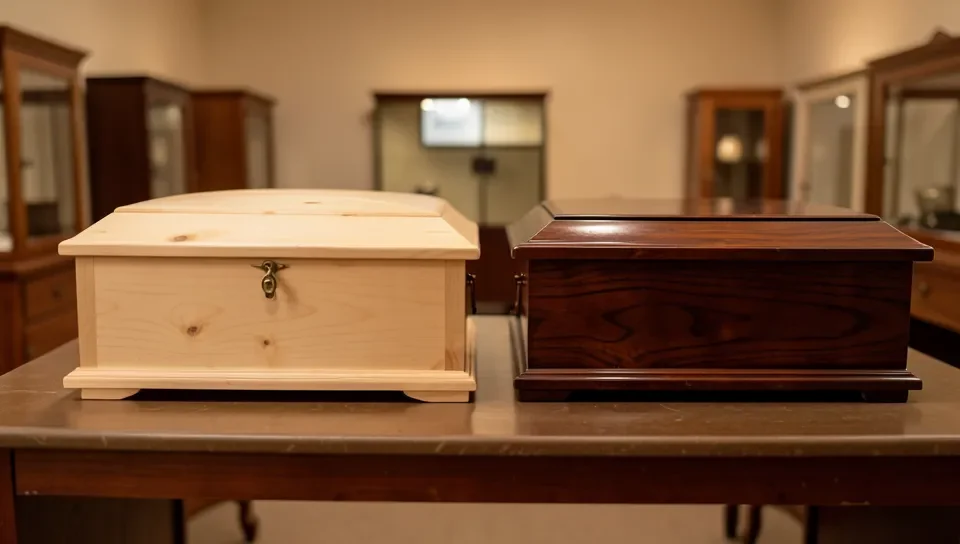
Wood caskets are the traditional choice in most Western funeral practices, and the wood species used has a large effect on both appearance and price. At the simple end, pine and poplar caskets are lightweight, biodegradable, and generally the most affordable wood option, often with a plain, straight-grained look and visible knots that many families find fitting for a simple, unadorned service.
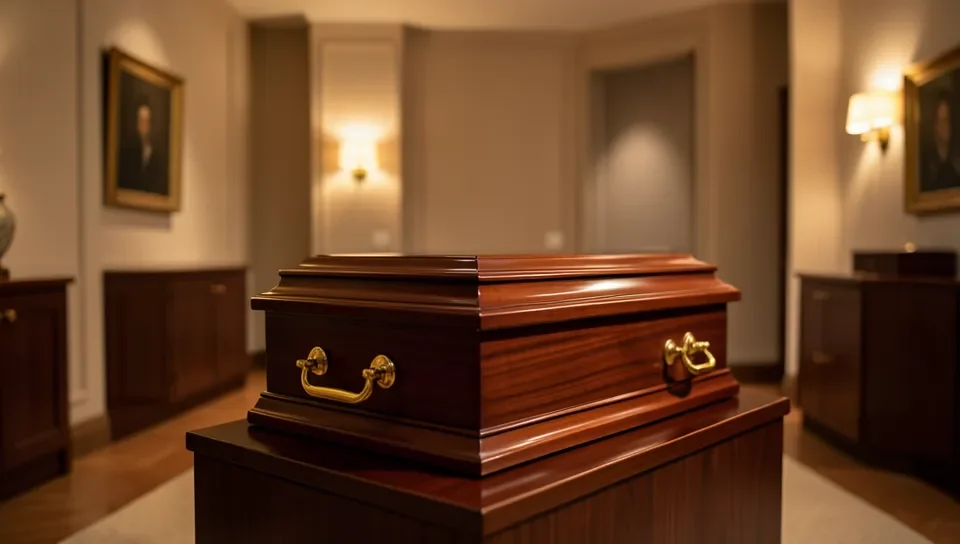
Moving up in price, oak is a common mid-range hardwood choice known for its pronounced grain and reputation for durability and dignity. Cherry offers a warmer, reddish tone that deepens with age, while walnut has a darker, richer color with more dramatic grain patterns. At the top of the range, mahogany caskets are typically the most expensive wood option, prized for their deep reddish-brown color, fine grain, and the way the wood takes a high polish. The cost difference between a basic pine casket and a premium mahogany one can be several thousand dollars, driven by both the raw material and the hand-finishing involved.
All wood caskets, regardless of species, are biodegradable. That is often listed as an environmental advantage, but it also means wood is naturally more susceptible to decay and moisture damage than metal over long periods, particularly in wet soil conditions. A finish or interior lining can slow this, but it doesn’t change the underlying material.
Metal Caskets: Steel, Bronze, and the Sealed-Casket Question
Metal caskets are most commonly made from steel, and steel caskets are described by gauge, which refers to the thickness of the metal sheet. Confusingly, a lower gauge number means a thicker, more substantial casket. Common gauges include 20-gauge (the thinnest and most affordable), 18-gauge, and 16-gauge (thicker and pricier). Stainless steel adds chromium for better rust and stain resistance at a moderate cost increase. Bronze and copper sit at the premium end: both are naturally corrosion-resistant alloys that don’t rust, and both come at a significantly higher price than steel.
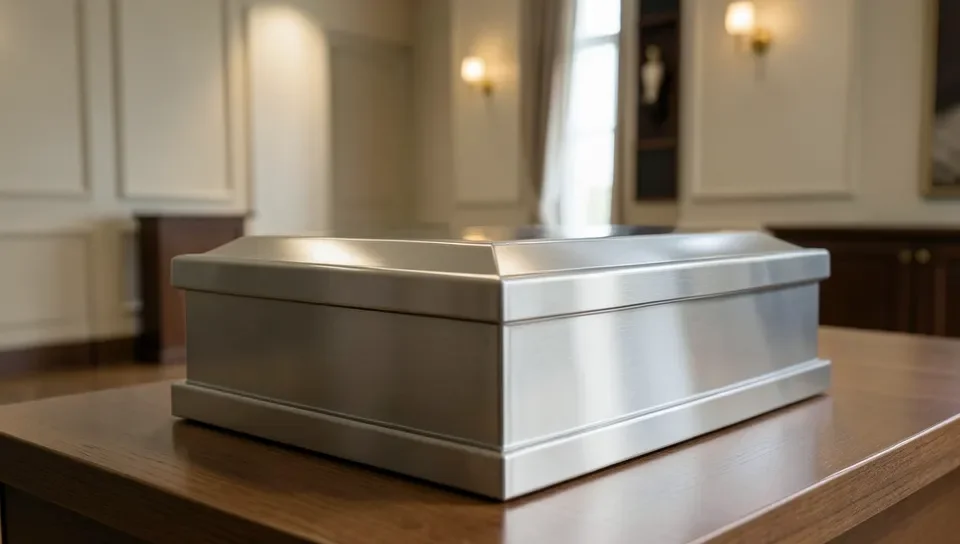
Many metal caskets are marketed as “gasketed,” “protective,” or “sealer” caskets, meaning they have a rubber gasket that seals the lid. This is where a genuinely important, and often misunderstood, point belongs: a sealed casket does not preserve a body indefinitely, and it is not required by any law. The Federal Trade Commission’s Funeral Rule specifically prohibits funeral providers from claiming that a casket or its gasket will keep remains preserved or protect them from natural decomposition, because that claim isn’t true. In practice, a hermetically sealed environment traps moisture inside the casket, which can actually speed up decomposition rather than slow it down, a well-documented issue that is also why cemeteries and mausoleums sometimes puncture or remove a casket’s seal before entombment. The gasket protects the casket’s interior from outside groundwater, not the body from the natural process of decomposition. Families are entitled to ask a funeral home directly what a “protective” feature actually does before paying extra for it.
Cost: Where Wood and Metal Overlap
It’s a common assumption that metal is automatically cheaper, or automatically more expensive, than wood. In reality the two price ranges overlap heavily. A basic 20-gauge steel casket is often one of the most affordable options available, sometimes less expensive than a mid-range hardwood casket. At the same time, a bronze or copper casket, or a premium hardwood casket in cherry or mahogany, can be among the most expensive choices in either category. Craftsmanship, hardware, interior lining quality, and finish all affect the final price as much as the base material does. The practical takeaway: material alone doesn’t determine budget tier, so it’s worth comparing specific models rather than assuming “wood” or “metal” sets the price.
| Feature | Metal Caskets | Wood Caskets |
|---|---|---|
| Common materials | Steel (20/18/16-gauge), stainless steel, bronze, copper | Pine, poplar, oak, cherry, walnut, mahogany |
| Durability | Corrosion-resistant, does not biodegrade | Biodegradable; varies by species and finish |
| “Protective” seal | Gasket seals the casket, not the body; does not stop decomposition and can trap moisture | Not typically sealed; some models offer a wood sealant finish for moisture resistance only |
| Typical price entry point | Basic steel is often the most affordable option overall | Basic pine/poplar is affordable; premium hardwoods rival high-end metal |
| Religious/cultural fit | Not used in traditions requiring plain wood, no metal | Required in some traditions, including some Jewish burial customs |
Religious and Cultural Traditions
For many families, the material isn’t a durability or budget question at all, it’s a religious or cultural one. Traditional Jewish burial law calls for a plain wooden casket made without any metal, including nails, based on the principle that the body should return to the earth as naturally and simply as possible; some Orthodox and Conservative communities follow this closely, while practices vary by congregation. Some other faith and cultural traditions likewise favor plain, simple wood over ornamented metal for similar reasons of humility and natural return, while other communities and families have no material restriction at all and choose based on personal taste. If tradition matters to your family, it’s worth raising with clergy or a funeral director early, since not every funeral home stocks every option.
How to Decide
A few practical questions can narrow the choice quickly:
- Did the person express a preference? If they specifically wanted wood or metal, that generally settles it.
- Is there a religious or family requirement? Some traditions call for plain wood specifically; confirm this before shopping.
- What’s the actual budget? Compare specific models rather than assuming one material category is cheaper.
- Is a “protective” or gasketed feature worth paying for? Given what that feature does and doesn’t do, decide based on the facts above rather than the marketing language alone.
- Burial or mausoleum entombment? Ask the cemetery or funeral home whether their site has any material or vault requirements, since some do.
There’s no universally “better” material here. Metal offers corrosion resistance and a range of finishes; wood offers a natural look, easier personalization through carving or engraving, and biodegradability. A funeral director can walk through in-stock options at your specific budget, and it’s reasonable to ask direct questions about any feature described as protective, sealed, or gasketed before paying more for it.
Frequently Asked Questions
Does a sealed or “protective” casket actually preserve the body longer?
No. The FTC’s Funeral Rule prohibits funeral providers from claiming that a gasketed or sealed casket preserves remains or protects them from decomposition, because it doesn’t. A sealed casket can trap moisture inside, which in some cases speeds up decomposition rather than slowing it. The gasket keeps outside groundwater from entering the casket; it does not stop the natural process of decomposition.
Is a metal casket always more expensive than a wood casket?
No. Basic steel caskets are often among the most affordable options available, sometimes cheaper than a mid-range hardwood casket. Premium metals like bronze and copper, and premium hardwoods like mahogany and walnut, both sit at the expensive end. Compare specific models rather than assuming the material sets the price.
Which casket material is more environmentally friendly?
Wood is biodegradable and generally considered the more environmentally friendly option, especially an untreated, unfinished casket. Metal caskets do not biodegrade and remain intact in the ground for a very long time.
Do any religious traditions require a wood casket?
Yes. Traditional Jewish burial practice calls for a plain wooden casket with no metal, including no metal nails, so the body returns to the earth naturally; observance of this varies by community. Other traditions also favor simple, plain wood for similar reasons. It’s worth confirming any requirement with clergy or the funeral home before selecting a casket.
Can both metal and wood caskets be personalized?
Yes. Wood caskets can be carved or engraved directly into the material. Metal caskets are typically personalized through interior fabric lining choices, corner hardware, or exterior finish and color, since the metal itself isn’t carved.
Final Thoughts
Metal and wood caskets both serve the same purpose, and the right choice comes down to the deceased’s wishes, family or religious tradition, and budget, not which material is objectively “better.” If a funeral home describes a feature as protective, sealed, or gasketed, it’s reasonable to ask exactly what that means before it factors into the decision. Whatever material is chosen, a straightforward conversation with the funeral director about cost, materials, and any tradition your family follows is the most useful step you can take.
Sponsored / affiliate links. As an Amazon Associate I earn from qualifying purchases. I may earn additional commission from eligible campaigns.