Pergo vs. SmartCore: How to Actually Pick Between Them (2026)
Pergo and SmartCore get compared constantly, but they’re not two brands making the same product – Pergo is a laminate flooring line, and SmartCore (Lowe’s house brand) is luxury vinyl plank (LVP). That single fact decides most of the real differences below: what’s actually inside each plank, where you can install it, and what happens if it gets wet. Here’s what actually separates them, without the vague “it depends on your needs” non-answer.
Pergo vs. SmartCore at a Glance
Before the details: Pergo is a laminate floor with a printed wood-image layer over a wood-fiber (HDF) core, sealed with a hard-wearing resin coating. SmartCore is vinyl through and through – a printed vinyl layer over a rigid SPC (stone-plastic composite) or flexible WPC (wood-plastic composite) core. That’s why SmartCore is genuinely waterproof and Pergo, despite some water-resistant lines, is not something you install in a bathroom that floods.
Best Cleaner for Either Floor’s Finish
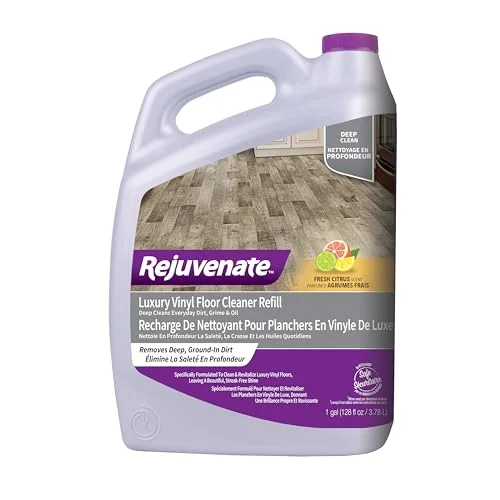 |
Rejuvenate Luxury Vinyl Floor Cleaner, 1 Gal – $16.73 Whichever brand you land on, both SmartCore’s vinyl wear layer and Pergo’s laminate coating get hazed by vinegar and oil soaps – this pH-balanced formula is safe on both.
|
What’s Actually Inside Each Floor
Pergo’s core is High-Density Fiberboard (HDF): compressed wood fibers, the same family of material as MDF but denser and more moisture-resistant. On top sits a photographic decor layer (the “wood look”) and then a melamine or aluminum-oxide wear layer that gives laminate its scratch resistance. Because the core is wood fiber, it will swell and delaminate if water sits on a seam long enough – that’s the one weakness laminate hasn’t solved.
SmartCore skips wood fiber entirely. Its core is either SPC (limestone powder bonded with PVC, very rigid and dent-resistant) or WPC (a foamed wood-plastic blend, slightly softer underfoot and better at hiding minor subfloor imperfections). Both cores are closed-cell plastic composites, so they don’t absorb water the way HDF does – the plank itself simply doesn’t care about moisture the way laminate does.
Durability: Where Each One Actually Wins
For scratch and dent resistance in dry rooms, Pergo’s aluminum-oxide wear layer is hard to beat – it’s the same coating technology used on commercial laminate, and it shrugs off dog claws and dragged furniture better than most vinyl. SmartCore’s urethane wear layer resists scuffs well too, but rigid-core SPC planks can dent under sustained point pressure (a stiletto heel or an unpadded furniture leg), something laminate’s harder surface resists better.
Where SmartCore pulls ahead is long-term stability in temperature swings. Laminate’s wood-fiber core expands and contracts more with humidity, which is why Pergo installations need a wider expansion gap at the walls. SmartCore’s plastic core is far more dimensionally stable, which is part of why it’s the more common choice for sunrooms, three-season porches, and homes without tight climate control.
Water Resistance: The Difference That Actually Matters
This is the comparison people get wrong most often, so it’s worth correcting directly: SmartCore being “100% waterproof” describes the plank, not the whole installed floor. Water that gets past the seams and sits on top of a concrete slab or crawlspace subfloor can still cause problems underneath – mold, adhesive failure, or a musty smell – even though the SmartCore plank itself never swells. Lowe’s own install specs still call for a compatible underlayment or vapor barrier on grade and below-grade concrete for exactly this reason. “Waterproof plank” is not the same claim as “waterproof floor system.”
Pergo’s newer Outlast+ and Defense+ lines are marketed as water-resistant, and they’ll survive a spill wiped up within a reasonable window, but they are not rated for standing water or rooms with real moisture exposure. If you’re flooring a full bathroom, laundry room, or a basement with any history of dampness, SmartCore (or any LVP) is the safer call; Pergo is better reserved for living rooms, bedrooms, and kitchens where spills get cleaned up quickly.
One more practical wrinkle worth knowing: SmartCore’s WPC line handles minor standing water (a slow leak found within a day or two) noticeably better than the SPC line, because WPC’s foamed core sheds moisture from its edges faster. If you’re specifically shopping for a laundry room or under-sink area, ask which core the exact SmartCore product uses rather than assuming “SmartCore” is one uniform product – Lowe’s sells both under the same brand name with different real-world moisture tolerance.
Installation: DIY-Friendly vs. Best Left to a Pro
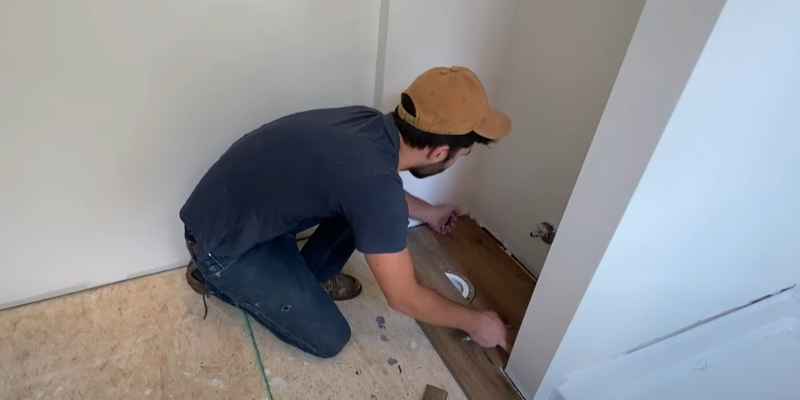
Both use click-lock, glueless installation, but they behave differently under a hand saw. Pergo’s HDF core cuts cleanly with a standard laminate cutter or fine-tooth saw, and it floats on a foam underlayment that also muffles sound – a reasonable weekend DIY project if you’ve done any flooring before. SmartCore’s rigid SPC core is denser and duller on blades, and because it’s frequently installed in bathrooms and basements, getting the subfloor prep and transition strips right matters more; it’s still DIY-doable, but budget more time for cutting and more care around plumbing fixtures.
Neither requires glue or nails for a standard room installation, and both tolerate minor subfloor imperfections better than solid hardwood – SmartCore’s WPC line in particular is the more forgiving option over an uneven older subfloor, since its slightly cushioned core flexes rather than telegraphing every dip.
Cost Comparison
Both brands span a wide range depending on the specific line. Pergo’s entry laminate runs roughly $2-3 per square foot, with the water-resistant Outlast+ and TimberCraft lines landing closer to $3.50-5. SmartCore follows a similar spread – the WPC-based Ultra line tends to sit around $3-4 per square foot, while the denser Pro (SPC) line runs $3.50-5.50. At the budget end they’re close to a wash; the real cost difference shows up later, in whether a water incident means refinishing a few planks (SmartCore) or replacing a swollen section down to the subfloor (Pergo).
Environmental and Air Quality Considerations
Pergo’s HDF core uses real wood fiber, much of it reclaimed or from certified sources, and the brand publishes FloorScore certification for indoor air quality on its lines. SmartCore carries GreenGuard Gold certification, which sets stricter limits on chemical off-gassing and is specifically relevant for vinyl flooring, since PVC-based products have historically drawn more air-quality scrutiny than wood-fiber ones. If indoor air quality is a deciding factor, GreenGuard Gold is the more rigorous of the two standards, though both products test within accepted safety limits.
So Which One Should You Buy?
Pick SmartCore for bathrooms, laundry rooms, basements, mudrooms, or any room where water is a realistic risk – the vinyl core genuinely doesn’t care about moisture the way laminate’s wood-fiber core does. Pick Pergo for living rooms, bedrooms, hallways, and dry-area kitchens where you want laminate’s harder wear layer, a slightly firmer underfoot feel, and (on many lines) a lower entry price. If you’re flooring an entire main level that includes both a kitchen with real spill risk and dry living spaces, it’s common – and not a compromise – to run SmartCore in the wet-prone rooms and Pergo everywhere else, since both click-lock into similar plank profiles and use compatible transition strips.
Frequently Asked Questions
Is SmartCore the same thing as Pergo, just cheaper?
No – they’re different flooring categories, not tiers of the same product. Pergo is laminate (a wood-fiber HDF core under a printed wear layer); SmartCore is luxury vinyl plank (an SPC or WPC plastic-composite core). That’s why SmartCore is truly waterproof and Pergo isn’t, regardless of price.
Can I install SmartCore in a bathroom and Pergo in the hallway right next to it?
Yes, and it’s a common approach. Both use similar click-lock plank systems, and Lowe’s sells matching transition/reducer strips for exactly this kind of room-to-room changeover, so you’re not stuck picking one floor for the entire level.
Does “waterproof” SmartCore need a vapor barrier over concrete?
Often yes, on grade or below-grade concrete. The plank itself won’t swell from moisture, but Lowe’s own installation instructions still call for a compatible underlayment or vapor barrier on concrete subfloors, because moisture trapped underneath the floor can still cause mold or adhesive problems even though the SmartCore plank stays intact.
Which one is harder to scratch, Pergo or SmartCore?
Pergo’s aluminum-oxide laminate wear layer generally resists scratches and dragged-furniture damage better than SmartCore’s urethane vinyl coating. SmartCore’s rigid SPC core resists denting from sustained pressure reasonably well, but for everyday scratch resistance in dry rooms, laminate’s harder surface usually has the edge.
Bottom Line
Stop thinking of this as “which brand is better” and start with the room. Real water risk (bathrooms, laundry rooms, basements) points to SmartCore’s vinyl core. Dry living spaces where you want a harder wear layer and a wood-fiber core point to Pergo. Both are click-lock, both install without glue, and both come from companies with decades in flooring – the deciding factor is what the room needs, not which name is on the box.
Sponsored / affiliate links. As an Amazon Associate I earn from qualifying purchases. I may earn additional commission from eligible campaigns.