Poly Glue Explained: When Polyurethane Beats Wood Glue
Poly glue is a polyurethane adhesive that cures by reacting with moisture – expanding as it dries to fill gaps in wood, metal, foam, and ceramics – but it’s a different product from PVA “wood glue,” even when both wear a Gorilla-brand label. Using the wrong one on an indoor furniture joint can mean a messier, weaker bond than plain wood glue would have given. This guide covers how poly glue actually works, when it beats wood glue, and how to apply it without wasting half the bottle on foam.
Poly Glue vs. Wood Glue: What’s the Difference?
Best Poly Glue Pick
 |
Gorilla Original Glue, Waterproof Polyurethane, 8 oz – $9.98 The classic polyurethane “poly glue” this guide is about – not to be confused with Gorilla’s separate PVA Wood Glue. Waterproof once cured and bonds wood, metal, stone, and foam.
|
As an Amazon Associate we earn from qualifying purchases.
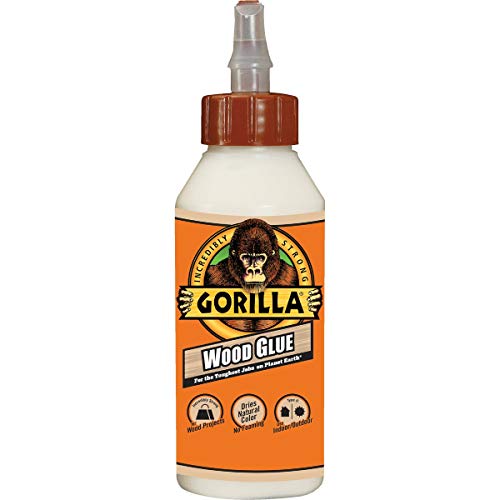
“Poly glue” almost always means polyurethane glue – the original Gorilla Glue formula is the best-known example. Confusingly, Gorilla also sells a separate product called Gorilla Wood Glue, which is a PVA adhesive, not polyurethane. They are not the same chemistry and are not interchangeable for the same reasons.
| Property | Polyurethane (Poly Glue) | PVA Wood Glue |
|---|---|---|
| Best for | Outdoor joints, end grain, bonding wood to metal/stone/foam | Indoor wood-to-wood furniture and cabinet joints |
| Cures by | Reacting with moisture, expands as it cures | Water evaporating, no expansion |
| Cleanup | Hard once cured, needs solvent or sanding | Easy, cleans up with water while wet |
| Clamping | Requires firm, even clamping or joints can be pushed apart | Standard clamping pressure, more forgiving |
| Water resistance | Waterproof once cured | Water-resistant at best (even “Type III” formulas) |
For most indoor furniture and cabinetry, a PVA wood glue gives a stronger, cleaner wood-to-wood joint with far less mess. Reach for polyurethane poly glue specifically when a joint will see moisture, when you’re bonding wood to a non-wood material, or when you need to fill a slightly uneven gap that a non-expanding glue can’t close.
The Science Behind Poly Glue
Poly glue is built from isocyanates and polyols that react with moisture – either ambient humidity or water on the wood’s surface – to form a rigid polyurethane bond. That reaction releases a small amount of carbon dioxide, which is what makes the glue foam and expand as it cures.
Because it needs moisture to kick off the reaction, poly glue actually bonds better on slightly damp wood than on bone-dry stock – a light misting of one surface with water before applying the glue speeds and strengthens the cure. Once fully cured, the bond is rigid, dries a tan-to-brown color, and is waterproof.

Safety and Precautions
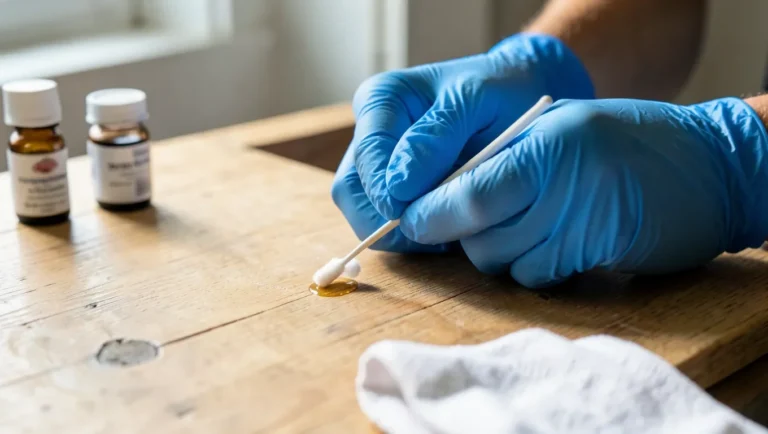
Wear gloves and eye protection when handling poly glue, and work in a well-ventilated area – the isocyanates in uncured glue can irritate skin and lungs. Keep it away from heat sources and open flames, and store it in a cool, dry place with the cap tightly sealed, since exposure to air and humidity will start curing glue inside a half-used bottle.
- Keep the container upright and tightly sealed between uses – an open bottle absorbs ambient moisture and starts curing from the inside out.
- Never eat, drink, or smoke while applying it.
- Dispose of unused, hardened glue according to local household hazardous waste guidelines – it does not wash down a drain safely once cured.
Common Applications
Poly glue is used wherever a joint needs to survive moisture or bond dissimilar materials: exterior trim and outdoor furniture, laminate countertop edges, bonding wood to stone or metal hardware, and repairing gaps in porous materials where the expansion helps fill voids a non-expanding glue would leave open.
It’s a poor choice for anything that needs to be stained or finished afterward – the cured foam doesn’t accept stain evenly, so any squeeze-out has to be scraped and sanded flush before finishing.
How to Apply Poly Glue Correctly
Poly glue needs less product and firmer clamping than most people expect – overapplying it just means more foam squeeze-out to clean up later.
- Clean both surfaces: remove dust, dirt, and grease with a damp cloth, then let the surfaces dry to just slightly damp, not soaking wet.
- Shake the bottle: poly glue settles between uses, so shake it before every application.
- Apply a thin, even layer: use less than feels natural – a thin bead on one surface is enough, since the glue will expand to fill the joint.
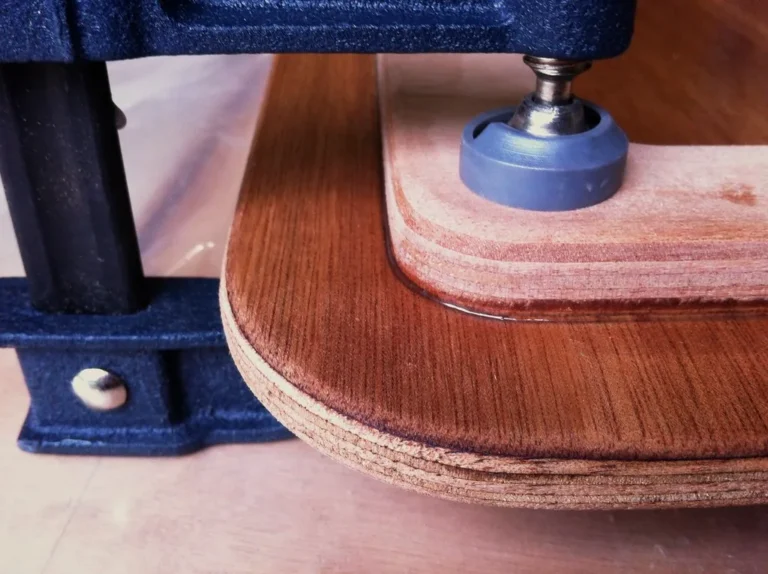
- Clamp immediately and firmly: uneven or loose clamping lets the expanding foam push the joint apart instead of holding it tight.
- Wait at least 1-2 hours before handling and let it cure fully for 24 hours before putting the joint under load.
- Scrape excess foam once it turns rubbery (about 1-3 hours) rather than after it’s fully hardened, when it’s much harder to remove cleanly.
Troubleshooting Weak Bonds
Most weak poly-glue joints trace back to one of two mistakes: too little clamping pressure, or gluing wood that was too dry for the moisture-cure reaction to fully activate. If a joint fails, check both before blaming the glue itself.
If glue has already hardened where you don’t want it, a sharp scraper or 120-grit sandpaper will remove it – acetone can soften small amounts of uncured glue but does very little once it’s fully cured. For future joints in very dry wood, lightly dampen one surface with a wet rag before applying the glue.

Frequently Asked Questions
What Is Poly Glue Used For?
Poly glue (polyurethane glue) is used for bonds that need to survive moisture or join dissimilar materials – wood, metal, plastic, foam, and ceramics. It’s common for exterior trim, outdoor furniture repairs, and gap-filling on porous materials.
How Does Poly Glue Work?
Poly glue cures through a chemical reaction with moisture rather than by drying out. That reaction releases carbon dioxide, which is why the glue foams and expands as it cures, filling small gaps between surfaces.
Is Poly Glue Waterproof?
Yes, poly glue is waterproof once fully cured, which is one of its main advantages over standard PVA wood glue. Always check the specific product’s cure time before exposing a joint to water or weather.
Is Gorilla Wood Glue the Same as Poly Glue?
No. Original Gorilla Glue is polyurethane (poly glue), while Gorilla Wood Glue is a separate PVA-based product. They cure differently, and PVA wood glue is generally the stronger, cleaner choice for indoor wood-to-wood furniture joints.
Can Poly Glue Be Used on Foam?
Poly glue can be used on certain types of foam. It bonds well with rigid foams but may not work effectively on soft, flexible foams. Always test on a small, hidden area first to confirm compatibility before committing to a full application.
Conclusion
Poly glue earns its place for outdoor joints, mixed-material bonds, and gap-filling repairs – but for straightforward indoor wood furniture, a PVA wood glue is usually the stronger and easier choice. Match the glue to the job rather than defaulting to whichever bottle is already on the shelf.
Sponsored / affiliate links. As an Amazon Associate I earn from qualifying purchases. I may earn additional commission from eligible campaigns.