What Is a Portable Table Saw Outfeed Table and Why Do You Need One?
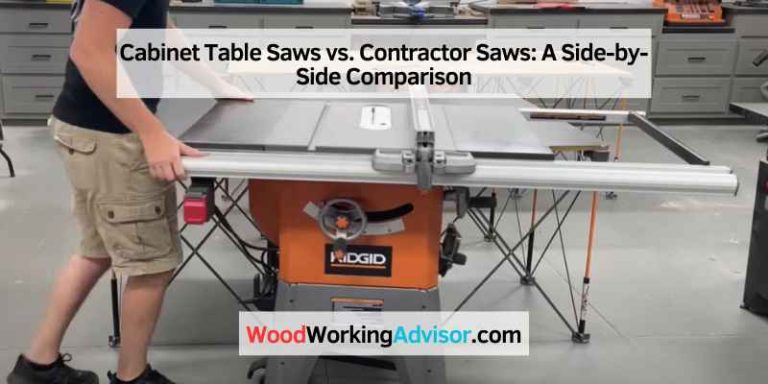
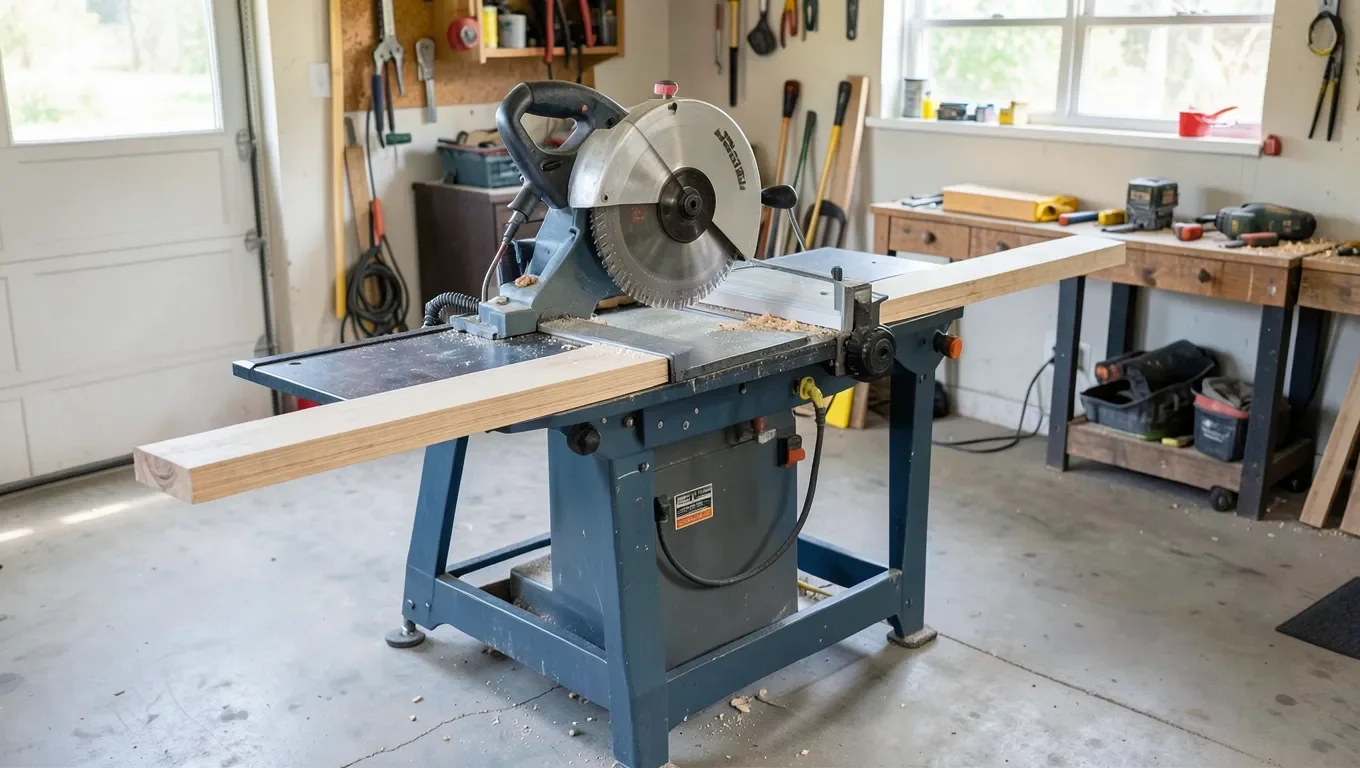
A portable table saw outfeed table is a surface that attaches to or sits behind a table saw to catch and support material as it exits the blade. Unlike a permanent shop-built outfeed table, a portable one is lightweight, foldable, or easy to disassemble, which makes it a good fit for small shops, garages, and jobsite saws that need to pack up between uses.
Why You Need One
A Portable Option Worth Trying First
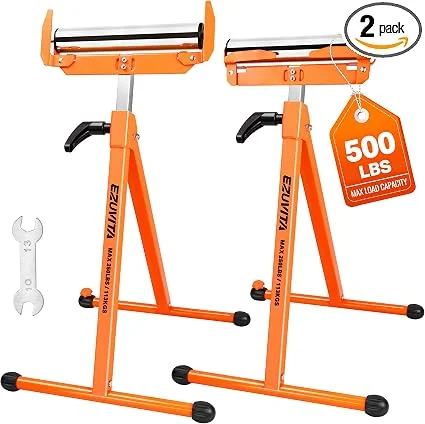 |
EZUVITA Folding Roller Stands, 2-Pack A lower-commitment way to get real outfeed support before building or buying a dedicated table – folds flat for storage and works for infeed support too.
|
Ripping a long board without outfeed support means the free end tips downward as it clears the saw table, which forces you to either awkwardly support the board yourself mid-cut or let it drag and bind. Both outcomes hurt cut accuracy, and a board that binds against the blade is a genuine kickback risk – unsupported long stock is one of the more common causes of kickback on a table saw. Outfeed support also matters for full sheets of plywood, which are heavy and unwieldy enough that letting them tip is both a safety issue and a good way to rip a board unevenly.
The core problem an outfeed table solves is simple: a table saw’s own table only supports material up to the point where it passes the blade. Anything longer than the saw’s table depth is, by definition, unsupported the moment it crosses that line – it’s not a defect in the saw, it’s just physics, and it applies to every table saw regardless of price or size. A portable outfeed table extends that support without requiring the permanent floor space of a full shop-built outfeed system, which matters most in garages, single-car shops, or on jobsites where the saw itself has to be portable in the first place.
Types of Portable Outfeed Support
Several distinct product categories fall under “portable outfeed support,” each suited to different situations.
| Type | Best For | Tradeoff |
|---|---|---|
| Folding outfeed table (attached to saw) | Fast setup, stays aligned with the saw | Can sag under heavy loads if the leg support is undersized |
| Roller stands | Long, narrow boards; very compact storage | Less stable under wide sheet goods, which can tip off the rollers |
| Freestanding collapsible table | Flexible placement, can be used away from the saw too | Slower to set up and level than an attached table |
| DIY custom build | Exact fit to a specific saw and space | Requires a build session before you have a usable table |
A jobsite saw (DeWalt, Bosch, Ryobi, and similar compact models) usually pairs best with a folding table that mounts directly to the saw’s rear rail, since it travels with the saw and doesn’t need separate leveling each time. If you’d rather build a dedicated outfeed table from scratch, see our step-by-step jobsite outfeed table build guide for a full plan and cut list.
Key Features to Look For
- Sturdiness: a flimsy table is worse than none, since it can wobble mid-cut and pull the board off-line. Solid plywood or metal-framed tables hold up far better than thin particleboard.
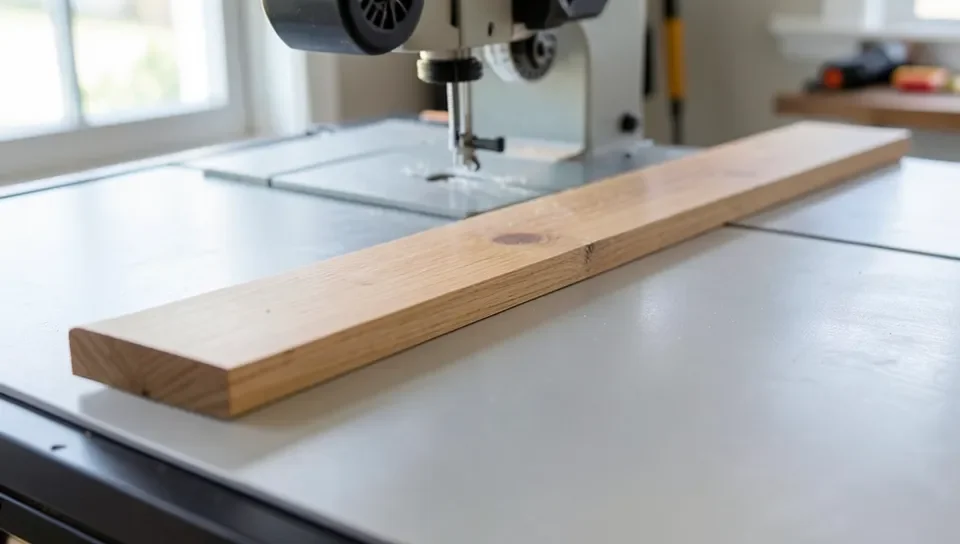
- Adjustable height: the table surface needs to sit flush with (or very slightly below) the saw table – even a small mismatch causes material to catch at the seam. Leveling feet or adjustable legs make this achievable on an uneven shop floor.
- Miter slot alignment: if you use a miter gauge or crosscut sled, the outfeed table’s slots (if it has them) need to line up with the saw’s own miter tracks.
- Portability: weight and fold/disassembly time both matter if the table needs to move or store away regularly – a table that’s a hassle to set up gets used less over time.
- Surface smoothness: melamine, laminate, or a paste-waxed plywood surface lets material glide; a rough or sticky surface fights every cut.
Measure the saw’s table height and the clearance behind it before buying or building – a table that ends up too tall creates the same catching problem as one that’s too short, and either can block the saw’s dust port depending on the model.
Setting It Up Correctly
Level the outfeed surface to the saw table using a straightedge laid across both – a difference as small as 1/16″ is enough to catch the leading edge of a board as it crosses the seam. Most people intentionally set the outfeed table a hair lower than the saw table rather than higher, since a slightly low table lets material drop onto it smoothly, while a slightly high table creates a lip the board has to climb over.
Keep the surface clean – sawdust buildup and dried glue create drag exactly where you need material to slide freely. A light coat of paste wax on a melamine or laminate surface, reapplied every month or so with regular use, keeps material moving smoothly.
If the outfeed table attaches to the saw itself (rather than standing freely), recheck its alignment any time you move the saw – even sliding a saw a few inches on a workbench can throw off a table that was previously dialed in. Making a quick alignment check part of your setup routine, rather than something you only think about after a bad cut, catches this before it causes a problem.
Common Mistakes
- Setting the table too high: material bumps against the edge as it exits the blade instead of sliding onto the surface smoothly.
- Skimping on materials: thin plywood or weak folding hardware sags under real loads like a full sheet of plywood, even if it seemed sturdy empty.
- Skipping miter slot alignment: if a sled or miter gauge needs to ride across the outfeed table, misaligned or missing slots make that impossible.
- Not testing portability before committing: a table that’s genuinely difficult to fold, carry, or store gets skipped more often than it gets used, which defeats the purpose of buying a portable one in the first place.
Conclusion
A portable outfeed table solves a real, common problem – long or heavy material tipping and binding as it leaves the saw – without requiring the floor space of a permanent shop fixture. Whether you buy a folding attachment, use roller stands, or build a custom table sized to your own saw and space, the table earns its keep the first time it saves a cut (or a hand) from an unsupported board.
Frequently Asked Questions
What’s the ideal size for a portable outfeed table?
Size it to your saw’s width and typical material – matching the saw’s table width and extending 24 to 36 inches deep is enough for most projects, with wider or deeper tables needed mainly for full sheet goods.
Can I use a roller stand instead of an outfeed table?
Roller stands work well for long, narrow boards but struggle with wide sheet goods, which can tip or misalign on the narrow rollers. A flat table offers better stability and versatility, especially for plywood or heavier stock.
How do I make sure my outfeed table is level with my saw?
Lay a straightedge across the saw table and the outfeed surface, then adjust with leveling feet or shims until there’s no visible gap or step at the seam. Many woodworkers set the outfeed table very slightly lower than the saw table to avoid material catching on the edge.
Is it worth building my own outfeed table?
Building one is a genuinely worthwhile weekend project if you want a table sized exactly to your saw and space, since off-the-shelf options come in fixed sizes. See our full build guide for a materials list and step-by-step instructions.
How do I store a portable outfeed table in a small shop?
Folding or collapsible tables that fold flat against a wall or fit under the saw stand are the most practical choice in tight spaces. Check the folded dimensions before buying or building to make sure it actually fits your storage spot.
What materials are best for a DIY outfeed table?
3/4-inch plywood with a melamine or laminate top gives a smooth, durable surface. Baltic birch or MDF also work for the top; 2×4 lumber or a metal frame both work for the base. Avoid thin plywood, which sags under real loads.
Sponsored / affiliate links. As an Amazon Associate I earn from qualifying purchases. I may earn additional commission from eligible campaigns.