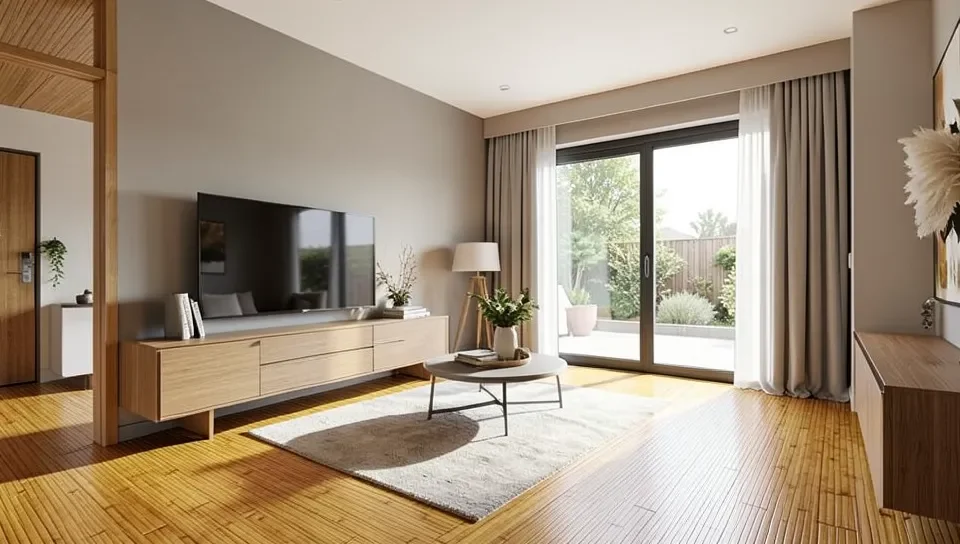
Solid Bamboo Flooring: Strand-Woven Is Harder Than Oak, Horizontal Grain Isn’t
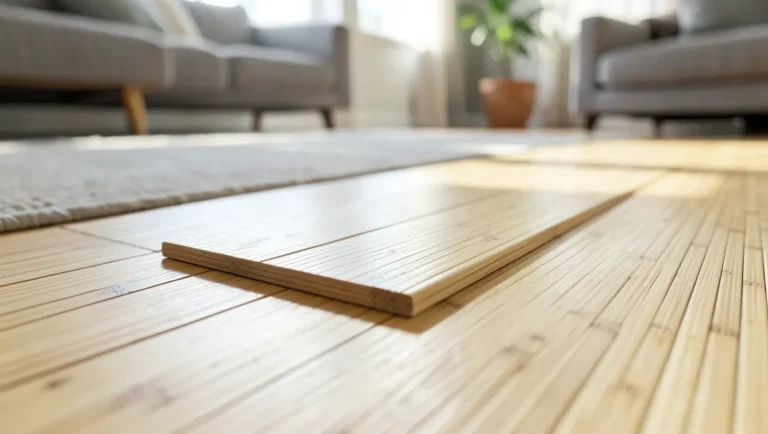
“Solid bamboo flooring” isn’t one hardness — strand-woven bamboo (bamboo fibers compressed under extreme pressure with resin) runs around 3,000-5,000+ lbf on the Janka hardness scale, harder than nearly any hardwood species including oak. Horizontal or vertical grain bamboo (full bamboo strips glued face-up or edge-up, the more traditional construction) is much softer, typically 1,180-1,380 lbf, closer to red oak than to strand-woven’s extreme hardness. Two bamboo floors can look similar and perform completely differently, which is why checking construction type matters more than trusting “bamboo” alone as a durability signal. A third construction type, engineered bamboo (a strand-woven or horizontal-grain wear layer bonded over a plywood-style core), trades some of solid bamboo’s dent resistance for better dimensional stability in humidity-prone rooms, similar to the solid-versus-engineered tradeoff in real hardwood flooring.
Why Strand-Woven and Horizontal Bamboo Perform So Differently
Rated for Bamboo’s Density
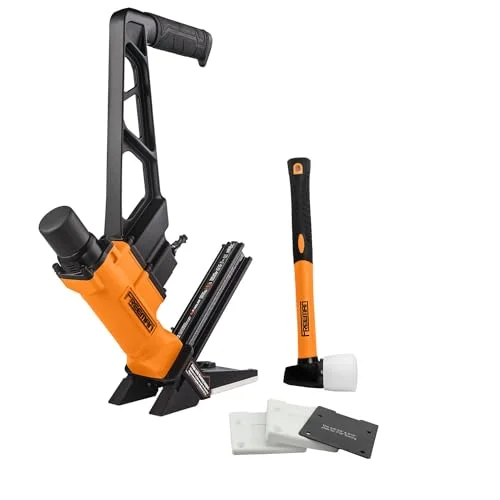 |
Freeman Pneumatic 18-Gauge Flooring Nailer – $247.99 Explicitly rated for strand-woven bamboo, which is dense enough to matter for nailer selection.
|
Strand-woven construction shreds bamboo fiber and compresses it with resin under high pressure into a dense composite, which is why it can exceed even the hardest natural hardwoods on the Janka scale. Horizontal and vertical grain bamboo instead glues whole bamboo strips together with much less compression, preserving more of bamboo’s natural (softer) structure and visible node lines. Strand-woven is the better choice for a high-traffic area or a household with pets; horizontal/vertical grain gives a more traditional bamboo look at the cost of dent resistance.
Carbonization Trades Hardness for Color
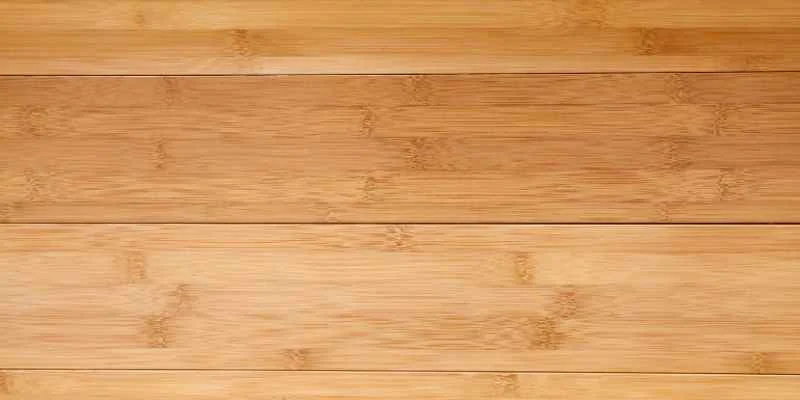
Carbonized bamboo (heat-treated to produce a darker amber-brown color throughout) loses roughly 30% of its hardness compared to natural, uncarbonized bamboo of the same construction type, since the heating process that darkens the color also breaks down some of the fiber’s structural strength. This means a carbonized strand-woven floor can still land well above most hardwoods despite the reduction, but a carbonized horizontal/vertical grain floor drops further below red oak territory. If maximum hardness matters more than a darker color, natural (non-carbonized) strand-woven is the combination to look for.
Bamboo Is a Grass, Which Actually Matters for Moisture
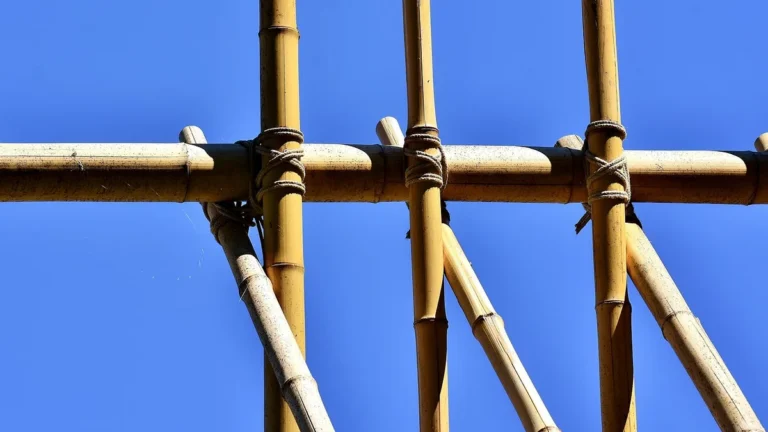
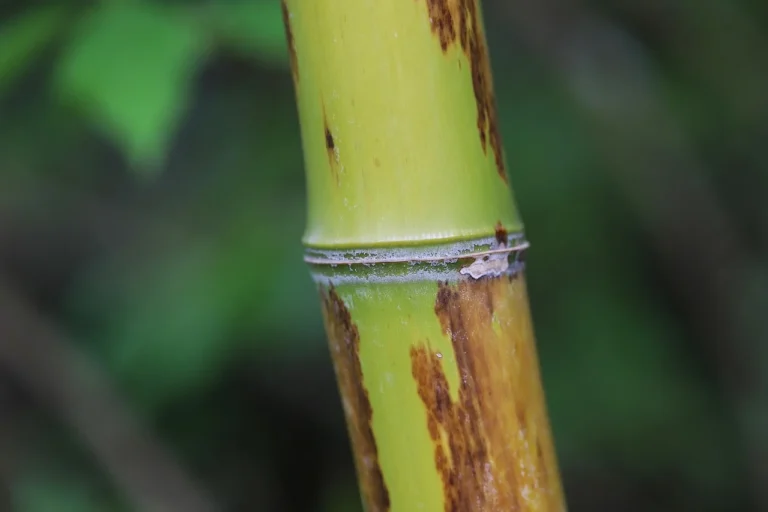
Bamboo is botanically a grass, not a tree, and its fast growth cycle (usable in 3-5 years versus decades for hardwood trees) is the real basis for its sustainability reputation. That grass structure also means bamboo can be more sensitive to humidity swings than some hardwoods, expanding and contracting with moisture changes in ways that make proper acclimation before installation and stable indoor humidity control genuinely important, not just standard boilerplate installation advice.
Cost: Where Bamboo Actually Lands vs. Hardwood
Solid bamboo flooring generally costs less per square foot than premium hardwoods like white oak or hard maple, but strand-woven specifically often costs more than budget horizontal/vertical grain bamboo despite both being “bamboo,” since the denser manufacturing process costs more to produce. Comparing bamboo to hardwood purely on the word “bamboo” versus “oak” misses this internal price spread — a premium strand-woven bamboo floor can cost close to mid-range hardwood, while budget horizontal-grain bamboo undercuts almost anything real-wood.
Real Maintenance Differences From Hardwood
Bamboo floors are cared for similarly to hardwood day-to-day (dry or slightly damp mopping, no standing water, felt pads under furniture), but refinishing capacity differs by construction type — a thick-wear-layer strand-woven floor can typically be sanded and refinished a few times like solid hardwood, while some horizontal/vertical grain products have a thinner usable surface layer that limits refinishing to once or not at all. Checking the specific product’s wear layer thickness before assuming hardwood-level refinishing potential avoids a surprise a decade into ownership. For a rundown of common complaints across bamboo flooring generally, see our bamboo flooring problems guide.
Frequently Asked Questions
Is all bamboo flooring the same hardness?
No. Strand-woven bamboo runs 3,000-5,000+ lbf on the Janka scale, harder than most hardwoods. Horizontal or vertical grain bamboo is much softer, typically 1,180-1,380 lbf, closer to red oak.
Does carbonized bamboo lose durability?
Yes, roughly 30% less hardness than natural bamboo of the same construction type. The heat treatment that darkens the color also weakens the fiber structure somewhat.
Is bamboo flooring more sensitive to humidity than hardwood?
It can be, since bamboo is a grass with different moisture behavior than tree-based hardwood. Proper acclimation before installation and stable indoor humidity matter more with bamboo than with some hardwood species.
Conclusion
The real durability question for solid bamboo flooring isn’t “is bamboo durable,” it’s “which construction type” — strand-woven and horizontal/vertical grain bamboo perform on completely different ends of the hardness scale despite both being genuinely solid bamboo. Check the construction type and carbonization status specifically before assuming any bamboo floor matches another’s real-world durability.
Sponsored / affiliate links. As an Amazon Associate I earn from qualifying purchases. I may earn additional commission from eligible campaigns.