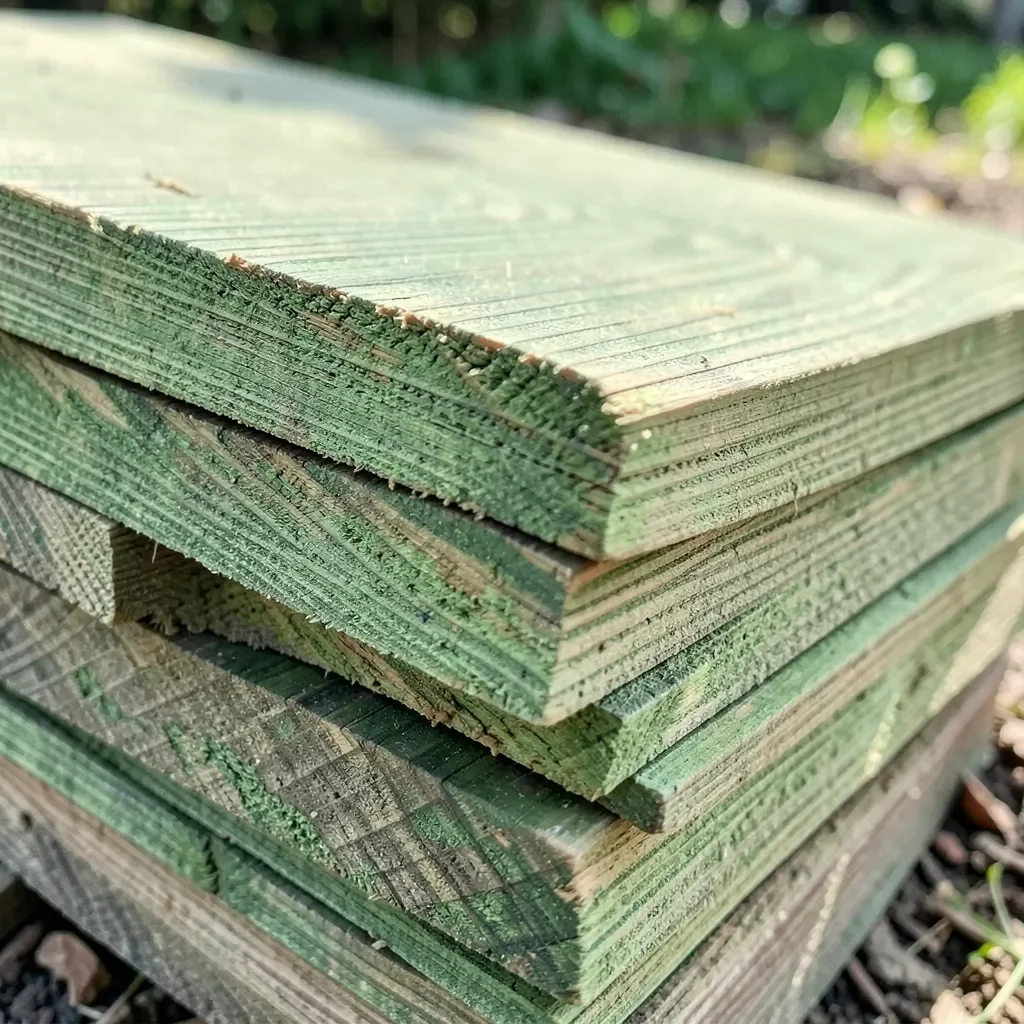
What Pressure-Treated Wood Looks Like: Fresh vs. Weathered Color
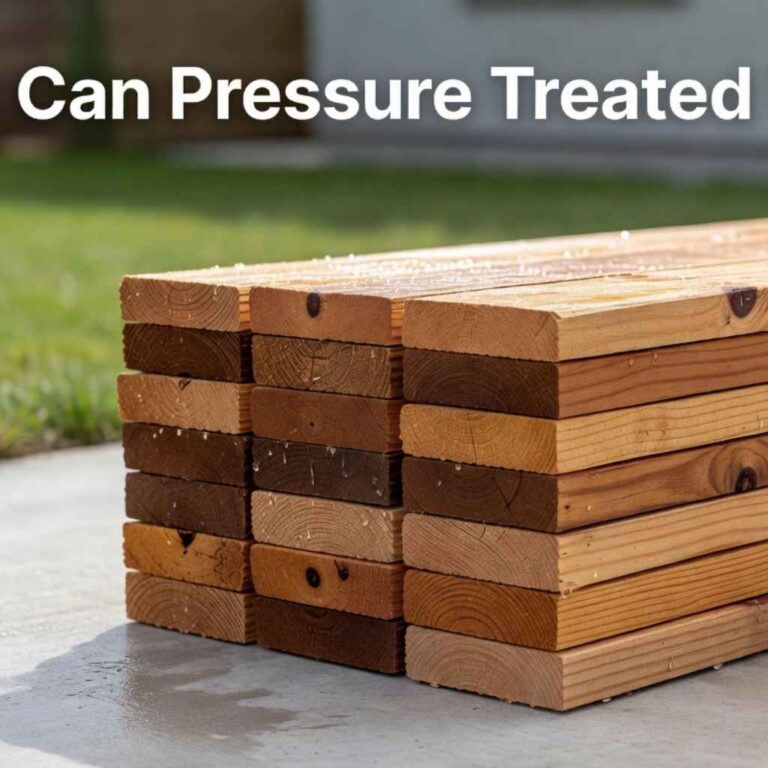
Freshly pressure-treated lumber has a greenish-tan cast and rows of small incision slits from the treatment press — not a uniform color like stained wood. That green fades to dull gray within 6 to 12 months of sun exposure, unless treated with a newer micronized copper formula (MCA or MCQ), which starts light tan instead of green. This guide covers the color timeline, the incision-mark texture test, and how it compares to the stamp-code method.
Affiliate disclosure: Woodworking Advisor is reader-supported. If you buy through links on this page, we may earn an affiliate commission at no extra cost to you.
Quick Answer
Pressure-treated wood is greenish or light brown when new, with visible incision slits and a slightly damp, heavier feel than untreated lumber of the same species. As it weathers outdoors, the color fades to silvery gray within about a year. A chemical, faintly metallic smell and an end-tag stamp (CA, ACQ, or MCQ) confirm it beyond just the color.
The Color Timeline: Fresh Green to Weathered Gray
Best Moisture Meter Pick
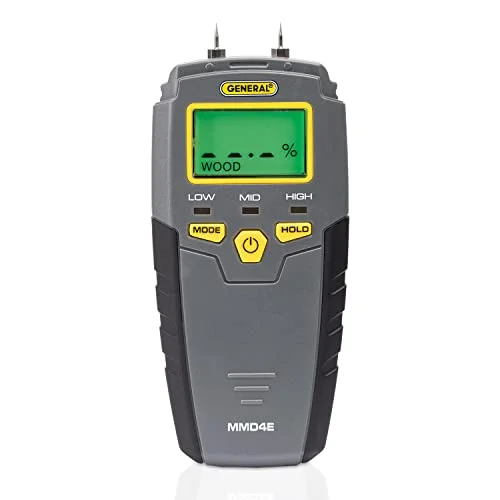 |
General Tools MMD4E Moisture Meter – $38.83 Since fresh pressure-treated lumber can stay damp for weeks before it’s ready to stain or paint, a pin-type moisture meter confirms the board has actually dried below 19% moisture content before you finish it.
|
Color is the first thing most people notice, and it changes fast. The exact shade depends on which preservative treated the board, but the pattern below holds for the copper-based chemicals (ACQ and CA) used in almost all residential pressure-treated lumber sold today.
| Age | ACQ / CA Lumber | MCA / MCQ (Micronized) Lumber |
|---|---|---|
| Day 1 (fresh cut) | Green to olive tint, visibly damp | Light tan, barely tinted |
| 1–3 months outdoors | Fading olive-brown | Tan deepening slightly |
| 6–12 months outdoors | Dull gray-brown | Gray-tan |
| 2+ years, unsealed | Silvery gray | Silvery gray |
Once a board reaches the silvery-gray stage, color alone can no longer distinguish it from weathered cedar or redwood — that’s when the incision marks and stamp (covered below) matter more than the tint.
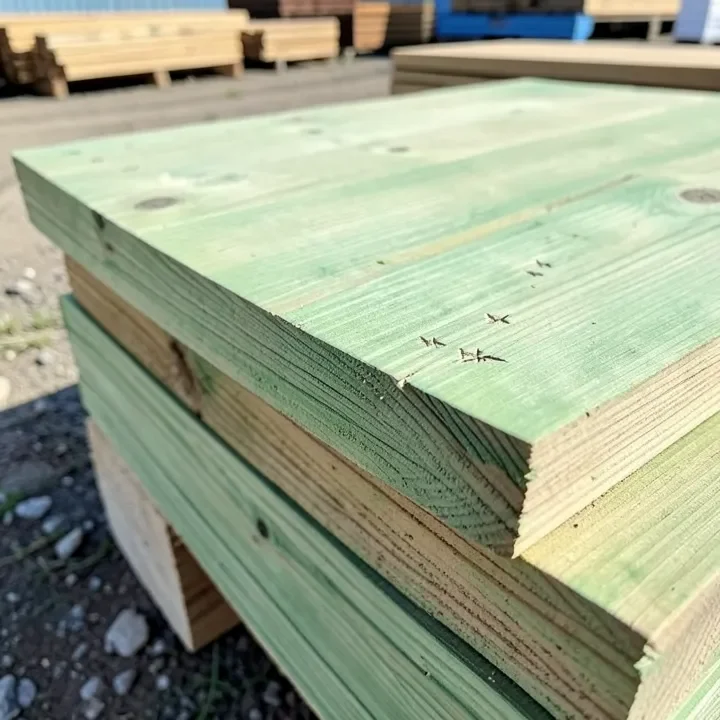
Once a board reaches full weathering, color can no longer tell fresh treated lumber apart from older stock — that’s when texture and weight (below) become the more reliable check.
Texture Clues: Incision Slits and Surface Feel
Look closely at the flat faces of the board for small, diamond-shaped slits arranged in evenly spaced rows — these incisions are cut before treatment so the preservative can penetrate dense species like Southern yellow pine past the outer growth rings. Untreated pine, cedar, and fir never have these marks.
Fresh pressure-treated boards also feel noticeably heavier and slightly damp compared to kiln-dried lumber of the same dimension, because the treatment process forces liquid preservative deep into the cell structure. A 2x4x8 pressure-treated stud can weigh 30 to 40% more than a kiln-dried untreated stud of the same size until it fully dries out, which typically takes several weeks to a few months depending on climate.
📊 Retention level matters as much as color. AWPA Use Category standards require a minimum copper retention of 0.15 to 0.40 pounds per cubic foot depending on whether the lumber is rated for above-ground use (UC3) or ground contact (UC4) — this number is printed on the same end tag as the treatment chemical name, not visible from color alone. — Source: Southern Pine Association, Grade & Quality Marks
If you plan to build anything load-bearing with reclaimed or unmarked lumber, our guide to using pressure-treated wood for framing covers which retention level and use category each structural application actually requires.
Beyond Looks: How This Compares to the Stamp-Code Method
Color and texture get you most of the way to a confident answer, but they can’t tell you the exact chemical, retention level, or use category a board was rated for — only the ink-stamped or tagged end marking does that. If you need to confirm those details (for a permit inspection, for example, or because the board has weathered to plain gray), our companion guide on how to tell if wood is pressure treated walks through reading the stamp codes (CCA, ACQ, MCQ), the smell test, and the incision-pattern check in more depth.
Common Look-Alikes: Cedar, Douglas Fir, and Plain Pine
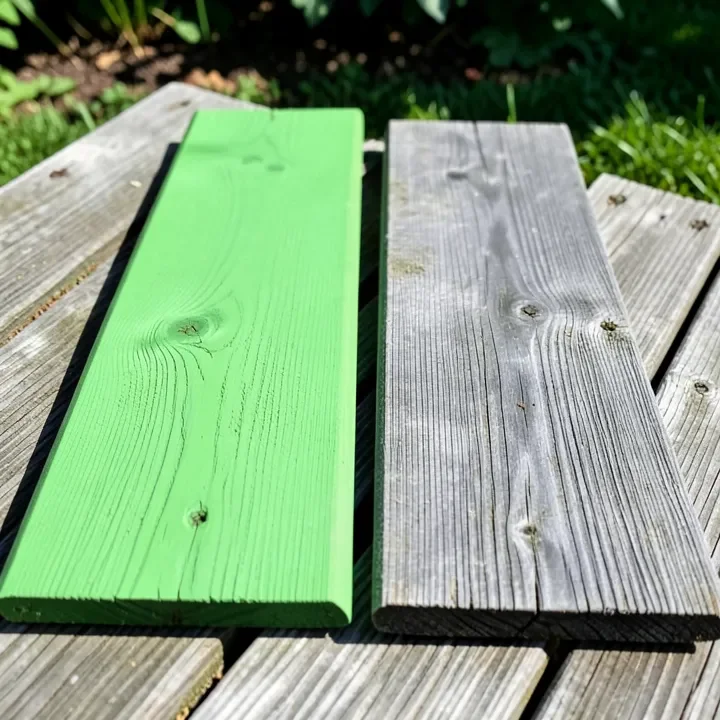
Weathered gray pressure-treated pine is the board most often mistaken for cedar, since both turn a similar silvery-gray outdoors. The giveaway is weight and grain: cedar is noticeably lighter and has a straighter, tighter grain with a distinct aromatic smell even when weathered, while gray pressure-treated pine still shows the incision slits and has no cedar scent. Untreated construction-grade Douglas fir and plain kiln-dried pine, by contrast, never show a green or olive tint at any age — if a “new” board looks green, it’s treated.
“The green tint people associate with pressure-treated lumber is really just the copper in the preservative — it’s the same reason a old penny turns green. Once that copper oxidizes and weathers out of the surface fibers over a year or so, you’re left with plain gray wood, and at that point the incision marks are a more reliable tell than color.”
— Our team, based on side-by-side board comparisons done for this guide
Frequently Asked Questions
Does pressure-treated wood always look green?
No. Only ACQ- and CA-treated lumber shows a strong green tint when fresh. Micronized copper (MCA/MCQ) lumber, now common at most big-box stores, starts out light tan with only a faint tint, and all types fade toward gray within a year outdoors regardless of the starting color.
Can you tell pressure-treated wood apart from cedar just by looking at it?
Usually yes when the wood is fresh, since cedar has no green tint and no incision slits. Once both have weathered to gray, check weight and smell instead — cedar stays lighter and keeps its aromatic scent, while weathered pressure-treated pine is noticeably heavier and has no cedar aroma.
Why does my pressure-treated wood look wet even after it’s been sitting for weeks?
Pressure-treated lumber is injected with a water-based preservative solution, so it can hold significant moisture at the time of purchase. It’s normal for a board to look and feel damp for several weeks to a few months after treatment, depending on humidity and board thickness, before it dries enough to accept stain or paint.
Do the incision marks go away as the wood ages?
No. The diamond-shaped incision slits are physically cut into the wood before treatment, so they remain visible for the life of the board, even after decades of weathering. They are one of the most reliable visual signs of pressure-treated lumber precisely because they don’t fade like color does.
Whether a board is bright green off the rack or has weathered to plain gray, the incision marks, extra weight, and faint chemical smell will confirm pressure treatment even when color alone can’t. For the deeper stamp-code breakdown, see our full identification guide, and check our wood species guide if you’re trying to identify the underlying species before it was treated.
Sponsored / affiliate links. As an Amazon Associate I earn from qualifying purchases. I may earn additional commission from eligible campaigns.