What Is a Miter Saw Used For? (Cuts, Types & Capacity)
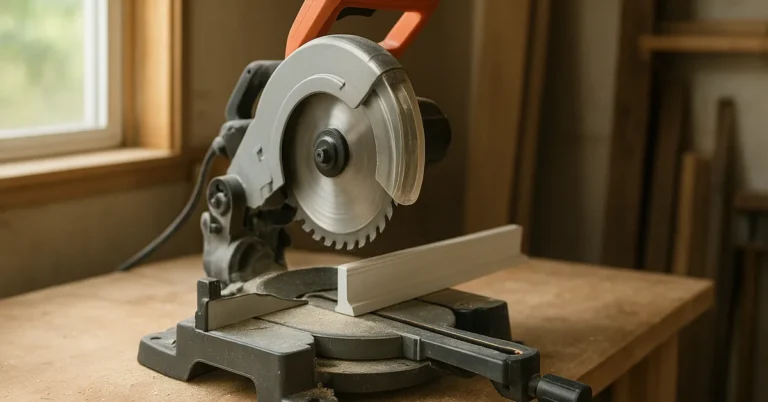
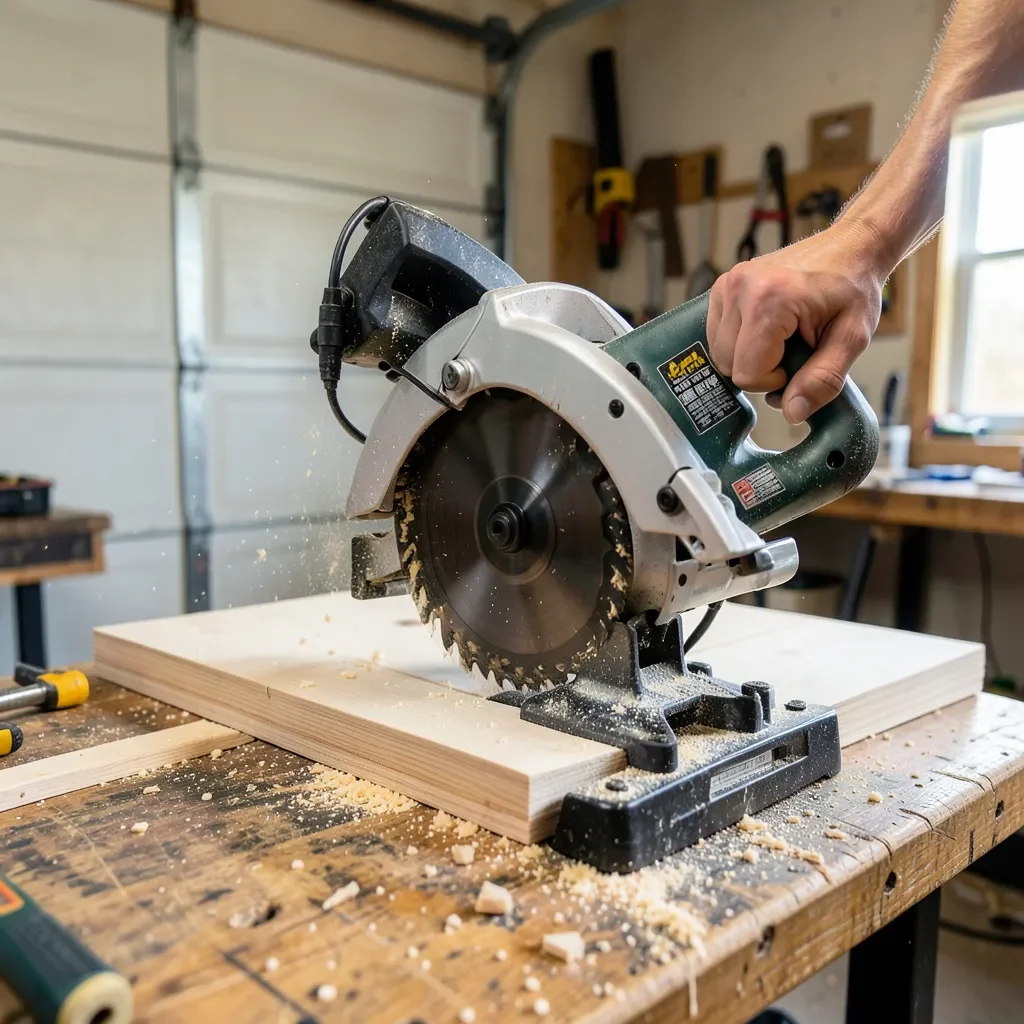
A miter saw is a power tool built for fast, repeatable angled crosscuts — a circular blade on a hinged arm swings down through the workpiece at a preset angle, from 0° straight cuts up to 45° miters on most models. It’s the go-to tool for trim, molding, and framing because it cuts the same angle consistently across dozens of pieces, something a circular saw or handsaw can’t match. This guide covers the three main types, real crosscut capacity by blade size, and the materials it can safely handle.
Miter Saw Blades: Getting Clean, Splinter-Free Cuts
Best Miter Saw Blade Pick
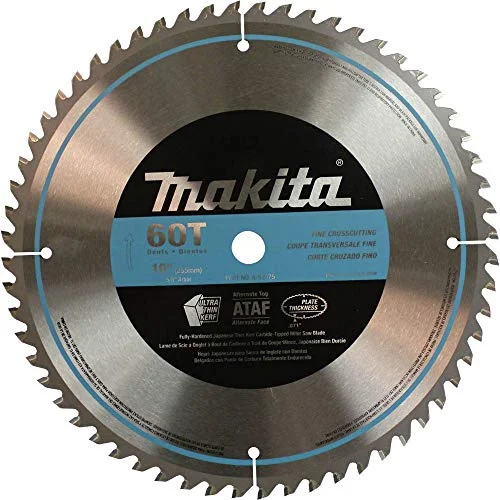 |
Makita 10-Inch 60-Tooth Micro-Polished Miter Saw Blade – $48.13 A 60-tooth fine-finish blade purpose-built for miter saws — the exact upgrade this guide recommends for splinter-free trim and molding joints.
|
The blade matters as much as the saw itself. A worn or low-tooth-count blade tears wood fibers instead of slicing them, leaving splintered edges on trim and molding joints. A 60-tooth fine-finish blade produces the smooth, chip-free cut that crown molding and picture-frame joints need, while a lower tooth count (24-40) is better suited to fast, rough framing cuts where finish quality matters less.
Swap blades based on the job, not just when the current one dulls — using a framing blade on fine trim work is a common reason miter cuts look rough even on an accurate saw.
Types of Miter Saws
All three types cut angles the same basic way; they differ in how far the blade tilts and travels.
| Type | What It Adds | Best For |
|---|---|---|
| Standard Miter Saw | Left/right angle cuts only | Simple framing, basic trim, beginners |
| Compound Miter Saw | Blade tilts for bevel cuts too | Crown molding, compound angle joints |
| Sliding Compound Miter Saw | Sliding rail extends cut width | Wide boards, large-scale carpentry |
How Much Can a Miter Saw Actually Cut? (Blade Size & Capacity)
Blade size sets the ceiling on crosscut width, and the numbers are more specific than most buying guides mention. A non-sliding 10-inch miter saw tops out around 5.5-6 inches of crosscut width at 90°; a non-sliding 12-inch blade extends that to about 8 inches. Add a sliding rail and both jump significantly: a 10-inch sliding compound saw can crosscut a 2×6 at 90° and a 2×4 at 45°, while a 12-inch sliding saw handles a 2×8 at 90° and a 2×6 at 45°.
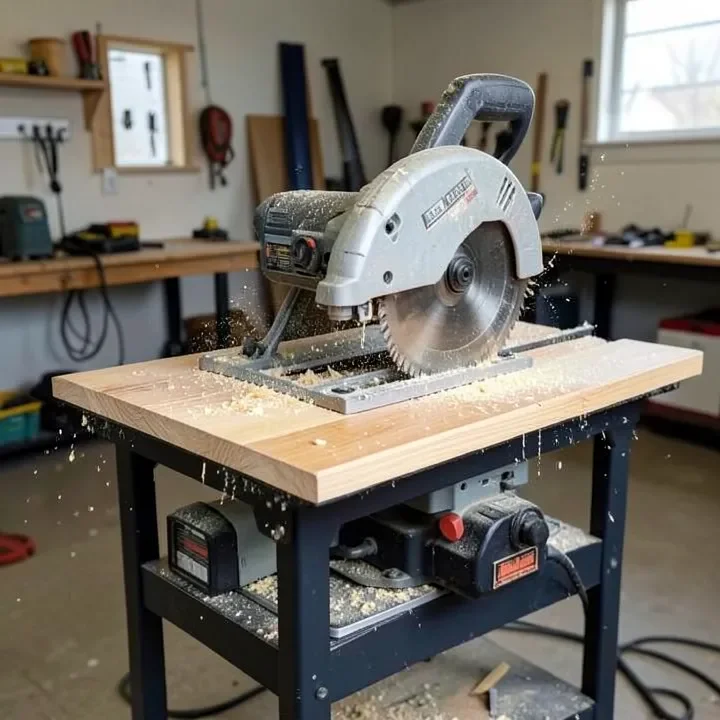
In practice, a sliding 10-inch saw often out-cuts a non-sliding 12-inch saw for less money — the sliding rail matters more than the extra 2 inches of blade diameter for most trim and framing work. For a full side-by-side breakdown, see our 10-inch vs. 12-inch sliding miter saw comparison.
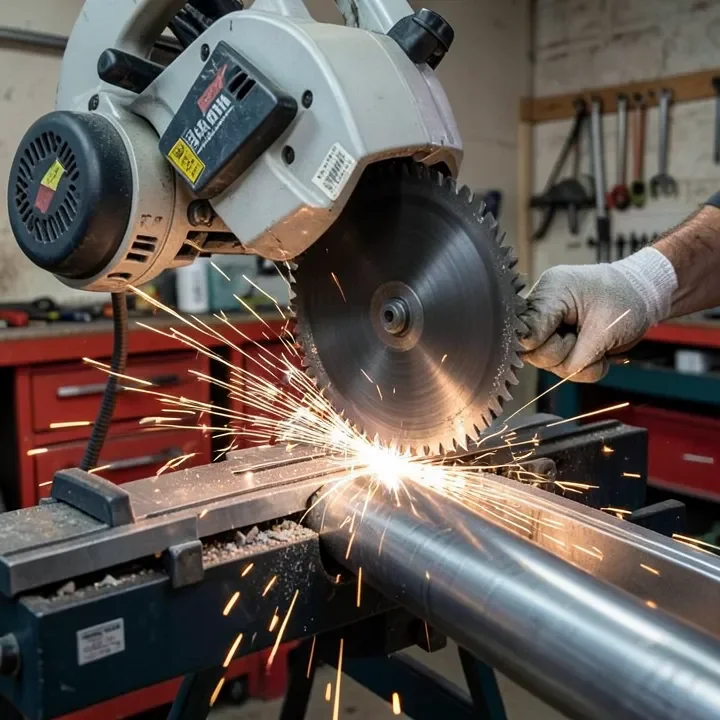
Can a miter saw cut metal? Yes, but only with a metal-specific abrasive or carbide-tipped cold-saw blade — never a wood blade, which will shatter or throw the metal piece. Clamp the material securely and expect sparks; this is a job for a dedicated metal-cutting blade rated for the saw’s RPM, not a standard wood crosscut blade swapped in.
Common Uses in Woodworking
A miter saw earns its place in a shop because the same angle can be reproduced across many pieces without re-measuring each time.
- Frames and moldings: Picture frames, door casings, and window trim need matching 45° corner joints — a miter saw’s stop and angle scale make repeat cuts consistent.
- Furniture building: Table and chair legs, shelf supports, and joinery pieces need exact, repeatable angles for parts to line up square.
- Framing and trim carpentry: Crown molding, baseboards, and stud framing all rely on accurate, fast crosscuts at set angles.
Miter Saw Safety Essentials
Most miter saw injuries come from two things: reaching near the blade before it fully stops, and cutting unclamped material that shifts mid-cut.
- Wear safety glasses and hearing protection every time — not just for long cuts.
- Clamp the workpiece or hold it firmly against the fence; never freehand a cut.
- Let the blade come to a complete stop before lifting it or reaching near the table.
- Match the blade to the material — a wood blade on metal (or vice versa) is a real hazard, not just a quality issue.
- Unplug the saw before changing blades or clearing offcuts.
Frequently Asked Questions
What is a miter saw used for?
A miter saw is used for making fast, accurate angled crosscuts in wood and other materials — it’s the standard tool for trim, molding, picture frames, and framing work that needs the same angle repeated across multiple pieces.
What is the definition of a miter saw?
A miter saw is a power tool with a circular blade mounted on a hinged, pivoting arm that swings down to cut a workpiece at a preset angle, typically anywhere from 0° to 45° on standard models.
How does a miter saw work?
A miter saw’s circular blade sits on a swinging arm above the workpiece. Pulling the arm down lowers the spinning blade through the material at whatever angle the base is set to, producing a clean crosscut in one pass.
Can a miter saw cut metal?
Yes, but only with a metal-specific abrasive or carbide cold-saw blade rated for the saw’s RPM — a standard wood blade will shatter or kick back on metal. Clamp the material securely before cutting.
What materials can a miter saw cut?
A miter saw handles hardwood, softwood, plywood, and MDF with a standard wood blade, plastic and PVC trim with a fine-tooth blade, and metal with a dedicated metal-cutting blade swapped in for the job.
Do I need a 10-inch or 12-inch miter saw?
Most trim and framing work fits within a 10-inch saw’s capacity, especially a sliding model. A 12-inch saw is worth the extra cost mainly for wide crown molding, large timber, or production work where cut capacity limits throughput.
Conclusion
A miter saw’s job is repeatable, accurate angled crosscuts — that’s what makes it the standard tool for trim, molding, and framing rather than a table saw or circular saw. Blade size sets your maximum cut width, but a sliding rail often matters more than an extra 2 inches of blade diameter. Match the blade to the material, keep it sharp, and the saw does the rest.
Sponsored / affiliate links. As an Amazon Associate I earn from qualifying purchases. I may earn additional commission from eligible campaigns.