Particle Board vs MDF: 7 Key Differences (Strength, Cost & Uses)
MDF and particle board are both engineered wood panels made from wood waste and resin, but MDF uses fine wood fibers while particle board uses coarser wood chips and sawdust. MDF is denser (700-800 kg/m3 vs 600-680 kg/m3), stronger, and takes paint more smoothly, but costs more and weighs more. Particle board costs less and suits flat-pack furniture where moisture exposure is minimal. This guide covers composition, strength, moisture resistance, cost, and which to choose for each application.
Quick Answer
MDF is stronger and smoother than particle board, use MDF for painted cabinet doors, moldings, and shelves. Particle board is cheaper and lighter, use it for hidden or non-load-bearing interior components. Neither is suitable for outdoor use or sustained moisture exposure without sealing.
Material Composition
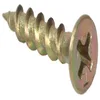 |
Best Particle Board Screw Pick Hillman Group Particle Board Screw, 8 x 3/4 in
|
As an Amazon Associate we earn from qualifying purchases.
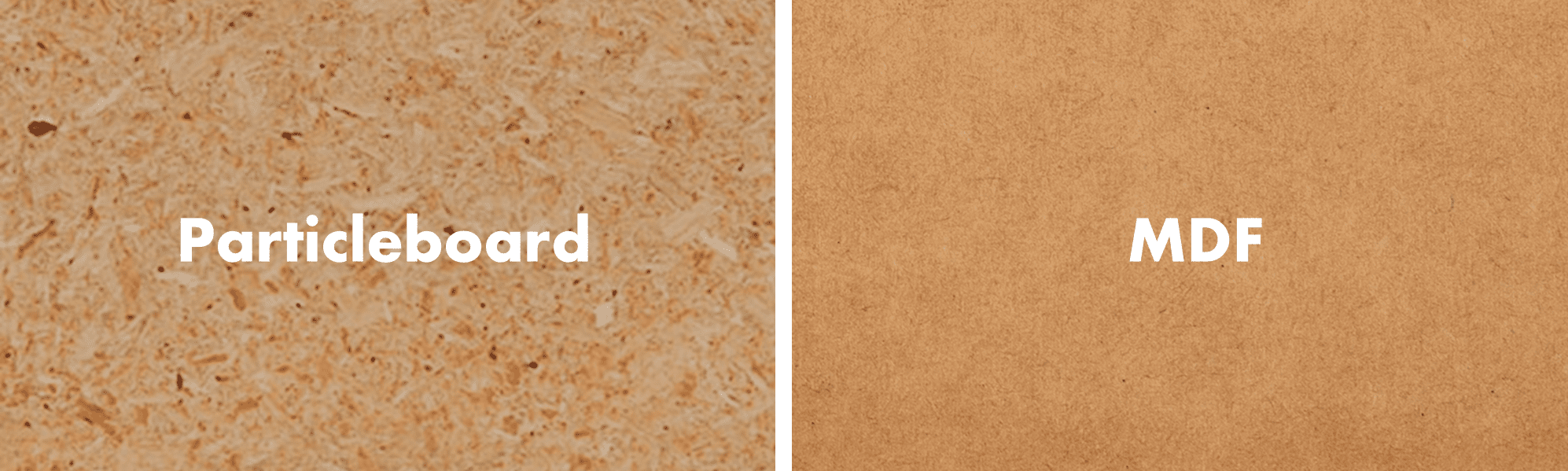
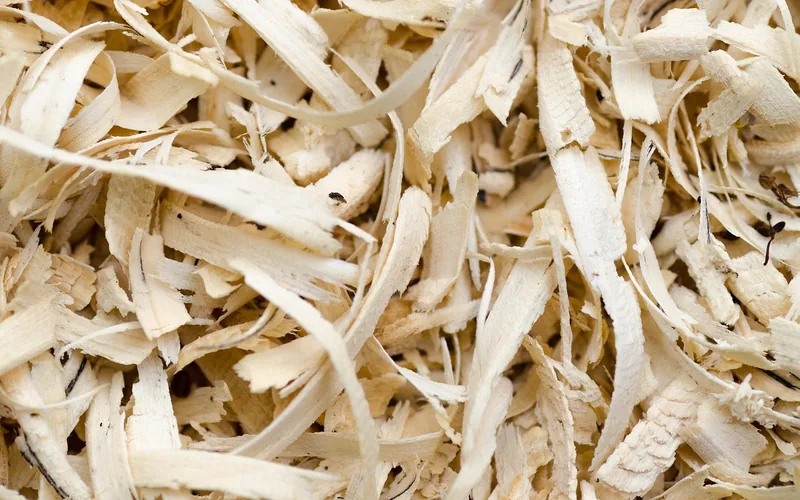
MDF (Medium-Density Fiberboard) is an engineered wood panel made by breaking hardwood or softwood residuals into fine wood fibers, then combining them with wax and resin under heat and pressure. Particle board is made from larger wood chips, sawdust and shavings bound with resin and compressed into sheets, a less refined process that produces a coarser, less dense panel.
Density: MDF typically runs 700-800 kg/m3 versus 600-680 kg/m3 for particle board (figures from the vir-mdf.com and Tribesigns material comparisons). That roughly 15-20% gap shows up as better screw holding and less sagging under shelf load. Looking for the other half of the comparison? See our guides on MDF vs plywood and MDF vs melamine.
Manufacturing Process
MDF stands for Medium-Density Fiberboard. It is made from wood fibers. These fibers are mixed with wax and resin. Then, they are pressed under high temperature. This makes MDF strong and dense. MDF is usually smooth and easy to paint.
Particle board uses wood chips. These chips are mixed with glue. They are then pressed together. Particle board is less dense than MDF. It is not as smooth. It is often covered with a veneer. This makes it look nicer.
| Material | Process |
|---|---|
| MDF | Wood fibers, wax, resin |
| Particle Board | Wood chips, glue |
Density And Strength
MDF stands for Medium Density Fiberboard. It is denser than particle board. MDF is made by breaking down hardwood or softwood residuals into wood fibers. Then, it is mixed with wax and a resin binder. It is then formed into panels by applying high temperature and pressure.
Particle board is made from wood chips and sawdust. It is bonded together with resin. It is less dense than MDF and not as strong. MDF is better for heavy loads. It is also smoother for painting. Particle board is cheaper but can sag under weight.
Both materials have different uses. MDF is used for doors, panels, and moldings. Particle board is often used for furniture and flooring. Choose wisely based on needs and budget.
Surface Finish
MDF has a very smooth surface. It is great for painting. You can easily add a layer of polish. This gives it a nice finish. Particle Board is rougher. It is not as smooth as MDF. It needs more work to look nice. You might need a veneer. Or, you might use laminate. This makes it look better. MDF is more even. Particle Board can show bumps. This makes a big difference in the final look. Choose wisely based on your project needs. MDF is ideal for visible surfaces.
Cost Comparison
Particle board is often cheaper than MDF. This is because it’s made from small wood pieces. Particle board is lightweight. It’s also easy to produce. These factors keep its price low.
MDF costs more. It’s made from fine wood fibers. This process takes time and effort. The result is a smoother surface. MDF is stronger than particle board. This makes it more expensive.
When choosing, price matters. Budget options often go with particle board. Quality choices lean towards MDF. Both materials have uses. Think about what you need. Decide based on cost and purpose.
Durability And Lifespan
MDF, or Medium-Density Fiberboard, is strong and holds up well. It is made from wood fibers glued under heat and pressure. This process makes it dense and durable. MDF can last many years if kept dry. It is often used in furniture and cabinets.
Particle Board is not as strong as MDF. It is made from wood chips and sawdust. These are glued together to form sheets. Particle board is cheaper and lighter. It is more likely to swell or break if it gets wet. It is best for temporary or budget-friendly projects.
Both have different uses based on needs. Choose wisely for your project.
Formaldehyde Standards: CARB Phase 2 and TSCA Title VI
Both panels are bonded with resin, and most standard resins are urea-formaldehyde, so emissions are a fair concern for indoor furniture. In the United States both products fall under the same rule: EPA TSCA Title VI, which mirrors the California CARB Phase 2 limits. The cap is set per panel type, and MDF is allowed a slightly higher number than particle board:
| Panel type | Maximum emission (ppm formaldehyde) |
|---|---|
| Particle board | 0.09 |
| MDF | 0.11 |
| Thin MDF (8 mm or less) | 0.13 |
The myth to drop: “MDF is the toxic one.” The higher MDF limit exists because MDF has far more resin-bonded surface area, not because certified MDF is more dangerous. A compliant MDF panel and a compliant particle board panel are both low-emitting; a non-certified import of either is the real risk. Look for a Title VI or CARB Phase 2 compliance label on the panel or the supplier paperwork, or choose boards made with no-added-formaldehyde (NAF) or ultra-low-emitting (ULEF) resins. Cutting also releases dust, so wear a respirator and work with ventilation whichever panel you pick. For the wider environmental picture, see why MDF gets a bad environmental reputation.
Common Uses
MDF is often used in making furniture. It is smooth and easy to paint. This board is also a good choice for cabinet doors. Many people use it for molding because it is strong. MDF can be found in shelves and panels. It is popular for indoor projects.
Particle board is used in cheap furniture. It is light and less strong. Often found in kitchen cabinets. It can be covered with a veneer for a better look. Some use it for flooring under carpets. Particle board is common in temporary structures. It is a budget-friendly option for many projects.
Pros And Cons
MDF is denser and smoother, ideal for painted surfaces, while particle board is lighter and more affordable, yet less durable. MDF offers better stability, making it suitable for intricate designs, whereas particle board works well for budget-friendly furniture. Both materials serve different needs based on cost and purpose.
MDF (medium Density Fiberboard)
MDF is a common material in furniture making. It is made from wood fibers. These fibers are glued together with resin. MDF is very smooth. This makes it easy to paint. It is also strong and does not warp easily. But MDF is heavy. It can be hard to move. If it gets wet, it can swell. This can damage the board.
Particle Board
Particle board is made from wood chips and sawdust. It is held together with glue. Particle board is cheaper than MDF. It is lightweight and easy to cut. This makes it good for shelves. But it is not very strong. It can break easily. Water can damage it too. It is not as smooth as MDF. Painting it can be tricky.
Where Plywood and OSB Fit In (The Wider Manufactured Wood Family)
MDF and particle board are only two members of a larger family of engineered wood panels. Plywood (thin wood veneers glued in alternating grain directions) and OSB (large wood strands pressed and bonded) solve problems neither MDF nor particle board can, mainly structural strength and screw-holding at the edge, where both MDF and particle board are weakest. If your project needs to bear real load or survive damp conditions, the choice usually isn’t MDF vs. particle board at all, it’s plywood or OSB instead.
| Aspect | Plywood | OSB | MDF | Particle Board |
|---|---|---|---|---|
| Cost (per 4×8 sheet) | $40-$100+ | $15-$40 | $40-$100 | $20-$50 |
| Moisture resistance | Good (exterior grades available) | Fair, swells at cut edges | Poor unless sealed | Poor, swells fastest of all four |
| Screw holding | Best: cross-grain layers grip well | Good in the face, weak on edges | Fair: needs pilot holes | Worst: strips out easily |
| Best for | Subflooring, cabinets, structural panels | Wall/roof sheathing, budget subfloor | Painted doors, moldings, routed edges | Flat-pack furniture, laminate cores |
In practice: reach for exterior-grade plywood or OSB anywhere the panel will bear weight or face repeated moisture, keep MDF for smooth painted surfaces indoors, and save particle board for the cheapest, lightest, least-stressed parts of a build (cabinet backs, drawer bottoms under a laminate top).
Screw Holding, Edges and Sealing: Where the Two Panels Really Differ
Because MDF and particle board hold screws worse than solid wood or plywood, hardware and edge treatment matter more than on a typical build. Face screws grip reasonably well in both; edge screws are where each panel fails differently.
| Task | MDF | Particle board |
|---|---|---|
| Screw into the edge | Holds if you drill a pilot hole, but the fine core can split near the end of the panel | Crumbles and strips out; use dowels, cam fittings or confirmat screws instead |
| Re-driving a screw after a repair | Fair, the hole stays tighter | Poor, the hole is usually ruined after one or two removals |
| Routed or profiled edges | Cuts crisp and paints well | Chips and exposes coarse chips, needs edge banding |
| Raw edge and moisture | Soaks up water at the edges first; prime or seal | Swells quickly at any raw edge; laminate or band every edge |
A pre-drilled pilot hole is not optional: skipping it is the most common reason both panels split during assembly. A coarse-thread screw like the Hillman pick above, glue on the joint, and sealed edges (iron-on banding for particle board, primer for MDF) get you the most out of either material. Moisture is the other big difference, so if the piece will see damp conditions, read how to make MDF waterproof first.
Frequently Asked Questions
Which Is Better MDF Or Particle Board?
MDF is denser and stronger, ideal for smooth finishes and detailed designs. Particle board is cheaper, suited for lightweight furniture. MDF offers better quality, but particle board is cost-effective for budget projects. Choose MDF for durability and particle board for affordability.
When Should You Not Use MDF?
Avoid MDF in wet or damp areas, as moisture can damage it. It isn’t ideal for heavy loads or outdoor use. MDF can be unsafe for cutting boards and food-related items due to chemicals. Ensure proper sealing to prevent swelling or warping in high-humidity environments.
What Are The Disadvantages For MDF?
MDF can swell and warp when exposed to moisture. It lacks natural wood grain, making it less visually appealing. MDF is heavier than plywood, which can complicate handling and installation. It may release formaldehyde, a harmful chemical. MDF has low durability compared to solid wood.
What Is A Particle Board Called Now?
Particle board is often referred to as chipboard today. It’s a composite wood product made from compressed wood chips and resin. Chipboard is widely used in furniture and construction due to its affordability and versatility. It’s a popular choice for budget-friendly projects and DIY tasks.
Is MDF Particle Board?
No, MDF and particle board are different materials. MDF is made from fine wood fibers compressed under high pressure, giving it a uniform, smooth, dense structure. Particle board is made from larger wood chips and sawdust, resulting in a coarser, less dense panel. Both are engineered wood products but have different strengths, surfaces, and best uses.
Can You Use Particle Board or MDF Outdoors?
No, neither standard particle board nor standard MDF is rated for outdoor use. Both absorb moisture and swell permanently once wet, and the damage does not reverse when the panel dries. For an outdoor panel, use exterior-grade plywood (rated CDX or better) or OSB with a proper vapor barrier and edge sealant instead.
Does MDF or Particle Board Have More Formaldehyde?
Neither is worse by type. Under EPA TSCA Title VI and CARB Phase 2, particle board is capped at 0.09 ppm and MDF at 0.11 ppm (thin MDF 0.13 ppm). MDF gets a higher cap because it has more resin-bonded surface area, but any certified panel is low-emitting. Check for a compliance label and consider NAF or ULEF resin boards.
Conclusion
Pick MDF when the surface will be painted, routed or carry shelf load: it is denser and smoother. Pick particle board when cost and weight matter and every edge will be laminated or hidden. Neither is a moisture or outdoor board, and both are held to the same federal formaldehyde rule, so buy certified panels and seal every cut edge. If the project needs structural strength or damp resistance, step up to plywood instead.
Sponsored / affiliate links. As an Amazon Associate I earn from qualifying purchases. I may earn additional commission from eligible campaigns.