Wood Filler vs. Wood Putty: The Real Difference
Wood filler and wood putty are not the same product, and swapping one for the other is one of the most common reasons a wood repair fails. Wood filler is a hardening, sandable compound built for raw or unfinished wood. Wood putty stays soft and flexible and is meant for finished, stained, or painted wood. Use the wrong one and you’ll either get a repair that crumbles under sandpaper or one that never truly dries.
Both products show up in the same aisle, often in nearly identical tubs, which is exactly why the mix-up happens so often. Below is a quick comparison, a real product recommendation, and the specific differences in composition, dry time, shrinkage, and outdoor durability that decide which one belongs in your toolbox for a given repair.
Wood Filler vs. Wood Putty at a Glance
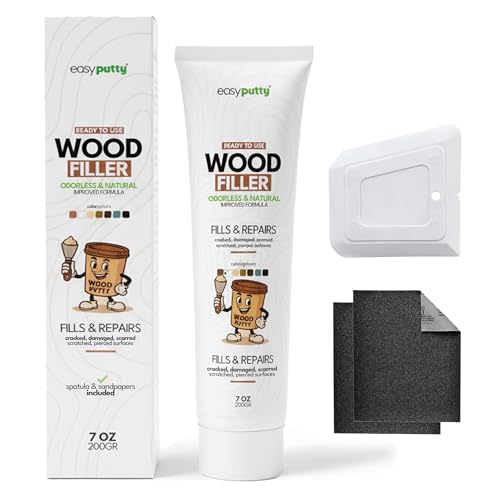
Best Exterior-Rated Wood Filler
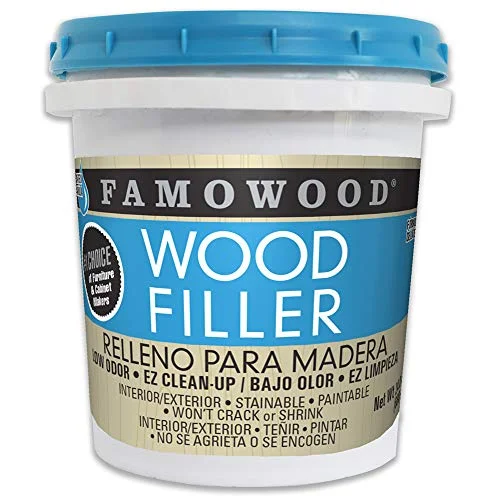 |
FamoWood Latex Wood Filler, Pint – $12.42 A water-based filler rated for interior AND exterior use, so it’s a safer default than a standard interior-only filler for the deck/trim repairs covered above.
|
If you’re patching a bare wood surface before painting or staining, reach for wood filler. If you’re touching up a small nail hole or scratch on wood that’s already finished, wood putty is the better tool. The table below breaks down why.
| Property | Wood Putty | Wood Filler |
|---|---|---|
| Composition | Oil, solvent, or epoxy-based paste | Wood fibers/sawdust with a water- or solvent-based binder |
| Hardens fully? | No, stays pliable | Yes, cures hard like wood |
| Shrinkage | Minimal to none | Some, especially in deep fills |
| Best surface | Finished, stained, or painted wood | Bare, unfinished wood |
| Sandable | Poorly, it gums up sandpaper | Yes, sands smooth once dry |
| Stainable | Rarely takes stain evenly | Yes, most formulas accept stain |
| Typical dry time | Hours to overnight; some never fully cure | 15–30 minutes for thin fills |
| Outdoor use | Traditional oil putty: yes, on finished exterior trim | Only if labeled exterior/outdoor grade |
What Is Wood Putty?
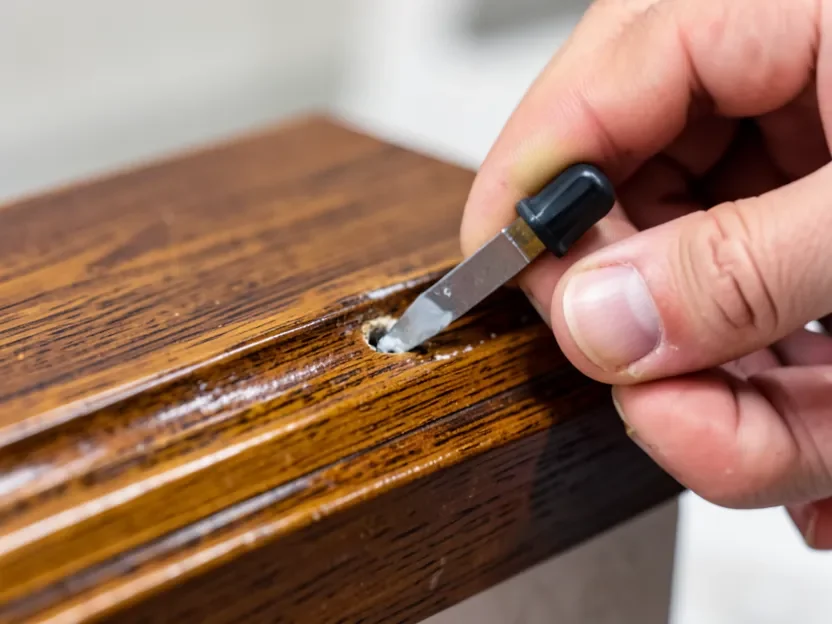
Wood putty is a soft paste built to stay soft. Traditional formulas are oil- or solvent-based, often with linseed oil as a base, and they never fully harden the way wood filler does. That’s intentional: putty is designed to go into wood that’s already finished, so it needs to expand and contract with the surrounding material instead of cracking loose as the wood moves with temperature and humidity.
Because it stays flexible, putty is a poor match for sanding, drilling, or shaping — press a sander into it and you’ll smear it rather than smooth it. It’s meant to go on last, after the wood is already stained, painted, or sealed, to hide a nail hole, a small scratch, or a minor surface flaw. Two-part epoxy putties are the exception: they mix and cure rock-hard, closer to how wood filler behaves, but they’re a different product from the classic oil-based tub most people mean by “wood putty.”
What Is Wood Filler?
Wood filler is made from actual wood fibers or fine sawdust bound together with a water-based (latex) or solvent-based binder. Unlike putty, it’s built to harden completely, which is what makes it sandable, drillable, and structurally solid once cured. That’s why it’s the right choice for raw, unfinished wood: gouges, screw holes, gaps between boards, or any spot that needs to be built back up to the surrounding wood surface before finishing.
Most wood fillers dry within 15 to 30 minutes for a thin application, though a deep fill can take longer to cure all the way through. Once it’s hard, you sand it flush, and most formulas will accept stain or paint afterward — though color match varies by brand, so test a scrap piece first if the final look matters. Some woodworkers try substituting wood glue and sawdust for a DIY filler, which works in a pinch but doesn’t match the consistency or shrink-resistance of a purpose-made product.
Can You Use Either One Outdoors?
This is where a lot of advice online gets it backwards, and it’s also one of the most common questions we see in search — queries like “wood filler vs wood putty for exterior deck holes” show up regularly. The honest answer is: it depends on the specific product, not just the category.
Traditional oil-based wood putty was originally developed for exterior trim and window glazing, so it handles outdoor temperature swings and finished exterior wood reasonably well, as long as the wood stays sealed. Standard wood filler, on the other hand, is usually formulated for interior use and can absorb moisture, swell, or crack if it’s left exposed to rain and freeze-thaw cycles. That said, several brands now sell an exterior-grade or “outdoor” wood filler specifically engineered to resist that kind of moisture cycling and hold up on deck boards, fascia, and other exposed repairs — check the label for “interior/exterior” or “exterior” before using any filler outdoors. Using a standard interior-only filler on an exterior deck hole is the single most common reason that kind of repair fails within a season.
Drying and Curing Times
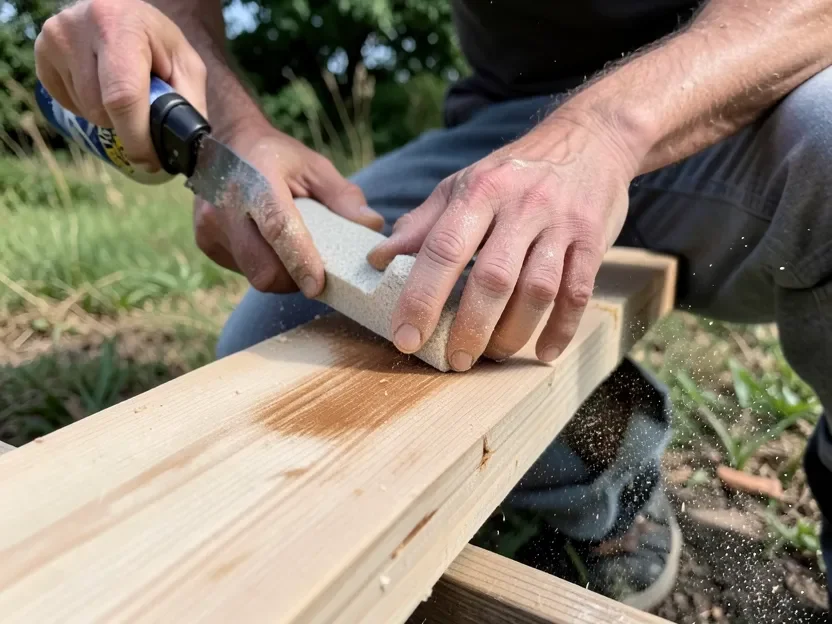
Drying speed is one of the clearest ways to tell the two products apart in practice. Wood filler is built to set up fast: a thin layer is usually dry to the touch in 15 to 30 minutes, and most manufacturers recommend sanding within an hour. The exact wait before sanding depends on how deep the fill is — a shallow scratch dries faster than a half-inch-deep gouge, which can need several hours to cure all the way through even if the surface feels dry.
Wood putty is slower by design. Because it doesn’t fully cure, “dry” for putty just means the surface has firmed up enough to paint or leave alone, which can take anywhere from a few hours to overnight depending on humidity and how thick the application is. In humid conditions, that window stretches out considerably; in a warm, dry shop, it can go noticeably faster.
Cost Comparison
Wood putty is generally the cheaper option for small repairs. Small tubes run a few dollars, and even premium brands rarely climb past $15–$20 for a standard size, since a little putty covers a lot of touch-up work. Wood filler tends to cost a bit more per container, roughly $5 to $15 for a small tub and up to $30 for larger sizes or specialty formulas, like color-matched or exterior-grade blends. For most one-off repairs, the price difference is small enough that surface type (finished vs. raw wood) should drive the decision, not cost.
Which One Should You Choose?
If the wood is still bare, unfinished, or about to be painted or stained for the first time, use wood filler — it hardens, sands flush, and takes finish evenly. If the wood is already finished and you’re covering a small nail hole, scratch, or minor blemish without disturbing the existing stain or paint, use wood putty. For anything going outside, confirm the specific product is rated for exterior or interior/exterior use before you commit — that single label check prevents the majority of repairs that fail within a season.
Frequently Asked Questions
Is Wood Filler the Same as Wood Putty?
No. Wood filler is made from wood fibers and a binder that hardens completely, so it can be sanded and shaped like real wood. Wood putty is an oil- or solvent-based paste that stays soft and pliable, and it’s meant for finished wood rather than raw, structural repairs.
Can You Use Wood Filler Outdoors?
Only if it’s labeled for exterior or interior/exterior use. Standard interior wood filler absorbs moisture and can crack or crumble outdoors. Exterior-grade fillers, like FamoWood’s latex formula, are built to resist that moisture cycling and hold up on decks, fascia, and other exposed wood.
Does Wood Putty Ever Harden Completely?
Traditional oil-based wood putty stays flexible on purpose and never fully hardens, which is why it shouldn’t be used for structural gaps. Two-part epoxy putties are the exception: once mixed, they cure rock-hard, closer to how wood filler behaves, but they’re a different product from classic tub putty.
Can Wood Putty Be Stained?
Most traditional wood putty does not take stain evenly, which is why it’s meant for wood that’s already finished. If color match matters, test on scrap first, or use a pre-tinted putty designed to match common wood tones instead of trying to stain it after the fact.
Conclusion
The short version: wood filler hardens and belongs on raw, unfinished wood that still needs to be sanded and finished. Wood putty stays soft and belongs on wood that’s already finished, covering small surface flaws without disturbing the existing stain or paint. Check the label before using either one outdoors — that’s the detail that decides whether an exterior repair lasts a season or several years.
If your product is specifically labeled painter’s putty (the oil-based paste used only on primed trim before painting), see our painters putty vs wood filler comparison for that specific product. For more on how long an opened container stays usable, see our guide to wood filler shelf life.
Sponsored / affiliate links. As an Amazon Associate I earn from qualifying purchases. I may earn additional commission from eligible campaigns.