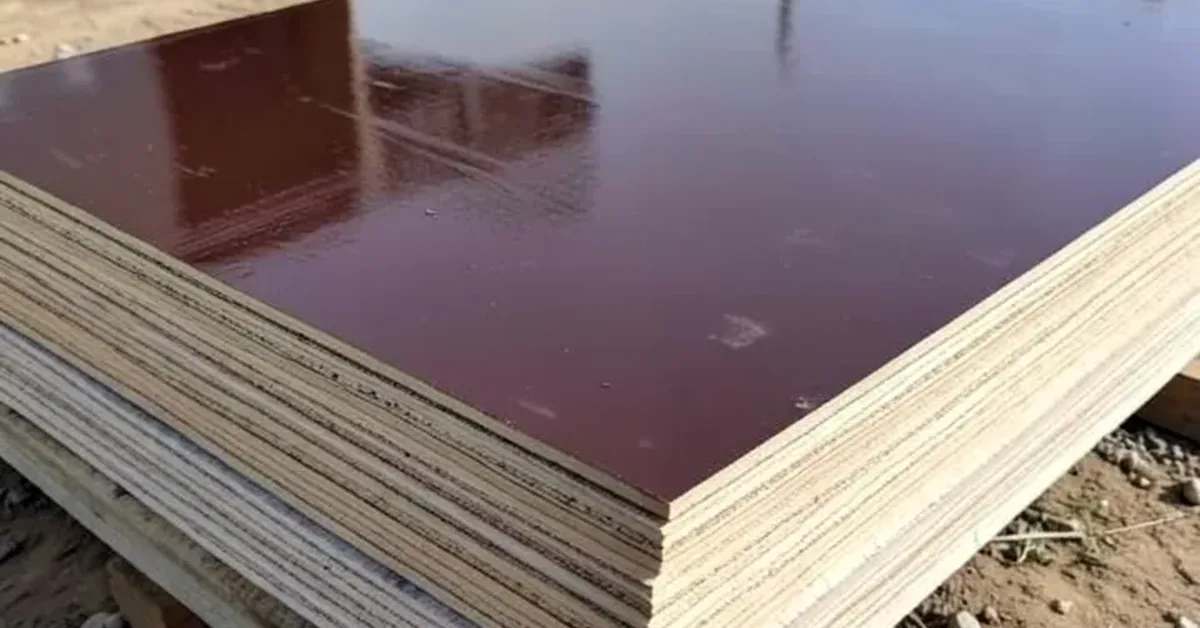
What Is WPF (Waterproof Film-Faced) Plywood?
WPF (Waterproof Film-Faced) plywood is plywood with a phenolic film bonded to one or both faces for concrete formwork and other high-moisture uses — most sheets use a 120 to 240 g/m² film and come in 12mm to 25mm thicknesses, with 18mm the industry standard for most formwork. Cutting into a sheet exposes raw wood at the edge, which is the one spot the factory film doesn’t protect. This guide covers film weight and thickness options, real-world uses, cutting and sealing steps, and how WPF compares to standard and marine plywood.
What Makes WPF Plywood Different, and What to Check Before You Buy
WPF plywood starts as a standard plywood core — usually birch, poplar, or a hardwood/softwood combi core — then gets a phenolic resin film bonded to one or both faces under heat and pressure. The film is what gives WPF its glossy, dark brown or black surface and its resistance to water and abrasion, not the core wood itself.
The core is bonded with WBP (weather and boil proof) phenolic glue, which is what lets the panel survive repeated exposure to wet concrete without delaminating. A plain interior-grade plywood core with a film face bonded using ordinary glue will still fail at the glue line, even though the surface looks identical.
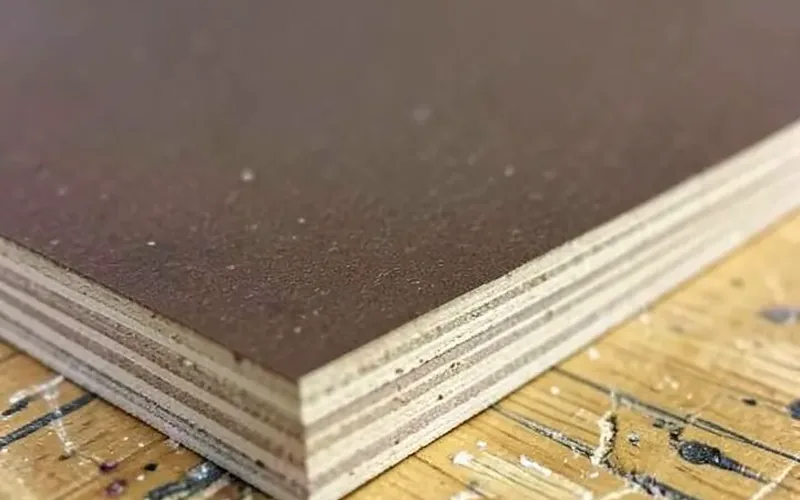
Two numbers determine how a WPF sheet performs and how many times it can be reused: film weight (grams per square meter) and panel thickness.
📊 A 120 g/m² film typically holds up for 10–15 concrete pour cycles, 180 g/m² for 15–20 cycles, and 240 g/m² (heavy-duty) for 20–25 cycles under normal conditions. — Source: Vinawood Film Faced Plywood Buying Guide, 2026
Best Plywood Edge Sealer Pick
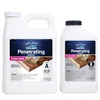 |
TotalBoat Clear Penetrating Epoxy Wood Sealer (1.5 Qt Kit) – $59.99 Cutting WPF plywood to size exposes raw, unsealed edges — this two-part penetrating epoxy seals cut plywood edges so the exposed core doesn’t wick moisture the way the factory film prevents on the faces.
|
As an Amazon Associate we earn from qualifying purchases.
| Thickness | Typical Use | Load Rating |
|---|---|---|
| 12mm | Secondary forming, slab edges | Light-duty, low-pressure pours |
| 15mm | Medium-duty walls and slabs | Moderate waler spacing |
| 18mm | Beams, columns (industry standard) | High-pressure concrete pours |
| 21–25mm | Heavy structural formwork | Maximum pour pressure/reuse |
Common Applications
Concrete formwork is WPF plywood’s primary job, but the same water resistance makes it useful anywhere a panel needs to survive repeated wetting.
- Concrete formwork/shuttering: the smooth film face leaves a cleaner concrete surface and releases from cured concrete more easily than raw plywood.
- Outdoor signage and site hoarding: the film resists weathering better than painted plywood.
- Truck bed liners and shipping container flooring: abrasion resistance from repeated loading.
- Marine and dock applications: where budget doesn’t stretch to true marine-grade plywood, though marine plywood’s void-free core is still the better choice below the waterline.
Cutting and Sealing WPF Plywood
The factory film only protects the faces — every cut edge exposes raw plywood core that the film was never meant to cover. Skipping this step is the single biggest reason a WPF panel starts absorbing water and delaminating at the edges months after installation.
- Cut with a fine-tooth blade: a carbide blade with a high tooth count reduces splintering along the film edge — see our guide on cutting plywood to size for blade selection.
- Sand the cut edge lightly: knock down any splinters or torn fibers before sealing so the sealer penetrates evenly.
- Apply a penetrating sealer to the raw edge: a two-part penetrating epoxy soaks into end grain in a way surface coatings can’t.
- Let it cure fully before exposure: follow the sealer’s cure time before the edge sees water or concrete contact.

“I’ve seen more film-faced plywood fail at a cut edge than anywhere else on the sheet — the face looks brand new while the core is already soaking up water from an unsealed edge. If you’re cutting a WPF panel down to size, budget five extra minutes to seal that edge before it ever gets used.”
WPF vs. Standard and Marine Plywood
| Type | Water Resistance | Best For |
|---|---|---|
| Standard interior plywood | Low — delaminates when wet | Dry indoor use only |
| WPF (film-faced) plywood | High on faces, cut edges need sealing | Concrete formwork, outdoor signage, repeated wetting |
| Marine-grade plywood | Highest — void-free core throughout | Boat hulls, below-waterline use |
Frequently Asked Questions
What is WPF plywood used for?
WPF plywood is used mainly for concrete formwork, where its film face resists water and releases cleanly from cured concrete. It’s also used for outdoor signage, truck bed liners, and other applications that need repeated exposure to moisture without delaminating.
How is WPF plywood different from regular plywood?
WPF plywood has a phenolic film bonded to its face using WBP (weather and boil proof) glue, which regular interior plywood doesn’t have. Regular plywood swells and delaminates when repeatedly wet; WPF’s film face resists that as long as the cut edges are sealed.
Do you need to seal the edges of WPF plywood?
Yes. The factory film only covers the flat faces of the sheet — any edge you cut exposes raw wood that the film never protected. Sealing cut edges with a penetrating sealer before use prevents water from wicking into the core and causing delamination.
What thickness of WPF plywood should I use?
18mm is the industry standard for most concrete formwork, including beams and columns under normal pour pressure. Thinner 12–15mm sheets work for lighter secondary forming and slab edges, while 21–25mm sheets are reserved for heavy structural formwork with maximum pour pressure.
Conclusion
WPF plywood earns its water resistance from the phenolic film bonded to its face, not from the plywood core underneath — which is exactly why a sealed cut edge matters as much as the film weight or thickness you choose. Match the film weight and thickness to how many pour cycles or how much moisture exposure the panel will actually see, and seal every cut edge before it goes into service.