Plywood Cut to Size: Store Costs & DIY Accuracy Guide
Plywood cut to size means having a full 4×8 sheet trimmed down to the exact dimensions a project needs, either by the store you buy it from or with your own saw at home. Home Depot and Lowe’s both offer in-store cutting, most local lumberyards charge a flat per-cut fee, and a circular saw with a straightedge guide gets the same result at home with tighter control over the final tolerance. Which path makes sense depends on how precise the cut needs to be and how many sheets are involved — run the numbers first with our plywood sheet calculator if that count isn’t settled yet.
Quick Answer
Home Depot and Lowe’s cut plywood in-store, usually free for the first several cuts and roughly 25 cents each after that; local lumberyards charge $5–25 per visit. A circular saw with a clamped straightedge cuts plywood just as flat at home, within about 1/32 inch on a properly guided cut, versus the wider tolerance of a busy store’s panel saw.
How Do You Get Plywood Cut to Size?
Plywood gets cut to size one of two ways: a store cuts it for you at the point of sale, or you break it down yourself with a circular saw, track saw, or table saw. Both routes start from the same 4×8-foot (48 x 96-inch) sheet in 1/4-inch, 1/2-inch, or 3/4-inch thickness — the three thicknesses every big-box store and lumberyard stocks.
If your supplier lists the material as “plyboard” instead of “plywood,” don’t assume it’s a different product without checking — see our plyboard vs plywood comparison for when the two words mean the same panel and when they genuinely don’t.A 3/4-inch sanded sheet is also the go-to thickness for a plywood subfloor that will be painted rather than carpeted or tiled — see our painted plywood floor ideas for grade selection and finishing steps if that’s the project.
Store cutting solves two problems at once: fitting an 8-foot sheet into a car that isn’t a truck, and skipping the tool investment for a one-off project. A full sheet is also heavier than it looks – a 3/4 inch sheet can run 55 to 90 pounds depending on the wood type, per our plywood weight breakdown by thickness – worth checking before you decide to haul one home whole. Cutting it yourself trades that convenience for tighter tolerance, no per-cut fee, and the ability to cut on your own schedule instead of during a store visit. See our full guide to cutting plywood to size for blade choice, support methods, and chip-out prevention if you go that route.
Which Stores Cut Plywood to Size, and What Do They Charge?
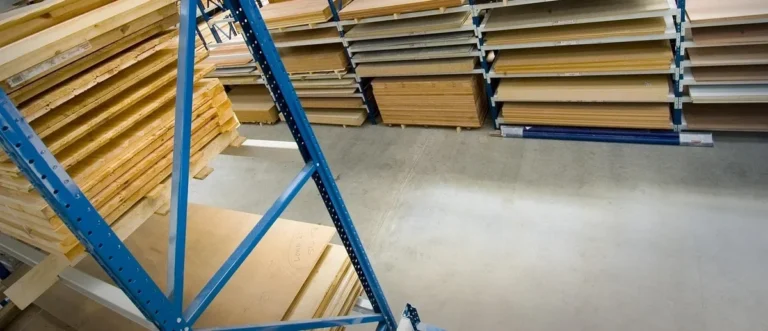
Home Depot, Lowe’s, and most independent lumberyards cut plywood purchased in-store, but the fee structure differs sharply between big-box chains and local yards. Big-box stores set no corporate-wide cutting policy; each store manager decides the free-cut allowance and fee, so the numbers below are typical ranges, not guarantees.
| Retailer | Free cuts | Fee after that | Cut type |
|---|---|---|---|
| Home Depot | 1–12 (store manager’s call) | ~$0.25 per cut | Straight rip and crosscut, panel saw |
| Lowe’s | Typically free with purchase | ~$0.25–0.50 per cut past 2 | Straight rip and crosscut, panel saw |
| Independent lumberyard | Varies, often 0 | $5–25 flat or per-cut | Straight cuts, some offer sized panel optimization |
Home Depot has no single national cutting policy — individual stores set their own free-cut count, and it ranges from one cut to as many as a dozen before the roughly 25-cent per-cut fee kicks in. Lowe’s is more consistently generous, and multiple store visits confirm free cutting is the norm there as long as the plywood was purchased on-site.
Local lumberyards price cutting as a service, not an afterthought. Dunn Lumber’s published cutting policy charges $5 per precision cut with a $20 minimum and holds cuts within 1/16 inch, and Raleigh’s Capitol City Lumber charges a $25 flat fee to rip up to three sheets with two cuts each. That flat-fee model is often cheaper than a big-box store’s per-cut fee once more than a handful of cuts are needed on multiple sheets.
For the full breakdown of one specific chain’s policy, including what happens if you bring your own plywood, see our guides to Home Depot’s plywood cutting service and Lowe’s plywood cutting service. All of the cutting fees above assume a standard 4×8 sheet is already in stock — if you specifically need an oversized 5×10 sheet, see our guide to where to buy 5×10 plywood for which retailers actually carry it.
How Accurate Is a Store’s Plywood Cut?
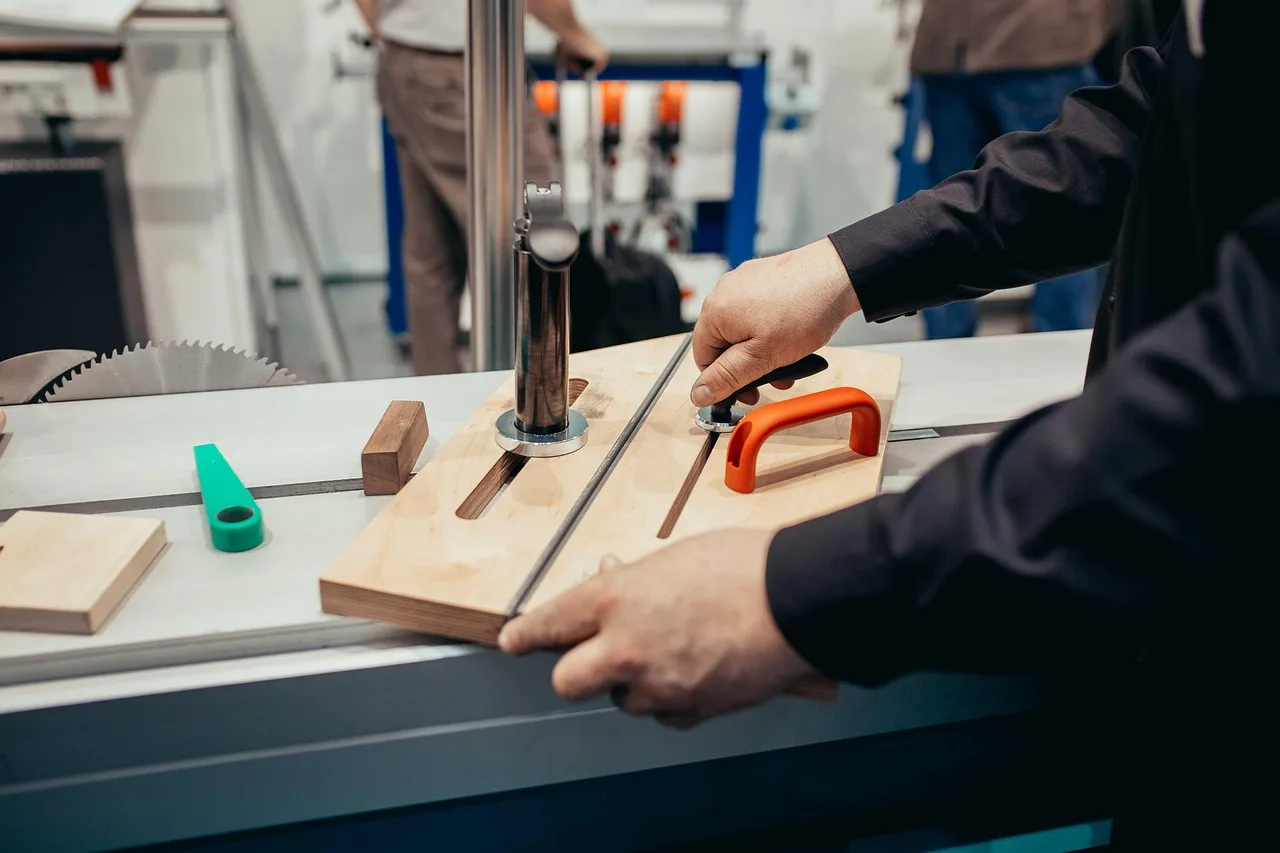
A store’s panel saw holds a straight cut within about 1/8 inch over an 8-foot length on a good day, which is fine for shelving or subfloor but too loose for cabinet doors or anything needing a tight glue-up. I brought a 3/4-inch birch sheet to a Home Depot lumber desk last spring for a workbench top; the associate made all four cuts for free, but the long rip ran roughly 3/16 inch out of parallel over the 8-foot length, enough that I had to joint one edge before the top would sit flat.
That gap exists because panel saws at busy stores get used dozens of times a day, and blade alignment drifts with that volume; it isn’t a reflection of the associate’s skill. For rough dimensioning — sheathing, subfloor, shed walls — store accuracy is more than adequate. For anything with a visible glue line or a tight-fitting joint, plan on a final trim pass at home regardless of who made the first cut.
How Do You Cut Plywood Straight at Home?
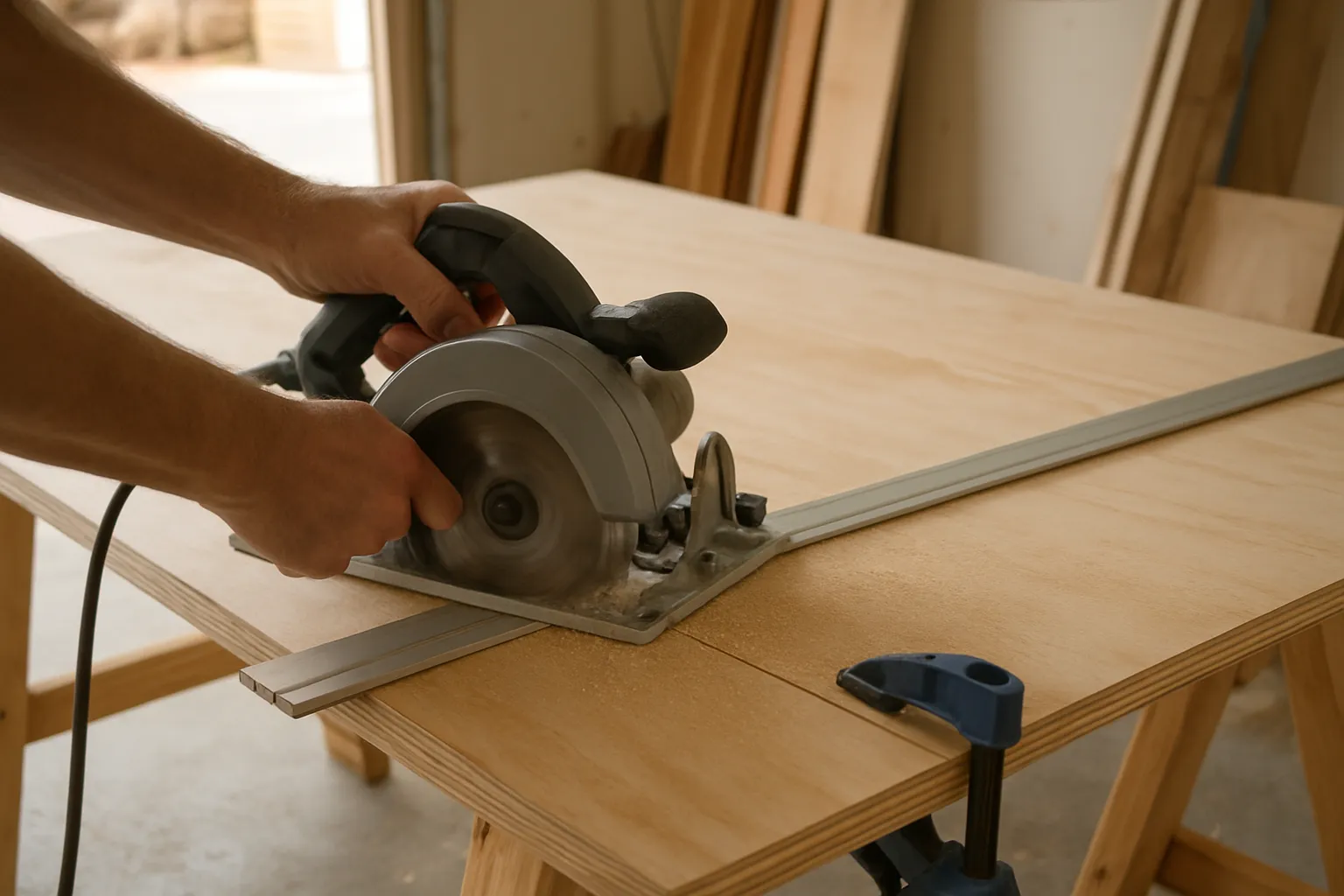
Clamp a straightedge across the sheet, offset from the cutline by the exact distance between the circular saw’s blade and the edge of its base plate, then run the saw against it in one continuous pass. For a full walkthrough of building and calibrating this kind of DIY guide, see our guide to circular saw floating barriers. This single technique removes almost all the wander that comes from free-handing a cut along a pencil line.
Fine Homebuilding’s plywood-cutting guide recommends scoring the cutline with a utility knife first to sever the wood fibers and stop tearout on the top face, then running a 24-tooth general-purpose blade for rough breakdown cuts or a 40-tooth finish blade when the edge will show. Support the sheet on scrap lumber underneath so the blade never pinches mid-cut, and keep the cord draped over a shoulder rather than trailing across the cutline. If the factory blade that came with your saw is the one leaving rough edges, our plywood blade comparison breaks down which tooth grind actually stops that.
Building a shooter board took me about 20 minutes with a factory-edge strip of 3/4-inch plywood screwed to a wider base as the guide rail; it’s held every cut within 1/32 inch across the last dozen sheets I’ve broken down, which is tighter than any store cut I’ve had done. A dedicated 100-inch guide rail clamp does the same job with less setup time if a sheet needs breaking down every week rather than once a season. For the marking and squaring checks that make any of these methods reliable, see our guide on how to cut wood to size accurately.
Is It Cheaper to Pay a Cutting Fee or Cut It Yourself?
For a single sheet, the store’s cutting fee almost always costs less than buying a tool to do it yourself. At Home Depot’s roughly 25-cent per-cut overage rate, a $90 guide rail would take more than 300 extra cuts to break even on fee savings alone — so fee avoidance is never the real reason to own one.
The case for cutting at home is accuracy and scheduling, not cost: a guide rail earns its price the first time a store’s panel saw runs out of tolerance for a glue-up, or when a project needs cutting on a Sunday evening instead of during store hours. Buying multiple sheets for one project still favors a lumberyard’s flat fee — Capitol City Lumber’s $25 flat rate for three sheets beats almost any per-sheet DIY tool cost for a single build. Once those sheets are home, a vertical plywood storage rack keeps them flat and out of the way until it’s time to cut.
How Do You Plan a Cut List to Minimize Plywood Waste?
A cut list that ignores how parts nest on the sheet wastes material; a grid-planned layout that fits parts to the sheet’s actual dimensions cuts that waste to single digits. Hand-planned layouts average close to 15 percent waste, while a nested, kerf-aware layout typically holds waste to 8–12 percent, according to cut-list optimization service OptiCutter.
Here’s the math on one real layout: eight 24 x 24-inch squares tile a 48 x 96-inch sheet exactly, with two columns of 24 inches across the 48-inch width and four rows of 24 inches down the 96-inch length. Cutting six of those eight squares for a project leaves two full offcuts to bank for the next build instead of scrap, and true waste on that layout — just the 1/8-inch blade kerf lost across four cuts — comes in under 1 percent of the sheet. That’s the same 24×24-inch panel size used to price-compare MDF against plywood in our MDF vs plywood ping pong table breakdown, where the smaller offcut tier turns out to cost more per square foot than a full sheet.
The rule that makes layouts like that possible: list every part’s exact dimension before touching the saw, group parts that share a dimension into the same row or column, and always crosscut the sheet into large sections before ripping those sections into final parts — ripping first wastes the offcuts that a crosscut-first order keeps usable. Our board-feet and cut-list calculators handle the arithmetic once the part list is written down.
Frequently Asked Questions
Does Home Depot cut plywood for free?
Usually, for the first several cuts. Home Depot sets no corporate cutting policy, so each store’s manager decides the free-cut allowance, commonly between one and twelve cuts before a roughly 25-cent per-cut fee applies.
Does Lowe’s cut plywood for free?
Most Lowe’s locations cut plywood free as long as it was purchased in that store, making Lowe’s the more consistently generous of the two big-box chains for this service.
Can I bring my own plywood to a store to be cut?
Policy varies by location and chain. Some stores will cut plywood you didn’t buy there for a fee, others decline entirely — call the specific store’s lumber desk before making the trip.
How much waste should I expect from a plywood cut list?
Expect close to 15 percent waste from a hand-planned layout and 8–12 percent from a nested, kerf-aware layout. A tight grid layout using the sheet’s full dimensions can push true waste under 5 percent.
What blade should I use to cut plywood at home?
Use a 24-tooth general-purpose blade for rough breakdown cuts and a 40-tooth finish blade for any edge that will stay visible. Scoring the cutline with a utility knife first stops tearout on the face veneer regardless of blade choice.
Conclusion
A single sheet cut down for a small project is almost always cheapest and fastest at the store where it was bought. A guide rail and a scored cutline take over once accuracy, scheduling, or repeat cutting matter more than a 25-cent-per-cut fee. Either way, writing the full cut list before the first cut — not after — is what keeps waste in the single digits instead of the 15 percent a hand-planned layout typically loses. For project ideas sized to exactly one sheet, see our one-sheet plywood projects guide.
If you need a small enclosed box rather than flat panels, see our guide to buying or building an MDF box.
Sponsored / affiliate links. As an Amazon Associate I earn from qualifying purchases. I may earn additional commission from eligible campaigns.