4×8 Plywood Panels: Read the Grade Stamp, Pick the Right Type
A 4×8 sheet of plywood is the most common panel on any lumber rack, yet two sheets that look alike can be very different products. The difference is printed on the panel itself: the APA grade stamp. This guide shows how to read that stamp, how the grade and bond classification change what a sheet can do, and which type fits which job, so you can choose from the label instead of the price tag or the name a store gives it.
How to Read the Stamp on a 4×8 Plywood Sheet
Best 4×8 Sheet Carrier Pick | |
 |
Kreg KMA3000 Panel Carrier (plywood and large panels)
|
As an Amazon Associate we earn from qualifying purchases. | |
Most structural plywood carries an APA trademark stamp. According to APA, the stamp is a compact technical profile of the panel, and the mill behind it is subject to ongoing auditing (source: APA, how to read an APA trademark stamp). Each element answers a different buying question:
| Stamp element | What it tells you | Why it matters at the lumber rack |
|---|---|---|
| Panel grade | Face and back veneer grades (A-B, B-C) or an end-use name (Rated Sheathing, Rated Sturd-I-Floor, Underlayment) | Tells you whether the face is meant to be seen or hidden |
| Span rating | Two numbers like 32/16, or one number on floor, underlayment and siding panels | Maximum support spacing in inches: roof/subfloor for the two-number form |
| Bond classification | Exterior or Exposure 1 | How much weather the glue and veneers are built to take |
| Species group | Group 1 (strongest) through Group 5 | Usually shown on panels without a span rating, mainly sanded grades |
| Standard | PS 1, PS 2 or APA PRP-108 | The manufacturing and performance rules the panel was built to |
| Mill number | The plant that made the sheet | Useful if you ever need to trace a bad batch |
Two details trip people up. First, the span rating only holds when the panel is installed with its long dimension across three or more supports. Second, the decimal thickness on the stamp is generally at or near the lower tolerance, which is why a panel sold as 3/4 inch may stamp as 23/32. For that thickness question, see our page on whether 23/32 is the same as 3/4 plywood. Thin 1/8 inch sheets follow the same rule, and our 1/8 plywood guide explains how 3mm and 1/8 inch stock differ.
Veneer Grades A Through D
Grade letters describe the veneers, not the strength. APA defines the range as A (the highest appearance quality, smooth and paintable) down to D (utility grade), and the letters set what repairs are allowed. C is the minimum face permitted for Exterior plywood, and D-grade veneer is limited to panels intended for applications protected from long-term weather (source: APA, plywood overview).
That cross-laminated build is why plywood resists splitting and swelling better than a solid board of the same thickness: veneers alternate grain direction, which distributes strength and stiffness in both directions and reduces shrinkage and swelling (APA). It is also why sealing exposed edges matters on wet jobs, which we cover in how to seal plywood edges.
Exposure 1 vs Exterior: The CDX Myth
Many shoppers read the X in CDX as meaning exterior. APA is explicit that panels commonly called CDX are Exposure 1, not Exterior, and should only be used where long-term weather exposure is not expected. Exposure 1 panels use the same exterior-type adhesives as Exterior panels, but other panel factors limit their long-term performance.
There is a second catch. APA also notes that bond classification does not provide resistance to fungal decay. Decay resistance depends on design, detailing, construction practice and maintenance. So even a sheet stamped Exterior can rot if water sits on it, and an Exposure 1 sheet suits a roof deck that gets covered promptly better than a shed floor left bare for a season.
Matching the Panel Type to the Job
APA groups panels by surface: unsanded panels for roof, wall and subfloor work where looks do not matter; touch-sanded panels such as underlayment and C-D or C-C plugged; and sanded panels with B-grade or better faces. Overlaid MDO and HDO panels are made for jobs that need a durable, uniform surface. Here is how that maps to common projects:
| Project | Look for on the stamp | Avoid |
|---|---|---|
| Roof or wall sheathing, subfloor | APA Rated Sheathing with a span rating that fits your rafter, joist or stud spacing | Panels with no span rating |
| Single-layer floor | Rated Sturd-I-Floor, usually tongue-and-groove, one-number span rating | Plain sheathing without a floor rating |
| Under vinyl or carpet | Underlayment grade (touch-sanded) | Sheathing with rough face patches |
| Painted shelves, cabinet boxes, built-ins | Sanded face grade, A-B or B-C style | Rated Sheathing, which is not graded for appearance |
| Wet or outdoor builds | Exterior bond classification, plus sealed edges and a finish | Exposure 1 left uncovered |
| Concrete forms, signs, painted outdoor panels | Overlaid MDO or HDO | Raw sheathing |
One more stamp detail affects floors and roofs: tongue-and-groove edges. APA notes that this jointing, where the tongue of one panel fits the groove of the next, can eliminate the need for blocking beneath panel edges. That is why single-floor panels are usually tongue-and-groove and why a square-edge sheet needs support under every joint. Check the edge profile before you buy, because a square-edge sheet where you planned on tongue-and-groove means extra framing work.
If you are shopping on price, our 4×8 plywood cheap guide covers what these sheets cost and how to avoid hidden fees, and our 5/8 plywood price at Home Depot page tracks one specific thickness. Prices change by store and week, so we do not list any here.
Is a 4×8 Sheet Actually 48 by 96?
Often it is slightly smaller. APA says the notation Sized for Spacing, found on Rated Sheathing, Rated Sturd-I-Floor and siding trademarks, indicates the manufacturer made the panel slightly less than the traditional 48 by 96 inches (source: APA technical topic TT-055). APA builder guidance also calls for 1/8-inch spacing between panels to prevent buckling. Together those two facts mean a sheathing panel is built to land on the framing grid with its expansion gap included.
The practical lesson: if you are cutting cabinet parts to the last sixteenth from a cut list, measure the actual sheet instead of assuming 48 by 96, and check the stamp for the Sized for Spacing note. For the tolerance ranges and a kerf-aware strip chart, see our guide to 4×8 plywood actual size.
Handling and Cutting Full Sheets
- Carry on edge: flat, a full sheet sags and drags. Carrying it on its long edge with a handle or carrier keeps your arm straight and the face scratch-free.
- Support the whole sheet when cutting: lay it on foam board or sacrificial supports so the offcut does not pinch the blade or splinter at the end of the cut.
- Cut with the good face in mind: a circular saw tends to splinter the face the teeth exit, so mark and cut with the show face down, or use a scoring pass first.
- Store flat or well supported: leaning a sheet at a steep angle for weeks can bow it. Keep it dry and off a concrete floor.
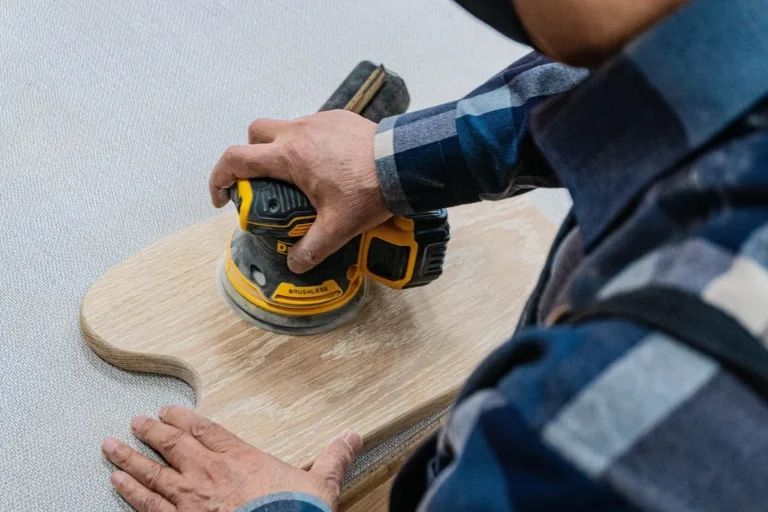
Edges are where plywood shows its layers, so plan the finish before you cut. If a sheet will be painted, our guide to sealing plywood edges explains what actually works.
Ready to turn a sheet into a project? Our how to make a plywood box guide shows how many boxes one sheet yields and how to lay out the cuts.
Frequently Asked Questions
Is CDX plywood exterior grade?
No. APA classifies panels commonly called CDX as Exposure 1, not Exterior. Exposure 1 uses exterior-type glue but is designed to survive construction-time moisture, not permanent weather exposure. Cover it promptly or choose a panel stamped Exterior.
What do the two numbers on a plywood stamp mean?
They are the span rating. In a stamp like 32/16, the left number is the maximum support spacing in inches for roof sheathing and the right number is the maximum for subflooring, with the panel long side across the supports.
Is a 4×8 sheet of plywood really 48 by 96 inches?
Often not. Panels marked Sized for Spacing are made slightly smaller than 48 by 96 inches, according to APA. Measure the actual sheet if your cut list is tight.
What is the difference between A, B, C and D veneer grades?
They describe the face appearance and allowed repairs, from A (smooth, paintable) down to D (utility). C is the minimum permitted face for Exterior plywood, and D is limited to panels used where they are protected from long-term weather.
Which 4×8 plywood is best for cabinets and furniture?
Pick a panel graded by its face veneers, such as A-B or B-C style sanded grades, rather than one graded only as Rated Sheathing. Sanded panels have B-grade or better faces, and sheathing is not graded for face appearance.
Bottom Line
Choose a 4×8 sheet by its stamp: grade for the face, span rating for structural work, and Exterior or Exposure 1 for moisture. Treat CDX as a construction-moisture panel, not an outdoor one, measure sheets if your cuts are tight, and match the panel type to the job using the table above.
After you pick a panel, see how to finish plywood for sanding, conditioning, and topcoating the face veneer.
Sponsored / affiliate links. As an Amazon Associate I earn from qualifying purchases. I may earn additional commission from eligible campaigns.