What Kind of Miter Saw Do I Need? A Real Buying Guide
Most home woodworkers need a 12-inch single-bevel compound miter saw – it handles miter cuts (rotating the blade left/right) and bevel cuts (tilting the blade) in one tool, crosscuts up to about 8 inches of straight board, and costs $300-$400 from a major brand. You only need to step up to a dual-bevel or sliding model for specific situations: dual-bevel saves you from flipping crown molding to cut mirrored angles, and a sliding rail is what lets you crosscut wide boards (think 2×12 lumber or wide baseboard) that a fixed-head saw’s blade can’t reach across.
The Four Real Categories
THE RIGHT DEFAULT FOR MOST HOME SHOPS
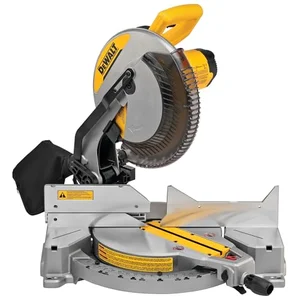 |
DEWALT DWS715 – $369.00 A 12-inch single-bevel compound saw with a 15-amp motor – the exact category that covers trim, framing, and most general shop cutting without paying for a slide rail you may not need.
|
Basic Miter Saw (Chop Saw)
Rotates left and right for angled crosscuts but the blade doesn’t tilt at all – no bevel capability. These are rare on shelves now since compound saws cost barely more, but if you only ever cut simple 90° and 45° crosscuts flat against a fence (framing lumber, basic trim), this is all you actually need.
Compound Miter Saw (Single Bevel)
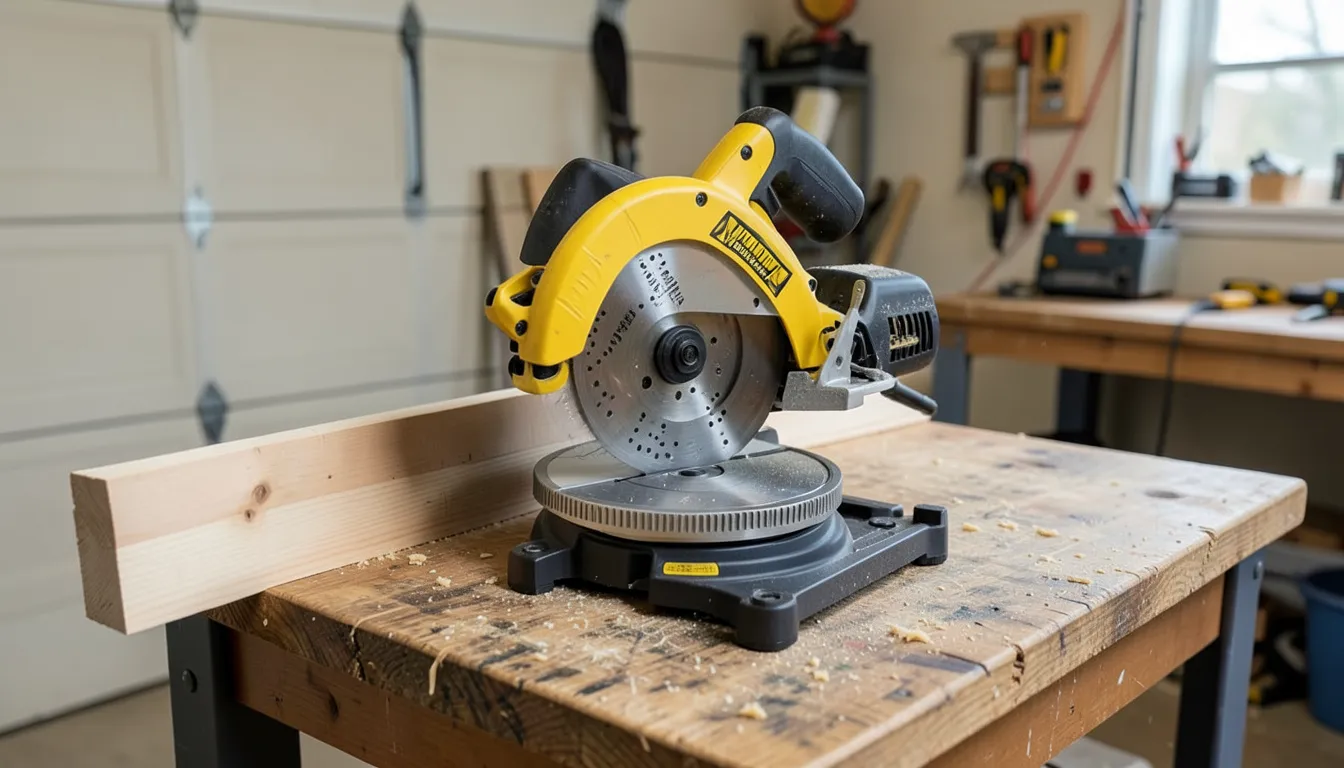
Adds a blade tilt, usually to the left only, so you can combine a miter angle and a bevel angle in one cut – exactly what crown molding and picture frame corners require. This is the right default for most home shops: it covers the vast majority of trim, framing, and general crosscut work without the extra cost and bulk of a slide mechanism.
Dual-Bevel Compound Miter Saw
Tilts both left and right. The practical benefit is speed and accuracy on symmetrical work: cutting the left and right pieces of crown molding or matching trim without unclamping, flipping the board, and resetting your angle – which is also where measurement errors creep in. If you do a lot of trim work, the time saved adds up fast; if you’re mostly framing or doing one-off cuts, it’s a nice-to-have rather than essential.
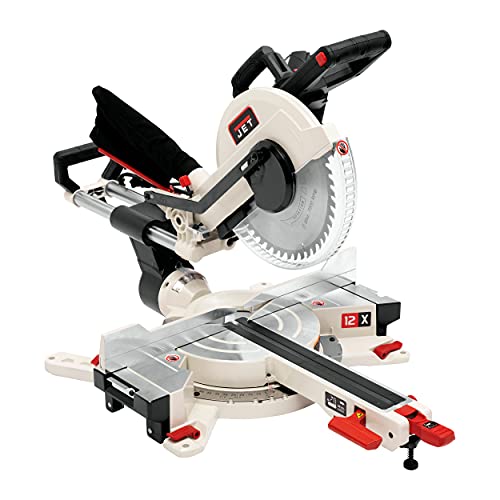
Sliding Compound Miter Saw
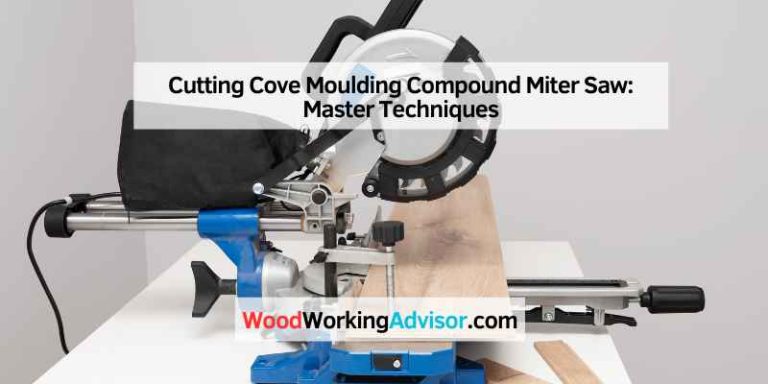
Adds a rail system that lets the blade head slide forward and back, dramatically increasing crosscut width without needing a larger blade. A non-sliding 12-inch saw typically maxes out around 8 inches of straight crosscut; a sliding 12-inch saw can often handle 12-16 inches, enough for a 2×12, a wide stair tread, or crown molding cut standing up against a tall fence. The tradeoff is size, weight, and price – sliding saws take up noticeably more bench or stand depth. If wide-board capacity is the deciding factor, our cordless sliding compound miter saw comparison breaks down cut width and cost across models.
| Type | Bevel | Typical Crosscut (12″ blade) | Best For |
|---|---|---|---|
| Basic/Chop Saw | None | ~8″ straight only | Simple framing crosscuts |
| Compound (single bevel) | One direction | ~8″ | Trim, crown molding, most home projects |
| Dual-bevel compound | Both directions | ~8″ | Repetitive trim/molding without flipping stock |
| Sliding compound | Single or dual | 12-16″+ | Wide boards, stair treads, tall crown against a fence |
Blade Size: 8.5″, 10″, or 12″
Blade diameter drives crosscut capacity more than anything else on the spec sheet. An 8.5-inch saw is compact and light but limited to narrow trim work. A 10-inch saw is the classic compromise – roughly 5.5-6 inches of straight crosscut, lighter and cheaper than a 12-inch, and plenty for most trim and small-project work. A 12-inch saw adds real crosscut capacity (around 8 inches non-sliding) at the cost of a bigger, heavier tool and pricier replacement blades. If your projects are mostly trim and small furniture parts, a 10-inch saw is often the better buy, not a compromise – buying more blade than you’ll use just adds bulk and cost.
Matching the Saw to Your Actual Projects
- Trim carpentry (baseboard, crown, casing): 10 or 12-inch single-bevel compound. Go dual-bevel if you’re doing this professionally or very frequently.
- Framing: 10 or 12-inch compound is fine; a slide isn’t usually necessary since framing lumber crosscuts are typically narrow.
- Furniture and small projects: A 10-inch compound saw is often the better fit – lighter, cheaper, and plenty of capacity for most stock widths.
- Deck boards, stair treads, wide shelving: Sliding compound, 12-inch, to get the wider crosscut without ripping boards down first.
- Tight shop space or frequent transport to job sites: A non-sliding compound saw, or a compact cordless model, keeps footprint and weight down.
Corded vs. Cordless
Corded miter saws are still the default for shop use – consistent power, no battery to manage, and generally lower upfront cost for the same cutting capacity. Cordless 12-inch sliding compound saws exist now and are genuinely useful on job sites without power access, but they typically cost significantly more for an equivalent spec and need a battery platform investment. Unless you specifically need to cut somewhere without outlet access, corded remains the more practical and cost-effective choice for a home shop.
Don’t Skip These When Budgeting
- A stand or bench mount: A miter saw bolted to a stable surface at a consistent height cuts more accurately than one balanced on sawhorses.
- Dust collection: Miter saws throw a surprising amount of dust forward and up; a shop vac hookup or the saw’s built-in bag makes a real difference indoors.
- A quality crosscut blade: The stock blade that ships with most saws is adequate but not great – a dedicated 60-80 tooth crosscut blade noticeably improves cut quality on trim work.
Frequently Asked Questions
What size miter saw do I actually need, 10-inch or 12-inch?
A 10-inch saw covers most trim and small-project crosscuts (around 5.5-6 inches straight) at a lower price and weight. A 12-inch saw adds crosscut capacity (around 8 inches non-sliding) for wider boards and framing stock, at the cost of size and price. Choose based on the widest material you’ll actually cut regularly, not the biggest saw available.
Do I need a dual-bevel saw?
Only if you’re regularly cutting mirrored angles, like both sides of crown molding or matching trim. A single-bevel saw does the same cuts, just requires flipping the workpiece, which costs time and introduces a chance for measurement error on repetitive trim work.
When do I need a sliding miter saw instead of a fixed-head one?
When your crosscut width regularly exceeds what a fixed-head saw’s blade can reach across – roughly 8 inches on a 12-inch non-sliding blade. Wide baseboard, deck boards, stair treads, and 2×12 framing lumber are the common cases where a sliding rail earns its extra size and cost.
Is a compound miter saw the same as a standard miter saw?
No. A standard (basic) miter saw only rotates for angled crosscuts and can’t tilt the blade. A compound miter saw adds that tilt, letting you combine a miter angle and a bevel angle in a single cut, which is required for crown molding and similar angled trim work.
Should I buy corded or cordless?
Corded is the more practical default for shop use: consistent power and generally lower cost for equivalent capacity. Cordless makes sense mainly for job sites without reliable outlet access, and typically costs more for the same spec.
Bottom Line
A 12-inch single-bevel compound miter saw is the right default for most home shops – it handles trim, framing, and general crosscuts without paying for capability you won’t use. Step up to dual-bevel if you do repetitive mirrored-angle trim work, and to a sliding model only if you regularly need to crosscut boards wider than about 8 inches. Buying based on your actual widest material and cut type, not the biggest saw on the shelf, is what actually determines whether the tool fits your shop.
Sponsored / affiliate links. As an Amazon Associate I earn from qualifying purchases. I may earn additional commission from eligible campaigns.