What Size Miter Saw Actually Cuts Through a 4×4 in One Pass?
A 4×4 post is really 3.5 inches by 3.5 inches once it’s been milled, not a full 4 inches — and that still trips up more miter saws than most buying guides admit. A 12-inch saw and a sliding 10-inch saw will both crosscut it in a single pass at 90 degrees. A standard fixed-head 10-inch saw usually can’t quite reach, falling short by anywhere from about half an inch to just over an inch depending on the model, which means finishing the cut with a flip instead of a straight pass. Here’s the real vertical crosscut capacity behind those numbers, which saw sizes get through a 4×4 outright, and the flip-cut technique for the ones that don’t.
Why a 4×4 Trips Up So Many Miter Saws
Best Sliding Saw For One-Pass 4×4 Cuts
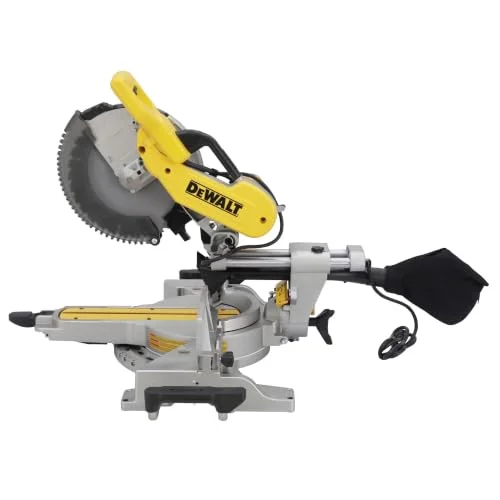 |
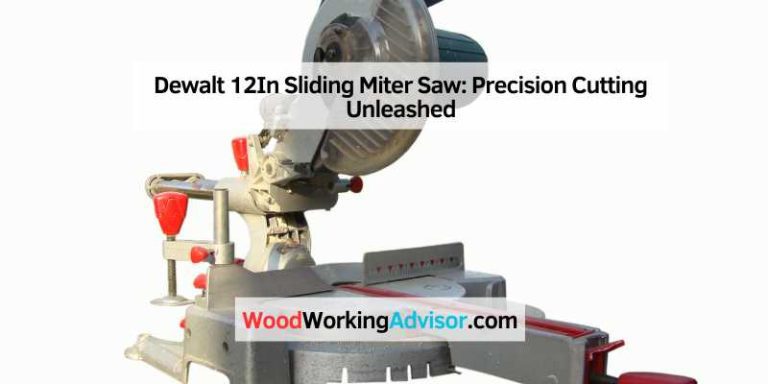
DEWALT DWS779 12″ Double-Bevel Sliding Compound Miter Saw – $399.00 Its tall sliding fences give roughly 6-3/4 inches of vertical clearance — nearly double the 3.5 inches a 4×4 needs — so it cuts straight through in one pass without a flip.
|
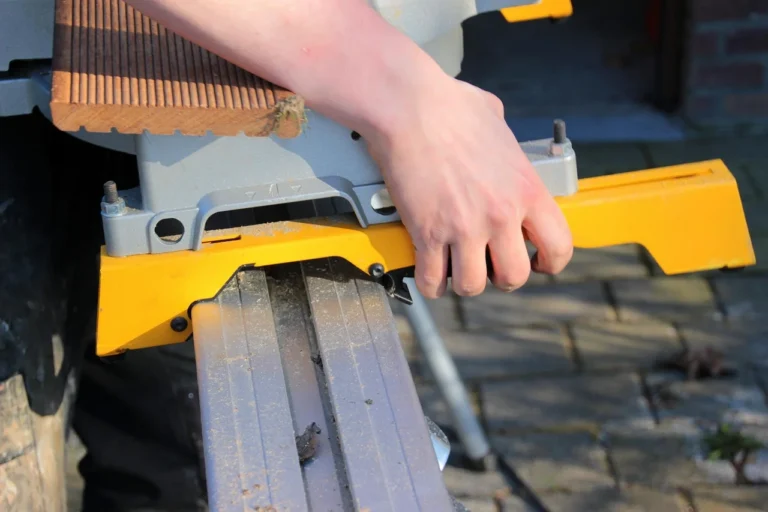
Most miter saw spec sheets advertise crosscut capacity as a board laid flat on the table — something like “cuts 2×14 lumber at 90 degrees.” That number describes how wide a flat board the saw can cut, not how tall a piece it can cut standing on edge. A 4×4 post gets cut standing up, against the fence, so the number that actually matters is the vertical crosscut capacity — and that’s the spec most listicles skip entirely.
How Big Is a 4×4, Really?
Nominal lumber sizing is where the confusion starts. A “4×4” is milled down from a rough 4-inch by 4-inch blank during planing and drying, and what actually ships is a true 3.5-inch by 3.5-inch post — the same nominal-vs-actual gap that turns a “2×4” into a 1.5-inch by 3.5-inch board. Pressure-treated deck posts and studs almost always follow this dimensional-lumber standard. The exception is rough-sawn landscape timbers and some fence posts sold as “true 4×4,” which can measure closer to the full 4 inches and eat into a saw’s capacity margin. When you’re checking whether your saw will make it through, measure your actual post rather than assuming 3.5 inches — treated lumber can also run a hair oversized from moisture swelling after milling.
Fixed-Head 10-Inch Saws: Why They Usually Fall Short
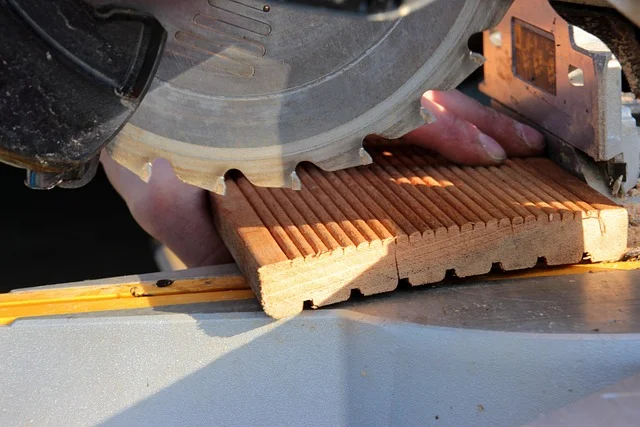
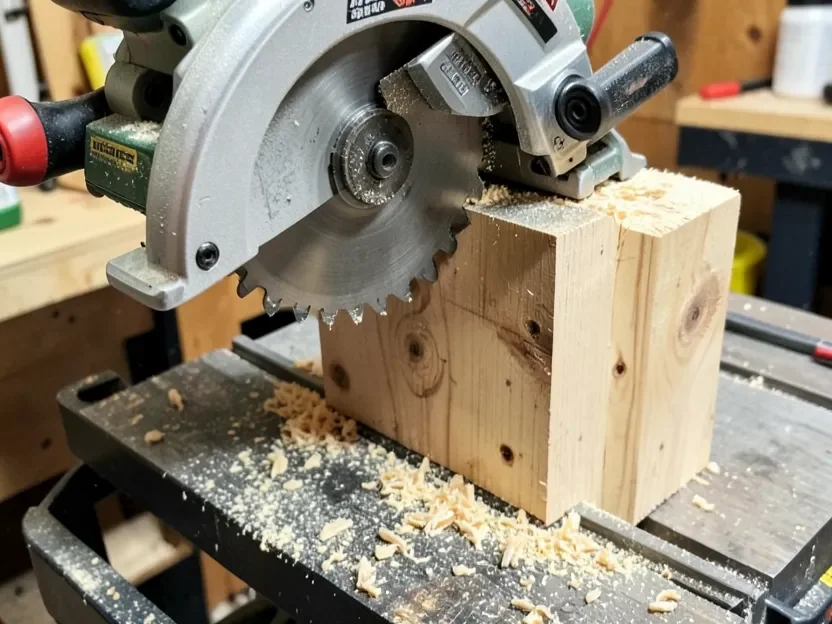
A fixed-head miter saw’s blade pivots straight down on a hinge, so its maximum vertical reach is set by the blade’s radius minus the arbor and guard hardware in the way. On a 10-inch blade, that usually works out to somewhere between about 2 and 3.5 inches of vertical clearance at 90 degrees, depending on the model’s arbor size and guard design. A lot of compact 10-inch saws land right at the edge of that range — close enough to a 4×4’s 3.5 inches that the blade gets most of the way through and then stops short, leaving an uncut sliver at the base that you either snap off by hand or finish with a handsaw. That’s not a defect; it’s just the geometry of a fixed pivot point meeting a full-depth post.
Sliding 10-Inch and 12-Inch Saws: The Two Sizes That Get There in One Pass
Two changes close the gap. The first is a bigger blade: a 12-inch blade’s larger radius pushes vertical crosscut capacity on most fixed-head 12-inch saws up to roughly 4 to 4.5 inches at 90 degrees, comfortably past a 4×4’s 3.5 inches. The second is a sliding rail system, which doesn’t change the blade size at all — instead, the whole motor and blade assembly rides forward on rails and the blade travels through the material front-to-back instead of only pivoting down. That extra travel is why a sliding 10-inch saw with tall fences, like the DEWALT DWS779 above, can clear well over 6 inches vertically even with a 10-inch blade. Either upgrade path works; a sliding 10-inch saw usually costs less and takes up less bench depth than a fixed 12-inch saw with comparable reach, but a 12-inch saw gives you more room to spare if you’re also cutting anything larger than a 4×4.
The Flip-Cut Technique (For Saws That Can’t Finish in One Pass)
If you’re stuck with a fixed-head 10-inch saw, a flip-cut gets you a clean, square cut without buying a new saw — most guides skip this entirely and just tell you to size up. Here’s the actual technique:
- Square a cut line around all four faces of the post with a speed square, working from one reference edge so the line wraps around consistently.
- Set the post against the fence, line the blade up with your mark, and cut straight down as far as the blade reaches. Don’t force it further — forcing a fixed-head blade past its natural stop is what causes binding and kickback.
- Rotate the post 90 degrees without shifting your fence stop or re-measuring, keeping the same face against the fence orientation.
- Line the blade up with the existing kerf on the new face and finish the cut. The two kerfs should meet in the middle if your first cut was square.
- On a slightly oversized post — rough-sawn landscape timber, or treated lumber that’s swelled a bit — you may need a third rotation to fully separate the cut; go slow and let the blade do the work rather than pushing through resistance.
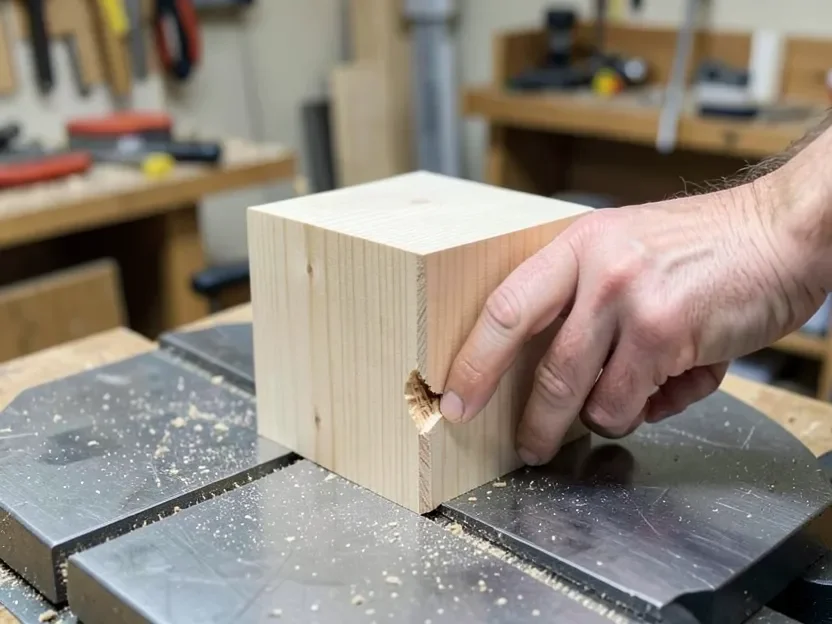
Real Crosscut Capacity by Saw Type
These are typical ranges, not guaranteed numbers for every model — always check the specific saw’s own spec sheet for vertical capacity against the fence before you buy.
| Saw Type | Typical Vertical Capacity at 90° | Cuts a 4×4 in One Pass? |
|---|---|---|
| Fixed-head 10″ | ~2″ – 3.5″ | Usually not — flip-cut needed |
| Sliding 10″ | ~3.5″ – 6.5″+ | Yes, on most models |
| Fixed-head 12″ | ~4″ – 4.5″ | Yes |
| Sliding 12″ | ~6″ – 7.5″+ | Yes, with room to spare for molding |
What to Check on the Spec Sheet Before You Buy
Look specifically for a “vertical capacity against the fence” or “base molding capacity” number, not just the flat-board crosscut width — manufacturers list base molding height because it’s measured the same way a post standing on edge is cut. Anything at or above 3.5 inches clears a standard 4×4. Also check blade guard clearance on fixed-head saws; some guards are shaped to allow slightly more vertical reach than the blade radius alone would suggest, so two 10-inch saws from different brands can have noticeably different real-world capacity even with an identical blade size.
If 4x4s are only an occasional cut and you already own a fixed-head saw, the flip-cut technique above costs nothing. If you’re buying new and want a general-purpose size recommendation beyond just 4×4 work, our miter saw sizing guide covers 10-inch vs. 12-inch capacity across trim, molding, and framing lumber. For a closer look at exactly how much capacity you gain moving up a size, see our 10-inch vs. 12-inch crosscut comparison. And if you’re working with a compact 7-1/4-inch cordless saw instead of a full-size 10-inch or 12-inch model, check whether a 7-1/4-inch miter saw can cut a 4×4 at all before you try.
Frequently Asked Questions
What size miter saw cuts a 4×4 in one pass?
A 12-inch miter saw or a sliding 10-inch miter saw will crosscut a 4×4 post in a single pass at 90 degrees. A standard fixed-head 10-inch saw usually can’t reach the post’s full 3.5-inch depth and needs a flip-cut to finish.
Can a regular 10-inch miter saw cut a 4×4?
A fixed-head 10-inch miter saw can start the cut but typically falls short of a 4×4’s 3.5-inch depth by roughly a half-inch to just over an inch, depending on the model. You’ll need to flip the post and finish the cut from the other side rather than cutting straight through.
How do you cut a 4×4 with a miter saw that can’t reach all the way through?
Square a cut line around all four faces of the post with a speed square, then cut down as far as the saw’s blade reaches on the first face. Rotate the post 90 degrees without moving your stop or fence setting, line the blade up with the existing kerf, and finish the cut from the new face. Repeat once more if the post is still slightly oversized.
Is a 12-inch miter saw necessary for cutting 4×4 posts?
No. A sliding 10-inch miter saw handles a 4×4 in one pass just as well as most fixed-head 12-inch saws, in a smaller footprint. A 12-inch saw is worth it mainly if you also need extra capacity for wide crown molding or dual-bevel angled cuts on post caps.
Sponsored / affiliate links. As an Amazon Associate I earn from qualifying purchases. I may earn additional commission from eligible campaigns.