When Was Plywood First Used in Houses? Real Timeline (1905-Now)
Commercial plywood was first sold in 1905, when Portland Manufacturing Company displayed three-ply veneer panels at Portland’s world’s fair — but almost none of it went into houses at first. Builders didn’t adopt it widely for home construction until the 1930s, after the Douglas Fir Plywood Association set the first real quality standards in 1933. This guide covers the real timeline, what problem plywood actually solved for builders, and how it went from a novelty veneer product to standard sheathing.
Quick Answer
Plywood was commercially invented in 1905, but it wasn’t widely used in home construction until the 1930s, after the Douglas Fir Plywood Association (founded 1933) standardized quality and a 1934 waterproof-glue breakthrough made exterior use practical. Demand then accelerated through the post-WWII housing boom.
When Was Plywood First Invented?
Best Exterior Wood Glue Pick
 |
Titebond III Ultimate Wood Glue – $9.58 A modern descendant of the 1934 waterproof-adhesive breakthrough covered below — the same basic problem (glue that survives moisture) this article’s history section explains.
|
As an Amazon Associate we earn from qualifying purchases.
The first U.S. patent for an early plywood-like product was issued in 1865, but it stayed a niche curiosity for decades. The real starting point for the plywood industry is 1905: Portland Manufacturing Company, a small Oregon box factory, displayed “three-ply veneer work” panels made from Pacific Northwest Douglas fir at Portland’s world’s fair. Orders started coming in almost immediately — but from door, cabinet, and trunk manufacturers, not homebuilders.
Through the 1920s, more mills opened across the Pacific Northwest — 17 by the end of the decade — and automakers started using plywood for car running boards. It was a real, growing industry, but it still wasn’t a house-framing material yet.
When Did Plywood Become Common in House Construction?
Two things had to happen before plywood became a real house-building material, and both landed in the 1930s. First, in 1933 independent mills founded the Douglas Fir Plywood Association (DFPA) in Tacoma, Washington, and set the first nationwide product-quality standards — before that, plywood quality varied enough between mills that builders couldn’t rely on it structurally. Second, in 1934, a chemist at Harbor Plywood Corporation in Aberdeen, Washington developed a genuinely waterproof adhesive, which removed the biggest barrier to using plywood outdoors — siding, roof sheathing, and anywhere weather could reach the glue line.
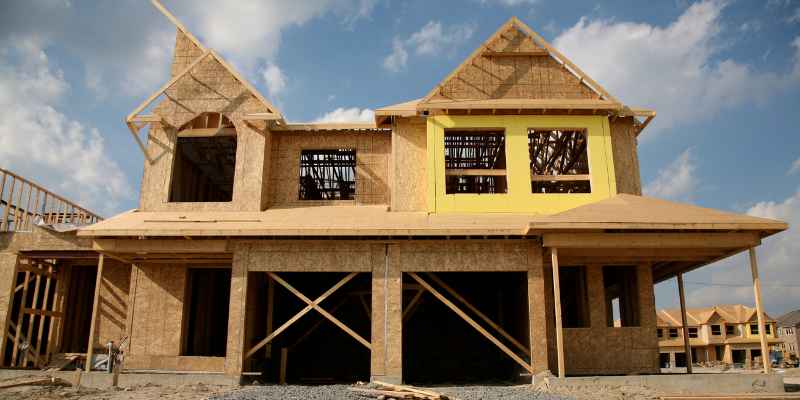
Those two changes together are why DFPA-trademarked plywood ended up in more than one million American homes. Demand then surged again during World War II for military housing and equipment, and mill capacity grew accordingly — by 1954, 101 mills across North America were producing Douglas fir plywood, much of it headed straight into the post-war housing boom.
What Problem Did Plywood Solve for Builders?
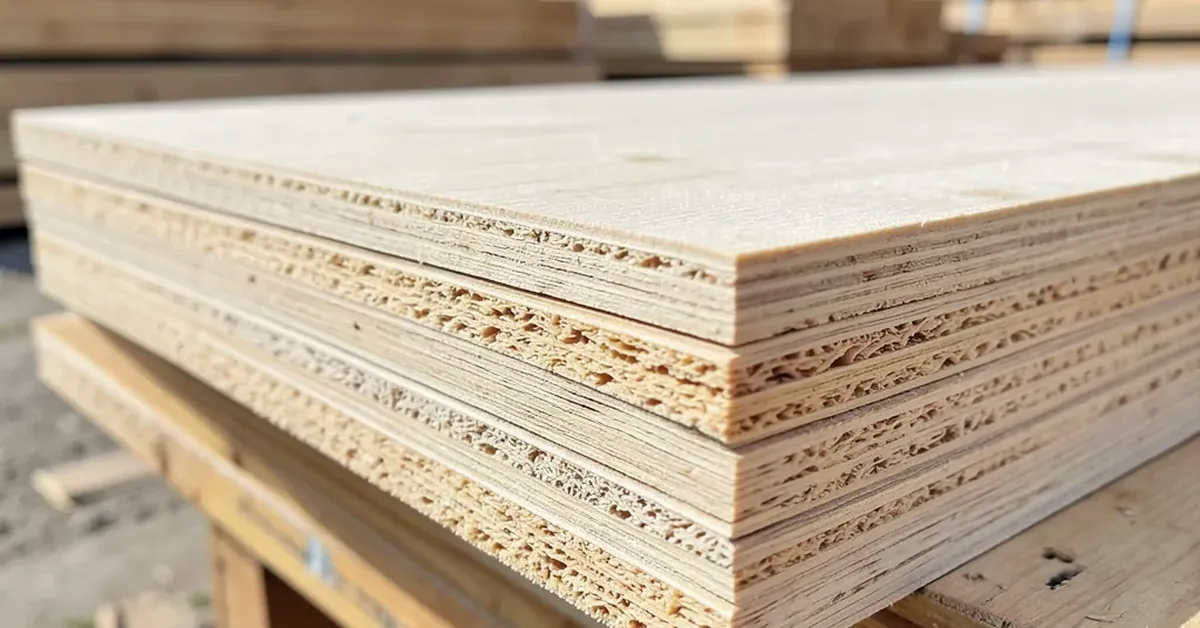
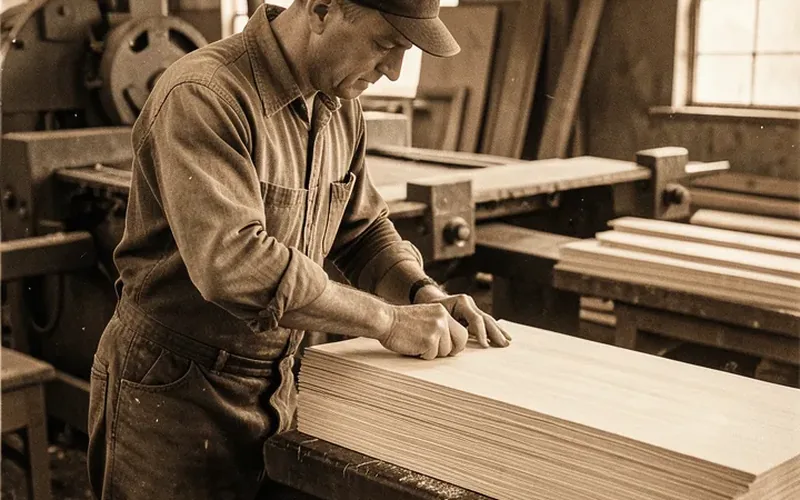
Plywood solved two problems solid lumber couldn’t: waste and stability. A single log can only yield so many wide, clear boards, but rotary-peeling that same log into thin veneer and cross-laminating the layers turns it into large, flat panels with far less waste per log. Cross-laminating the grain direction of each layer also cancels out most of solid wood’s tendency to warp, cup, or split along the grain — a 4×8 plywood sheet stays flatter over time than a comparable width of solid boards.
For builders, that meant faster wall and roof sheathing (one large panel instead of dozens of narrow boards), more predictable structural performance, and eventually lower material cost per square foot once mills scaled up. That combination — less waste, more stability, faster installation — is why it displaced board sheathing once the 1930s standards made its quality reliable.
A Quick Timeline of Plywood in Construction
| Year | Milestone |
|---|---|
| 1865 | First U.S. patent for an early plywood-like laminated wood product |
| 1905 | Portland Manufacturing Co. debuts three-ply veneer panels at Portland’s world’s fair — commercial plywood industry begins |
| 1920s | 17 Pacific Northwest mills producing plywood; automakers adopt it for running boards |
| 1933 | Douglas Fir Plywood Association founded, sets first nationwide quality standards |
| 1934 | Waterproof adhesive developed, enabling exterior/structural use |
| 1930s-40s | Widespread residential adoption; 1M+ homes built with DFPA-trademarked plywood |
| WWII | Military demand surges (barracks, patrol torpedo boats); mills expand to 30+ facilities |
| 1954 | 101 North American mills producing Douglas fir plywood, feeding the postwar housing boom |
| 1990s-today | Production peaks, then OSB (oriented strand board) replaces plywood in much of residential sheathing |
📊 Standardized DFPA plywood went into more than 1 million U.S. homes after the 1933 quality standards took hold — Source: Dunn Lumber, “The History of Plywood in the Pacific Northwest”
Was There “Plywood” Before the 1900s?
Wood veneering — gluing thin sheets of decorative wood over a solid or laminated base — is genuinely ancient; Egyptian furniture makers used the technique thousands of years ago for appearance, not structure. That’s a real historical thread, but it’s a different thing from modern structural plywood: cross-laminated layers engineered specifically for strength and stability in construction. If you see a claim that plywood itself was widely used in ancient houses or temples, treat it skeptically — the well-documented construction-material story starts in 1905, not antiquity.
If you’re deciding what to do with plywood already in your house today, see our guides on removing glued wood flooring from a plywood subfloor, painting plywood floors, and pressure-treated vs. marine plywood for exterior and wet-area jobs.
Frequently Asked Questions
When was plywood first used in construction?
Commercial plywood debuted in 1905, when Portland Manufacturing Company exhibited three-ply veneer panels at Portland’s world’s fair. It was used in doors, cabinets, and trunks first — widespread use in home construction didn’t take off until the 1930s.
What problem did plywood solve, and why was it important?
Plywood let builders turn a log into large, stable panels instead of narrow boards, cutting waste and giving a panel that resists warping and splitting better than solid wood of the same thickness. That combination of efficiency and stability is why it caught on fast once quality standards existed.
When did plywood become common in home construction?
Widespread residential use dates to the 1930s, after the Douglas Fir Plywood Association formed in 1933 and set the first nationwide quality standards — more than one million homes were eventually built using DFPA-trademarked plywood, with demand accelerating further during the post-WWII housing boom.
Is plywood durable for long-term use in a house?
Yes. Properly specified and installed plywood sheathing and subflooring routinely lasts the life of a house. Exterior-rated plywood using waterproof adhesive (a formula introduced in 1934) can handle roofing, siding, and other weather-exposed uses that interior-grade plywood cannot.
Conclusion
Plywood as a commercial product dates to 1905, but it took roughly three more decades — and two specific breakthroughs, the 1933 DFPA quality standards and the 1934 waterproof adhesive — before it became a standard house-building material. Once those pieces were in place, plywood spread through American homes fast, and its basic advantage over solid lumber (less waste, more stability) is still why engineered wood panels dominate residential construction today, even as OSB has taken over much of plywood’s old sheathing role.
Sponsored / affiliate links. As an Amazon Associate I earn from qualifying purchases. I may earn additional commission from eligible campaigns.