Melamine vs Plywood for Shelving: Which Lasts Longer?
Plywood usually lasts longer for shelving, especially over wider spans, in humid spaces, or under heavier loads. Melamine can last about as long as plywood in dry, well-supported cabinets when the edges stay sealed and the span is short. If you ignore span, moisture, or edge protection, expect sagging, swelling, chipped faces, and earlier replacement. This guide compares strength, moisture resistance, edge durability, and total cost so you can choose the right shelf material for closets, pantries, garages, and utility storage.
| Factor | Melamine | Plywood for Shelving | Winner |
|---|---|---|---|
| Up-front sheet cost | Average 4×8 sheet cost: $35–$45 | 3/4-inch cabinet-grade plywood: $60–$80 | Melamine |
| Span and sag margin | Max unsupported span cited at 32 inches | Max unsupported span cited at 36+ inches | Plywood for Shelving |
| Fastener and support behavior | Best when loads are light and support is frequent | Better screw-holding and better support for shelf hardware | Plywood for Shelving |
| Moisture tolerance | Face resists spills, but exposed edges can swell | Better humidity tolerance and better recovery in damp rooms | Plywood for Shelving |
| Finish work | Pre-finished surface; cut edges need banding | Needs edge treatment and usually finishing labor | Melamine |
Melamine vs plywood: the shelf-life trade-off
What each panel is made
Melamine board is a resin-coated composite panel, usually built on particleboard, MDF, or plywood. The face arrives pre-finished, but cut edges expose the core and need banding. Plywood is a cross-laminated veneer panel. That layered structure gives it better structural behavior on shelves.
Why span, load, and moisture decide longevity
Shelf life depends on the whole setup, not the label on the sheet. Unsupported span controls sag more than many buyers expect, while load and moisture decide whether a shelf stays flat, stays tight at the supports, or starts swelling and breaking down at the edges.
Quick side-by-side comparison
Forest Plywood describes melamine as a resin-coated sheet bonded to particleboard, MDF, or plywood, and says it fits interior cabinet boxes, shelving, closet systems, office furniture, and commercial display cases. Vinawood says plywood wins for structural shelving because it holds fasteners better and resists humidity.
Melamine shelf basics
Particleboard core vs MDF core
Most melamine shelves use either particleboard or MDF underneath the resin face. Particleboard is a common substrate, with coarse chips and weaker screw holding; it also tends to swell when water enters exposed edges. MDF is denser and smoother at the cut edge, with better screw retention than particleboard, but it is heavier.
Why the face stays clean but the edge needs banding
The resin face is one reason melamine is popular for cabinet interiors and closet shelves. The problem starts at the cut line. Edge banding covers exposed edges with PVC or melamine tape, often applied with hot-melt or PUR adhesive, to reduce chipping and help slow moisture entry.
Common failure modes: edge swelling and chip-out
Melamine shelves usually fail at the weak points first. The face can hold up well, but exposed edges are vulnerable to swelling after water intrusion, and the brittle surface can chip during cutting or when hardware is installed without care. That makes edge handling central to shelf longevity.
Plywood shelf basics
Why cross-laminated veneers matter
Plywood’s alternating veneer layers resist splitting and help the panel stay stable under load. The same source notes that plywood holds fasteners better than melamine-faced particleboard or MDF, which matters when you are supporting brackets, shelf pins, or other hardware that must stay tight over time.
Cabinet-grade plywood for 3/4-inch shelves
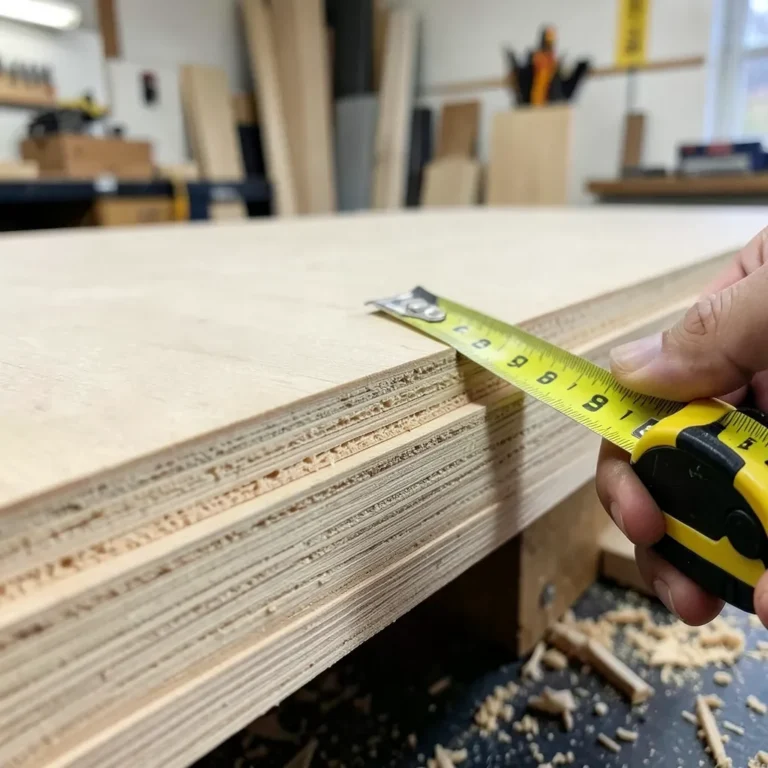
Cabinet-grade plywood is commonly used at 3/4 inch for shelves that need better span and load performance. Vinawood also notes that 3/4-inch and 1/2-inch are workhorse thicknesses for cabinet construction, and that a 36-inch wide bookshelf in 3/4-inch hardwood plywood will hold its line for years.
Common failure modes: veneer damage and finish wear
Plywood usually does not fail the way melamine does. Instead, the risks are veneer damage at edges, surface wear where the finish is thin, and movement if the sheet is poorly sealed. The panel can still last a long time, but it often needs more finishing work up front.
Which lasts longer under load?
Plywood usually lasts longer under load because it spans farther, sags less, and holds fasteners better. Melamine can still last well in short spans with light storage, but once load rises or the shelf gets wider, the panel type and support layout matter much more than the surface finish.
Shelf span and sag limits
One source cited a maximum unsupported span of 32 inches for melamine and 36+ inches for plywood. That difference is small on paper, but it matters in closets and bookshelves where a few extra inches can decide whether a shelf stays flat or starts to dip.
Say your closet shelf is 30 inches wide and holds folded clothes in a dry room. Melamine can be a sound choice if the panel is well supported and the cut edges are banded. Move that same shelf to 42 inches and load it with books, and plywood becomes the safer pick.
Screw-holding and support hardware
Plywood’s better screw-holding matters when you use shelf pins, screws into side panels, or support cleats. Particleboard cores can strip more easily, especially around repeated hardware adjustments. MDF is more consistent than particleboard, but it still does not match plywood for structural fastening.
What changes with 3/4-inch thickness
Thickness helps both materials, but it does not erase the core difference. A 3/4-inch shelf in either material will perform better than a thinner panel, yet plywood still has the edge on span and load. That is why cabinet-grade plywood is often chosen when the shelf must stay straight for years.
Melamine shelf longevity table
This table uses three variables that control shelf life: unsupported span, expected load, and moisture exposure. The cost column adds edge banding for both materials where needed, and adds finishing labor for plywood because it does not arrive with a finished face like melamine does.
| Unsupported span | Expected load | Moisture exposure | Better material | Likely failure mode: Melamine | Likely failure mode: Plywood for Shelving | Simple total cost |
|---|---|---|---|---|---|---|
| Up to 32 inches | Light storage: folded clothes, light pantry goods | Dry interior | Melamine | Edge chip-out or minor sag if overloaded | Veneer wear or overpaying for capacity you do not need | Melamine: $35–$45 sheet plus banding; Plywood for Shelving: $60–$80 sheet plus banding and finishing labor |
| 32–36 inches | Moderate load: boxed food, small tools, mixed storage | Dry to lightly humid | Plywood for Shelving | Noticeable sag and edge stress over time | Edge wear if left unfinished, but structure stays stronger | Melamine: $35–$45 sheet plus banding; Plywood for Shelving: $60–$80 sheet plus banding and finishing labor |
| Over 36 inches | Heavy load: books, hardware, shop supplies | Any humidity risk | Plywood for Shelving | Sag, edge swelling, or premature replacement | Possible finish wear at cut edges, but better shelf life overall | Melamine: $35–$45 sheet plus banding; Plywood for Shelving: $60–$80 sheet plus banding and finishing labor |
What happens in wet or humid spaces?
Melamine’s face resists spills, but exposed edges are the weak point in wet or humid spaces. Plywood usually tolerates humidity better, especially when sealed, because its veneer structure is more forgiving. In garages, pantries, and utility rooms, that difference can matter as much as load or span.
Cut-edge swelling in melamine
When water gets into a melamine shelf’s exposed edge, the core can swell and the edge can break down. Particleboard is the most vulnerable substrate, but MDF can also suffer if the edge is repeatedly damp. That is why edge banding is not optional on cut melamine.
Why plywood usually tolerates humidity better
The same source says plywood resists humidity better than melamine-faced particleboard. It still needs sealing or finishing where exposed, but the panel is generally more forgiving in rooms that swing between dry and damp conditions. That makes it a better choice for utility shelving and many garage setups.
Where garages, pantries, and utility rooms change the answer
The same source lists melamine as good for interior cabinet boxes, shelving, closet systems, office furniture, and commercial display cases, but also says it is not right for heavy loads over long spans. In a garage, that long-span problem often meets dust, temperature swings, and occasional moisture at the same time.
Suppose you are building a 36-inch pantry shelf for canned goods. In a dry kitchen, melamine can be a practical choice if the shelf is well supported and the edges are banded. Put the same shelf in a damp utility room, and plywood usually earns the nod because the failure risk shifts from cosmetic wear to swelling and sag.
Choose plywood or melamine
Choose plywood if you need longer spans, heavier loads, or damp conditions. Choose melamine if you want a prefinished dry interior, shorter spans, and lower up-front cost. The extra plywood cost is worth it when shelf replacement would be harder than finishing the board once.
Choose melamine if…
Choose melamine if the shelf stays under about 32 inches unsupported, the load is light to moderate, and the room stays dry. It is also a strong fit when you want a clean cabinet interior without sanding and painting. That is why it works well for closet interiors, cabinet interiors, and drawer boxes.
Choose plywood for shelving if…
Choose plywood for shelving if the span reaches 36 inches or more, the load includes books or tools, or the room has humidity swings. It is the better call for load-bearing shelves, cabinet shelves that must stay straight, and utility areas where edge swelling would shorten service life.
When the extra plywood cost is worth it
The price gap is real: a 4×8 sheet often runs $35–$45 for melamine and $60–$80 for 3/4-inch cabinet-grade plywood. Once you add edge banding to both and finishing labor to plywood, the gap widens. That extra spend makes sense when sag, fastening, or moisture would force an early rebuild.

Frequently asked questions
Does melamine last longer than plywood for shelving?
No, plywood usually lasts longer for shelving, especially when the shelf is wide, carries heavier items, or sits in a humid room. Melamine can last just as long in short, dry, well-supported runs, but its edge and core are less forgiving when the layout pushes the limits.
How much weight can melamine shelves hold compared with plywood?
There is no single weight limit that fits every shelf, because thickness, span, support spacing, and load distribution all matter. As a practical rule, plywood handles heavier loads more safely, while melamine is better suited to light-to-moderate storage on shorter spans with frequent support.
Is plywood or melamine better for closet shelves?
For many closet shelves, melamine is the better value because it is prefinished, easy to wipe clean, and often strong enough for clothing and light storage. If the closet shelf is unusually long, expected to carry books or bins, or needs better moisture tolerance, plywood is the safer choice.
Does melamine sag more than plywood on long shelves?
Yes. On long unsupported shelves, melamine generally sags more than plywood, and one cited comparison put the unsupported span at 32 inches for melamine versus 36+ inches for plywood. The difference matters most once you move beyond light storage and into books, tools, or heavy pantry goods.
What happens when melamine shelves get wet?
The face may resist spills, but exposed edges can absorb water and swell, especially on particleboard-core shelves. Once the edge swells, the shelf can chip, lose its clean fit, and become harder to band or repair. That is why sealed edges matter so much.
Is plywood worth the extra cost for shelving?
Yes, when the shelf needs longer span, higher load capacity, or better moisture tolerance. The higher sheet price and extra finishing work are easier to justify if the shelf sits in a garage, pantry, utility room, or any cabinet where sag or edge damage would shorten its service life.
Sponsored / affiliate links. As an Amazon Associate I earn from qualifying purchases. I may earn additional commission from eligible campaigns.