Will Ash Wood Float in Methanol? Yes, and Here’s Why
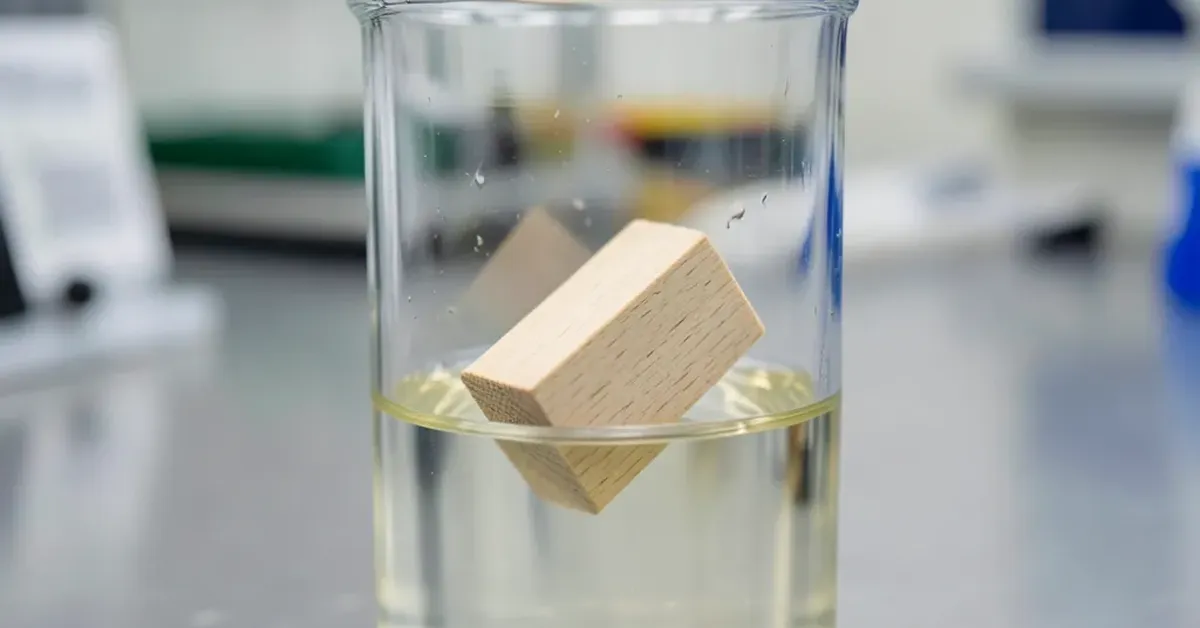
Yes — a block of ash wood will float in methanol. Air-dried white ash has a density of roughly 0.55–0.65 g/cm³, while methanol is denser at about 0.79 g/cm³. Anything less dense than the liquid it’s placed in floats, so ash comes out on top with room to spare.
The margin is actually smaller than you’d get testing the same block in water (density 1.0 g/cm³): ash still floats in both liquids, but it rides noticeably lower — more of the block submerged — in methanol than it would in water, simply because methanol is closer in density to the wood itself. Below, the actual density numbers, why methanol changes the math compared to water, and how to run this test yourself with a kitchen scale.
Properties Of Ash Wood
Best Wood Moisture Meter
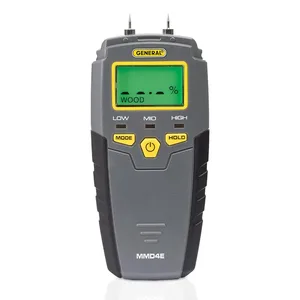 |
General Tools MMD4E Moisture Meter – $37.70 Wood density shifts with moisture content, so if you want to repeat this float test on your own lumber, a meter like this tells you what you’re actually starting with.
|
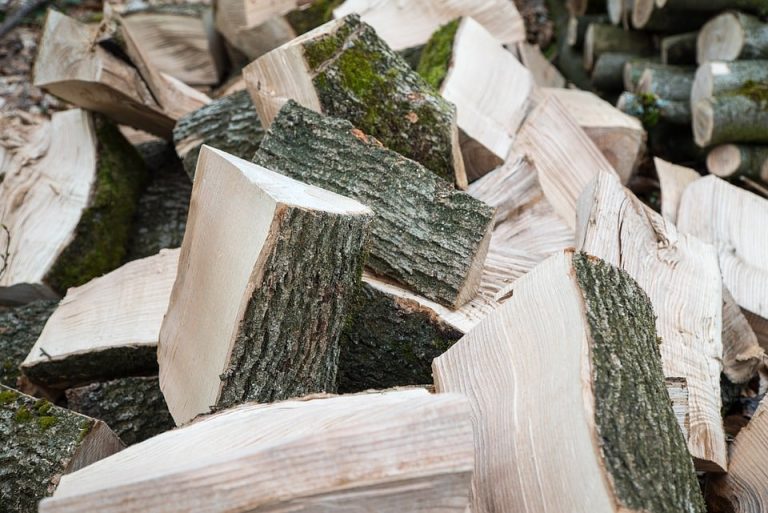
White ash (Fraxinus americana) has an air-dried density of roughly 0.55–0.65 g/cm³, which corresponds to a specific gravity of about 0.60 on the standard oven-dry-weight, air-dry-volume basis that the USDA Wood Handbook uses to rank species. That places ash in the medium-density range for North American hardwoods — denser and stiffer than pine or basswood, but noticeably lighter than dense woods like hickory or hard maple, which is part of why ash became the traditional choice for baseball bats and tool handles: it’s light enough to swing fast but tough enough to absorb repeated shock without shattering. That density comes almost entirely from the wood’s cellulose and lignin content and how tightly the cell walls are packed, and it changes measurably with moisture content — green, freshly-cut ash can weigh 30–40% more than the same board after it’s air-dried, which is exactly why the density figures used for a float test always specify air-dried or oven-dry wood rather than green lumber. Ash’s straight, open grain doesn’t meaningfully change its bulk density, but it does mean a test block cut with the grain running lengthwise behaves consistently, without air pockets or grain irregularities skewing the result.
Methanol’s Relevant Properties
Methanol (CH₃OH) is the simplest alcohol — a single carbon atom bonded to three hydrogens and a hydroxyl group — and that small, polar molecular structure is what gives it a density of about 0.791 g/cm³ at room temperature, noticeably lighter than water’s 1.0 g/cm³ despite methanol looking and pouring just like water. It’s a clear, colorless, highly flammable liquid with a faintly sweet odor, a low boiling point of 64.7°C, and it mixes completely with water in any ratio because both molecules are polar. For this experiment, the only property that actually matters is that density gap: at roughly 79% of water’s density, methanol sits much closer to ash’s own density than water does, which is exactly why the float margin shrinks even though the outcome (floating) stays the same.
The Physics: Why Density Difference, Not Just Density, Decides How High Something Floats
Archimedes’ principle explains both whether something floats and how high it rides: an object floats when its average density is lower than the liquid’s, and at equilibrium it settles at exactly the depth where the weight of displaced liquid equals the object’s own weight. The fraction of the object submerged works out to simply its own density divided by the liquid’s density. For ash at roughly 0.60 g/cm³ floating in water (1.0 g/cm³), that fraction is about 60% submerged, meaning 40% of the block sits above the surface. In methanol (0.791 g/cm³), the same block submerges to roughly 76% of its volume, leaving only about 24% visible above the surface — still floating, clearly, but riding noticeably lower in the liquid because methanol’s lower density can’t generate as much buoyant force per unit volume as water can.
That’s the whole reason methanol makes a good teaching example: it demonstrates that “floats or sinks” is a yes-or-no outcome, but exactly how high something floats is a continuous function of the density ratio between the object and the liquid, not just a binary comparison.
Running the Test Yourself
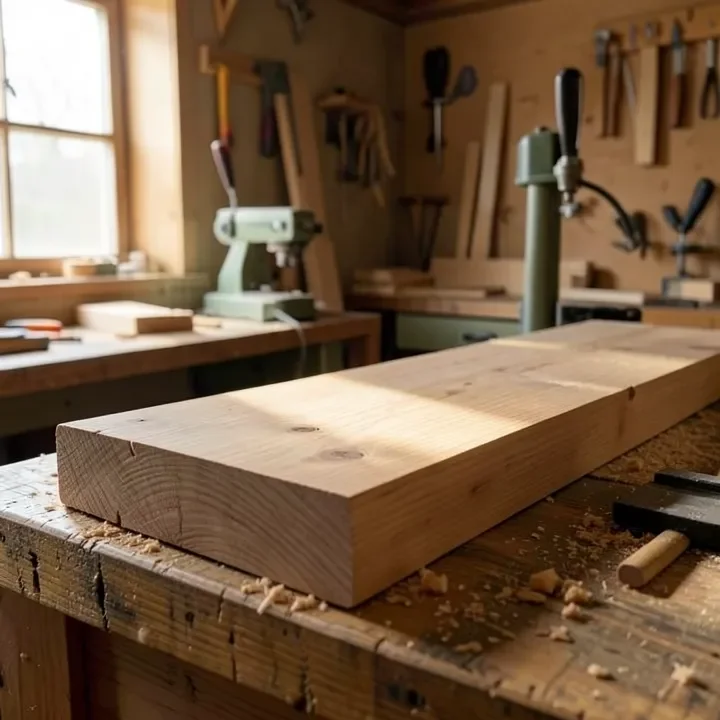
You’ll need a small block of ash (a known, regular shape like a cube or rectangular prism makes the math easiest), a kitchen scale accurate to at least a gram, a ruler or calipers, and enough methanol in a clear, heat- and solvent-safe container to fully submerge the block — work in a well-ventilated area away from any flame source, since methanol is flammable and its vapor is also toxic in enough concentration. Measure the block’s dimensions and calculate its volume, then weigh it on the scale and divide weight by volume to get density directly; this tells you exactly where your specific piece of ash falls in that 0.55–0.65 g/cm³ range before you even wet it, since moisture content, growth conditions, and exactly which part of the tree the board came from all shift the number slightly.
Once you place the block in the methanol, it should settle within seconds to its equilibrium floating depth rather than continuing to slowly rise or sink — if it’s still moving after 30 seconds to a minute, that usually means air is trapped in the wood’s pores and slowly escaping, which briefly increases the block’s average density, or that the block has absorbed enough liquid to change its effective density from what you calculated dry. Mark the waterline with a grease pencil or measure the submerged depth with a ruler, and you can compare that measured submersion fraction against the roughly 76% predicted by the density math above as a real check on the calculation.
Why This Matters Beyond the Experiment
The same density principle explains a lot of practical woodworking observations: it’s why ash and other medium-density hardwoods are the traditional pick for tool handles and sporting goods where a balance of light weight and toughness matters, and it’s why species identification sometimes leans on a rough float or weight test when grain alone doesn’t clearly distinguish two similar-looking woods. Ash trees also grow relatively quickly compared to slower hardwoods like oak or walnut, which is part of why ash lumber has historically been affordable and widely available, though supply in parts of North America has tightened due to the emerald ash borer infestation affecting standing ash trees regardless of what any individual board’s density tells you.
Frequently Asked Questions
Will A Block Of Ash Wood Float In Methanol?
Yes. Air-dried ash’s density (roughly 0.55–0.65 g/cm³) is lower than methanol’s (about 0.791 g/cm³), so it floats, though it sits noticeably lower in the liquid — more submerged — than it would in water.
Does Wood Ash Float?
Wood ash (the mineral residue left after burning wood) generally does not float in water — its particles are denser than water and sink, though very fine, powdery particles can stay suspended briefly before settling. This is a different material entirely from ash the wood species discussed above.
Will Any Substance Float In Methanol?
Yes — any material with a density lower than methanol’s roughly 0.791 g/cm³ will float in it, while denser materials sink. Most common woods, most plastics like polyethylene and polypropylene, and ice all qualify; denser woods like ebony or lignum vitae, along with metals and glass, sink.
Does Wood Naturally Contain Methanol?
Yes, in small amounts — methanol was historically called “wood alcohol” because it was originally produced by heating wood in the absence of oxygen (destructive distillation), which breaks down hemicellulose into methanol among other byproducts. It’s not present in meaningful amounts in normal woodworking use, but it is released during wood combustion and pyrolysis.
Conclusion
Ash wood floats in methanol because its density sits well below methanol’s, but the real lesson in this experiment is that floating isn’t just yes-or-no — the size of the density gap determines how high or low the block actually rides, and ash sits noticeably lower in methanol than it would in plain water. Run the numbers yourself with a scale and a known volume, and the roughly 76% submerged prediction from Archimedes’ principle should match what you actually see.
Sponsored / affiliate links. As an Amazon Associate I earn from qualifying purchases. I may earn additional commission from eligible campaigns.