What Does Ash Wood Grain Look Like? (Visual ID Guide vs Oak)
Ash wood grain is straight and ring-porous, with bold rows of open pores at each growth line and almost none of oak’s fleck-pattern rays — the giveaway once the two get confused after staining. Mistake one for the other and a “solid ash” listing can turn out to be something else. This guide covers what ash grain looks like face-grain and end-grain, how it compares to oak, hickory, and maple, and the 4 checks that confirm it in under a minute.
Quick Answer
Ash wood grain is straight, open, and coarse, running in long uniform lines with distinct growth rings and a light brown-to-cream color. It’s ring-porous, meaning each ring starts with a visible row of large pores — the same structure as oak, but ash lacks oak’s wide medullary rays, which is the fastest way to tell the two apart on sight.
What Does Ash Wood Grain Look Like?
Best Wood Grain Loupe Pick

Gain Express 10x Illuminated Jewelers Loupe (LED & UV Light)
A 10x triplet loupe with built-in LED lighting — enough magnification to see individual endgrain pores, and the light means you don’t need a bright window to do it.
- Best for: checking endgrain pore rows on lumber-yard or reclaimed boards
- Why we picked it: the LED light makes pore rows visible in dim shop corners, where a plain loupe struggles
- Main drawback: the UV setting is unnecessary for wood ID — you’ll only ever use the white LED mode
Compare more wood-ID magnifier options
 Option 1 Ade Advanced Optics 10x Triplet Loupe
|
 Option 2 ReinHoo 10x LED Magnifier with Stand
|
 Option 3 OttLite Pocket LED Magnifier
|
As an Amazon Associate we earn from qualifying purchases.
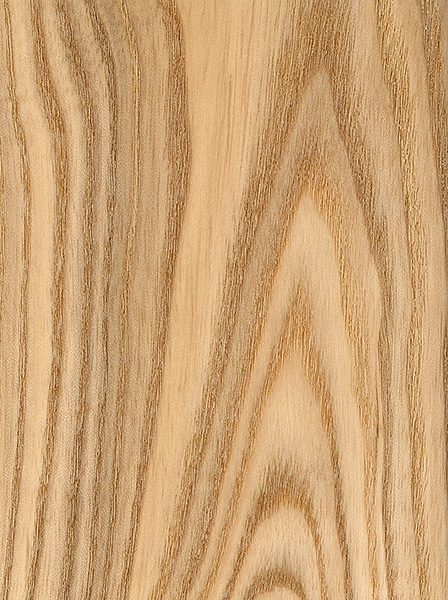
Ash is almost always straight-grained, running in long, evenly spaced lines with few interruptions. The color ranges from creamy white sapwood to light brown or slightly olive heartwood, occasionally with a faint pink or yellow cast. Texture-wise, ash reads as coarse and open rather than smooth — you can feel the grain slightly under a bare finish, unlike a diffuse-porous wood like maple.
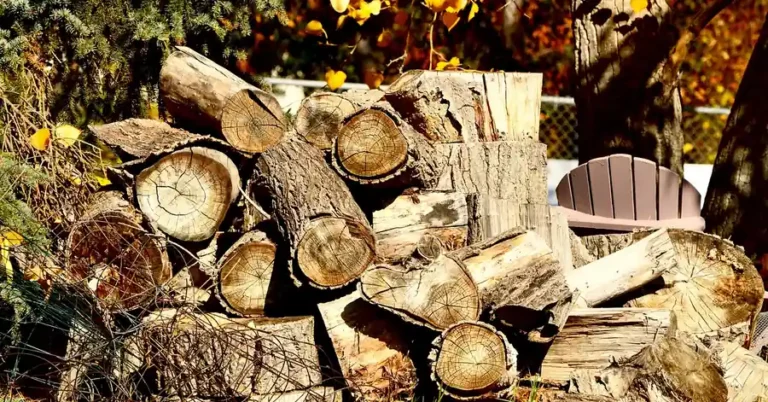
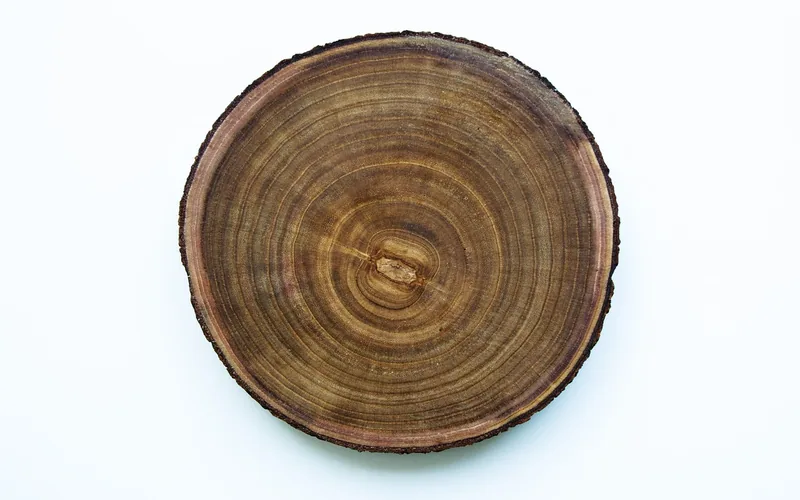
That openness comes from ash being ring-porous: at the start of every growth ring, the tree lays down a row of large, easy-to-see pores (earlywood), followed by denser, harder wood with much smaller pores (latewood) for the rest of the ring. On a flat-sawn board, this shows up as distinct light-and-dark growth-ring lines running the length of the piece. On quartersawn ash, the rings show as tighter, straighter stripes with almost no fleck pattern — the detail that separates it from quartersawn oak.
How to Identify Ash Grain: A 4-Test Checklist
No single glance settles it, but stacking these four checks in order gets a confident answer in under a minute — useful before you buy lumber or reclaimed boards labeled only “hardwood.”
- Look for straight, open grain. Run your eye down the face of the board. Ash grain is straight and coarse with visible growth-ring lines; if the lines wander into a bold cathedral or flame pattern, you’re more likely looking at oak or a figured species.
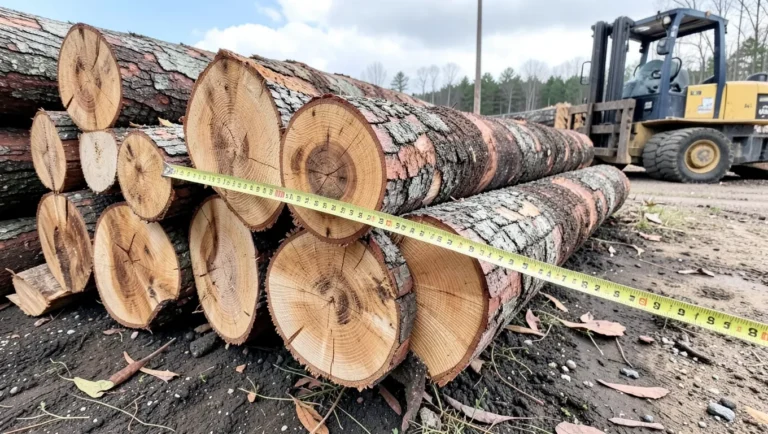
- Check the endgrain for pore rows, not rays. Cut or sand the end of the board smooth, then look with a 10x loupe. Ash shows organized rows of large earlywood pores at each ring — the same ring-porous structure as oak — but ash’s rays are narrow and barely visible, while oak’s are wide enough to throw a visible fleck pattern across a quartersawn face.
- Weigh it in your hand. Ash sits at a Janka hardness of about 1,320 lbf. If the board feels noticeably heavier and denser for its size, you’re likely holding hickory (1,820 lbf) instead.
- Smell a fresh cut. Freshly sawn ash gives off a mild, slightly sweet odor that fades within a day or two of drying. Oak’s fresh-cut smell is more tannic and sour by comparison.
“In the shop, the fastest tell between a stack of ash and red oak boards is flipping one on end. Oak’s medullary rays throw a fleck pattern under a loupe that ash just doesn’t have — that one check has saved me from a few mislabeled lumberyard bundles over the years.”
Ash Wood Grain vs. Oak, Hickory, and Maple
Ash gets confused with three woods most often, and each has one reliable tell once you know where to look.
| Wood | Grain Look | Janka (lbf) | Fastest Tell vs. Ash |
|---|---|---|---|
| Ash | Straight, open, ring-porous | 1,320 | — |
| Red/White Oak | Bold, also ring-porous | 1,220–1,360 | Wide medullary rays (flecks) on quartersawn faces; ash has almost none |
| Hickory | Straight, ring-porous, high contrast | 1,820 | Noticeably heavier and harder; sharper light/dark sapwood-heartwood contrast |
| Maple | Fine, uniform, diffuse-porous | 1,450 | No visible open pores at all — maple’s grain is smooth and closed, ash’s is coarse and open |
📊 Ash is rated 1,320 lbf on the Janka hardness scale — almost identical to red oak (1,290 lbf) but noticeably softer than hickory (1,820 lbf). Source: Wood Database
Grain Variations: Straight, Curly, and Figured Ash
Most ash you’ll see is plain straight-grained, but two variations show up occasionally and are worth recognizing so you don’t mistake them for a different species entirely:
- Curly or figured ash – the grain lines ripple into a wavy, almost three-dimensional shimmer under light. It’s rare and priced at a premium; see our guide to figured ash lumber for what drives the value.
- Rift-sawn ash – cut at roughly 30–60° to the growth rings, producing very tight, dead-straight lines with almost no ray fleck or cathedral pattern at all. Our rift-sawn ash guide covers when it’s worth the extra cost.
- Knotty ash – lower grades show small, tight knots where branches met the trunk. These don’t change the underlying grain structure, just interrupt it locally; see does ash wood have knots for how that affects strength and where to expect them.
Why the Grain Matters When Buying or Finishing Ash
Ash’s open, ring-porous grain isn’t just a look — it changes how the wood behaves. The open pores soak up stain unevenly if you skip a pre-stain conditioner, and they need a grain filler for a truly glass-smooth finish. Our guide to finishing ash wood covers the exact steps. If you’re buying rather than building, check our ash wood properties guide for the full strength and density picture, or see how ash stacks up directly against its most common look-alike in ash vs. white oak. For the basics of how wood species are classified in the first place, our types of wood guide is a good starting point.
Frequently Asked Questions
How can you tell ash wood grain from oak by looking at it?
Check for medullary rays. Oak has wide rays that show up as short, flecked lines running across the growth rings, especially on quartersawn boards. Ash lacks conspicuous rays, so its grain reads as cleaner, more uniform straight lines with no fleck pattern.
Does ash wood have a tight or open grain?
Ash has an open grain. It’s ring-porous, meaning each growth ring starts with a row of large, visible pores, giving the wood a coarser texture than a closed-grain wood like maple or cherry.
What does figured or curly ash wood look like?
Figured ash shows a rippling, wavy shimmer across the grain lines instead of the usual straight pattern, similar in effect to curly maple. It’s uncommon and typically sold at a premium by specialty lumber suppliers rather than big-box stores.
Can you identify ash wood without cutting into it?
Yes, in most cases. Straight, coarse, open grain with a light cream-to-brown color and no visible ray flecks is enough to identify ash on a finished or rough-sawn face. An endgrain check with a loupe is only needed when the board is stained dark enough to mask the face grain.
Why does ash grain look different on flat-sawn vs. quartersawn boards?
Flat-sawn ash shows the growth rings as broad, U-shaped or cathedral-like arcs running down the board. Quartersawn ash is cut roughly perpendicular to the rings instead, producing tight, straight, ruler-like stripes with almost no arcing pattern — and because ash has minimal rays, quartersawn ash looks noticeably plainer than quartersawn oak cut the same way.
Ash’s grain comes down to two things: it’s straight, and it’s open. Those two traits are consistent enough that once you know to check for growth-ring pore rows instead of oak’s ray flecks, telling the two apart takes seconds — on the board, at the lumberyard, or under a $20 loupe.
Sponsored / affiliate links. As an Amazon Associate I earn from qualifying purchases. I may earn additional commission from eligible campaigns.