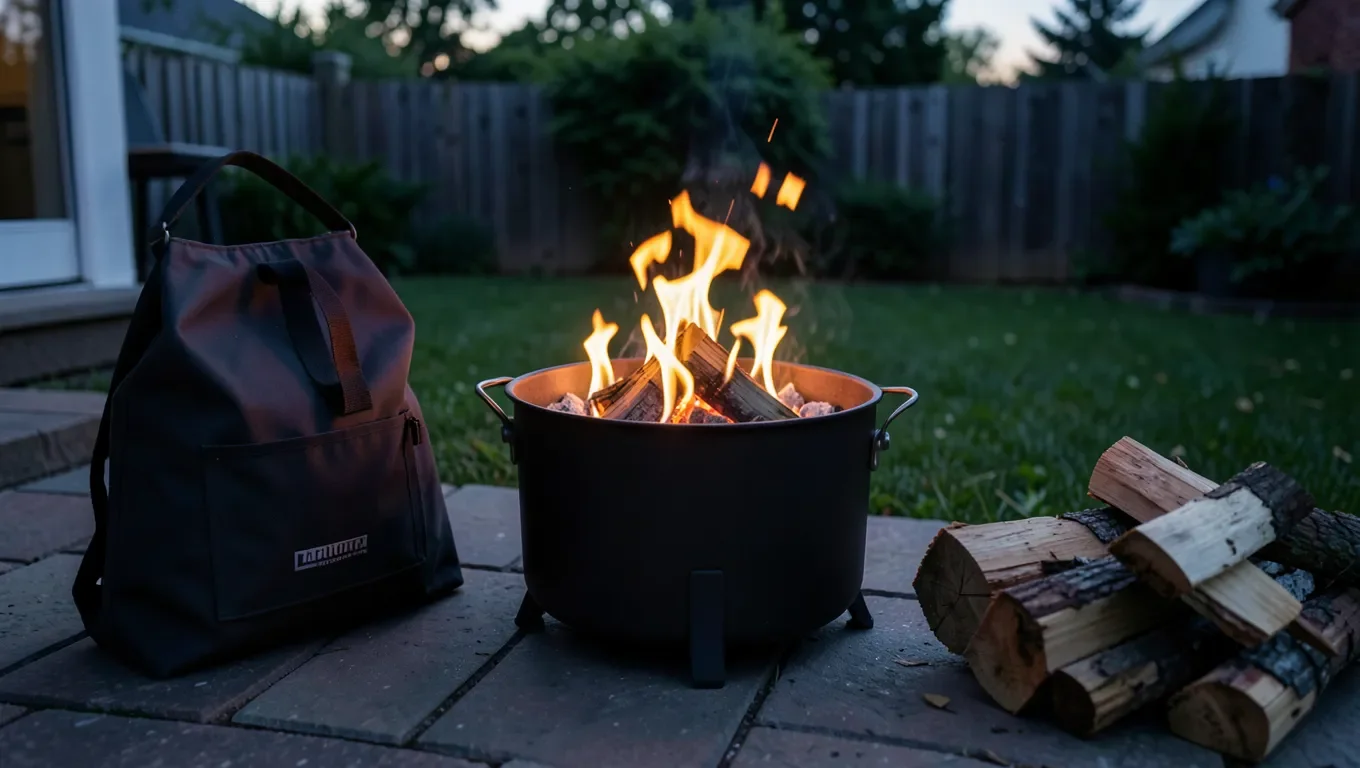
Wood Burning Portable Fire Pit: Buyer’s Guide and Safety Tips
A wood-burning portable fire pit is a small, movable metal container designed to hold a wood or pellet fire safely, light enough to carry between a backyard, patio, and campsite. Unlike a built-in masonry fire pit, most portable models weigh 15-30 pounds, fold down or come with a carry bag, and range from around $50 for a basic ring to $300+ for a smokeless design with a removable ash pan.
This guide covers what to look for, how to set one up safely, real model comparisons, and the mistakes that cause the most smoke and cleanup headaches.
What Is a Wood Burning Portable Fire Pit?
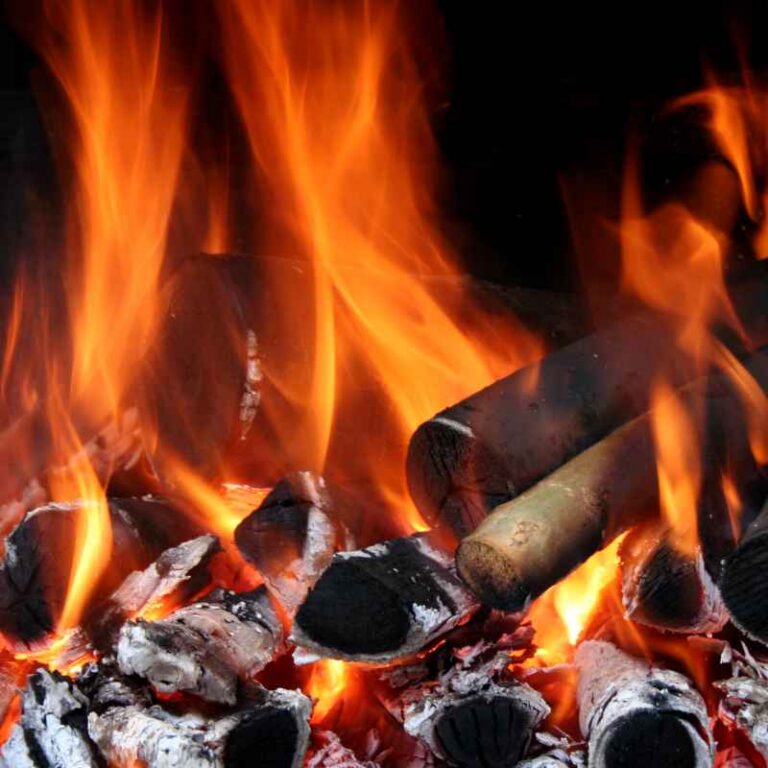
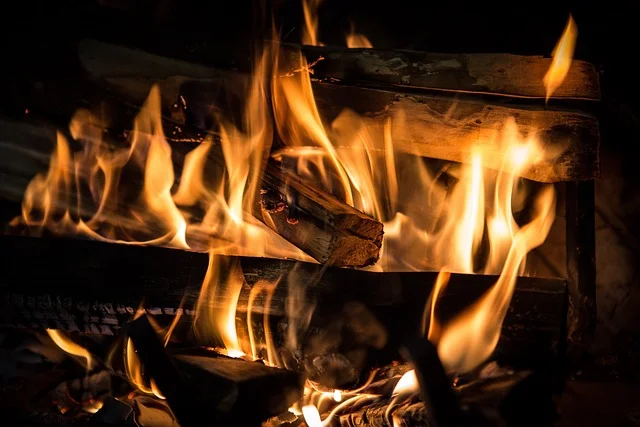
A wood burning portable fire pit is a compact metal fire container built to be moved, not permanently installed. It burns seasoned logs or wood pellets to create an open flame for warmth, cooking, or ambiance, while keeping the fire contained and off bare ground. Many current models use a double-wall or 360-degree airflow design that draws in secondary air to burn off smoke before it escapes, which is what “smokeless” fire pits are actually doing — they’re not smoke-free, just far lower-smoke than an open ring fire.
Best For Camping And Patio Use
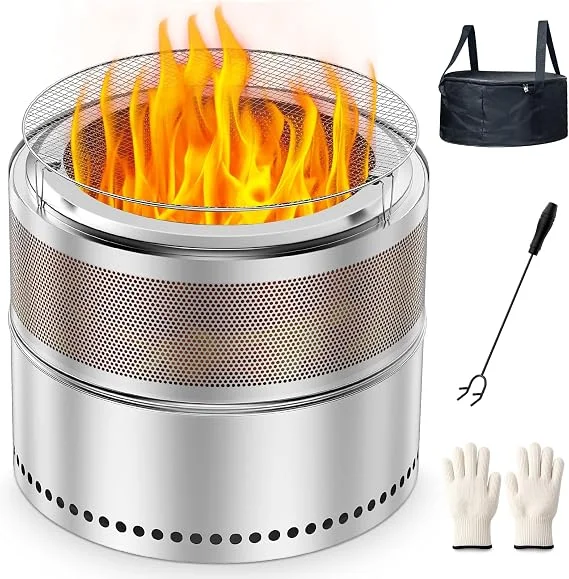 |
VICEARTH 20″ Smokeless Portable Fire Pit – $119.99 A genuine wood-burning (not propane) portable pit with the 360° airflow design that actually cuts smoke.
|
Why Choose a Wood Burning Portable Fire Pit?
Portable wood-burning fire pits deliver the classic campfire experience — the crackle, the wood smell, real coals for roasting — without the cost or permanence of a built-in installation. They’re genuinely portable (most weigh 15-30 pounds and pack into a carry bag), affordable relative to masonry fire pits ($50-$300 versus $500+ for a built-in), and versatile enough to move between a patio, a campsite, or a tailgate.
The tradeoffs: they burn through wood faster than a larger fixed fire pit, require dry log storage, and the smokeless models cost more and take slightly more effort to clean (the double-wall design traps ash in places a simple ring doesn’t).
How to Set Up Your Wood Burning Portable Fire Pit
Setup is straightforward across most models:
- Pick a safe spot: a flat, non-flammable surface like concrete, gravel, or a fire pit mat, at least 10-15 feet from structures, fences, or overhanging branches.
- Assemble it: most portable pits ship ready to use or need only the stand/legs attached.
- Add fuel: use dry, seasoned firewood or wood pellets. Wet or “green” (unseasoned) wood is the single biggest cause of excess smoke.
- Light it: crumpled newspaper or a fire starter cube under kindling, then small logs once it catches.
- Feed it gradually: add one or two logs at a time rather than loading it full — overloading chokes airflow and causes smoke on smokeless-design models specifically.
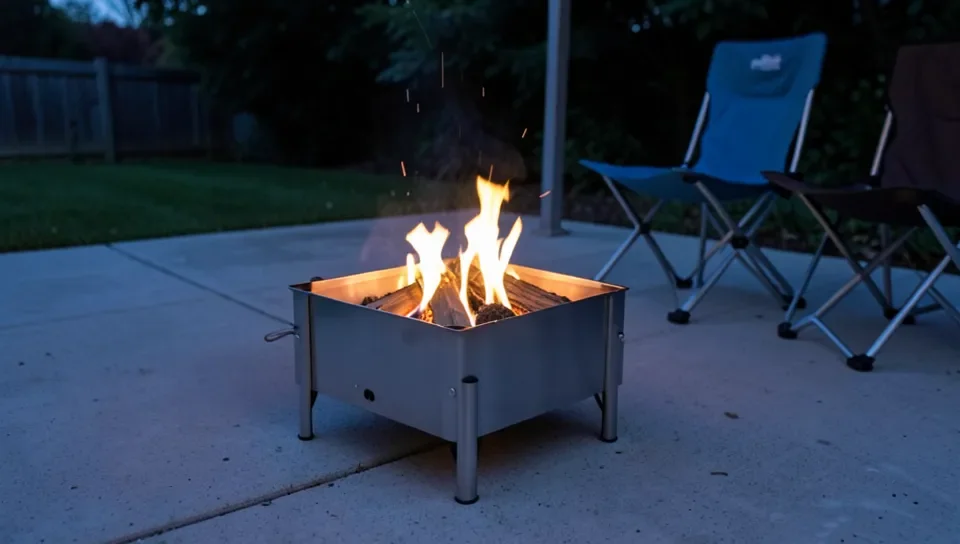
Comparing Popular Wood Burning Portable Fire Pits
| Fire Pit | Weight | Price | Features | Best For |
|---|---|---|---|---|
| Solo Stove Bonfire 2.0 | 20 lbs | ~$250 | Smokeless design, removable ash pan | Backyard, camping |
| VICEARTH 20″ Smokeless | ~20 lbs | ~$120 | Smokeless, carry bag, grill grate included | Camping, RV, patio |
| Blue Sky Traveler | 15 lbs | ~$150 | Smokeless, compact, budget-friendly | Budget buyers, tailgating |
Safety Tips for Using Your Fire Pit
- Keep it clear: place the pit away from dry grass, low branches, or anything flammable within the manufacturer’s stated clearance.
- Use a spark screen: most models offer one as an accessory or included part; it catches embers that would otherwise land nearby.
- Never leave it unattended: stay nearby until the fire has fully burned down, not just until it looks low.
- Keep water or a hose ready in case the fire spreads beyond the pit.
Common Mistakes to Avoid
- Using wet wood: unseasoned or wet logs are the leading cause of heavy smoke, even in a smokeless-design pit.
- Overloading the fire: too many logs at once chokes airflow and defeats a smokeless design’s secondary-burn feature.
- Skipping cleanup: ash buildup can clog the air vents on double-wall smokeless models; clean the ash pan after each use.
Fuel Cost Comparison
| Fuel Type | Cost | Pros | Cons |
|---|---|---|---|
| Seasoned Firewood | $5-$10/bundle, $50-$100/cord | Classic campfire feel | Burns fast, needs dry storage |
| Wood Pellets | $6-$8/bag | Burns cleaner, easy to store | Pricier, less traditional look |
| Dry Yard Debris | Free | No cost | Must be fully dry, inconsistent burn |
Alternatives to Wood Burning Portable Fire Pits
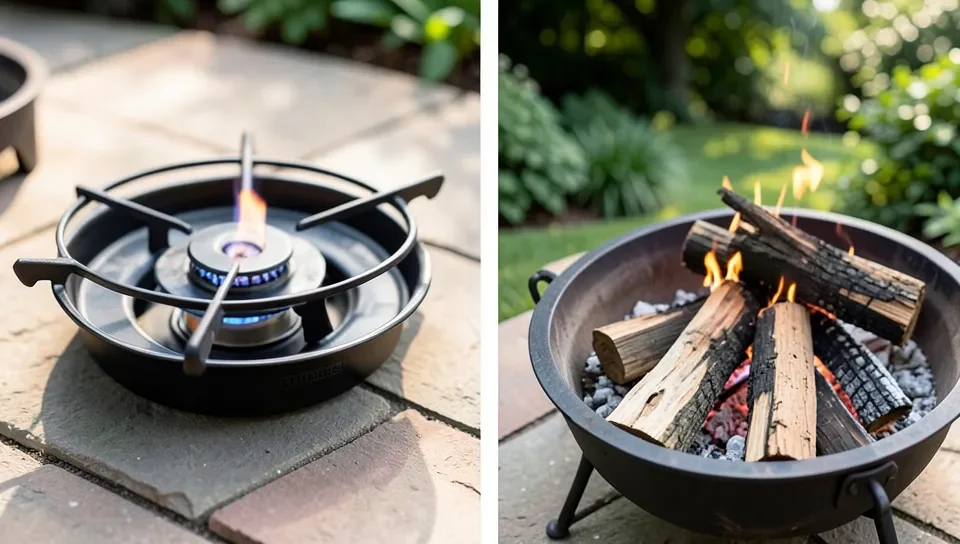
Propane fire pits are the main alternative: they light instantly, need no wood storage, and produce no ash to clean up, at the cost of the wood smell and crackling sound many people specifically want from a fire pit. If low maintenance matters more than the traditional campfire feel, a propane model is worth considering instead.
Conclusion
A wood-burning portable fire pit is a practical way to get a real campfire experience in a backyard, on a patio, or at a campsite without a permanent installation. Prioritize dry fuel, a safe clearance distance, and a model sized to how often you’ll actually move it, and a smokeless design is worth the extra cost if you’ll be using it around guests or in a smaller yard.
Frequently Asked Questions
What Is a Wood Burning Portable Fire Pit?
A metal container that holds a wood or pellet fire safely and can be moved easily between locations. It’s suited to backyards, patios, and camping trips.
How Do I Choose the Best Fire Pit?
Look for a lightweight model (15-30 lbs) with a smokeless secondary-airflow design if reducing smoke matters to you, and check the price range ($50-$300) against how often you’ll actually transport it.
Can I Use a Fire Pit on Grass?
Yes, but use a heat-resistant stand or mat underneath to avoid scorching the lawn. A flat, non-flammable surface like gravel or concrete is safer overall.
How Do I Reduce Smoke in My Fire Pit?
Use dry, seasoned wood or pellets and avoid overloading the fire. A smokeless-design pit helps significantly, but wet wood will still smoke in any fire pit.
What’s the Best Fuel for a Fire Pit?
Seasoned firewood gives the classic campfire feel; wood pellets burn cleaner and are easier to store but cost more per burn.
How Do I Clean My Fire Pit?
Wait until it’s fully cool, then empty the ash pan or tip out the ash into a metal container. Use a brush for stuck-on residue, and clean after every use to keep vents clear on smokeless models.
Are Fire Pits Safe for Kids?
Yes, with active supervision and a spark screen in place. Keep kids several feet back and never leave a fire unattended around children.
Sponsored / affiliate links. As an Amazon Associate I earn from qualifying purchases. I may earn additional commission from eligible campaigns.