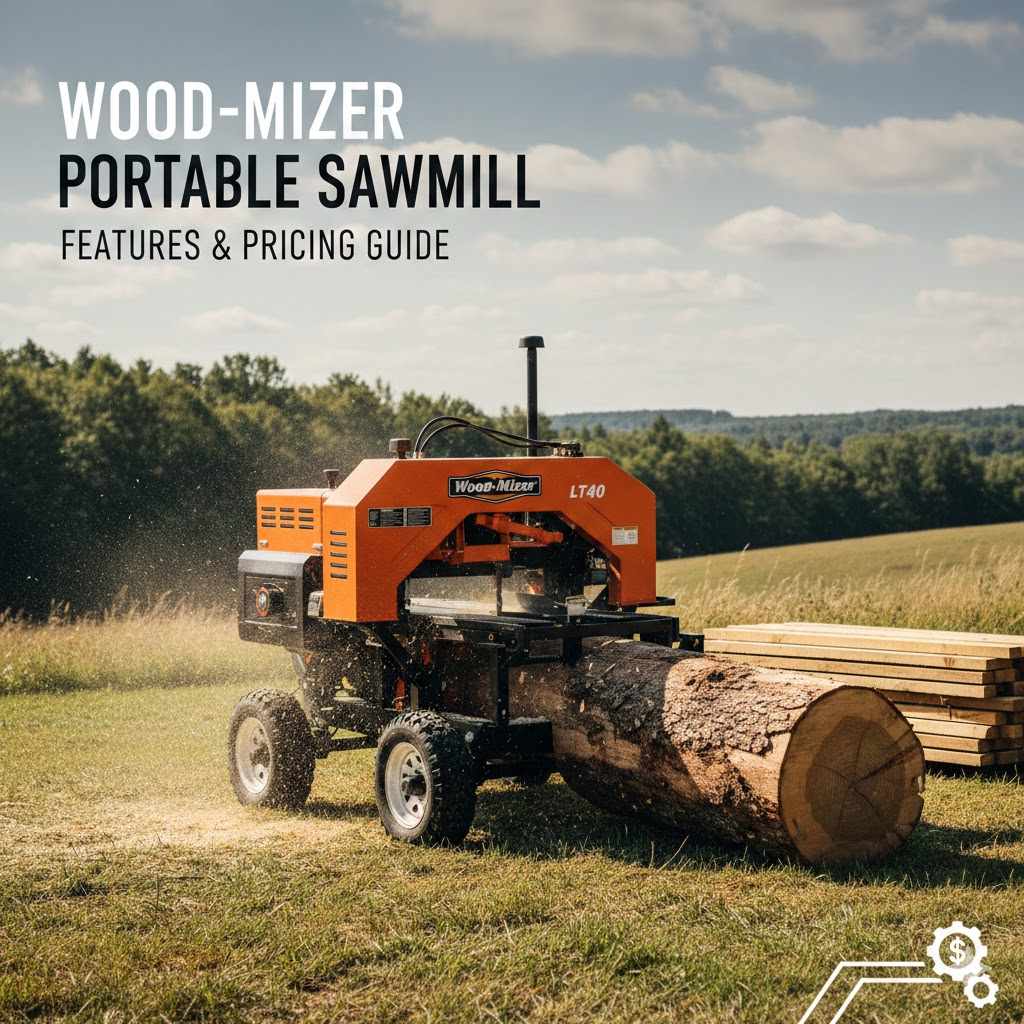
Wood-Mizer Portable Sawmill Features and Pricing Guide
Figuring out the best setup for your sawing needs can feel tricky, especially when you’re new to it. When people search for Wood-Mizer Portable Sawmill Features & Pricing, they often want clear answers without all the confusing jargon. This guide will make it super simple. We’ll break down what makes these sawmills great and what you can expect price-wise. Get ready for an easy-to-follow guide that will help you make the right choice.
Exploring Wood-Mizer Portable Sawmill Options
Choosing the right portable sawmill is a big step for anyone looking to cut their own lumber. The Wood-Mizer brand is well-known for its quality and versatility in this area. This section will explore the range of portable sawmills they offer, highlighting what makes each model unique.
We’ll look at the different sizes and capacities available, so you can start to see which might fit your projects best. Think about the types of wood you want to cut and how much lumber you need to produce.
Understanding Different Wood-Mizer Models
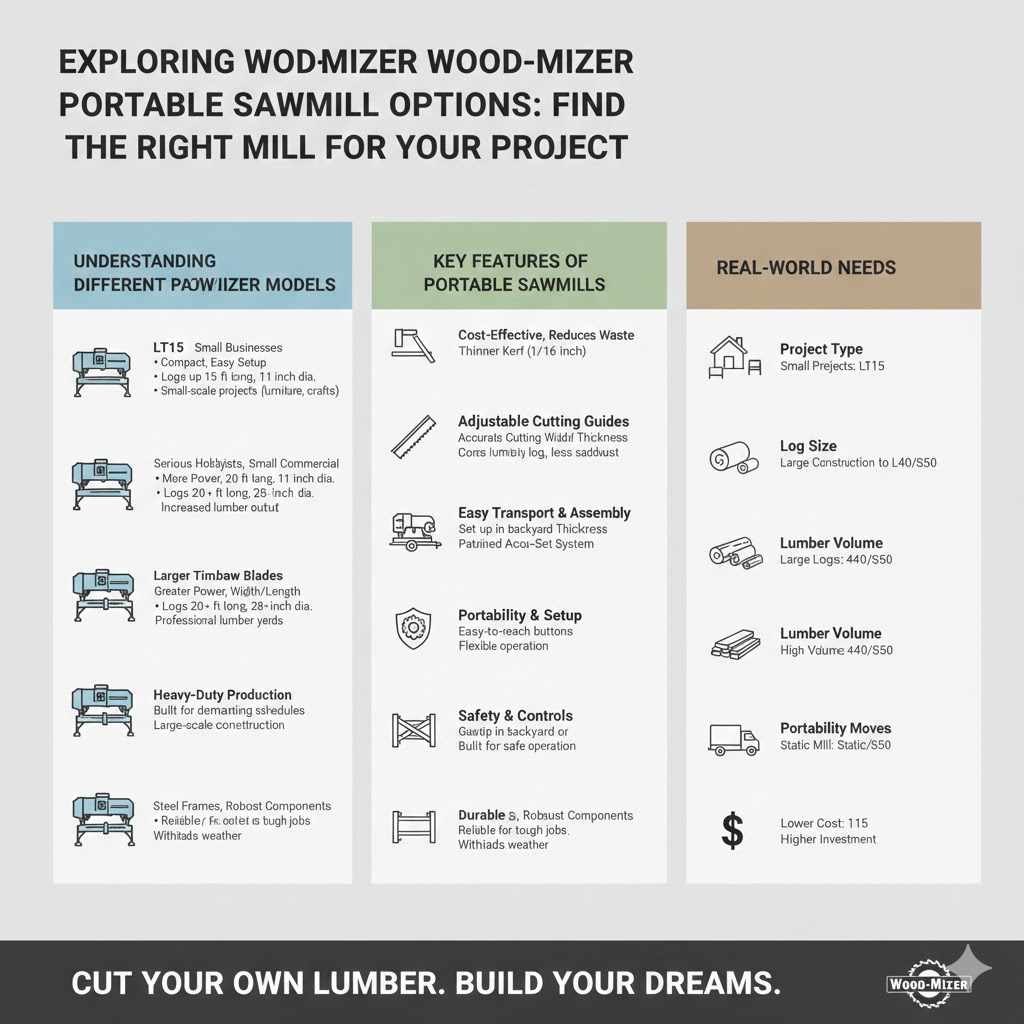
Wood-Mizer offers a variety of portable sawmills, each designed for specific needs. The LT15 is a popular choice for hobbyists and small businesses. It’s compact and easy to set up. The LT20 is a step up, offering more power and higher production capacity. For those who need to mill larger logs, the LT40 and LT50 models are excellent options.
They provide greater cutting width and length.
The LT15 sawmill is great for beginners. It’s user-friendly and doesn’t require a lot of space. You can process logs up to 15 feet long and 11 inches in diameter. This makes it ideal for small-scale projects like building furniture or creating custom crafts.
Moving up to the LT20, you get a more robust machine. It handles logs up to 20 feet long and 13 inches in diameter. This model is designed for more frequent use and can increase your lumber output significantly. It’s a good middle ground for serious hobbyists or small commercial operations.
For larger timber processing, the LT40 and LT50 series are the way to go.
These sawmills can cut logs much longer and wider, up to 20 feet and more, and often 28 inches in diameter or larger. They are built for heavy-duty work and can handle demanding production schedules, making them suitable for professional lumber yards or large-scale construction projects.
Key Features of Wood-Mizer Portable Sawmills
Wood-Mizer portable sawmills are packed with features that make them efficient and easy to use. One of the most important features is the blade system. They use narrow bandsaw blades, which are cost-effective and reduce wood waste. This is a big plus for anyone wanting to get the most out of their logs. The sawmills also have adjustable cutting guides to ensure straight cuts every time.
Another great feature is their portability. Most Wood-Mizer portable sawmills can be transported easily. You can set them up in your backyard or take them to where the timber is. This flexibility is invaluable for many users. The sawmills are also designed with safety in mind, featuring guards and easy-to-reach controls. The patented Accu-Set parallelogram cutting system on many models allows for quick and accurate board thickness adjustments.
The narrow bandsaw blade technology is a core Wood-Mizer innovation. These blades require less power to cut and produce a thinner kerf. This means more lumber from each log and less sawdust. A typical 1/16 inch kerf blade can save you a significant amount of wood compared to thicker blades.
Portability and ease of setup are also major selling points.
Many models can be assembled or disassembled relatively quickly. This allows users to move their operation to different sites if needed, whether it’s on their property or at a remote logging location.
The durable construction ensures longevity. Wood-Mizer sawmills are built with steel frames and robust components. This makes them reliable for tough jobs and able to withstand various weather conditions.
Wood-Mizer Portable Sawmill Pricing Factors
Understanding the price of a Wood-Mizer portable sawmill involves looking at several things. The model you choose is the biggest factor. Bigger, more powerful sawmills naturally cost more. The features you select also play a role. Some sawmills come with basic setups, while others offer advanced options that add to the cost. Think about things like engine size, cutting length, and any special attachments.
New Versus Used Wood-Mizer Sawmills
When looking at Wood-Mizer portable sawmill features & pricing, you have the option to buy new or used. New sawmills come with warranties and the latest technology. They offer peace of mind that everything is in perfect working order. However, they represent a larger upfront investment. Used sawmills can offer significant savings. They are a great way for people on a tighter budget to get started.
When buying used, it’s important to inspect the machine carefully. Check for signs of wear and tear. Make sure all parts are in good condition. You might want to have a mechanic or someone experienced with sawmills take a look. A well-maintained used Wood-Mizer can be a fantastic value. It’s common for these machines to last for many years if cared for properly.
Buying new guarantees the latest design and full manufacturer support. You’ll also get a warranty, which can save you money on repairs down the line. This is often preferred by businesses that rely heavily on their equipment for income.
Used sawmills offer a more affordable entry point. You can often find older models that still perform very well. This allows individuals to start their lumber milling projects without breaking the bank. It’s a smart financial choice for hobbyists or those testing the waters.
The lifespan of a Wood-Mizer sawmill is impressive. Many owners report using their machines for decades with proper maintenance. This means that even a used machine, when purchased wisely, can provide years of reliable service.
Optional Upgrades and Accessories
Beyond the base sawmill price, there are many optional upgrades and accessories that can enhance its performance and versatility. These additions can customize the sawmill to your specific needs. For instance, adding hydraulic log loading and turning systems can make handling large, heavy logs much easier. This is a significant labor saver. Log dogs and toe boards help secure logs for precise cuts.
Other accessories include things like trailers for easier transport, saw blade maintenance equipment, and dust collection systems. The choice of engine is also an option, with gasoline, diesel, and electric models available on some units. Each upgrade will add to the total cost, but can also increase efficiency and the range of projects you can tackle. Careful consideration of your long-term needs will help decide which extras are worthwhile.
Hydraulic systems are a popular upgrade. They can include log loaders, log turners, and bed extensions. These systems reduce the physical strain of handling large logs, making the milling process faster and safer, especially for one-person operations.
Blade maintenance tools are essential for optimal cutting. This includes sharpening equipment and set gauges. Keeping your blades sharp and properly set ensures clean cuts and extends blade life, saving you money over time.
Trailer packages turn your sawmill into a mobile unit. This is perfect for custom milling services or for those who need to move their operation to different sites. It’s an investment in flexibility and accessibility.
Wood-Mizer Portable Sawmill Features & Pricing Deep Dive
Let’s really break down what goes into the cost of a Wood-Mizer portable sawmill. The Wood-Mizer Portable Sawmill Features & Pricing is often a main search term for people looking to buy. The price isn’t just a number; it reflects the engineering, materials, and capabilities of the machine. We will look at what you get for your money and how different choices impact the final price tag. This detailed look will help you budget and make an informed decision.
The Value Proposition of Wood-Mizer Technology
Wood-Mizer’s technology offers excellent value for lumber producers. Their narrow bandsaw blades are a prime example. Compared to traditional circular sawmills, bandsaws generate less sawdust and require less power. This translates to lower operating costs and higher lumber yield per log. For example, a standard 1-inch kerf blade on a circular mill might waste 1/4 inch of wood per cut. A Wood-Mizer 1/16-inch blade wastes only about 1/16 inch. Over a large volume of lumber, this difference is substantial.
The patented Accu-Set system is another innovation. It allows operators to quickly and precisely adjust the thickness of the boards they are cutting. This means less time spent measuring and readjusting. The durable construction of the sawmills also adds to their value. They are built to withstand the rigors of heavy use, often lasting for decades. This longevity reduces the need for frequent replacements, offering a solid return on investment.
The narrow bandsaw blade is a cornerstone of Wood-Mizer’s efficiency. This design means less wood is turned into sawdust. For every board cut, more usable lumber is produced. This is crucial for maximizing profitability, especially for commercial operations.
The Accu-Set parallelogram cutting system is a key feature. It enables fast and accurate changes in board thickness. This system also helps to keep the blade cutting straight and true, even with difficult logs. It simplifies the operation significantly for the user.
Durability is built into every Wood-Mizer portable sawmill. They use heavy-gauge steel and robust components. This ensures the sawmill can handle challenging conditions and long working hours. A well-maintained Wood-Mizer can serve its owner for 20 years or more.
Comparing Entry-Level vs. Professional Models
When examining Wood-Mizer portable sawmill features & pricing, there’s a clear distinction between entry-level and professional models. Entry-level sawmills, like the LT15 series, are designed for individuals or small businesses just starting out.
They are generally more affordable, easier to operate, and require less power. Their cutting capacity is typically smaller, suitable for processing logs up to around 15 feet in length and 11 inches in diameter. These models are perfect for hobbyists, small construction projects, or producing lumber for personal use.
Professional models, such as the LT40 and LT50 series, are built for higher production volumes and more demanding work. They feature larger engines, wider cutting capacity (often up to 28 inches or more in diameter), and longer bed lengths.
These sawmills are equipped with more advanced features, including optional hydraulic systems for log handling and turning. They are designed for commercial sawyers, large farms, and businesses that need to mill lumber consistently and efficiently. The investment is higher, but the increased productivity and durability justify the cost for professional operations.
Entry-level sawmills offer a great starting point. They are cost-effective and allow users to learn the ropes of lumber milling. The LT15, for instance, provides a reliable way to turn logs into usable lumber for smaller projects.
Professional models are engineered for maximum output and durability. They come with more powerful engines and larger cutting capacities. These are essential for businesses that need to produce large quantities of lumber on a daily basis.
The pricing reflects these differences in capability. An entry-level LT15 might start in the low to mid-$5,000 range, while a fully equipped professional LT40 or LT50 could easily reach $15,000 to $25,000 or more, depending on options.
Real-World Pricing Examples and Considerations
Let’s look at some concrete examples of Wood-Mizer portable sawmill features & pricing. A base model LT15WIDE, which offers a wider cut than the standard LT15, might start around $6,500. This price would include a standard engine (like a 14 HP gas engine) and a basic bed length. Adding options like a trailer package, a more powerful engine, or bed extensions would increase the price. For instance, adding hydraulics to an LT15 can push its price closer to $10,000.
On the professional end, a base LT40HD (heavy-duty) with a 25 HP gas engine could start around $9,000. However, many professional users opt for fully hydraulic models. An LT40 Super Hydraulic, equipped with hydraulic log loaders, log turners, and hydraulic bed extension, could range from $15,000 to $20,000.
The LT50 series, offering even greater capacity, would be priced higher still. For example, a fully loaded LT50 Super Hydraulic could exceed $25,000. These prices are approximate and can vary based on dealer promotions, shipping costs, and specific configurations.
Scenario 1: A homeowner wants to mill lumber for a backyard deck. They might opt for a base LT15WIDE. With a trailer for transport and maybe a slightly more powerful engine, they could be looking at a total cost of around $8,000-$9,000. This would allow them to cut beams and planks from logs they’ve gathered.
Scenario 2: A small custom furniture business needs to process a variety of hardwoods. They might choose an LT40HD with basic hydraulic log turners and a longer bed. This could bring their investment to around $12,000-$14,000. This setup offers the power and convenience to handle larger logs efficiently.
Scenario 3: A professional timber framing business needs a high-production sawmill for continuous operation. They would likely invest in a fully hydraulic LT50 Super. With all the bells and whistles for maximum efficiency, the price could reach $25,000 or more. This is an investment in their core business operations.
Optimizing Your Wood-Mizer Sawmill Experience
Once you have your Wood-Mizer portable sawmill, there are ways to make sure you get the most out of it. This involves proper maintenance, understanding its capabilities, and using it efficiently. Learning the best ways to handle logs, set up your cuts, and care for your blades will save you time and money in the long run. It’s about making your sawing experience as smooth and productive as possible.
Blade Maintenance for Optimal Performance
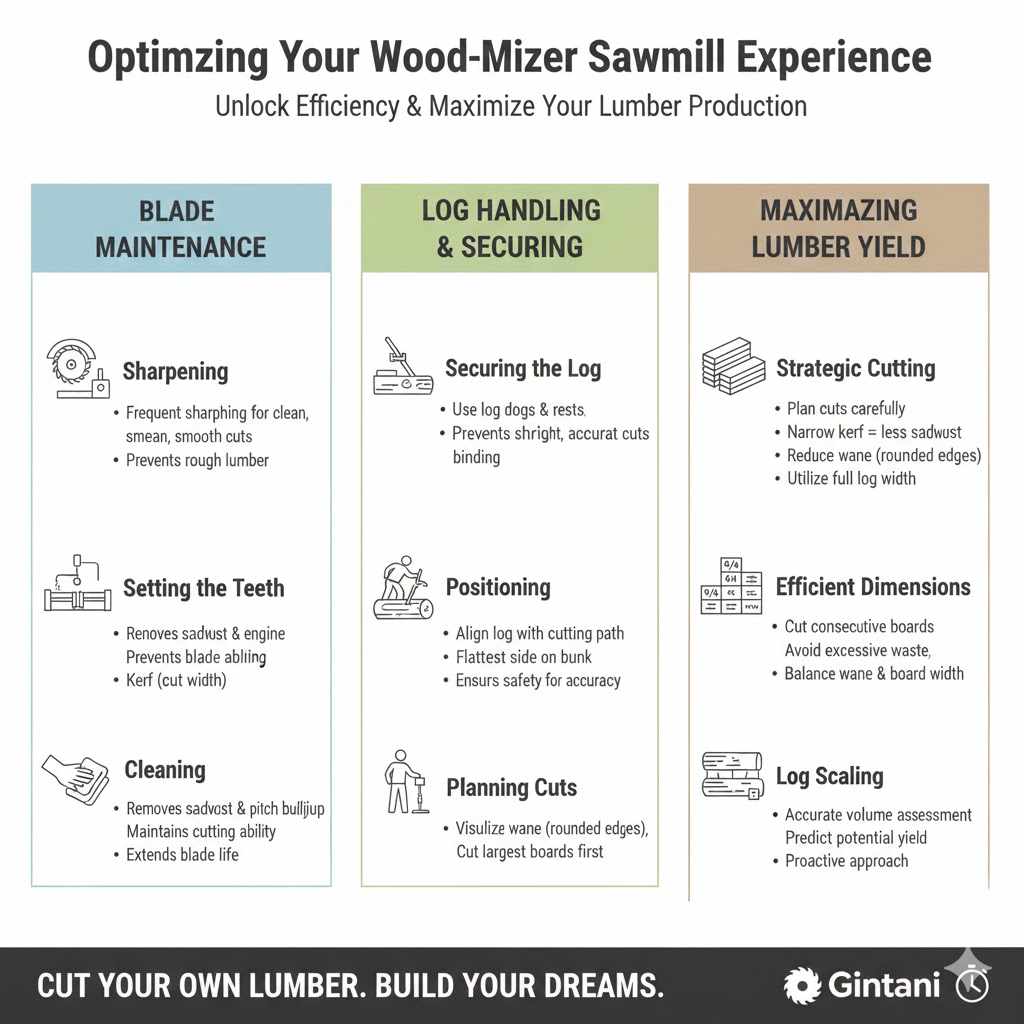
Blade maintenance is absolutely crucial for the performance of any Wood-Mizer portable sawmill. Dull or damaged blades will not cut efficiently. They can lead to rough lumber, increased strain on the engine, and a higher risk of blade de-tracking. Wood-Mizer offers excellent blade maintenance equipment, including sharpeners and set gauges. Regularly sharpening and setting your blades ensures they cut cleanly and smoothly through the wood.
It’s recommended to sharpen blades frequently, especially when cutting hardwoods or knotty logs. A sharp blade cuts with less effort. Setting the teeth correctly is also important. The set refers to how far each tooth is bent outward from the blade’s plane. This prevents the blade from binding in the cut.
Wood-Mizer blades are designed to be easily re-sharpened and re-set.
Sharpening keeps your blades cutting effectively. A dull blade forces the sawmill to work harder. This wastes fuel or electricity and can even damage the sawmill’s components over time. Keeping them sharp is a simple but vital task.
Setting the teeth properly creates the kerf, the width of the cut. An incorrect set can cause the blade to bind or run crooked. This leads to inaccurate cuts and can even cause the blade to break. Most Wood-Mizer blades need a set of around 0.045 to 0.055 inches.
Blade cleaning is also important. Sawdust and pitch can build up on the blade, affecting its cutting ability. Cleaning the blade regularly with a good solvent or cleaner will help maintain its performance.
Effective Log Handling and Securing Techniques
Handling and securing logs properly is key to safe and accurate sawing. Wood-Mizer portable sawmills often come with features to help with this, such as adjustable log rests and dogging systems. For larger logs, using log jacks or cant hooks can help position them correctly on the sawmill bed. It’s important to ensure the log is stable and doesn’t roll during the cutting process. This prevents accidents and ensures your cuts are straight and consistent.
The goal is to have the log perfectly aligned with the sawmill’s cutting path. This usually means ensuring the flattest side of the log is against the sawmill’s bunk or guides. For irregular logs, using shims can help create a stable base. Always double-check that the log is secure before starting the cut. This is a fundamental safety practice that also guarantees the quality of your lumber.
Using log dogs is a standard practice. These devices grip the log, preventing it from moving during the cut. Many Wood-Mizer models have integrated or optional log dog systems.
For round or uneven logs, adding shims or using specialized rollers can create a flat surface for sawing. This ensures the blade starts on a predictable plane. It’s essential for achieving straight lumber.
Never compromise on securing the log. A log shifting during a cut can be dangerous and will ruin the lumber. Take the time to ensure it is firmly in place.
Maximizing Lumber Yield and Reducing Waste
Maximizing lumber yield from each log is a primary goal when using a portable sawmill. This means planning your cuts carefully to get the most usable boards. Understanding the dimensions of the log and the desired lumber sizes is essential. Wood-Mizer’s accurate measuring systems help with this. Setting your cuts to avoid excessive wane (the rounded edge of the log) where possible can increase the yield of square boards.
The narrow kerf of Wood-Mizer blades inherently reduces waste. However, smart cutting strategies also play a big role. For example, if you need 4/4 (1-inch thick) boards, cutting them consecutively without removing too much material between cuts is efficient. Consider cutting the largest dimension boards first. This can sometimes open up the log in a way that allows for more efficient cutting of smaller dimensions.
Strategic cutting is key. Before you start, visualize the best way to get your desired lumber dimensions from the log. Sometimes cutting the thinnest usable boards first can be more efficient.
Utilizing the full width of the log is important. While perfectly square lumber is often desired, accepting some natural wane on the edges can mean getting a wider board from a smaller log. This is a trade-off between perfect form and maximum yield.
Using a good log scaler or measuring tape to accurately assess the log’s volume and potential yield can help in planning. This proactive approach ensures you’re getting the most value from every piece of timber you process.
Frequently Asked Questions
Question: What is the average starting price for a Wood-Mizer portable sawmill?
Answer: The starting price for a new Wood-Mizer portable sawmill can range from around $5,000 for basic entry-level models like the LT15 series, up to $9,000 for more heavy-duty entry models.
Question: Are Wood-Mizer portable sawmills easy to transport?
Answer: Yes, many Wood-Mizer portable sawmills are designed with transportability in mind. Some models can be fitted with trailer packages for easy movement between job sites.
Question: What kind of engine power is typical for Wood-Mizer portable sawmills?
Answer: Engine power varies by model, but you can find options ranging from around 14 HP gasoline engines for smaller models to 25 HP or higher for professional-grade sawmills. Electric and diesel options are also available for some models.
Question: Can I cut large logs with a Wood-Mizer portable sawmill?
Answer: Yes, Wood-Mizer offers models capable of cutting large logs. While entry-level models might have a cutting diameter of around 11 inches, professional series like the LT40 and LT50 can handle logs up to 28 inches in diameter or more.
Question: What is the main advantage of Wood-Mizer’s narrow bandsaw blades?
Answer: The main advantage is reduced wood waste due to a thinner kerf, meaning more lumber is produced from each log. They also require less power to cut and are more cost-effective.
Summary
This guide explored Wood-Mizer portable sawmill features & pricing. You learned about different models, from entry-level LT15 to professional LT40 and LT50 series. We covered key features like narrow bandsaw blades and Accu-Set systems.
Pricing factors like new versus used and optional upgrades were discussed. Realistic price examples for various configurations were provided. Finally, we shared tips on blade maintenance, log handling, and maximizing lumber yield. This information helps you choose the right Wood-Mizer for your needs.