Maloof Chair Templates: Where to Find Real Chair Plans
Curious about the design philosophy and joinery behind these curves? See our guide to Sam Maloof’s craftsman style and design philosophy.
aph”>A Maloof chair template is a full-scale pattern for the seat, backrest, and leg curves that define the low-back and rocker chairs designed by Sam Maloof, not a simplified stencil. Without one, replicating the compound curves and hidden joinery by eye alone typically takes several failed test pieces before the shape reads correctly. This guide covers what a template includes, the tools from our woodworking tools guide needed to cut from one, and where to find real, buildable patterns.The Essence Of Maloof Chairs
Best Chisel Set Pick

Amazon Basics 8-Piece Wood Chisel Set – $28.12
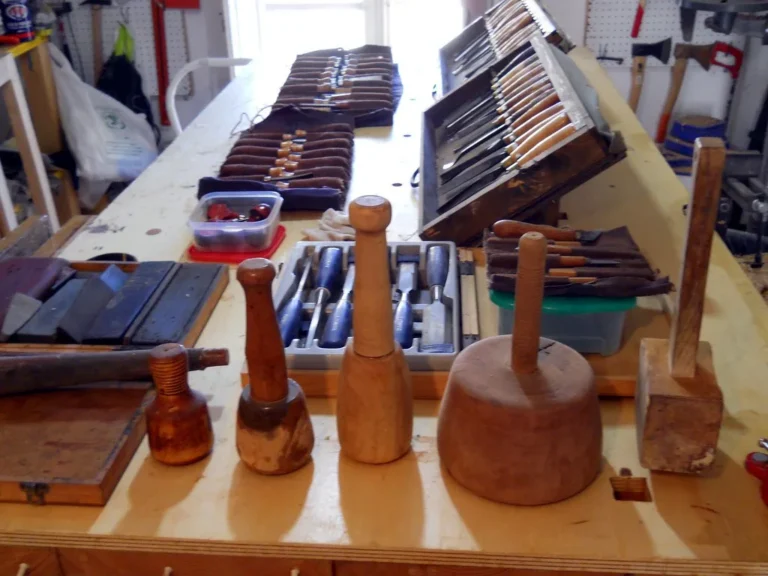
This guide lists chisels as an essential hand tool for shaping a template’s curves – this set covers 1/4″ to 1-1/2″ and includes the honing guide and stone needed to keep the edges sharp for clean cuts.
- Best for: Beginners who need a complete starter set
- Why we picked it: Includes the sharpening stone and honing guide this guide recommends keeping on hand
- Main drawback: Steel isn’t as premium as boutique European chisels
Compare more chisel set options
 Option 1 DEWALT Pro 3-Piece Chisel Set – $16.99
|
 Option 2 Jorgensen 6-Piece Chisel Set – $53.99
|
 Option 3 Narex Bevel Edge Chisel Set (4pc) – $48.99
|
As an Amazon Associate we earn from qualifying purchases.
The Maloof chair traces back to the mid-20th-century American studio furniture movement, built around Sam Maloof’s belief that a chair’s structure and its beauty should be the same thing – no applied ornament, no upholstery hiding the joinery. The original Sam Maloof chair remains the reference point every template traces back to.
“I felt a piece could be very beautiful and very functional at the same time, and that is really the center of what I do.”
What Wood Real Templates Are Cut From
Templates themselves are usually cut from 1/4-inch plywood or MDF so they hold their shape through repeated tracing, but the chair itself should be built from the same woods Maloof actually used: black walnut and sapele. Both carve cleanly along tight compound curves without the tear-out that oak or maple can produce on the same cuts – if a template source recommends oak or pine for a Maloof-style build, that’s a sign it’s generic chair-building advice repurposed for this specific design, not template guidance built around how these curves actually behave in different woods.
Real Places To Find Buildable Templates
- Canadian Woodworks sells actual full-scale low-back chair templates built for this exact design, not generic chair patterns relabeled.
- Hal Taylor’s rocker plans (via his own site and rockingchairuniversity.com) include the template geometry alongside full build instructions for the rocker variant – see our guide to real Maloof rocker plan sources for the full breakdown.
- Woodworking magazines that have published Maloof-style projects (Fine Woodworking among them) sometimes include scaled templates as part of the article – worth checking back issues before buying a template from an unfamiliar seller.
- Scott Morrison (finewoodworker.com) sells his own purchasable low-back and rocker chair templates built specifically for the Maloof-inspired design, alongside paid video build instruction – a second named, verifiable source beyond Canadian Woodworks.
Be skeptical of any site offering a single free universal “Maloof template PDF” with no named source – Maloof’s own workshop built to commission rather than publishing one, so a legitimate template always traces back to a named designer or publication, not an anonymous download.
Not planning to build one yourself? See our guide to Maloof rocking chairs for sale for ready-made options instead of a template.
📊 Canadian Woodworks’ Sam Maloof-style low-back chair template carries 32 customer reviews, with 85% rating it 4 or 5 stars – Source: Canadian Woodworks product page, 2026
Essential Tools For Cutting From A Template
Once you have a real template, the tools that turn it into a chair part are the same ones covered in the product picks above: chisels for paring joints to a clean fit, a spokeshave and rasps for the free-hand curve work a template can guide but not finish, and a bandsaw for rough-cutting the traced outline before shaping. A low-back chair build and a rocker share most of this same tool list, since both use the same joint and shaping approach.
Using A Template Without Ruining The Curves
Trace the template directly onto your stock rather than eyeballing a copy – even a slightly-off freehand trace compounds across the seat, backrest, and leg curves since they’re all meant to flow into each other. Cut just outside your traced line on the bandsaw, then sneak up on the final line with a spokeshave or rasp rather than cutting to the line directly; wood removed by hand-shaping is easy to keep, wood removed by an oversized bandsaw cut is not.
Common Mistakes To Avoid
The two mistakes that ruin more template-based builds than anything else: tracing a template that was scaled for a different chair (a rocker template does not transfer directly to the low-back’s dimensions), and cutting joints to their final size before assembly instead of oversizing them and carving the assembled joint down – the second mistake is the one that erases the sculpted, continuous look that makes a Maloof-style chair recognizable in the first place.

Caring For Your Finished Chair
Once your chair is built and finished, upkeep is straightforward. Dust it regularly with a soft, dry cloth, and use a damp cloth with mild soap for deeper cleaning – avoid harsh chemicals, which can strip the finish. Applying a quality wood polish periodically helps maintain the shine and prevents the wood from drying out, and keeping the chair out of direct sunlight helps prevent fading. Check joints occasionally for looseness and tighten as needed, and store the chair in a climate-controlled space when possible, since humidity swings are what eventually work joinery loose.
Frequently Asked Questions
What Are Maloof Chair Templates?
Maloof chair templates are full-scale patterns — usually cut from 1/4-inch plywood or MDF — for the seat, backrest, and leg curves of a Sam Maloof-designed chair pattern. They’re working patterns traced directly onto stock, not simplified stencils, because the compound curves have to flow into each other exactly.
How To Use Maloof Chair Templates?
Trace the template directly onto your stock rather than copying it freehand, then cut just outside the traced line on a bandsaw and sneak up on the final line with a spokeshave or rasp. Cutting to the line directly on the bandsaw removes wood you can’t put back.
Where Can I Find Maloof Chair Templates?
Canadian Woodworks sells real full-scale low-back chair templates, Hal Taylor’s rocker plans include the template geometry for the rocker variant, and Scott Morrison at finewoodworker.com sells his own low-back and rocker templates with paid video instruction. Be cautious of any site offering one generic free PDF with no named source — Maloof’s workshop never published a universal template.
Are Maloof Chair Templates Suitable For Beginners?
Yes, with the caveat that a template guides the outline, not the joinery. A beginner can trace and rough-cut from a template on a first attempt, but the hand-shaping and oversized-then-carved-down joints that give a Maloof-style chair its sculpted look still take practice — expect a test piece or two before the curves read cleanly.
Conclusion
A real Maloof chair template only gets you the outline — the sculpted look still comes from tracing carefully, cutting oversized, and carving the joints down by hand rather than to a finished line. Buy the pattern from a named source, use walnut or sapele if you want the curves to carve cleanly, and expect the first attempt to teach you more than the template itself.
Sponsored / affiliate links. As an Amazon Associate I earn from qualifying purchases. I may earn additional commission from eligible campaigns.