Sur La Table Wood Cutting Board: Maple vs. Walnut Prices
Sur La Table doesn’t sell just one “wood cutting board” — it sells two different things under that name. There’s the retailer’s own house-branded maple line (the Everyday and Reversible boards, priced $59.95-$109.95), and there’s a separate shelf of curated third-party boards from Boos, Teakhaus, Viking, and Larch Wood that Sur La Table carries as a specialty kitchen retailer, priced anywhere from $45 to $200. Knowing which one a review or product link is actually pointing to matters, because the price, the wood, and the construction are completely different depending on which line you land on. This guide breaks down both, with real prices, real hardness numbers for the wood species involved, and honest advice on which one is worth buying.
Sur La Table’s Own Brand vs. the Curated Brands It Carries
The Sur La Table-branded boards — sold under names like the Everyday Cutting Board and the Reversible Cutting Board — are edge-grain maple boards made for the retailer’s own house line. They’re the ones most people land on when searching “Sur La Table wood cutting board” directly, and they’re the ones available through Amazon as well as surlatable.com.
Separately, Sur La Table’s cutting board section (both in stores and on its site) carries boards from outside manufacturers it has chosen to stock: John Boos walnut edge-grain serving boards, Teakhaus teak boards, Viking acacia boards, and Larch Wood’s end-grain “self-healing” blocks. These aren’t Sur La Table’s own manufacturing — the retailer is acting as a specialty kitchen store curating brands it trusts, similar to how Williams Sonoma sells its own boards alongside outside brands. If you’re comparing “a Sur La Table board” to a board from another retailer, check which of these two categories you’re actually looking at first.
Best Sur La Table House-Brand Pick
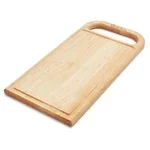 |
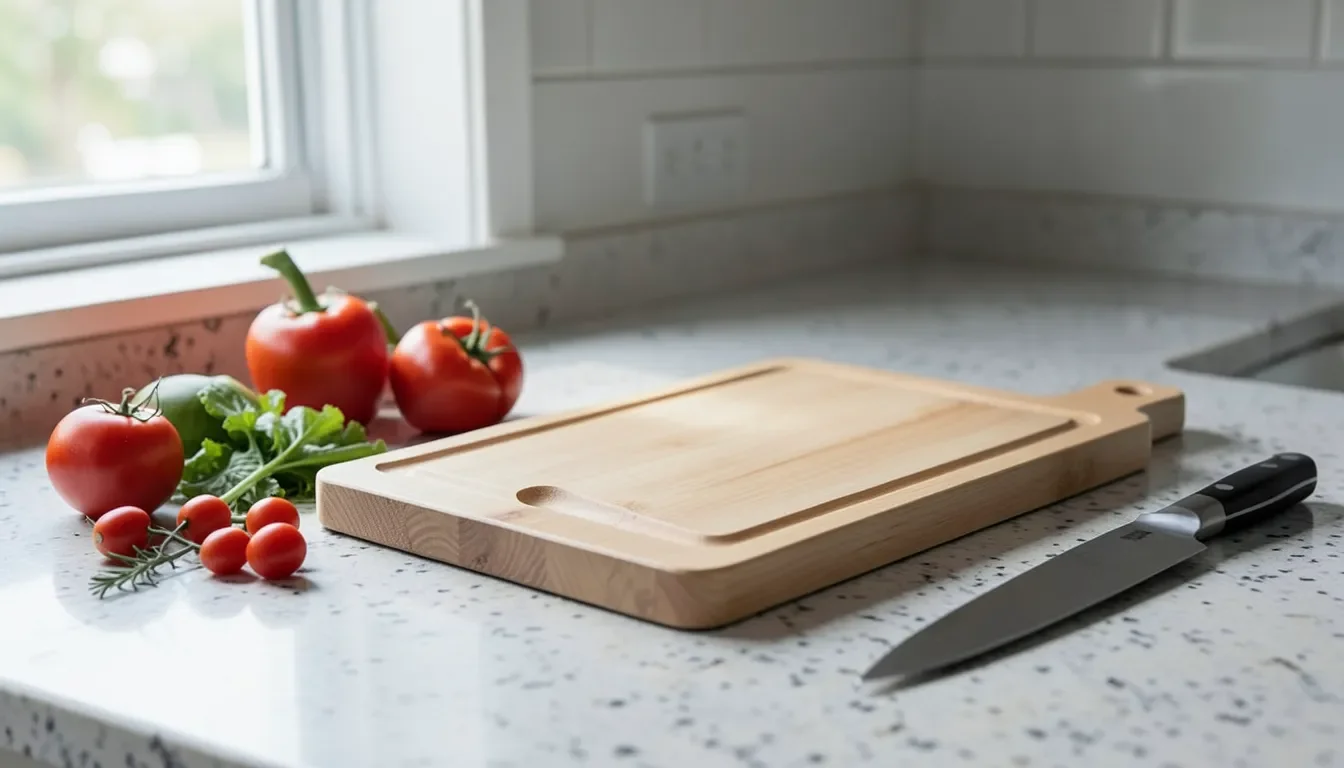
Sur La Table Everyday Cutting Board, 18″ x 9″, Maple – $59.95 This is the actual Sur La Table house-brand board most people mean when they search the term — genuine tight-grained maple with a juice groove and cut-out handle, verified in stock at checkout.
|
Maple vs. Walnut: The Real Hardness and Care Differences
Sur La Table’s boards mostly split between hard maple and black walnut, and the difference isn’t just looks. Hard maple (Acer saccharum) rates around 1,450 lbf on the Janka hardness scale, while black walnut (Juglans nigra) rates closer to 1,010 lbf. In practice, that means maple resists deep knife scarring a bit better and stays lighter-colored with fewer visible marks over years of use, while walnut is noticeably softer — slightly gentler on your knife edges, but it shows cut marks and dents sooner.
Walnut’s other trade-off is color: it’s naturally rich and dark, which hides stains from things like turmeric or berries better than maple does, but that same dark color makes fresh knife marks and light scratches more visible against the grain. If your priority is a board that still looks close to new after a year of chopping, maple is the safer pick. If you want a board with more visual depth for serving cheese and charcuterie, walnut typically wins on looks alone. Neither wood is meaningfully harder on knives than the other — the ~440 lbf gap between them is real but small compared to something like hard acacia, which can run 2,000+ lbf and dulls blades noticeably faster.
Real Prices Across Sur La Table’s Wood Cutting Board Lineup
Prices vary a lot depending on whether you’re buying the house-brand line or one of the curated brands. Here’s what’s actually listed, verified directly from Sur La Table and Amazon:
| Board | Wood | Construction | Price |
|---|---|---|---|
| Sur La Table Everyday, 18″x9″ | Maple | Edge-grain | $59.95 |
| Sur La Table Reversible, 16″x12″ | Maple/Walnut | Edge-grain | $109.95 |
| Viking Acacia, 18″x12″ | Acacia | Edge-grain | $44.96 |
| Viking Acacia, 20″x14″ | Acacia | Edge-grain | $99.96 |
| John Boos Walnut w/ Feet | Walnut | Edge-grain | $199.95 |
| Larch Wood | Larch | End-grain, self-healing | $200 |
Caption: Verified pricing pulled directly from surlatable.com and Amazon listings; prices can shift with sales and stock.
End-Grain vs. Edge-Grain: Which One Are You Actually Buying?
This matters more here than on most cutting board pages, because Sur La Table’s own house-brand boards (Everyday and Reversible) are edge-grain, while the Larch Wood board it carries is end-grain. Edge-grain boards are made from long strips of wood glued face-to-face, with the grain running the length of the board — they’re lighter, less expensive to produce, and perfectly durable for normal home cooking. End-grain boards are built from short blocks of wood standing on end, so the knife cuts into the end of the wood fibers instead of across them. That construction lets the wood fibers close back up after a cut instead of scarring, which is where the “self-healing” claim on the Larch Wood board comes from — it’s a real structural difference, not just marketing.
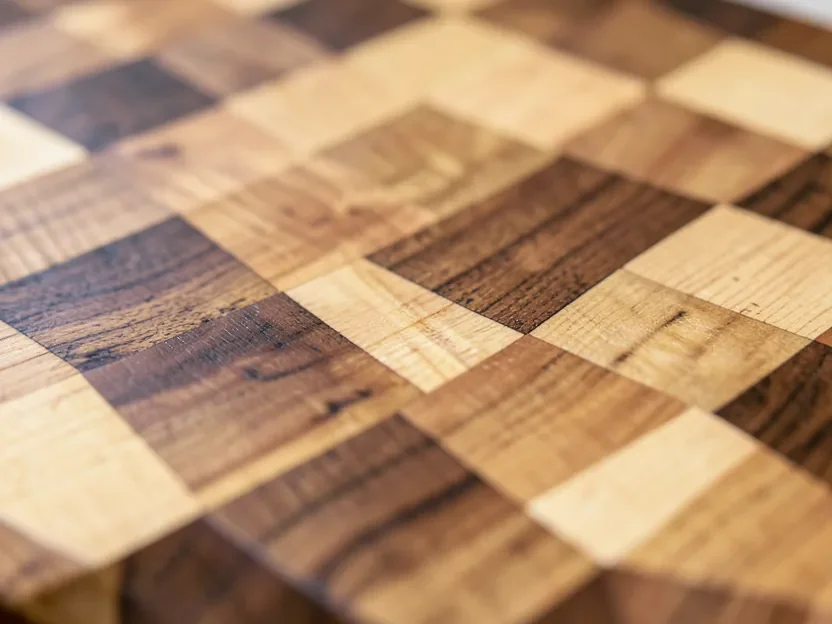
For most home cooks, the edge-grain Everyday or Reversible board is the practical choice — it’s lighter to lift, easier to store upright, and costs a fraction of the end-grain option. End-grain is worth the jump to $200 mainly if you’re cutting on the same board daily for years and want the surface to show as little wear as possible.
Caring for a Sur La Table Wood Cutting Board
Sur La Table’s own care guidance for its wood boards is standard for any solid-wood board, and it applies whether you bought the house-brand maple or one of the curated brands:
- Hand wash only: Warm water and mild soap, dried immediately with a towel. Skip the dishwasher entirely — the heat and prolonged soaking will warp or crack any solid wood board, including maple and walnut.
- Never soak it: Standing water is the single fastest way to split a wood board. Wash, rinse, and dry in one pass rather than leaving it in the sink.
- Oil monthly: Food-grade mineral oil (not olive or vegetable oil, which can turn rancid) keeps the wood from drying out and cracking. A thin coat rubbed in with a cloth, left to absorb for a few hours, is enough.
- Store it standing up in a dry spot with airflow on both sides, rather than flat against a counter, to keep it from warping unevenly.
If you want the deeper mechanics of why soaking and dishwashers damage wood boards specifically, see our full guide to cleaning a wooden cutting board.
Is a Sur La Table Wood Cutting Board Worth the Price?
For the $59.95-$109.95 house-brand line, yes — you’re paying close to what comparable solid maple boards cost at Boos or Catskill Craftsmen, and you’re getting genuine tight-grained maple rather than a cheaper laminated substitute. It’s not a bargain-bin price, but it’s not inflated for the brand name either.
The curated brands are a different call. The $200 Larch Wood and John Boos walnut boards are priced at the high end of the wood cutting board market generally, and you’re paying for end-grain construction and the retailer’s selection rather than anything unique to Sur La Table itself — the same boards, or very close equivalents, are often available directly from the manufacturer or other kitchen retailers at similar prices. If your main goal is a genuine Sur La Table-branded board at a reasonable price, the house-brand maple line is the better value. If you specifically want an end-grain block and don’t care about the name on it, it’s worth comparing prices across retailers before buying at $200.
Frequently Asked Questions
Does Sur La Table make its own cutting boards, or just sell other brands?
Both. Sur La Table has its own house-branded maple line (the Everyday and Reversible boards), and it separately carries curated boards from outside manufacturers like John Boos, Teakhaus, Viking, and Larch Wood.
Is maple or walnut better for a Sur La Table cutting board?
Maple (about 1,450 lbf Janka hardness) resists knife marks slightly better and stays lighter-looking over time. Walnut (about 1,010 lbf) is a bit softer and shows cut marks sooner, but its dark color hides stains better and shows more visual grain for serving.
Can I put a Sur La Table wood cutting board in the dishwasher?
No. Dishwasher heat and prolonged water exposure will warp or crack any solid wood board. Hand wash with warm, soapy water and dry it immediately instead.
Why is the Larch Wood board $200 when the Everyday board is $59.95?
The Larch Wood board uses end-grain construction, where the wood is cut and glued so the knife strikes the end of the fibers rather than the length of them. That lets the surface close back up after cuts instead of scarring, but it takes more material and labor to build, which is reflected in the price.
How often should I oil a Sur La Table cutting board?
About once a month with food-grade mineral oil, or sooner if the wood starts looking dry or pale. Avoid olive or vegetable oil, since both can go rancid on a wood surface.
Sponsored / affiliate links. As an Amazon Associate I earn from qualifying purchases. I may earn additional commission from eligible campaigns.