Wood Trim Restoration: Genius & Essential Tips
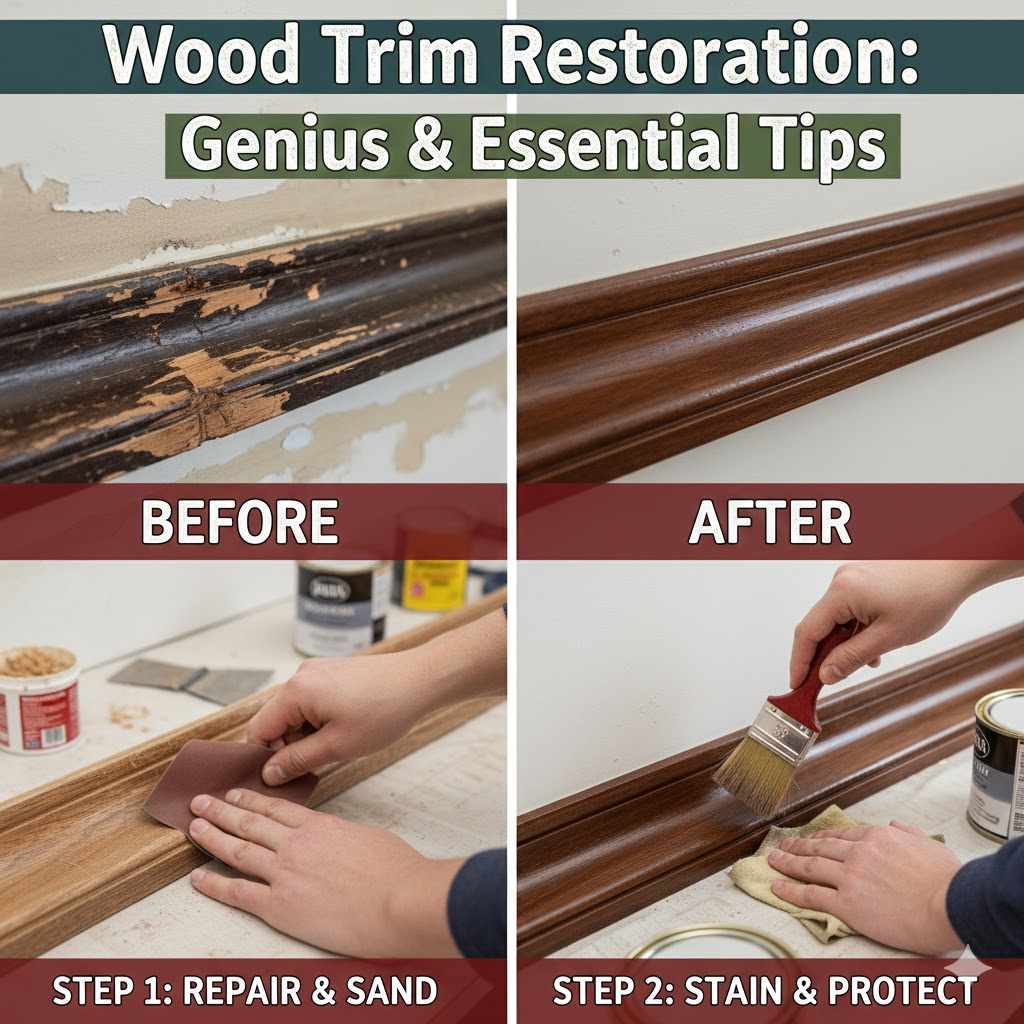
Wood trim restoration involves cleaning the wood, repairing any dents or scratches with wood filler, and sanding the surface smooth. After sanding, apply your choice of stain or paint, followed by a protective top coat like polyurethane to bring your trim back to its original beauty and protect it for years to come.
Do you look at your home’s wood trim and see its former glory hidden under years of scuffs, scratches, or dull, peeling paint? It’s a common story. Beautiful, classic wood trim can lose its shine over time. But the thought of fixing it can feel like a huge, complicated job.
Don’t worry! I’m here to show you that it’s not as hard as it looks. You can bring that warm, rich character back to your home, and I promise you can do it yourself. In this guide, I’ll walk you through every simple step, from cleaning to the final beautiful finish.
Why You Should Restore Your Wood Trim (And Why It’s Easier Than You Think!)
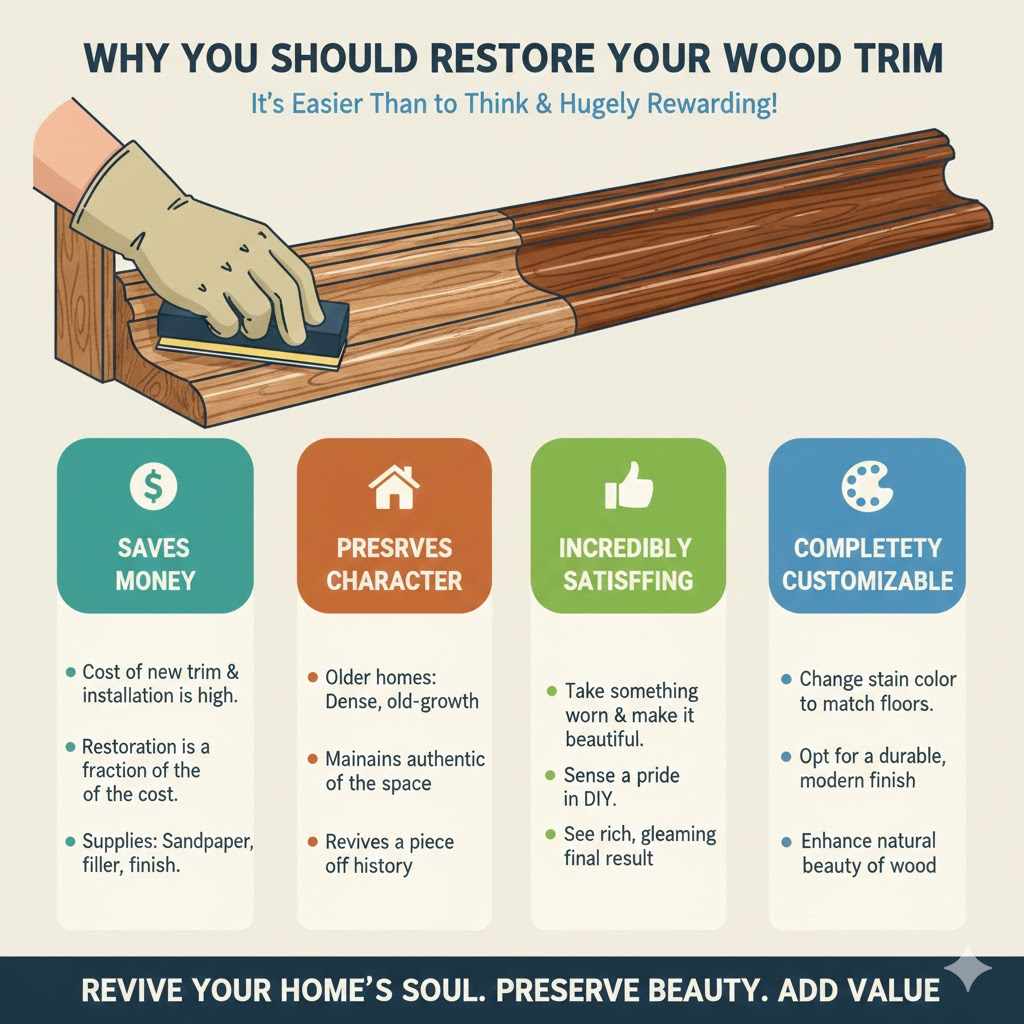
Restoring wood trim is one of the most rewarding DIY projects a homeowner can tackle. It’s about more than just a cosmetic fix; it’s about reviving a key architectural element that adds warmth, character, and value to your home. Many people immediately think of replacing old trim, which is expensive, wasteful, and often means losing the original, high-quality wood that gives a house its soul. Restoration is a much smarter path.
The benefits are clear:
- It Saves a Ton of Money: The cost of new wood trim, plus a professional to install it, can add up quickly. Restoring what you already have costs just a fraction of that, mainly involving simple supplies like sandpaper, wood filler, and a can of finish.
- It Preserves Your Home’s Character: Older homes, in particular, often have trim made from dense, old-growth wood that simply isn’t available today. By restoring it, you’re preserving a piece of history and maintaining the authentic feel of your space.
- It’s an Incredibly Satisfying Project: There’s a unique sense of pride that comes from taking something worn and tired and making it beautiful again with your own hands. Seeing the final result—rich, gleaming wood trim—is a fantastic feeling.
- It’s Completely Customizable: Restoration gives you total control. You can change the stain color to match new floors, opt for a durable, modern finish, or simply enhance the natural beauty of the wood. You get to be the designer.
Don’t let a lack of experience hold you back. The process is straightforward and forgiving. It’s all about following a few key steps patiently. I’ll break everything down for you, making sure you feel confident and ready to bring that beautiful trim back to life.
Your Essential Toolkit: Gathering Your Supplies
Having the right tools ready before you start makes any project run smoother. You don’t need a professional workshop for this! Most of these items are easily found at your local hardware store. Let’s get your shopping list sorted.
Must-Have Tools & Materials
- Cleaning Supplies: A bucket, warm water, mild soap (like dish soap), and clean rags or sponges.
- Wood Filler or Putty: For filling in nail holes, dents, and deep scratches. Choose one that is stainable if you plan to stain the wood.
- Putty Knife: A flexible one is best for applying wood filler smoothly.
- Sandpaper: You’ll need a few different grits. A good starting point is 120-grit for removing old finish, 180-grit for general smoothing, and 220-grit for a super-fine finish before staining.
- Sanding Block or Random Orbital Sander: A sanding block works fine for small areas, but an orbital sander will save you a huge amount of time and effort on larger projects.
- Painter’s Tape: To protect your walls and floors from stray drips of stripper, stain, or finish.
- Drop Cloths: To cover floors and furniture and make cleanup a breeze.
- Stain & Finish: Your choice of wood stain color and a protective top coat like polyurethane or varnish.
- Natural Bristle Brushes or Foam Brushes: For applying stain and oil-based finishes. Use synthetic brushes for water-based finishes.
- Clean, Lint-Free Rags: For wiping away excess stain and for applying certain types of finishes. Old cotton t-shirts work great.
- Tack Cloth: An essential for wiping away all the fine sanding dust right before you apply your stain or finish.
Optional but Helpful Gear
- Heat Gun: An alternative to chemical strippers for removing thick layers of old paint or varnish. It’s less messy but requires careful handling.
- Chemical Stripper: For when sanding alone won’t remove a stubborn old finish. Choose a more eco-friendly citrus- or soy-based gel stripper for better ventilation.
- Scraper Tool: A carbide scraper is great for carefully removing softened finish after using a stripper or heat gun.
- Shop Vacuum: To quickly clean up sanding dust from the trim and the surrounding area.
Safety First: A Non-Negotiable Step
Before we dive into the fun part, let’s talk about safety. It’s the most important tool in your kit. Woodworking projects involve dust, chemicals, and sometimes old materials that need to be handled with care. Taking a few simple precautions will ensure your project is not only successful but also safe.
Always have the following personal protective equipment (PPE) on hand:
- Safety Glasses: Protect your eyes from dust, debris, and chemical splashes at all times.
- Dust Mask or Respirator: Sanding creates fine wood dust that you shouldn’t breathe in. A simple N95 mask is good, but a respirator is even better, especially when using chemical strippers.
- Gloves: Wear chemical-resistant gloves when working with strippers or solvents, and simple work gloves to protect your hands from splinters during sanding.
Proper ventilation is also key. Open windows and doors, and use a fan to circulate fresh air, especially when staining or applying a top coat. The fumes can be strong, and good airflow helps them dissipate quickly and aids in drying.
A crucial safety note: If your house was built before 1978, your trim might be coated in lead-based paint. Sanding or scraping lead paint can release toxic dust that is extremely dangerous, especially to children. Before you begin, it’s vital to check for lead. You can learn more about identifying and safely handling lead paint from the U.S. Environmental Protection Agency (EPA). If you suspect lead paint, it’s best to consult a professional for removal.
The Step-by-Step Guide to Flawless Wood Trim
Ready to get started? We’re going to break this down into simple, manageable steps. Just follow along, take your time, and enjoy the process of transforming your trim.
Step 1: Prepare Your Space and Inspect the Trim
First, clear the room as much as possible. Move furniture to the center of the room and cover it with a drop cloth. Lay down more drop cloths along the base of the trim you’ll be working on. Use painter’s tape to create a clean line between the trim and the wall. This not only protects your paint but also gives you a crisp, professional-looking edge when you’re done.
Next, take a close look at the trim. Are there nail holes, deep gouges, or small cracks? Are there sections that are loose? Make a mental note of all the little spots that will need filling and repair later. Now is also a good time to gently pull any loose trim away from the wall just enough to scrape out old caulk if needed.
Step 2: A Deep Clean is Key
You can’t get a beautiful finish on a dirty surface. Over the years, wood trim collects a surprising amount of dirt, grease, and grime. Mix a few drops of mild dish soap into a bucket of warm water. Dip a sponge or soft cloth in the soapy water, wring it out well, and wipe down every inch of the trim. For stubborn, greasy spots (common in kitchens), a specialized wood cleaner or a mixture of equal parts vinegar and water can work wonders. After cleaning, wipe everything down again with a clean, damp cloth to remove any soap residue, and then let it dry completely.
Step 3: Repairing Minor Damage (The Magic is in the Details)
Now it’s time to fix those imperfections you spotted earlier. Scoop a small amount of stainable wood filler onto your putty knife. Press the filler firmly into nail holes, dents, and scratches. Overfill them slightly, as the filler will shrink a little as it dries. Use the edge of the putty knife to scrape away the excess, making it as flush with the wood surface as you can.
Don’t worry about getting it perfectly smooth right now; that’s what sanding is for. Let the filler dry completely according to the manufacturer’s instructions, which can be anywhere from 15 minutes to a few hours depending on the product and the depth of the repair.
Step 4: Stripping Away the Old Finish (If Necessary)
This step is only needed if your trim has a thick layer of paint or a dark, heavy varnish that you want to remove completely. If you’re just refreshing a lightly worn clear coat, you can often get by with a light sanding (scuff sanding) and skip to Step 5.
If you do need to strip it, you have two main options:
- Sanding: For thinner finishes, you can often sand them off. Start with a coarser grit sandpaper (like 100 or 120-grit) on an orbital sander or by hand. This method is effective but creates a lot of dust, so be sure to wear your mask!
- Chemical Stripper: For thick paint or varnish, a chemical stripper is more efficient. Choose a gel-based formula, as it will cling to vertical surfaces without dripping as much. Apply a thick layer with an old paintbrush and let it sit according to the instructions. You’ll see the finish start to bubble and lift. Once it’s ready, use a scraper to gently remove the softened gunk. Always work in a well-ventilated area and wear your gloves and safety glasses.
After stripping, you may need to clean the wood with mineral spirits to remove any chemical residue before proceeding to the final sanding.
Step 5: Sanding for a Buttery-Smooth Surface
Sanding is the secret to a professional-looking finish. It smooths out your wood filler repairs and creates a perfect surface for the stain and top coat to adhere to. Always sand in the direction of the wood grain to avoid creating cross-grain scratches that will show up later.
Start with a medium-grit sandpaper, like 150 or 180-grit, to smooth out the repairs and any remaining old finish. Go over the entire surface of the trim. Once it feels smooth, switch to a fine-grit sandpaper, like 220-grit. This final pass will polish the wood, leaving it feeling silky and ready for finishing. After you’re done, vacuum up all the dust and then wipe the trim down with a tack cloth. This sticky cloth is amazing at picking up the last fine particles that a vacuum or rag might miss.
Step 6: Applying Wood Stain for Rich Color
If you want to change or enhance the color of your wood, now is the time to stain. Before you start on the trim itself, always test your stain on a scrap piece of the same wood or in a small, hidden spot (like inside a closet). This ensures you like the color and shows you how the wood will absorb it.
To apply the stain, dip a clean, lint-free rag into the can and wipe it onto the wood, moving in the direction of the grain. Work in small, manageable sections. Let the stain sit for a few minutes (check the can for recommended times), then use a separate clean rag to wipe off all the excess. The longer you let it sit, the darker the color will be. Wiping off the excess is crucial for an even color without a sticky, blotchy finish. Let the stain dry completely, which usually takes 24 hours.
Step 7: Sealing the Deal with a Protective Finish
The final step is to apply a protective top coat. This clear finish will protect the wood from moisture, dirt, and scratches, and it’s what gives the trim its beautiful, durable sheen. Use a high-quality natural bristle brush for oil-based finishes or a synthetic brush for water-based ones.
Apply a thin, even coat, moving with the grain. Don’t over-brush; just apply it smoothly and let it level out on its own. Let the first coat dry completely. Then, lightly sand the surface with very fine-grit sandpaper (320-grit or higher) to knock down any dust nibs. Wipe with a tack cloth, and then apply your second coat. For high-traffic areas like baseboards, a third coat is a good idea for extra durability. Once the final coat is dry, you can carefully remove the painter’s tape and admire your beautifully restored wood trim!
Choosing the Right Protective Finish
The top coat you choose has a big impact on the final look and durability of your trim. There are several great options, each with its own pros and cons for a beginner. Here’s a quick comparison to help you decide.
| Finish Type | Ease of Use | Durability | Look & Feel |
|---|---|---|---|
| Oil-Based Polyurethane | Medium. It has a longer drying time, which gives you more time to work, but requires mineral spirits for cleanup. | Excellent. Very tough and resistant to scratches and water. | Adds a warm, amber glow to the wood. Available in satin, semi-gloss, and gloss sheens. |
| Water-Based Polyurethane | Easy. It dries quickly and cleans up with soap and water. You must work fast to avoid brush marks. | Very Good. Modern formulas are quite durable, though slightly less tough than oil-based versions. | Dries crystal clear, so it won’t change the wood’s natural color. A good choice for lighter woods. |
| Wipe-On Poly | Easiest. You simply wipe it on with a rag. It’s almost impossible to get drips or brush marks. | Good. It builds up in very thin layers, so you’ll need more coats (4-5) for good protection. | Creates a beautiful, hand-rubbed look that feels very natural and close to the wood. |
| Shellac | Medium. It dries extremely fast, which can be challenging. It’s best used on decorative trim, not high-impact areas. | Fair. It is not very resistant to water or alcohol, so it’s not ideal for baseboards. | Provides a classic, warm, and high-gloss finish. Great for antique furniture or decorative molding. More information can be found at woodworking resources like Woodcraft. |
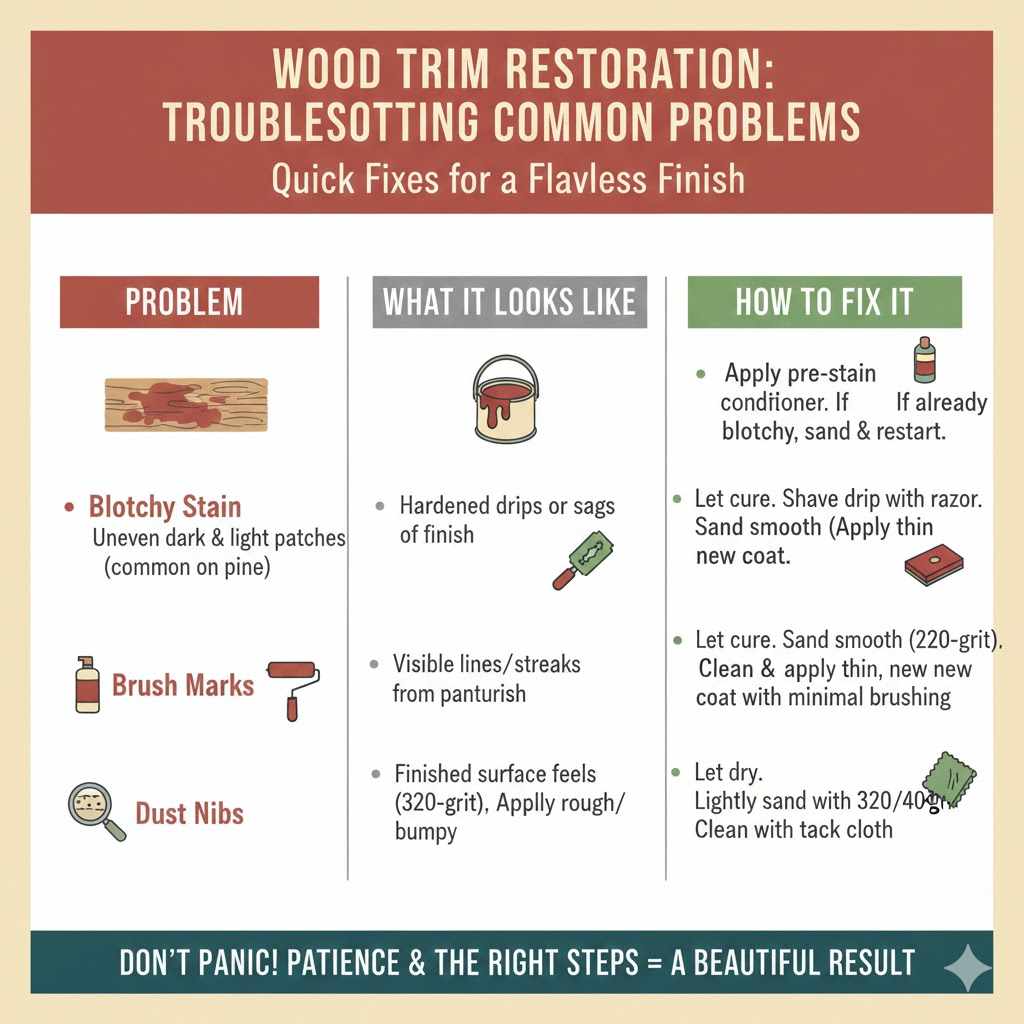
Troubleshooting Common Problems
Even with careful work, you might run into a small issue. Don’t panic! Most problems have a simple fix. Here are some common ones you might encounter.
| Problem | What It Looks Like | How to Fix It |
|---|---|---|
| Blotchy Stain | The stain looks uneven, with dark and light patches. This is common on woods like pine or maple. | Before staining, apply a pre-stain wood conditioner. This partially seals the wood so it absorbs the stain evenly. If it’s already blotchy, you may need to sand it down and start over with a conditioner. |
| Drips or Runs in the Finish | Hardened drips or sags of polyurethane or varnish on the surface. | Let the finish cure completely (a few days). Then, carefully shave the drip off with a fresh razor blade held almost flat. Sand the spot smooth with 320-grit sandpaper, wipe with a tack cloth, and apply a very thin new coat to that area to blend it in. |
| Brush Marks | Visible lines or streaks from the paintbrush in the dried top coat. | This is usually caused by over-brushing or applying the finish when it’s too cold. To fix it, let the finish cure, then sand the entire surface smooth with 220-grit sandpaper. Clean off all the dust and apply a new, thin coat, flowing it on with minimal brushing. |
| Dust Nibs | The finished surface feels slightly rough or has tiny bumps in it. | This is very common! Let the finish dry completely. Lightly sand the surface with 320-grit or 400-grit sandpaper wrapped around a block. Just a few gentle passes are all you need. Clean with a tack cloth before your next coat. |
Frequently Asked Questions (FAQ)
Here are answers to some of the most common questions I get from beginners about restoring wood trim.
1. Can I restore wood trim without removing it from the wall?
Absolutely! All the steps outlined in this guide are designed for restoring trim in place. It saves a huge amount of time and effort. The keys are to use painter’s tape to protect your walls and to cover your floors with drop cloths to catch any mess.
2. What is the easiest finish for a complete beginner to use?
Wipe-on polyurethane is by far the most beginner-friendly option. You apply it with a clean cloth instead of a brush, which virtually eliminates the risk of drips, runs, and brush marks. It gives a beautiful, professional result, but you will need to apply more coats to build up a durable layer of protection.
3. How can I fix small scratches without doing a full restoration?
For minor scuffs and scratches on trim with a clear finish, you can often use a “touch-up” restoration product like Howard Restor-A-Finish. You simply wipe it on with a cloth, and it blends away minor imperfections. For deeper scratches, a stain-filled touch-up marker that matches your trim color can work wonders.
4. Do I really have to sand before I apply a top coat?
Yes, but it doesn’t have to be a major job. Even if the surface looks good, a light “scuff sand” with 220-grit sandpaper is crucial. This step does two things: it removes any imperfections and, more importantly, it slightly roughens the surface, giving the new top coat a much better grip for a stronger, longer-lasting bond.
5. How do I know if my trim has lead paint on it?
If your home was built before 1978, you should assume there might be lead paint. The safest way to know for sure is to use an EPA-recognized lead test kit, which is available at most hardware stores. These kits are easy to use and give you results in minutes.
6. How long does a wood trim restoration project usually take?
This depends on the size of the room and the condition of the trim. For an average-sized room, plan for a full weekend. Day one could be for cleaning, repairing, and sanding. Day two could be for staining and applying the first coat of finish. Remember to factor in drying time between coats, which can add another day or two.
Your Next Steps: From Worn-Out to Wonderful
And there you have it—everything you need to know to breathe new life into your wood trim. See? It’s not so intimidating when you break it down into simple, clear steps. This project is about more than just home improvement; it’s about reconnecting with your space and taking pride in creating something beautiful with your own hands.
Don’t strive for perfection on your first try. Strive for progress. Every step you complete is a victory. The scuffs, the dullness, the peeling paint—they can all be erased, revealing the gorgeous, timeless wood that’s been hiding underneath. You have the knowledge and the plan. Now all that’s left is to pick a room, gather your supplies, and start the wonderful process of transformation. You’ve got this!