Worm Drive Skil Saw Guide: Why It’s Still Called a Skilsaw
A worm drive skil saw is a heavy-duty circular saw with its motor mounted at a 90-degree angle to the blade – the layout Skilsaw pioneered in 1928 and locked in with the Model 77 in 1937, which is why builders still call any circular saw a “skil saw” today. That gearing trades RPM (about 4,250-4,500 vs. 6,000+ on a sidewinder) for torque, so it powers through wet framing lumber without bogging down. This guide covers how the gearing works, worm drive vs. sidewinder specs, and which model to buy.
What Is a Worm Drive Skil Saw?
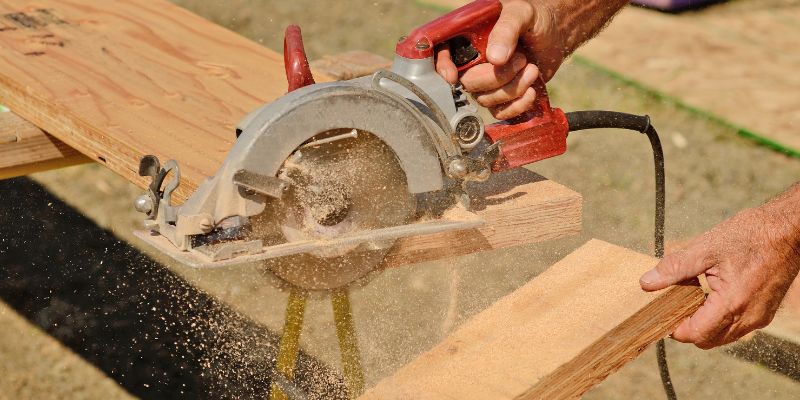
A worm drive skil saw is a handheld circular saw whose motor sits behind the blade and drives it through a worm gear set turned 90 degrees to the blade shaft. That gearing multiplies torque instead of speed, so the saw spins slower than a standard sidewinder but pushes harder through dense or wet material. Framers, deck builders, and roofers reach for one wherever ripping thick, tough lumber matters more than saw weight. See our full circular saw hub for every saw type we cover on this site.
Why Is It Still Called a “Skil Saw”?
In 1924, French immigrant inventor Edmond Michel and Minneapolis developer Joseph Sullivan opened the Michel Electric Handsaw Company in Chicago. The company renamed itself Skilsaw, Inc. in 1926 after Michel left. Skil released the worm-drive Model E in 1928, and in 1937 engineer Edward Sterba built the 7-1/4-inch Model 77 that became the industry standard for handheld worm drive saws. Because Skilsaw got there first, “skil saw” became a genericized trademark, the same way people say “Kleenex” for any facial tissue – so today’s DeWalt, Makita, Bosch, and Milwaukee worm drives all get called “skil saws” even though Skil is only one brand among several. Milwaukee doesn’t sell a true worm drive, though — its M18 FUEL rear-handle saws borrow the ergonomics with a direct-drive motor instead of worm gearing. See our Milwaukee circular saw lineup guide for how the sidewinder and rear-handle M18 FUEL models compare.
📊 Skilsaw’s Model 77 worm drive saw, introduced in 1937, remains in production in nearly unchanged form 85+ years later. – Source: Pro Tool Reviews, 2026
Best Worm Drive Skil Saw to Buy
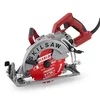
The Skilsaw SPT77WML-22 is the modern version of that original Model 77 covered above. Skil lists it at 11.5 lbs., about 4 lbs. lighter than its predecessor and the lightest worm drive on the market, with a 15-amp motor, a die-cast magnesium foot, and a 24-tooth carbide blade included in the box.
|
Best Worm Drive Skil Saw Pick
|
As an Amazon Associate we earn from qualifying purchases.
Worm Drive vs. Sidewinder: Key Differences
Motor placement is the root difference, and it drives everything else – speed, weight, and which jobs each saw is built for. See our sidewinder vs. worm drive breakdown for a deeper look at both drivetrains.
| Feature | Worm Drive | Sidewinder |
|---|---|---|
| Motor position | 90° to the blade, rear-mounted | Inline with the blade |
| Typical RPM | ~4,250-4,500 | 6,000+ |
| Weight | 11-15 lbs. | 6-9 lbs. |
| Best for | Ripping thick or wet lumber, framing | General carpentry, overhead and one-handed cuts |
| Maintenance | Many models need gear oil added | Sealed, no user oil required |
How the Worm Drive Gear System Works
Inside the housing, a worm gear (a screw-shaped gear on the motor shaft) meshes with a wheel gear at a 90-degree angle to the blade. That 90-degree mesh is a mechanical-advantage multiplier: it lowers the blade’s top speed but multiplies the torque the motor can deliver, which is what lets a worm drive rip through soaked 2x framing lumber that would bog down a faster, lower-torque sidewinder. Most worm drives also run the blade on the left side of the saw body rather than the right.
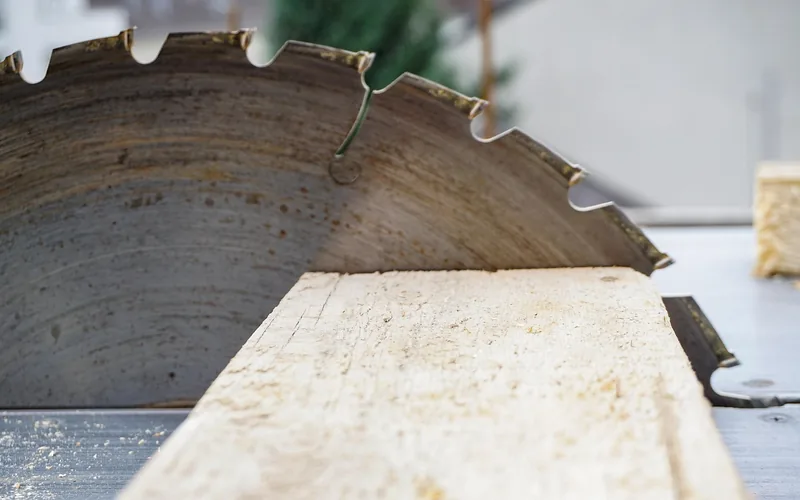
“Because the blade sits on the left side of the saw body on nearly every worm drive, a right-handed user gets a clear, unobstructed sightline down the cut line instead of looking across the motor housing – the opposite setup from most sidewinders. It’s worth standing over both saws at a store before you buy, not just comparing spec sheets.”
Worm Drive Saw Specs That Actually Matter
Beyond weight and RPM, three specs decide whether a worm drive fits your actual work. On the Skilsaw SPT77WML-22 featured above, Skil lists a 53-degree bevel capacity and a maximum cut depth of 2-3/8 inches at 90 degrees, dropping to 1-15/16 inches once you bevel to 45 degrees. That bevel range covers standard framing angles, but if your work regularly needs a steeper compound bevel, confirm the exact max angle before buying, since it varies by model and brand.
- Bevel capacity: most corded worm drives top out between 50 and 56 degrees; check this if you cut a lot of compound angles.
- Cut depth loss on bevels: expect roughly a quarter-inch to half-inch less depth at 45 degrees than at 90 degrees on most 7-1/4 inch worm drives.
- Cord length: corded worm drives commonly ship with an 8-foot cord, short enough that a jobsite extension cord is standard equipment, not optional.
Cordless worm drives exist but remain uncommon next to corded models, since the gearing’s torque demands are harder to sustain on battery power for a full framing day. If you go cordless, plan on carrying spare batteries rather than expecting all-day runtime from one pack.
Safety Tips and Maintenance for Worm Drive Saws
Worm drive saws are heavier and torquier than sidewinders, so a few habits matter more here than on a lighter saw:
- Check the gear oil. Many worm drives use an open gear case that needs oil added periodically – check your owner’s manual for the model’s recommended interval, since it varies by manufacturer.
- Use both hands. The extra weight and torque make a worm drive more likely to kick back if you try to muscle it one-handed through a cut.
- Let the blade reach full speed before entering the cut, and never force the saw faster than the blade wants to cut.
- Unplug before changing blades and confirm the retractable guard snaps back freely every time you swap a blade.
- Wear eye and hearing protection. The 24-tooth blades that ship with most worm drives throw larger chips than a fine-finish blade.
Common Mistakes to Avoid
- Buying a worm drive for occasional home use. If you’re cutting a few shelves a year, a 6-9 lb. sidewinder is easier to handle and store.
- Skipping the gear oil until the gears strip. An open-gear worm drive that never gets oil can wear out far sooner than one that’s maintained on schedule.
- Ignoring bevel capacity. If your work regularly needs compound miters, check a model’s max bevel angle before you buy, not after.
- Assuming every worm drive is corded. Corded is still the norm because of how much power the gearing draws, but check the listing rather than assuming, since cordless options are starting to appear.
Frequently Asked Questions
What is a worm drive skil saw?
A worm drive skil saw is a handheld circular saw with its motor mounted behind the blade, connected through a worm gear set turned 90 degrees to the blade shaft. That gearing trades top speed for torque, making it a favorite for framing and ripping thick or wet lumber.
Why is a circular saw called a “skil saw”?
Skilsaw, Inc. built the first worm-drive circular saw in 1928 and the industry-standard Model 77 in 1937. Because it got to market first, “skil saw” became a genericized trademark, so people still use it for circular saws made by other brands like DeWalt, Makita, or Bosch.
What’s the difference between a worm drive and a sidewinder saw?
A worm drive’s motor sits at a 90-degree angle to the blade and spins around 4,250-4,500 RPM with high torque; a sidewinder’s motor sits inline with the blade and spins faster, around 6,000+ RPM, with less torque. Worm drives are heavier (11-15 lbs. vs. 6-9 lbs.) but rip thick or wet lumber more easily.
Are worm drive saws heavier than sidewinders?
Yes. A typical worm drive weighs 11 to 15 pounds, while a sidewinder usually weighs 6 to 9 pounds. The extra weight comes from the worm gear set and the larger motor housing needed to generate more torque.
Do worm drive saws need oil?
Many do. Most worm drive saws use an open gear case that needs periodic gear oil to keep the worm gear and wheel gear from wearing prematurely; sidewinders are typically sealed and don’t need user-added oil. Check your specific model’s manual for its recommended oil type and interval.
What bevel angle can a worm drive saw cut?
Most corded 7-1/4 inch worm drive saws bevel between 50 and 56 degrees, with cut depth dropping roughly a quarter to a half inch once you’re past 45 degrees. The Skilsaw SPT77WML-22, for example, lists a 53-degree bevel capacity with 2-3/8 inches of depth at 90 degrees.
A worm drive skil saw earns its keep on torque, not speed: the 90-degree gearing Skilsaw introduced in 1928 and refined into the Model 77 in 1937 is still why framers reach for one on wet or oversized lumber, and still why any circular saw ends up getting called a “skil saw.” If your work is mostly finish carpentry or occasional cuts, a lighter sidewinder may suit you better – see our Skilsaw vs. circular saw guide or our full best circular saw picks to compare both drivetrains across more models and budgets.
Sponsored / affiliate links. As an Amazon Associate I earn from qualifying purchases. I may earn additional commission from eligible campaigns.