8 1/4 Saw Blade: Arbor Size & Depth of Cut Explained (+ Picks)
An 8 1/4 saw blade almost always uses a 5/8-inch arbor, but a handful of compact-saw models take a 1-inch arbor instead — mount the wrong size and the blade won’t seat flush. Forcing a mismatched blade causes vibration, wandering cuts, or a blade that flies loose mid-cut. This guide covers real arbor sizing, verified cutting-depth numbers for compact 8-1/4-inch saws, the best tooth count for ripping versus crosscutting, and which replacement blades are worth buying.
Quick Answer
Check your saw’s manual or measure the center hole with calipers before buying an 8 1/4 saw blade — 5/8-inch is the standard arbor, but some compact saws use a 1-inch arbor. A 24-tooth blade rips fastest, 40-tooth handles general crosscuts, and 60-tooth gives the smoothest finish cuts.
Types of 8 1/4 Saw Blades
Best All-Purpose 8 1/4 Blade Pick
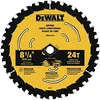
DEWALT 8 1/4 In. 24-Tooth Framing & Ripping Blade – $18.72
A 24-tooth flat-top grind blade for fast ripping and framing cuts — the tooth count this guide recommends when speed matters more than finish.
- Best for: Fast ripping and rough framing cuts
- Why we picked it: 5/8-inch arbor matches the standard fit this guide covers, and the low tooth count clears sawdust fast on deep rip cuts
- Main drawback: Leaves a rougher edge than a 40 or 60-tooth blade — not the pick for visible finish cuts
Compare more 8 1/4 blade options
 Option 1 FOXBC 40T Table Saw Blade – $19.99
|
 Option 2 FOXBC 60T Fine Finish Blade – $22.99
|
 Option 3 Luckyway 24T/40T/60T 3-Pack – $23.39
|
As an Amazon Associate we earn from qualifying purchases.
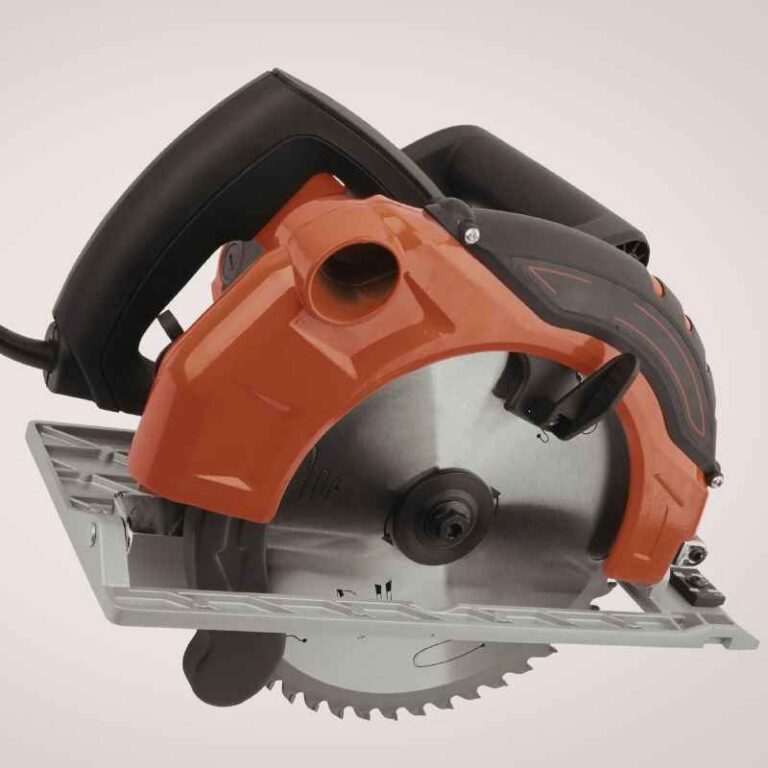
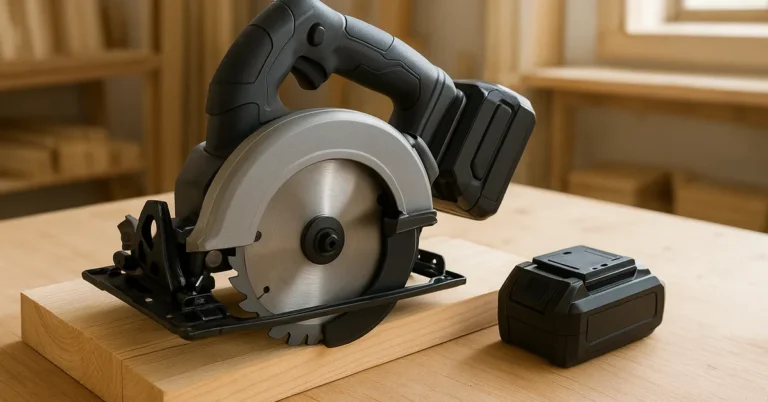
An 8 1/4 saw blade is built for compact circular saws and small table saws, giving you a smaller, lighter-spinning alternative to a full-size 10-inch blade. Most are carbide-tipped, though tooth count and grind vary by task — ripping, crosscutting, and fine-finish work each call for a different blade. If you’re shopping for the saw itself rather than just a replacement blade, see our best circular saw picks for models built around this blade size. For a broader look at saw types and blade charts, our woodworking saws guide covers where 8 1/4-inch blades fit among the rest.
Material Composition
Carbide-tipped blades are the standard choice for wood — the teeth stay sharp far longer than plain steel and cut faster through knots and plywood glue lines. Plain high-speed steel (HSS) blades are cheaper but dull quickly and are mostly found on low-cost multipurpose blades. Diamond-grit blades exist in this size too, but they’re for tile and masonry, not wood — don’t buy one by mistake if you’re cutting lumber.
Tooth Design and Count
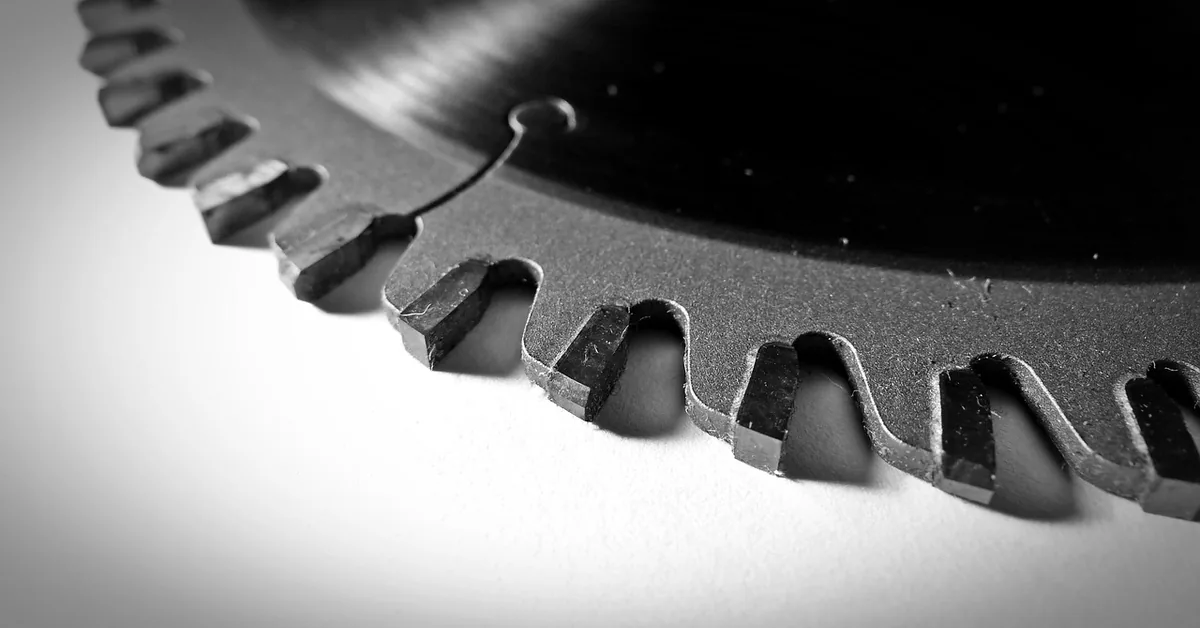
Tooth design determines cut quality more than material does. Flat-top grind (FTG) teeth rip fastest along the grain but leave a rougher edge. Alternate top bevel (ATB) teeth alternate cutting angles for a smoother crosscut. Triple-chip grind (TCG) teeth resist chipping in dense or composite material. As a rule of thumb: 24 teeth for fast ripping, 40 teeth for general-purpose crosscutting, and 60 teeth for a glue-line-quality finish cut.
Arbor Size: The Fit Question Most Guides Skip
The arbor is the center hole in the blade, and it has to match your saw’s spindle exactly — the blade’s outer diameter does not determine fit. Most 8 1/4-inch blades ship with a 5/8-inch arbor, which is also the most common arbor size on 7-1/4-inch blades. A smaller number of compact table saws and job-site saws use a 1-inch arbor instead. Always measure the center hole with calipers or check your saw’s manual before ordering a replacement — a listing that says “fits 8-1/4-inch saws” without stating the arbor size is not enough information to buy from.
This is also why you’ll sometimes see a 7-1/4-inch blade mounted in an 8-1/4-inch saw, or vice versa: if the arbor sizes match (commonly 5/8-inch on both), the smaller blade will physically bolt on. It will not give you the depth of cut the saw was designed for, and running a mismatched diameter can throw off the guard and depth-of-cut markings, so match diameter to your saw’s rated blade size and only rely on arbor adapters when both the saw and blade are rated for one. For more on matching blade bore to saw spindle, see our circular saw arbor adaptor guide — the same diameter-versus-capacity trade-off comes up when people ask whether a smaller miter saw blade can still cut a 4×4.
How Deep Can an 8 1/4 Saw Cut?
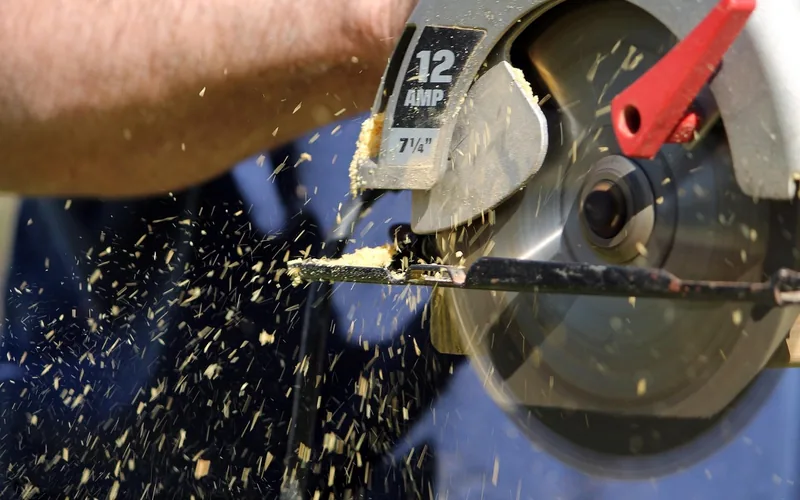
Cutting depth depends on the saw, not just the blade diameter. On a popular compact worm-drive model, the SKILSAW SPT78W-01, published specs show 2-7/8 inches at 90 degrees and 2-1/4 inches at a 45-degree bevel. Most other 8-1/4-inch circular saws land close to that range, typically 2-1/2 to 3 inches at 90 degrees — always check your specific saw’s spec sheet rather than assuming a flat 2.5-inch figure, since it varies by model.
📊 The SKILSAW SPT78W-01 (8-1/4-inch worm drive) cuts 2-7/8 inches deep at 90° and 2-1/4 inches at 45°, at 4,700 no-load RPM. — Source: SKIL, 2026 product specifications
An 8-1/4-inch table saw (as opposed to a portable circular saw) typically cuts a bit deeper at 90 degrees — usually around 2-3/4 to 3 inches — because the blade sits in a fixed arbor with less body/guard clearance to work around than a handheld saw’s shoe and guard assembly.
Installing an 8 1/4 Saw Blade
Safety Precautions
Unplug the saw before touching the blade — never assume the switch alone is enough. Wear safety goggles and hearing protection, keep the work area clear of scrap and sawdust, and inspect the new blade for cracked or missing teeth before mounting it. A damaged blade can shatter under load; a stable, clamped workpiece and a saw set on a flat surface prevent most installation accidents.
Step-by-Step Blade Installation
- Unplug the saw: Disconnect power completely before loosening anything.
- Lock the spindle: Engage the arbor lock button or use the wrench provided to keep the shaft from spinning.
- Remove the old blade: Loosen the arbor nut (usually counter-clockwise — check your manual, some saws reverse this) and lift the old blade off.
- Check the new blade’s arbor: Confirm the center hole matches your saw’s spindle diameter (5/8-inch or 1-inch) before mounting.
- Mount the new blade: Slide it onto the arbor with the teeth pointing in the direction of blade rotation, matching any rotation arrow printed on the blade to the one on the guard.
- Tighten the arbor nut: Snug it firmly with the wrench — don’t overtighten to the point of stripping the threads.
- Spin-test by hand: With the saw still unplugged, rotate the blade by hand to confirm it spins freely with no wobble or guard contact.
- Test on scrap: Plug in, put on eye and ear protection, and make a test cut on a scrap piece before starting your real project.
“The arbor mismatch is the single most common reason a ‘compatible’ replacement blade won’t seat — the diameter label on the box can match your saw perfectly while the center hole doesn’t. Measure the bore with calipers before you order, don’t trust the packaging alone.”
The embedded video below walks through blade selection on a standard circular saw and applies directly to 8 1/4-inch models.
Maintenance Tips
Clean pitch and resin buildup with warm soapy water and a soft brush, then dry the blade fully before storing it to prevent rust. Avoid harsh solvents — they can degrade the carbide’s brazing over time. Sharpen carbide-tipped blades every few months of regular use, or send them to a sharpening service once the cut quality noticeably drops; carbide holds an edge far longer than steel but isn’t sharpenable with a basic file the way HSS blades are. Replace any blade with a cracked plate or a missing tooth immediately — a damaged blade is unsafe to run at speed.
Common Cutting Techniques and Jigs
Cross-cutting (across the grain) shortens boards to length — a 40 or 60-tooth blade gives the cleanest edge. Rip-cutting (along the grain) resizes plank width — a 24-tooth blade clears sawdust faster on these longer cuts. For either cut, a straightedge clamp or a shop-made cutting guide keeps the saw tracking straight and improves both accuracy and safety by giving you a fixed reference to push against instead of freehanding the line.
Troubleshooting Common Problems
- Blade won’t cut straight: Usually a dulled or warped blade — replace it rather than forcing the cut.
- Excess noise or vibration: Check for a loose arbor nut or, per the arbor section above, a bore that doesn’t fully match the spindle.
- Burn marks on the wood: The blade is overheating, often from resin buildup or feeding the wood too slowly — let the blade cool and clean it before continuing.
- Rough or splintered edges: Wrong tooth count for the cut — switch to a higher tooth-count blade for crosscuts and finish work.
Frequently Asked Questions
What arbor size does an 8 1/4 saw blade use?
Most 8 1/4 saw blades use a 5/8-inch arbor, the same size common on 7-1/4-inch blades. A smaller number of compact table saws use a 1-inch arbor instead. Always measure your saw’s spindle or check the manual before buying a replacement blade.
Can you put a 7 1/4 blade on an 8 1/4 saw?
Yes, if the arbor sizes match — commonly 5/8-inch on both. The saw will run, but you lose the extra depth of cut the larger blade provides, and the guard and depth markings may no longer read accurately. Match blade diameter to what your saw is rated for whenever possible.
How thick of wood can an 8 1/4 table saw cut?
An 8 1/4-inch table saw typically cuts up to about 2-3/4 to 3 inches thick at 90 degrees, depending on the specific saw’s arbor height and blade guard clearance. Check your saw’s spec sheet for the exact rated depth rather than assuming a single universal number.
How deep will an 8 1/4 circular saw cut?
On the SKILSAW SPT78W-01, a common 8-1/4-inch worm-drive model, published specs show 2-7/8 inches at 90 degrees and 2-1/4 inches at a 45-degree bevel. Most other 8-1/4-inch circular saws fall in a similar 2-1/2 to 3-inch range at 90 degrees, but this varies by model.
How many teeth is best for a saw blade?
The ideal tooth count depends on the material and cut type. For general use, 24 to 80 teeth cover most needs: fewer teeth cut faster but rougher, while more teeth give a smoother finish at a slower feed rate.
What is the best tooth count for ripping?
24 to 30 teeth is the typical range for ripping wood. The lower tooth count clears sawdust faster along the grain, which keeps the cut efficient and reduces the risk of the blade binding or burning.
Choosing the right 8 1/4 saw blade comes down to two things this guide covers that most listings don’t: confirming the arbor size before you buy, and matching tooth count to whether you’re ripping, crosscutting, or finish-cutting. Get those two right and the blade will fit, run true, and last.
Sponsored / affiliate links. As an Amazon Associate I earn from qualifying purchases. I may earn additional commission from eligible campaigns.