1 Wood vs Driver: Proven Essential
Choosing between a 1 wood (often called a driver) and a 3 wood can feel tricky when you’re just starting in golf. Both are crucial clubs for distance, but they have distinct purposes. This guide simplifies the differences, helping beginner golfers understand when to use each for maximum benefit and confidence on the course. Let’s unlock your game!
The golf course presents many challenges, and one that often stumps newcomers is understanding their longest clubs. You’ve likely heard them referred to as the “1 wood” or “driver” and the “3 wood.” They both promise big distance, but when do you reach for one over the other? It’s a common question that can lead to missed opportunities and frustration. Don’t worry! As your woodworking mentor, I believe in breaking down complex tasks into simple, manageable steps. We’ll explore these two powerful clubs, demystify their roles, and help you make confident choices on the tee box and beyond. Get ready to add clarity and control to your game!
Understanding Your Longest Clubs: 1 Wood vs. Driver
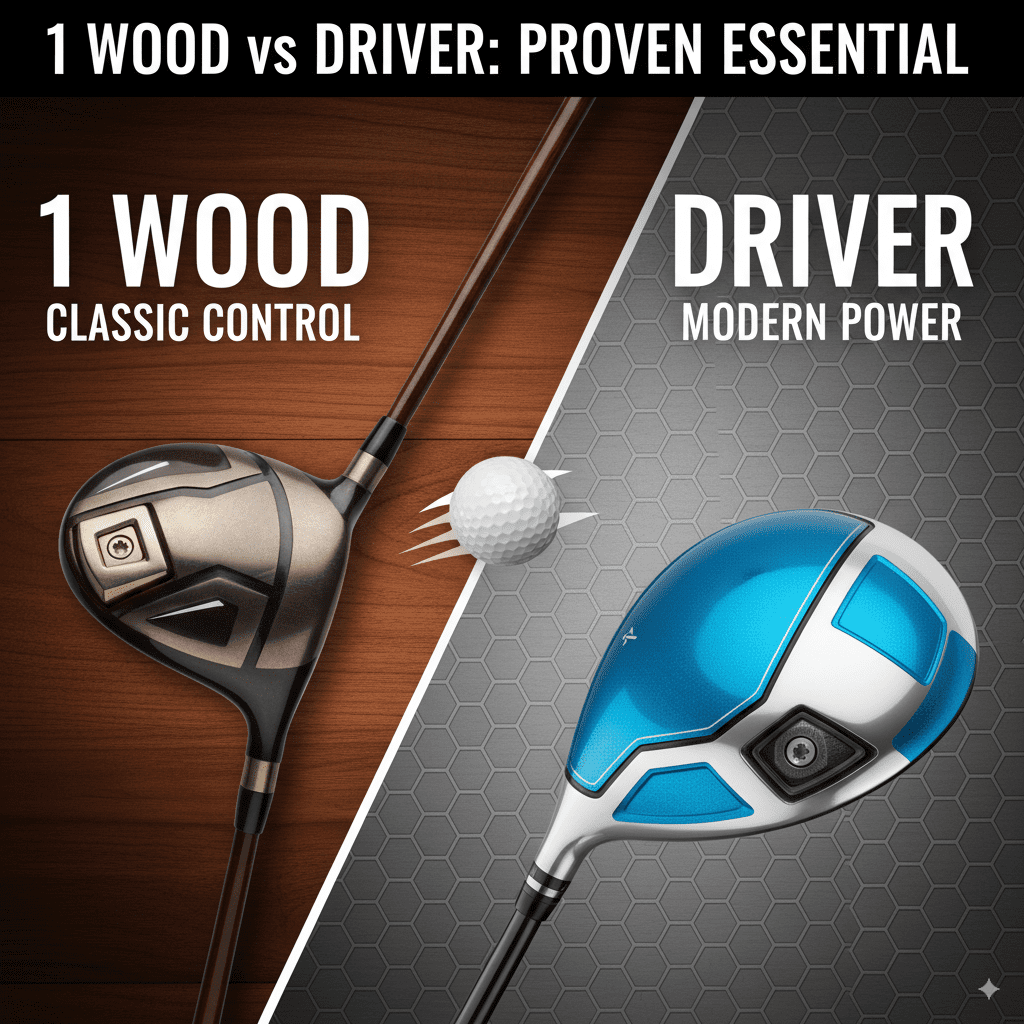
Let’s settle this right away: in modern golf, the term “1 wood” is almost universally replaced by “driver.” While historically the driver was the 1 wood, today’s drivers are highly specialized clubs designed for maximum distance off the tee. The “wood” designation comes from the fact that early golf clubs were actually made of wood! Now, they are made of advanced metal alloys and composites.
The key takeaway for beginners is to think of “1 wood” and “driver” as the same thing. It’s your longest club, designed for the widest open fairways and tee shots where distance is the primary goal. The 3 wood, on the other hand, offers a more versatile option that can be used off the tee but also from the fairway, providing a good balance of distance and control.
What is a Driver (or 1 Wood)?
The driver is the longest club in your bag, with the shortest shaft and the largest clubhead. Its primary purpose is to hit the golf ball the furthest possible distance. This is achieved through several design elements:
Loft: Drivers have the lowest loft of any club, typically ranging from 8 to 12 degrees. Lower loft helps the ball travel on a lower, faster trajectory, maximizing distance.
Clubhead Size: The driver boasts the largest allowable clubhead size (460 cubic centimeters), providing a large “sweet spot” for optimal contact.
Shaft Length: Drivers have the longest shafts, which allows for greater clubhead speed.
Face Angle: The face is often designed to be slightly open or closed, depending on player preference and swing characteristics, to help control the ball’s direction.
What is a 3 Wood?
The 3 wood is the second-longest club in your bag. It serves as a bridge between the driver and your irons, offering a balance of distance and playability.
Loft: A 3 wood has more loft than a driver, usually between 14 and 17 degrees. This higher loft helps launch the ball higher, making it easier to get airborne and land softly on the green.
Clubhead Size: The clubhead is smaller than a driver’s, making it easier to maneuver.
Shaft Length: The shaft is shorter than a driver’s, leading to more control and a more consistent swing.
When to Use Your Driver (1 Wood)
The driver is your big gun, reserved for situations where you need to send the ball as far as possible, usually from the tee. Think of it as the powerful hand tool reserved for the biggest cuts in woodworking – it’s effective, but requires precision.
1. Tee Shots on Wide Fairways
This is the driver’s domain. If the fairway is wide and forgiving, and you have ample room for error, reach for your driver. The goal here is to maximize distance and set up your approach shot.
2. When Distance is Paramount
Hole lengths like par 5s often require you to hit a long drive to have any chance of reaching the green in two shots. On such holes, the driver is almost always the correct choice for your first shot.
3. Holes with a Clear, Straight Path
If the hole is relatively straight and doesn’t present many hazards like water or out-of-bounds areas that demand extreme accuracy, your driver can be unleashed.
4. Practicing Your Swing Speed
When you’re on the driving range and working on generating more power, the driver is the club to use. It’s designed for speed.

When to Use Your 3 Wood
The 3 wood is a more versatile club. It’s often called the “fairway wood” for a reason – it excels from the fairway. It’s like a well-balanced chisel, capable of precise work but also delivering satisfying efficiency.
1. Tee Shots on Narrow Fairways or with Hazards
If a fairway is tight, lined with trees, or has out-of-bounds markers, accuracy might be more important than maximum distance. The 3 wood’s shorter shaft and higher loft make it easier to control, reducing the risk of a wayward shot.
2. Second Shots on Par 5s
When you’ve hit a good drive but not quite reached the green on a par 5, the 3 wood is often the perfect club for your second shot. It provides significant distance while being easier to control than a driver.
3. Long Par 3s
Some par 3s are quite long. For these holes, a 3 wood can be the right club to reach the green from the tee. The higher loft helps the ball get up quickly and land more softly than a driver would.
4. Approach Shots from the Fairway
When you’re still a good way from the green (say, 200-240 yards out), but a driver’s low trajectory might send you over the green or into trouble, the 3 wood offers a good compromise for distance and loft.
5. When You’re Not Hitting the Driver Well
If you’re struggling with your driver on a particular day – perhaps slicing or hooking – switching to a 3 wood can help you find a more comfortable, repeatable swing and still get good distance.
Key Differences Summarized
To help visualize the contrast, let’s break down the core differences in a simple table. This is like comparing a heavy-duty circular saw to a finer jigsaw – both cut wood, but for very different jobs.
| Feature | Driver (1 Wood) | 3 Wood |
|---|---|---|
| Primary Use | Maximum distance off the tee | Distance with control; versatile off tee & fairway |
| Loft | Lowest (8-12 degrees) | Low to Mid (14-17 degrees) |
| Shaft Length | Longest | Shorter than driver, longer than irons |
| Clubhead Size | Largest (460cc max) | Smaller than driver, larger than irons |
| Ball Flight | Lower, faster trajectory | Higher trajectory |
| Forgiveness | Less forgiving due to length and low loft | More forgiving for a variety of lies |
A Practical Comparison: Loft and Trajectory
The loft of a golf club is a critical factor determining how high and how far the ball will travel. Think of it like the angle you set your workbench – a steeper angle directs things differently than a shallower one.
Driver (1 Wood): With its minimal loft, the driver is designed to launch the ball on a flat trajectory that keeps rolling down the fairway. This is excellent for maximizing distance on firm surfaces. However, this low launch angle can make it harder for beginners to get the ball airborne.
3 Wood: The added loft on a 3 wood helps the ball climb higher into the air. This is beneficial for several reasons:
Carriage Distance: The ball travels further through the air.
Landing Angle: A higher trajectory results in a steeper landing angle, which helps the ball stop more quickly on the green. This is crucial for approach shots where you don’t want the ball zipping past your target.
Playability from Different Lies: The higher loft and slightly smaller head make the 3 wood easier to strike cleanly from the fairway or even the rough, where the ball sits on the turf rather than on a tee.
How to Choose Your First Driver (1 Wood)
As a beginner, selecting your first driver can feel daunting. Here are some tips to make it easier:
Focus on Forgiveness: Look for drivers marketed as “game improvement” or “forgiving.” These typically have larger heads, perimeter weighting (meaning more weight is distributed to the edges of the clubhead), and wider soles to help you make solid contact even on off-center hits.
Consider Loft: A higher lofted driver (like 10.5 or 12 degrees) is generally recommended for beginners. This will help you get the ball up in the air more easily and achieve better distance than a lower-lofted driver. The United States Golf Association (USGA) has specific rules regarding club design, including maximum driver head size. You can learn more about these regulations at USGA Equipment Rules.
Shaft Flex: The shaft flex refers to how much the shaft bends during the swing. Most beginners benefit from a “regular” or “senior” flex shaft, which is more flexible and can help generate clubhead speed.
Try Before You Buy: If possible, visit a golf store that allows you to demo clubs. Hitting a few balls with different drivers can give you a feel for what works best for your swing.
How to Choose Your First 3 Wood
Choosing a 3 wood is similar to choosing a driver, but with a slightly different emphasis.
Loft is Key: For beginners, a 3 wood with at least 15 degrees of loft is usually a good starting point. Some golfers might even benefit from a stronger 3 wood, which is essentially a 4 wood with 3 wood loft specs.
Ease of Launch: You want a 3 wood that you can easily get airborne from the fairway. Look for clubs designed to promote a higher, more consistent ball flight.
Versatility: Consider how the club performs from different lies. Some 3 woods have shallower faces or wider soles that help you get under the ball more easily.
Shaft: Again, a “regular” or “senior” flex shaft is often suitable for beginners.
Essential Golf Etiquette and Safety
When you’re out on the course, remember that golf is a game of respect and safety. Just like in woodworking, proper technique and awareness keep everyone safe and the project looking good.
For the Driver (1 Wood)
Tee Box Etiquette: Always tee your ball up. Place the tee in the ground within the designated teeing area (usually two club-lengths behind the markers).
Grounding Your Club: Do not touch the ground with your club during your backswing when addressing the ball.
Pace of Play: Be ready to hit when it’s your turn. If you’re struggling with the driver, consider playing a different club or taking a practice swing without hitting.
For the 3 Wood
Fairway Etiquette: When playing from the fairway, take your practice swing away from the ball and avoid grounding your club behind it unless it’s a hazard.
Divots: Try to take a clean divot. Replace any turf you dislodge. A well-maintained fairway is a joy for everyone.
Respect Other Players: Ensure you do not swing your club near another person.
General Safety Tips
Be Aware of Your Surroundings: Know where other players are before you swing.
Clear Communication: Yell “Fore!” if your ball is heading towards other players. Swift action and clear communication are vital, much like calling out “hand tool!” in the workshop.
Club Care: Store your clubs properly in your bag when not in use.
Common Beginner Mistakes and How to Avoid Them
It’s natural to make mistakes when you’re learning! Here are a few common ones beginners encounter with their long clubs and how to steer clear of them.
1. Trying to Hit the Driver Too Hard
Many beginners think more effort equals more distance. This is rarely true in golf. Trying to “muscle” the ball with a driver often leads to a loss of control, mishits, and even injury.
Solution: Focus on a smooth, balanced swing. Let the club do the work. Think about good tempo and striking the ball squarely.
2. Topping or Thinning Shots with the 3 Wood
This happens when you hit the top half of the ball, resulting in a low, skidding shot. It often occurs because the player is trying to help the ball up into the air or has an incorrect swing path.
Solution: Trust the loft of the club. Make a sweeping motion through the ball, as if you’re trying to take a shallow divot after the ball. Ensure your swing arc is appropriate for hitting off the turf.
3. Using the Driver on Almost Every Tee
Some golfers get attached to their driver and use it even when the hole demands accuracy. This can lead to a lot of lost balls and strokes.
Solution: Assess the hole before teeing off. Look at a course map or the course signage. If the fairway is narrow or there’s trouble, consider a 3 wood or even a hybrid/iron for more control.
4. Never Practicing with the 3 Wood from the Fairway
Many beginners only practice their driver on the range. This means they don’t develop the feel for hitting a fairway wood from a stationary ball on the ground.
Solution: On the driving range, hit some shots with your 3 wood without a tee. Practice taking a divot after the ball. This will build confidence for when you need to use it on the course.
Integrating into Your Golf Bag: A Beginner’s Strategy
For a beginner, a standard golf bag often includes a driver, a 3 wood, and a few irons. As you progress, you might consider adding a 5 wood or hybrids, which bridge the gap between fairway woods and irons.
Recommended Starter Set Configuration:
Driver (1 Wood): For maximum distance off the tee.
3 Wood: For controlled tee shots and long fairway shots.
Irons: A set of irons (e.g., 7-iron, 8-iron, 9-iron, Pitching Wedge) for shorter distances and approach shots.
Putter: For putting on the green.
Many beginner sets are available, often including a complete lineup of clubs. When you’re starting, investing in a beginner-friendly set can be more economical and provide clubs that are easier to learn with. For more information on identifying suitable clubs, resources like Golf Distillery offer helpful insights into club types and their functions.
Practice Makes Perfect: Drills for Long Clubs
Consistent practice is key to mastering any skill, whether it’s woodworking or golf. Here are a couple of simple drills to help you get comfortable with your driver and 3 wood.
Driver Drill: The “Pause” Drill
This drill helps promote a smooth transition and prevents you from rushing your swing.
1. Address the ball with your driver.
2. Take the club back as usual.
3. At the top of your backswing, pause for a second.
4. Then, initiate the downswing with a smooth, unhurried motion.
5. Focus on making solid contact.
This pause helps build control and ensures you’re not just swinging wildly.
3 Wood Drill: The “Sweeping” Drill
This drill focuses on hitting the 3 wood correctly from the fairway or rough.
1. Place the ball on a tee (even when practicing from the fairway feel) so it’s slightly elevated.
2. Focus on making contact with the ball and then sweeping through the turf.
3. Imagine you’re trying to take a shallow piece of grass after* the ball.
4. Swing smoothly, not with excessive force.
This drill helps you avoid hitting “topping” shots and promotes a consistent, sweeping impact.
FAQs About 1 Wood vs. Driver
What is the difference between a 1 wood and a driver?
In modern golf, there is no difference. The “1 wood” is the traditional term for the club that is now universally known and manufactured as the “driver.” It is designed for maximum distance.
Which club should a beginner use off the tee?
For beginners, it’s often advisable to start with a 3 wood or even a hybrid club off the tee if the fairway is narrow or you’re struggling to consistently hit your driver. If the fairway is wide open and you feel confident, a higher-lofted driver (10.5° or 12°) can also be a good starting point.
Can I use my driver from the fairway?
While technically possible, using a driver from the fairway is generally not recommended for beginners (or even many experienced golfers). Drivers are designed for use with a tee, and their low loft and long shaft make them difficult to hit cleanly from the turf, often resulting in mishits.