Do Male or Female Carpenter Bees Drill Holes? (The Real Answer)
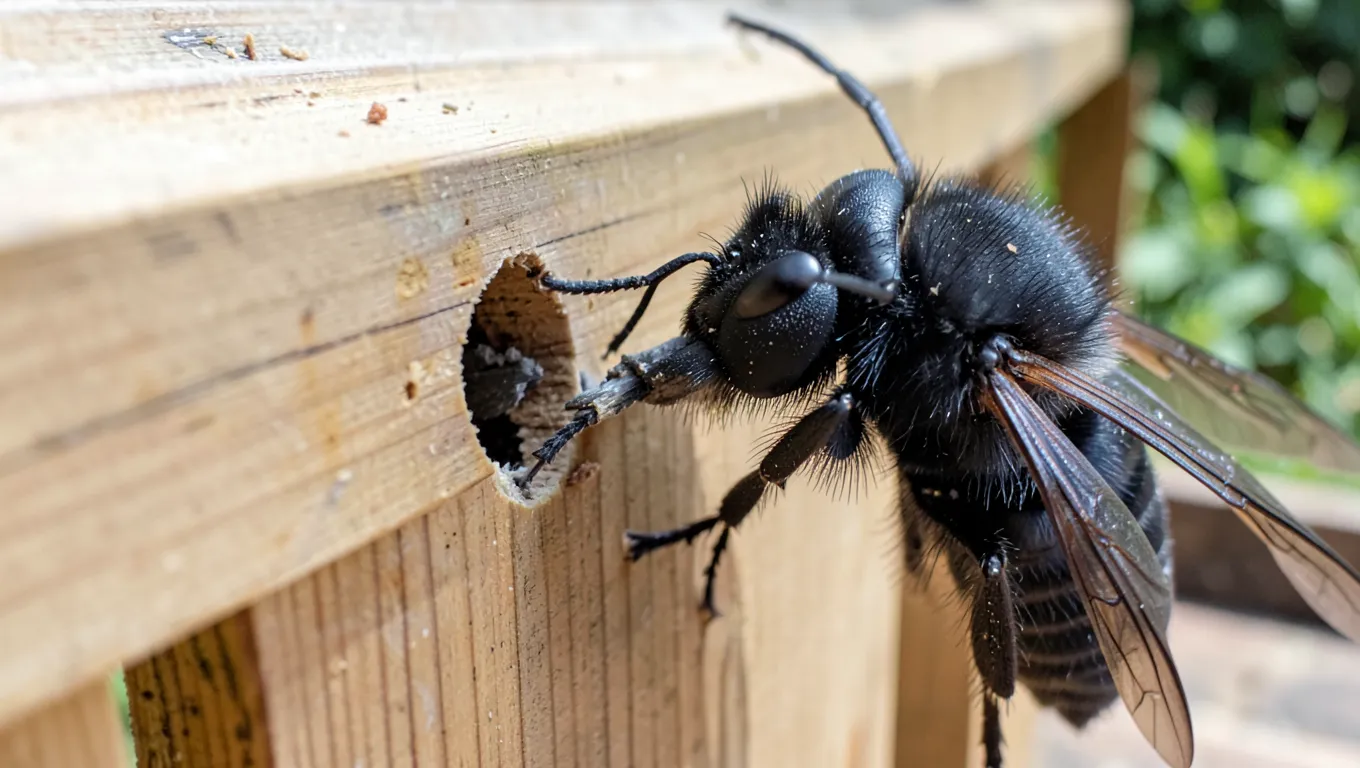
Female carpenter bees do the drilling. Males never cut a single tunnel; they can’t, because they lack the mandible strength and, more importantly, they lack a stinger and spend their short adult life patrolling the airspace around the nest instead of building it. If you’re watching a bee bore into a fascia board or deck rail right now, you’re watching a female at work.
How a Female Carpenter Bee Builds Her Nest
Best Non-Chemical Carpenter Bee Control
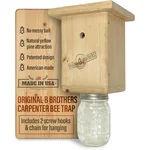 |
Original B Brothers Carpenter Bee Trap – $20 Mimics an attractive nesting hole to lure females away from your siding, deck, or fascia boards without any insecticide.
|
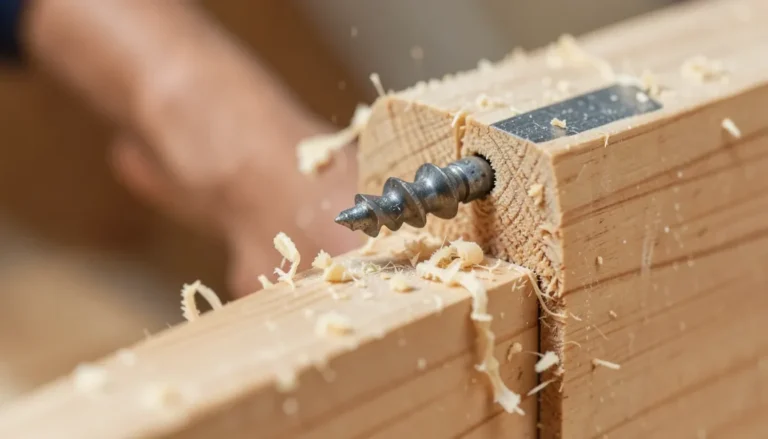
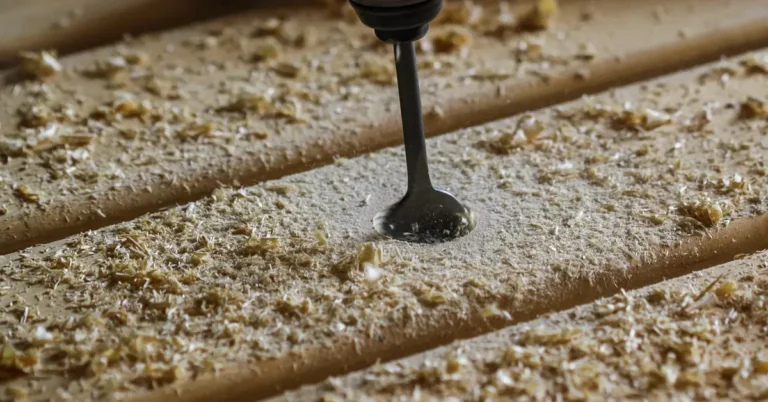
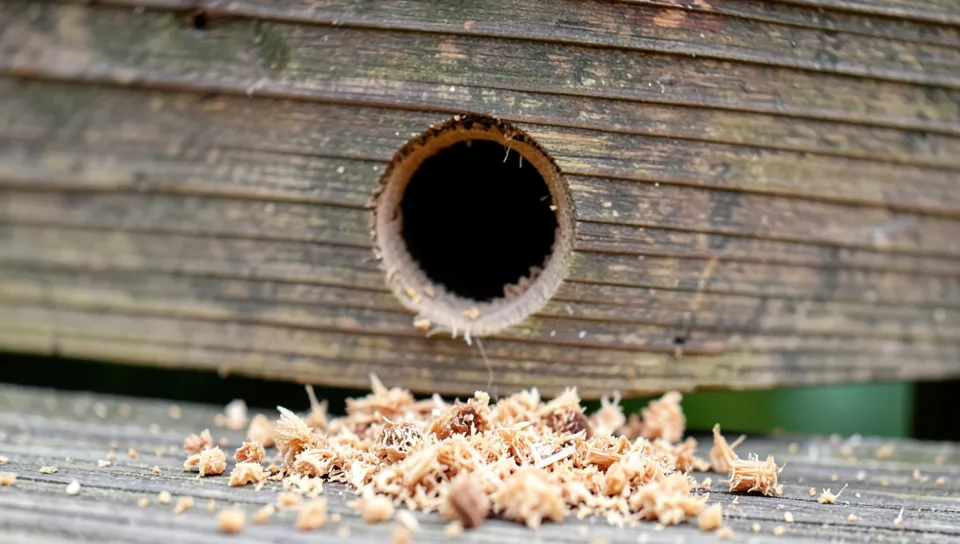
A female carpenter bee (genus Xylocopa) chews a nearly perfect half-inch round entrance hole straight into bare, unfinished wood using her mandibles, then makes a sharp turn and tunnels with the grain for several inches to a few feet. Along that tunnel she partitions off a series of individual cells, each stocked with a ball of pollen and nectar and a single egg, sealed with a wall of chewed wood pulp before she moves on to the next cell. The whole process can take her several days of steady work per tunnel, and established nests are often reused and extended year after year, which is why an old carpenter bee hole can turn into a surprisingly long tunnel system over time.
Why Males Can’t Drill (and What They Do Instead)
Male carpenter bees are the ones you’ll usually notice first, since they’re the aggressive-looking bees hovering and darting at anything, including people, that gets near the nest. That behavior is a bluff: males have no stinger at all (like all male bees, they lack the modified egg-laying structure that a stinger evolved from), so the dive-bombing is pure intimidation with nothing behind it. Their actual job is guarding the nest entrance from other insects and rival males while the female does the physical work of excavation, provisioning, and egg-laying. It’s a genuine division of labor, not males being lazy: without a female’s mandibles and internal biology built for that task, males are simply not equipped to drill.
How to Tell If You Actually Have Carpenter Bees
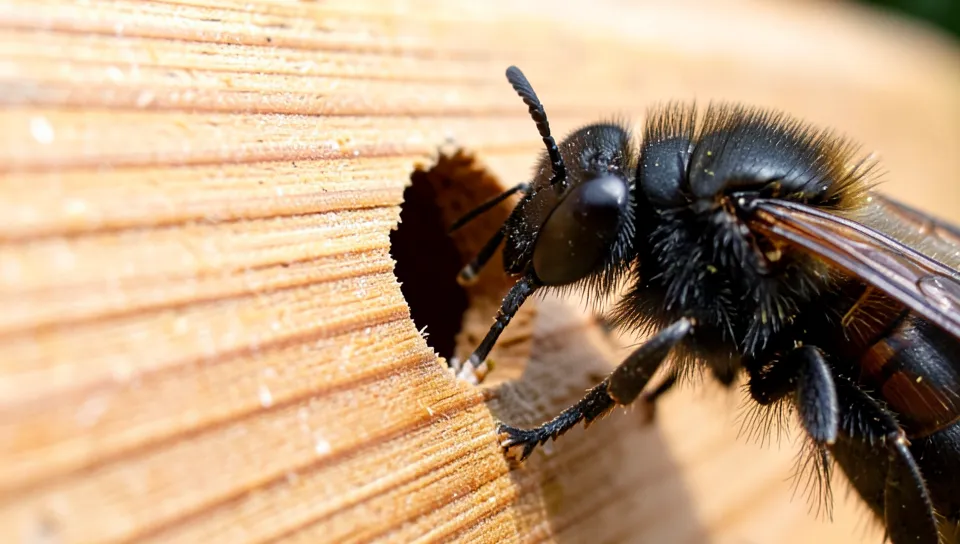
Look for a nearly perfectly round, half-inch entrance hole, almost always in bare, unpainted or unstained softwood like cedar, pine, redwood, or fir siding, fascia boards, deck rails, and eaves. A pile of coarse, granular sawdust (frass) directly below the hole is the giveaway that separates an active carpenter bee hole from an old, weathered knot or a woodpecker hole. Carpenter bees are roughly bumblebee-sized, but you can tell them apart up close: a carpenter bee has a shiny, mostly hairless black abdomen, while a bumblebee’s abdomen is densely fuzzy and often banded with yellow. Activity peaks in spring when new females emerge and start excavating or reopening nests.
Managing an Infestation
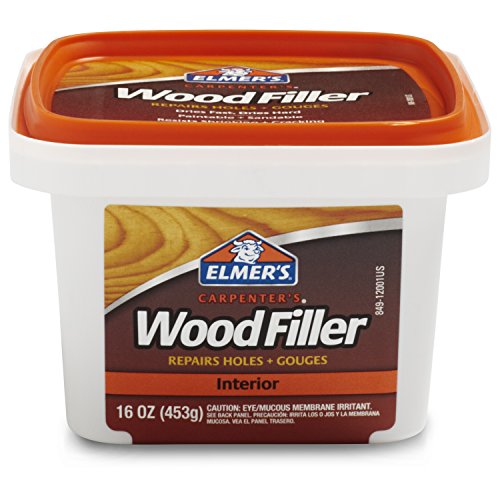
Painted or well-sealed wood is far less attractive to carpenter bees than bare wood, so priming and painting exposed softwood (rather than just staining it) is one of the most effective long-term deterrents. For an active hole, treat it at dusk when the bee is inside and less active, using an insecticidal dust labeled for carpenter bees puffed directly into the opening, then wait 24 to 48 hours before sealing the hole with wood filler so any bees inside have a chance to contact the treatment and leave or die, rather than getting sealed in alive to chew a new exit elsewhere. Bee traps, which mimic an entrance hole and funnel bees into a container they can’t escape, are a genuinely non-chemical option that works reasonably well for light to moderate activity. For an established infestation on a structural or hard-to-reach area, a licensed pest control professional can apply treatments more thoroughly and safely than an over-the-counter approach.
Frequently Asked Questions
What do carpenter bees eat?
Carpenter bees feed on nectar and pollen, the same as most other bees. They don’t eat wood; they only excavate it to build nesting tunnels.
How do I know if I have carpenter bees?
Look for a perfectly round, half-inch hole in bare wood with coarse sawdust piled directly beneath it. Bees hovering aggressively near the hole (usually males on guard duty) are another strong sign.
Are carpenter bees dangerous?
Female carpenter bees have a stinger and can sting, but they’re not aggressive and rarely do unless handled or trapped. Males look aggressive because they dive at intruders, but they have no stinger and cannot sting at all.
How can I prevent carpenter bees?
Paint or prime exposed bare wood rather than leaving it unfinished or just stained, since carpenter bees strongly prefer bare, untreated wood. Traps and filling old holes with wood filler also reduce the chance of a new or repeat nest.
Do carpenter bees reuse old nests?
Yes. Females often return to an existing tunnel system and extend it rather than starting a brand new hole, which is why an old, small nest can grow into a much longer tunnel network over several seasons if it’s never sealed.
Final Thoughts
The drilling is entirely a female carpenter bee’s job; males only guard the airspace around her work. Knowing that division matters practically, because it tells you the aggressive bee buzzing at your head can’t actually hurt you, while the quieter bee working inside the hole is the one doing the structural damage and the one any treatment needs to target.
Sponsored / affiliate links. As an Amazon Associate I earn from qualifying purchases. I may earn additional commission from eligible campaigns.