12 Affordable Laminate Wood Flooring Ideas for 2026
Laminate flooring costs $1 to $6 per square foot in materials — well under solid hardwood — while still delivering a genuine wood look, provided you pick a style and AC rating that match the room. This wood flooring guide covers 12 real laminate styles, current 2026 costs, what the AC durability rating actually means, and how to install it yourself.
Laminate Wood Flooring Costs and Durability, Explained
Best Laminate Installation Tool Pick
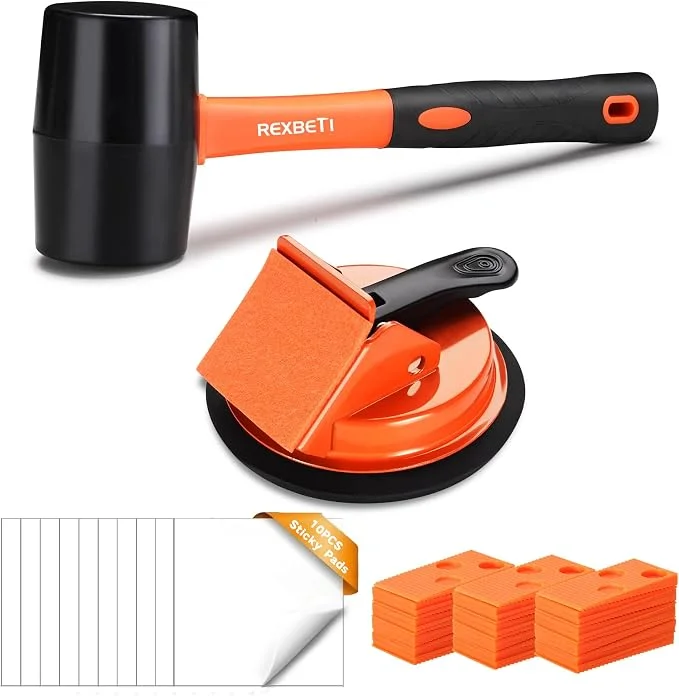 |
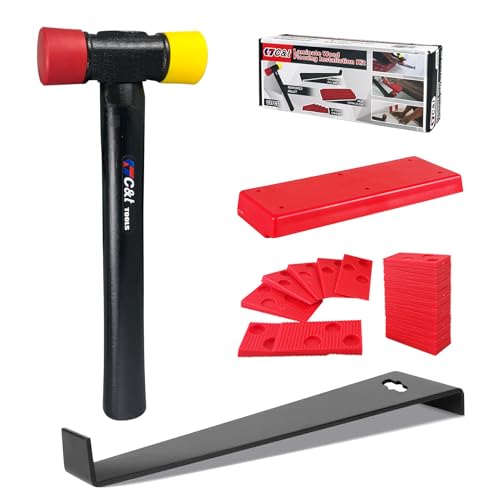
REXBETI Floor Gap Fixer Tool and Installation Kit – $22.99 A rubber mallet and suction-cup gap fixer cover two jobs from the DIY steps below: tapping planks into their click-lock seams and closing a gap that opens up along the last row.
|
Laminate earns its “affordable” reputation honestly. Material costs run $1 to $6 per square foot depending on style and thickness — a cheaper alternative to hardwood floors across the board, and professional installation typically adds $3 to $8 per square foot on top of that — a full DIY install keeps you near the material cost alone since laminate is designed for click-lock assembly with no nails or glue.
| Flooring Type | Material Cost per Sq Ft |
|---|---|
| Laminate Wood | $1 – $6 |
| Solid Hardwood | $5 – $10+ |
Durability is graded by an AC (Abrasion Class) rating from AC1 to AC5, based on how much surface wear the laminate withstands in lab testing — not a marketing term, an actual industry test standard:
| AC Rating | Best For |
|---|---|
| AC1-AC2 | Light-traffic rooms like guest bedrooms |
| AC3 | Standard residential use — daily traffic, kids, pets |
| AC4-AC5 | Commercial spaces or very high-traffic homes |
1. Classic Oak Laminate
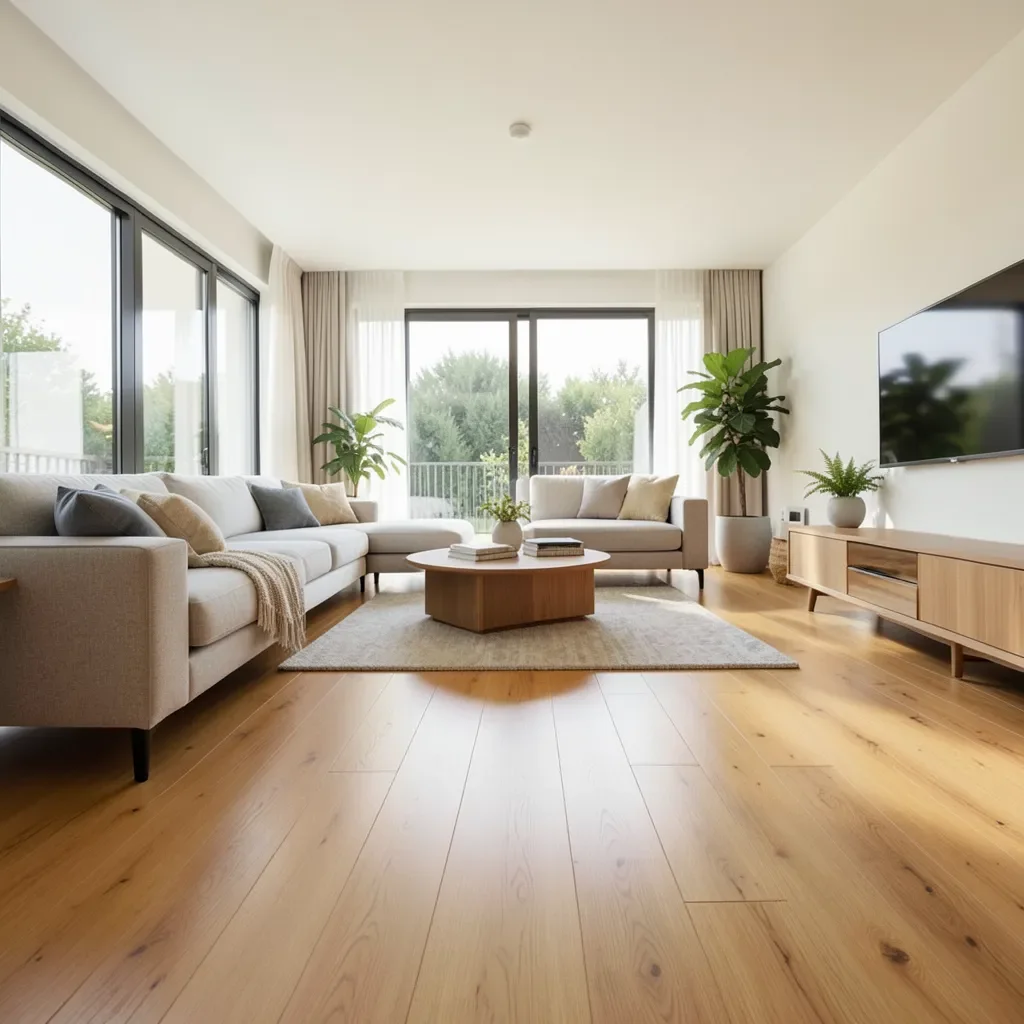
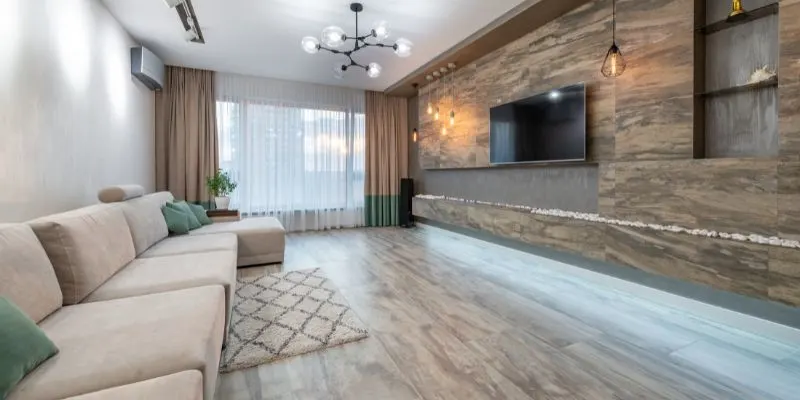
Classic oak laminate mimics real oak’s grain and warm-to-medium tones, and it’s the style most people picture when they think “wood floor.” It works in nearly any room style, from traditional to transitional, because the color palette ranges from light honey to medium brown.
2. Rustic Pine Laminate
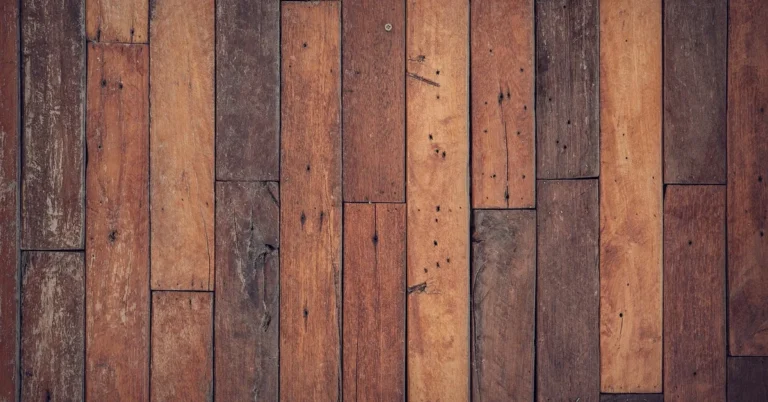
Rustic pine laminate reproduces pine’s visible knots and looser grain pattern for a cabin or farmhouse feel. The busier grain pattern also does a good job hiding everyday scuffs between cleanings.
3. Modern Gray Laminate
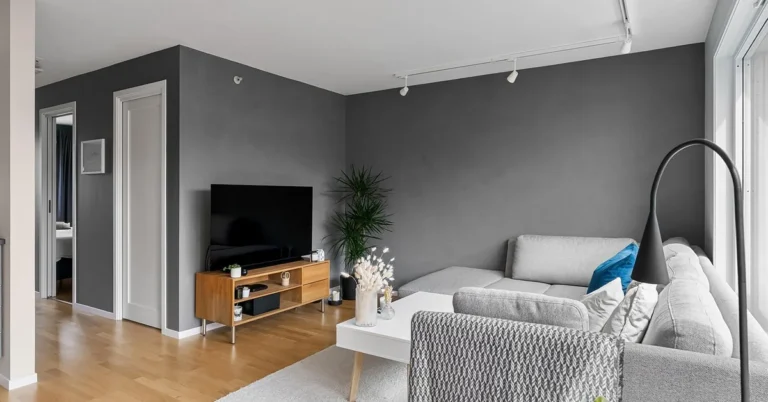
Gray laminate skips the traditional wood-tone palette entirely for a cooler, more contemporary look. It pairs well with minimalist and industrial decor and tends to make a small room read as more spacious because of its neutral, light-reflecting tone.
4. Cherry Wood Laminate
Cherry wood laminate’s reddish-brown tones add warmth that reads as more formal than oak or pine. It suits dining rooms and home offices where a slightly richer, more polished look is the goal.
5. Maple Laminate
Maple laminate has a pale, subtle grain that reflects more ambient light than darker species, which is useful in a room with limited natural light. Its neutral tone also makes it one of the easier styles to decorate around later.
6. Walnut Laminate
Walnut laminate goes the opposite direction from maple — deep, dark brown tones that add drama and make a room feel cozier and more enclosed. It reads as a premium, higher-end material even at laminate pricing.
7. Bamboo Laminate
Bamboo-look laminate gives you that material’s distinctive linear grain pattern without sourcing actual bamboo flooring, which can be harder to find and pricier. It’s a fitting pick if sustainability is part of the appeal, since the printed layer avoids the sourcing question entirely.
8. Hickory Laminate
Hickory laminate reproduces one of the more dramatic real-wood grain patterns, with strong color variation from plank to plank. That variation means each floor looks a little different from the next, which some homeowners specifically want over a more uniform oak.
9. Water-Resistant Laminate
Water-resistant laminate adds a tighter core and sealed edges so spills don’t swell the seams the way a standard laminate can. It’s the right call for kitchens, bathrooms, laundry rooms, and basements — anywhere moisture is a regular risk rather than an occasional accident.
10. Whitewashed Oak Laminate
Whitewashed (sometimes called “driftwood” or “barn oak”) laminate applies a pale gray-white wash over an oak grain pattern for a weathered, coastal, or Scandinavian look. It’s one of the more current styles in the category and pairs especially well with light, airy interiors.
11. Herringbone Pattern Laminate
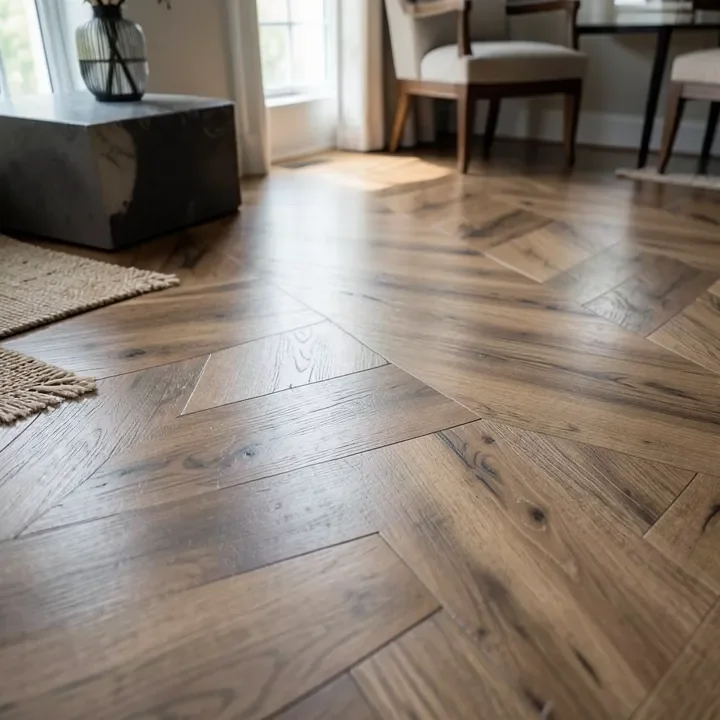
Herringbone is a layout choice rather than a wood species — short planks installed at 90-degree angles to each other in a zigzag pattern. Several laminate brands now sell pre-shaped herringbone planks specifically for this look, which used to require cutting standard planks by hand.
12. Wide-Plank Laminate
Wide-plank laminate (typically 7 to 9 inches wide, versus 3 to 5 inches for standard planks) shows more of each board’s grain pattern and uses fewer seams to cover the same floor area. It reads as more modern and, in a larger room, can make the space feel bigger since there’s less visual “chopping” from seam lines.
How to Install Laminate Flooring Yourself
- Acclimate the flooring: Let the planks sit in the room for 48 hours so they adjust to the space’s temperature and humidity before installing.
- Prepare the subfloor: Clean, dry, and level the surface, and repair any damage first.
- Install underlayment: Roll it out to reduce noise and add a moisture barrier if the manufacturer recommends one.
- Plan the layout: Start from the longest wall, using spacers to hold a 1/4-inch expansion gap around the room’s perimeter.
- Lock the planks together: Click each plank into place, tapping the seams snug with a mallet and tapping block.
- Cut and fit the last row: Measure, cut to width, and use a pull bar to seat planks too close to the wall for a mallet.
- Remove spacers and add trim: Pull the spacers and install baseboards or quarter-round to cover the expansion gap.
Frequently Asked Questions
What is laminate wood flooring?
Laminate wood flooring is a composite material with a photographic wood-look layer under a clear wear layer, over a dense fiberboard core. It looks like solid or engineered wood at a fraction of the material cost.
How much does laminate flooring cost per square foot in 2026?
Laminate material typically runs $1 to $6 per square foot depending on style and quality, with installation labor adding roughly $3 to $8 per square foot if you hire it out. A full DIY install keeps you closer to the material cost alone.
What AC rating should I choose for a home?
AC3 is the standard residential rating and handles daily foot traffic, pets, and kids in most rooms. AC1 or AC2 is fine for a low-traffic bedroom, while AC4 or AC5 is really built for commercial spaces, though it works in a home too.
Can laminate wood flooring be installed over existing floors?
Yes, in most cases. The existing floor needs to be clean, dry, flat, and structurally sound (see our guide on installing wood floors over tile for that specific case) — laminate floats over the subfloor rather than attaching to it, so an underlayment layer usually goes between the two.
Conclusion
All 12 of these laminate styles deliver a real wood look for $1 to $6 per square foot in materials — the differences come down to color, grain, layout, and whether the room needs water resistance or a higher AC rating for heavier traffic. Match the style to the room, check the AC rating against how the space actually gets used, and a DIY install can get you a new floor for close to material cost alone.
Sponsored / affiliate links. As an Amazon Associate I earn from qualifying purchases. I may earn additional commission from eligible campaigns.