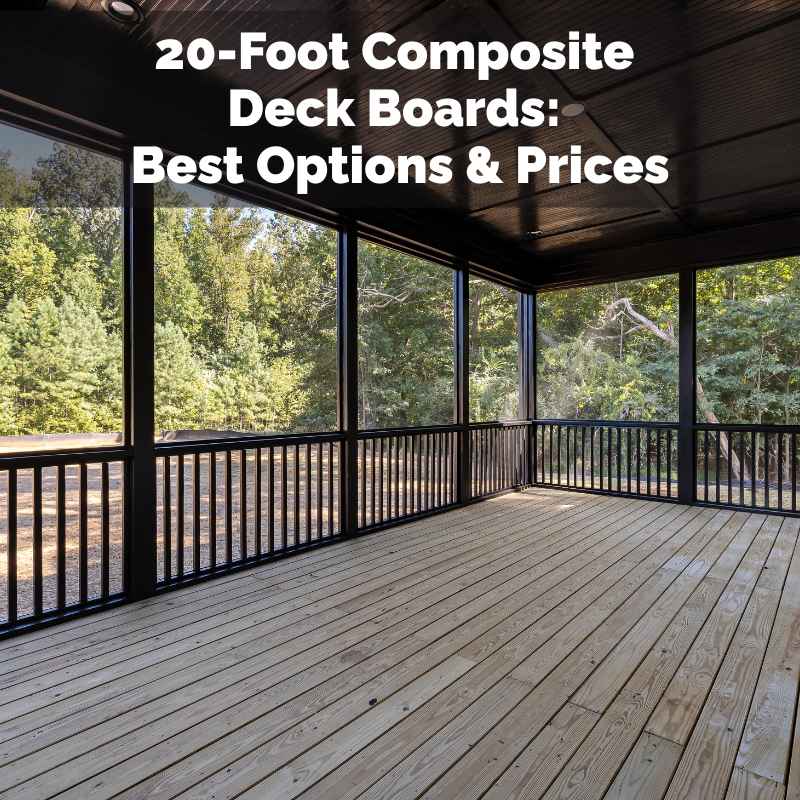
20-Foot Composite Deck Boards: Best Options & Prices
When you’re planning a deck, picking the right materials is a big step. You want something that looks great, lasts long, and doesn’t need a ton of work. Composite decking has become a top choice for many homeowners.
It mixes wood fibers with plastic. This makes it tough and easy to care for. But with so many choices out there, it can feel a little overwhelming.
Especially when you’re looking at longer boards like 20-foot composite deck boards. These longer planks can change how your deck looks and how you build it.
The best 20-foot composite deck boards offer a blend of durability, low maintenance, and aesthetic appeal, with prices varying based on brand, features, and warranty. Top brands like Trex, TimberTech (Azek), and Fiberon provide excellent options that mimic natural wood without the upkeep.
Understanding 20-Foot Composite Deck Boards
Composite deck boards are made from a mix. They use wood flour, often from recycled wood, and plastic. This mix is then heated and shaped into boards.
It’s a smart way to reuse materials. It also gives you a product that acts very differently from real wood. These boards resist rot, insects, and warping.
This means less worry about yearly staining or sealing. They hold up better in bad weather too. Think of rain, sun, and snow.
20-foot composite deck boards are simply longer versions of these popular planks. They are often used to create a more seamless look. They can also reduce the number of seams on your deck.
This makes the surface feel more continuous.
Why choose longer boards? Well, fewer seams can make a deck look cleaner. It can give a more expansive, luxurious feel.
Imagine a large patio area. Long boards help achieve that smooth, flowing look. They can also mean fewer cuts.
This might save some time during installation. But there are things to think about. Longer boards are heavier.
They need more careful handling. You also need to make sure your deck frame can support them well. The joist spacing might need to be adjusted.
This is key for preventing sagging over time. So, while they offer a great look, they come with specific building needs.
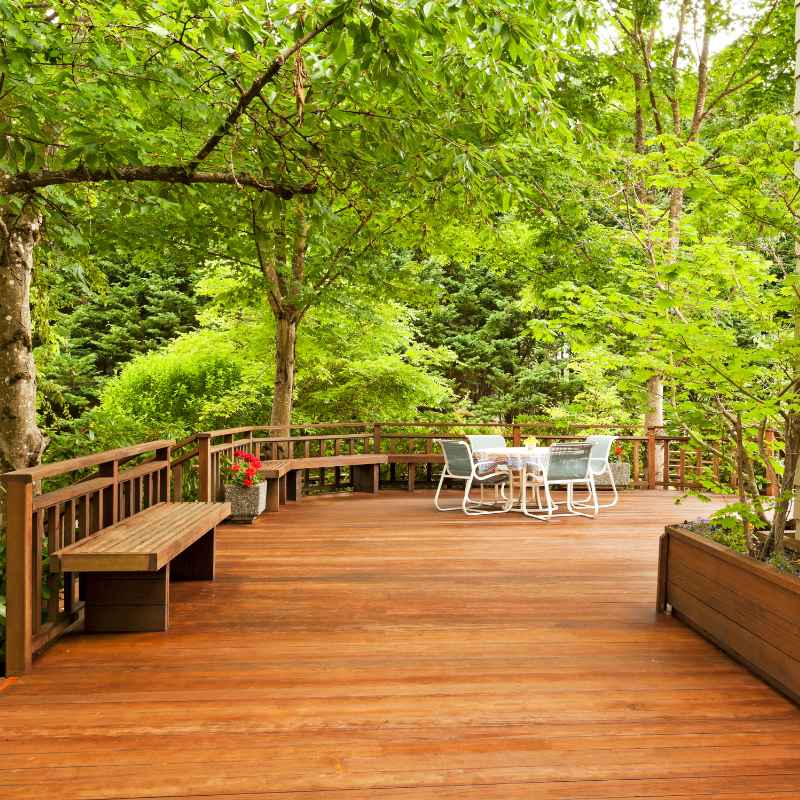
The Benefits of Composite Decking
One of the biggest draws of composite decking is that it’s low maintenance. Unlike wood decks, you don’t need to stain or seal them every year. This saves you time and money.
You just need to clean them now and then. A gentle scrub with soap and water usually does the trick. They also resist common deck problems.
Rot is a big one. Many wood decks start to rot after a few years. Termites and other bugs can also damage wood.
Composite boards are not tasty to these pests. They don’t absorb water like wood does. This means they won’t swell up or warp as easily when it gets wet.
They also don’t splinter. This makes them safer for bare feet, especially for families with kids and pets. They are very durable.
They can last for many years.
Composite boards come in many colors and textures. You can find ones that look like natural wood, like cedar or redwood. Some have a smooth finish, while others have a more textured grain pattern.
This variety helps you match your home’s style. You can create a deck that looks like a natural extension of your house. Plus, many composite deck boards are made from recycled materials.
This makes them a more eco-friendly choice. You’re helping the environment by choosing them. It’s a win-win for your home and the planet.
These boards are built to last. They often come with long warranties, sometimes 25 years or more. This gives you peace of mind.
It shows the companies stand behind their products.
Why Long Boards Matter for Deck Design
Seamless Look: 20-foot boards create fewer lines across your deck. This gives a smooth, open feel.
Reduced Seams: Less chance for water to get into small gaps between boards. This can help prevent issues over time.
Installation Time: While heavier, fewer boards might mean faster overall covering of a large area. Fewer cuts also save labor.
Structural Support: Long boards need strong joists spaced closely. This is vital to stop them from sagging.
Handling: These boards are heavy. You’ll need help to move and install them. Plan for this.
Top Brands and Their 20-Foot Offerings
When you look at 20-foot composite deck boards, you’ll see a few big names. These companies are known for quality and innovation. Trex is one of the oldest and most popular brands.
They have lines like Transcend and Enhance. Trex boards are known for their durability and wide range of colors. Many of their products are available in 20-foot lengths.
TimberTech, now part of Azek, is another leader. Their AZEK and PRO collections offer premium options. They often have very realistic wood grain patterns.
Some are even made to feel like real wood underfoot. Fiberon is also a strong contender. They offer good value with their Horizon and Paramount lines.
You can often find 20-foot lengths in their collections. These brands focus on giving you a great look and long-lasting performance.
The price of 20-foot composite deck boards can vary a lot. This depends on the brand and the specific product line. Basic composite boards, often called “capped” composites, are more budget-friendly.
They have a protective outer layer. Higher-end boards might have more advanced capping. This offers better stain and fade resistance.
They might also have more detailed embossing to mimic wood. These premium boards will cost more. You can expect to pay anywhere from $4 to $12 or more per linear foot.
So, a 20-foot board could cost between $80 and $240, or even higher for the top-tier products. It’s important to look at the warranty too. A longer warranty often means a better quality board.
Brand Spotlight: What to Expect
- Trex: Known for its wide selection, good durability, and various price points. Transcend and Enhance lines are popular.
- TimberTech (Azek): Offers premium looks, advanced weather resistance, and realistic wood textures. PRO and AZEK collections stand out.
- Fiberon: Provides solid performance and attractive options, often at competitive prices. Horizon and Paramount lines are good choices.
Factors to Consider When Buying
When you’re picking out 20-foot composite deck boards, there are several things to think about. First is the type of composite. There are “composite” and “co-extruded” or “capped” composite boards.
Basic composite boards might be cheaper but can stain more easily. Capped composites have a hard outer shell. This shell is made of plastic and provides a barrier.
It protects against stains, fading, and scratches. Most people prefer capped composites for better performance. Check how much of the board is capped.
A thicker cap means better protection.
Another big factor is the warranty. Look for a warranty that covers staining, fading, and structural integrity. Many good brands offer 25 to 50-year warranties.
This shows they believe in their product’s lifespan. Also, consider the finish and color. Do you want a smooth surface or one that looks like wood grain?
Think about the colors available. Will they match your home’s exterior? Remember that colors can look different in person than on a screen.
Try to get samples. Feel them and see them in different lighting. Don’t forget the fastening system.
Some boards use hidden fasteners. These create a clean look with no visible screws. Others use screws that match the board color.
Quick Scan: Choosing Your Boards
| Feature | What to Look For | Why It Matters |
|---|---|---|
| Composite Type | Capped (Co-extruded) | Better stain, fade, and scratch resistance. |
| Warranty | 25+ years, covering stains, fade, structure | Peace of mind, long-term value. |
| Aesthetics | Color, grain pattern, texture | Matches home style, desired look. |
| Fastening System | Hidden fasteners (optional) | Clean, screw-free surface. |
| Budget | Compare linear foot cost | Fits your project funds. |
Installation Considerations for Long Boards
Installing 20-foot composite deck boards is different from shorter ones. The weight is a major factor. One person usually cannot lift and maneuver these boards safely.
You’ll need at least two people, maybe three, depending on the board’s thickness and your strength. Plan your delivery carefully. Make sure the boards can be brought to the work area without too much difficulty.
If your deck is high or in a tight spot, this can be a challenge.
The structural support for 20-foot boards is also critical. Standard joist spacing for wood decks is often 16 inches on center. For composite, it might be 16 inches too, but for 20-foot boards, especially if they are less rigid, you might need to reduce this spacing.
Some manufacturers recommend 12 inches on center for 20-foot boards to prevent sagging. Always check the manufacturer’s installation guide. They will specify the maximum joist span for their specific product.
Using the wrong spacing can lead to a bouncy or uneven deck surface over time. This can also void your warranty. So, planning the substructure is as important as choosing the boards.
When cutting, use the right saw blade. A fine-tooth carbide blade is usually recommended. This helps prevent splintering the composite material.
Always wear safety glasses and a dust mask. Composite dust can be irritating. Measure twice and cut once, as always.
With long boards, a mistake can be costly. Consider using a chalk line or a laser level for straight cuts. When fastening, follow the manufacturer’s instructions.
If using hidden fasteners, ensure they are installed correctly. If screwing boards down, use the recommended screw type and spacing. Leave a small gap between boards for expansion and contraction.
This gap is usually specified by the manufacturer. It’s often around 1/8 to 1/4 inch.
Installation Tips for 20-Foot Boards
- Team Lift: Always use at least two people to move and position boards.
- Joist Spacing: Consult the manufacturer’s guide. You may need closer joist spacing (e.g., 12 inches on center).
- Cutting Tools: Use a fine-tooth carbide blade for clean cuts. Wear safety gear.
- Expansion Gaps: Leave recommended gaps between boards for expansion and contraction.
- Fasteners: Use approved screws or hidden fastener systems. Follow guidelines precisely.
Cost Comparison: 20-Foot Boards vs. Shorter Boards
Buying 20-foot composite deck boards might seem more expensive upfront per board than shorter ones. A 20-foot board will cost more than a 12-foot or 16-foot board. However, when you look at the total cost for a deck, the difference might not be as big as you think.
For a large deck area, you’ll need fewer 20-foot boards than shorter boards to cover the same space. This means you might buy fewer total boards. Less cutting might also save on labor costs if you’re hiring someone.
So, while the per-board price is higher, the overall material cost might be comparable or even slightly lower for a large project.
You also have to factor in the substructure. If 20-foot boards require closer joist spacing, you’ll need more joists. This means more lumber for your frame.
So, while the decking itself might be more efficient, the supporting structure can add to the cost. It’s important to get a full quote for both scenarios. Compare the total cost of materials and labor for using 20-foot boards versus a mix of shorter boards.
Consider the long-term value too. Composite decking, especially the capped kind, generally lasts much longer than traditional wood. It saves on maintenance costs over its lifespan.
This makes the initial investment worthwhile for many people.
Maintaining Your Composite Deck
One of the best parts of composite decking is how easy it is to maintain. You don’t need to worry about sanding or staining. For regular cleaning, a soft brush and some soapy water is usually enough.
You can use a mild dish soap. Rinse the deck thoroughly with a hose. For tougher stains, like mold or mildew, you might need a specific composite deck cleaner.
Always test any cleaner in an inconspicuous spot first. Some cleaners can be too harsh. If you have stubborn dirt or grime, a power washer can be used.
But be careful. Keep the nozzle at least a foot away from the deck surface. Use a low-pressure setting.
High pressure can damage the surface, especially on older boards.
Preventive care is also simple. Keep the deck clear of debris. Leaves and dirt can trap moisture.
This can lead to mold or mildew growth. Sweep your deck regularly. If you have planters or furniture that can trap moisture, consider placing them on risers.
This allows air to circulate underneath. Avoid dragging heavy items across the deck. Use furniture pads to protect the surface.
Snow can be cleared with a plastic shovel. Avoid metal shovels that can scratch the boards. If you see any mold or mildew, clean it right away.
It’s usually easy to remove when it’s fresh. For the most part, composite decking requires very little effort to keep it looking good for years. It’s this low-maintenance aspect that makes it so appealing.
Simple Composite Deck Care Guide
- Regular Sweeping: Remove leaves and debris to prevent moisture buildup.
- Gentle Washing: Use soap and water with a soft brush for cleaning.
- Stain Removal: Use mild deck cleaners. Test first.
- Power Washing Caution: Use low pressure and keep the nozzle far away.
- Snow Removal: Use a plastic shovel to avoid scratches.
- Preventive Measures: Keep planters on risers. Use furniture pads.
Are 20-Foot Composite Deck Boards Right for You?
So, who should consider 20-foot composite deck boards? They are a great choice for larger decks. If you have a big backyard and want a spacious, uninterrupted deck surface, these long boards can help you achieve that look.
They are also good if you want a modern, sleek appearance. The fewer seams create a cleaner visual line. Homeowners who are willing to invest a bit more in their deck structure might also find them suitable.
This includes ensuring the joists are spaced correctly to support the longer span.
However, they might not be the best choice for smaller decks. The visual impact of long boards is less noticeable on a small space. They can also be more challenging to handle on smaller or more complex deck shapes.
If you have a very DIY-focused approach and aren’t used to handling heavy materials, or if you have limited help, shorter boards might be easier to manage. Always consider the budget for your entire deck project, including the substructure. Get detailed quotes.
Talk to experienced deck builders. They can offer insights based on your specific backyard and needs. Ultimately, the decision depends on your desired look, the size of your deck, your budget, and your comfort level with installation requirements.
When Is It Time to Worry About Your Composite Deck?
While composite decking is known for its durability, there are still a few things to keep an eye on. One is excessive fading. While most modern capped composites resist fading well, some older or lower-quality boards might show signs of color loss over time.
If you notice significant fading that makes your deck look uneven or old, it’s worth investigating. Another issue can be scratching. Although composite boards are scratch-resistant, sharp objects or dragging heavy furniture can still cause marks.
If scratches are deep and noticeable, they can be hard to fix without replacing the board.
Staining can also be a problem, even with capped composites. Things like grease, oil, or certain chemicals can leave marks if not cleaned up quickly. If a stain sets in, it might be very difficult to remove completely.
Also, keep an eye out for any warping or sagging. While composite is designed to resist these issues, improper installation or extreme environmental conditions could potentially cause problems. If you notice any boards bending significantly or not sitting flat, it’s a sign that the underlying support might not be adequate or that the board itself has a defect.
Any significant structural issues, like cracking or splitting, are also cause for concern and should be addressed immediately. These are rare, but they can happen.
Normal vs. Concerning Composite Deck Signs
Normal: Minor color variations between boards, slight texture differences.
Normal: Surface dirt, needing a simple wash.
Normal: Small, superficial scratches that are hard to see.
Concerning: Significant, widespread fading that looks unnatural.
Concerning: Deep, visible scratches or gouges.
Concerning: Stubborn stains that won’t come out with cleaning.
Concerning: Visible warping, sagging, or unevenness in boards.
Concerning: Cracking, splitting, or de-lamination of the material.
Quick Tips for Choosing and Using
When you’re ready to choose 20-foot composite deck boards, get samples. See them in your yard’s light. This helps you pick the best color and texture.
Always buy a little extra. It’s good to have some on hand for any mistakes or future repairs. Make sure your deck frame is built to support the weight and span of 20-foot boards.
Consult the manufacturer’s guidelines for joist spacing. If you’re hiring a contractor, ask to see their past work. Look for decks with composite materials.
Ensure they understand the specific needs of longer boards. Don’t be afraid to ask questions about the installation process. A good contractor will be happy to explain it.
Finally, remember that composite decking is an investment. It’s meant to last. Choosing wisely upfront will save you headaches and money down the road.
Frequently Asked Questions
What is the main advantage of 20-foot composite deck boards?
The main advantage is the ability to create a more seamless and expansive look for your deck by reducing the number of visible seams.
Are 20-foot composite deck boards more expensive than shorter ones?
Per board, yes, they are more expensive. However, for large decks, you might use fewer boards overall, potentially making the total material cost similar or even less than using shorter boards.
Do 20-foot composite deck boards require different installation than shorter boards?
Yes, they often require closer joist spacing to prevent sagging and more people for handling due to their weight and length.
Can I use standard tools to cut 20-foot composite deck boards?
It’s best to use a fine-tooth carbide blade for cutting composite boards to ensure clean edges and minimize dust. Always wear safety gear.
How do I clean mold or mildew from my composite deck?
You can use a specialized composite deck cleaner or a mild solution of soap and water. For tougher spots, a power washer on a low setting can be used cautiously.
What kind of warranty can I expect for good quality 20-foot composite deck boards?
Reputable brands typically offer warranties of 25 to 50 years, covering issues like staining, fading, and structural integrity.
Are 20-foot composite boards heavier than wood boards of the same length?
Generally, yes. Composite materials are denser than most wood, making 20-foot composite boards heavier and requiring more effort to handle.
Final Thoughts
Choosing the right deck materials is exciting. 20-foot composite deck boards offer a fantastic way to create a stunning, durable deck. They give you a clean look that lasts.
Remember to think about installation needs. Proper planning for the substructure and handling is key. With the right choices and care, your composite deck will be a beautiful addition to your home for years to come.