16 Ft Treated Deck Boards: Top Picks & Buying Guide
The best 16 ft treated deck boards offer a great balance of strength, durability, and cost. They are typically made from common lumber like pine or fir, pressure-treated to resist rot, insects, and decay. Factors like the type of treatment, wood grade, and the manufacturer’s reputation play a big role in their quality and longevity for your outdoor space.
Understanding 16 Ft Treated Deck Boards
So, what exactly are 16 ft treated deck boards? They are pieces of wood, usually pine or fir, that have been put through a special process. This process forces a preservative deep into the wood fibers.
Think of it like giving the wood a super shield. This shield protects it from things that can harm it outdoors. Water, bugs, and fungus are the usual suspects.
Deck boards are the main surface you walk on. Using longer boards, like 16-footers, can simplify your deck design. It means fewer seams and fewer cuts.
Why 16 feet? This length is popular for several reasons. It often fits well with standard deck joist spacing.
Joists are the beams that support your deck. If your joists are spaced 16 inches apart, a 16-foot board can often span multiple joists without needing to be cut too often. This saves you time.
It also saves you money because you waste less wood. Longer boards can make a deck look more seamless. It gives a cleaner, more finished appearance.
It’s like having fewer puzzle pieces to put together.
The Importance of Wood Treatment
The “treated” part is super important. Without it, deck wood would rot away pretty fast. Especially in places with a lot of rain or humidity.
The treatment process involves placing the wood in a big tank. Then, a special chemical solution is pumped in under pressure. This pushes the chemicals into every nook and cranny of the wood.
It’s not just a coating. It goes all the way through.
The most common treatment in the US is called Alkaline Copper Quaternary (ACQ). You might also see treatments like Copper Azole (CA) or other copper-based preservatives. These chemicals are effective against a wide range of decay-causing organisms.
They also deter insects like termites and carpenter ants. The treatment process is regulated. This is to ensure it’s safe for people and the environment when used correctly.
You’ll often see a marking on the wood. This mark shows the type of treatment and the level of protection.
When you buy 16 ft treated deck boards, you’ll usually see them marked for different uses. For example, some are rated for ground contact. Others are for above-ground use.
Ground contact treated lumber is more heavily treated. It’s designed to withstand constant moisture and direct contact with soil. For a typical deck, above-ground treatment is often sufficient.
It’s good to check the labeling to make sure you’re getting the right kind for your deck’s structure.
Treated Wood: What It Means for Your Deck
Protection Against Nature: Treated wood is built to fight off common deck destroyers. This includes rot, decay, and hungry insects. It uses chemicals like copper compounds that wood-eating bugs don’t like.
Plus, it keeps mold and fungi from growing and breaking down the wood.
Longer Lifespan: Because it’s protected, treated wood lasts much longer than untreated wood. You can expect a well-built and maintained treated deck to last for 15 to 25 years, or even more. This means fewer costly repairs and replacements over time.
Safety First: Modern wood treatments are designed with safety in mind. They are safe for use in homes and yards. However, it’s always a good idea to wear gloves when handling treated wood.
Also, avoid burning it. Proper disposal is key.
Common Wood Types for Treated Deck Boards
You won’t find every type of wood treated for decks. The most common ones are softwoods. These are woods that grow more quickly.
This makes them more affordable and easier to work with for large projects. Here are the main players:
Southern Yellow Pine (SYP): This is a very popular choice, especially in the southern United States. SYP is known for its strength and ability to hold preservatives well. It often has a distinctive reddish-brown hue.
It’s also usually quite affordable. Because it’s so widely available, you can often find 16 ft treated deck boards made from SYP without much trouble.
Douglas Fir: Another strong softwood. Douglas Fir is common in the western parts of the US. It’s known for its good strength-to-weight ratio.
It can be a bit more expensive than SYP. Douglas Fir also takes treatment well. Its natural color is often a yellowish-brown.
Spruce-Pine-Fir (SPF): This is a combination of woods often found in the northern US and Canada. These woods are generally lighter in color and a bit softer than SYP or Douglas Fir. They are very budget-friendly.
SPF boards are treated to resist decay and insects. They are a good option if cost is a major factor. Just know they might dent or scratch a bit more easily.
The specific species of wood can affect its grain pattern, color, and hardness. However, once treated, their primary differences for deck building come down to cost and availability in the lengths you need, like 16 feet.
Wood Type Quick Scan
Southern Yellow Pine: Strong, holds treatment well, affordable, common.
Douglas Fir: Strong, good strength-to-weight, slightly more costly, common in West.
Spruce-Pine-Fir (SPF): Budget-friendly, lighter color, softer, good for basic decks.
What to Look for in 16 Ft Treated Deck Boards
When you’re at the lumberyard or home improvement store, what should you be looking for? It’s more than just grabbing the longest boards. Here’s a checklist:
Grade of Wood: Lumber is graded based on its quality and appearance. For deck boards, you’ll often see grades like “Select Structural,” “No. 1,” or “No.
2.” For deck surfaces, “No. 1” or “No. 2” are typically fine.
These grades mean the wood has a certain number of knots or small imperfections. Higher grades mean fewer knots and a smoother appearance. For deck boards, a few knots are usually okay.
They don’t usually affect the structural integrity much.
Treatment Level and Type: As mentioned, check for the treatment rating. Is it rated for above-ground use or ground contact? For your deck surface, above-ground is usually fine.
If you’re building deck posts that go into the ground, you absolutely need ground-contact rated lumber. The label should also tell you the type of preservative used (e.g., ACQ, CA).
Moisture Content: Treated lumber is often sold “wet.” This means it’s still carrying the water from the treatment process. It’s heavier and can shrink or warp as it dries. Some lumberyards offer “kiln-dried after treatment” (KDAT) wood.
This wood has been dried in a kiln after treatment. It’s lighter, more stable, and easier to stain or seal. It is usually more expensive, though.
Appearance: Look at the boards. Are they relatively straight? Do they have large, loose knots that might fall out?
Are there deep cracks or splits? While some knots are natural, you want boards that are in good shape. Check for warping.
You can do this by looking down the length of the board. A slight twist might be okay, but a severe bow is not. Remember, wood is a natural product.
Minor imperfections are expected.
Manufacturer Reputation: Some brands are known for better quality control. If you have a choice, go with a well-known, reputable brand. This can often save you headaches down the road.
Check reviews or ask experienced DIYers or lumberyard staff for recommendations.
Board Inspection Checklist
- Grade: Look for No. 1 or No. 2 for deck surfaces.
- Treatment: Ensure it’s rated for your use (above-ground/ground-contact).
- Moisture: Consider KDAT if budget allows for better stability.
- Straightness: Check for severe warping or twisting.
- Knots: Minor knots are okay; avoid large, loose ones.
- Splits/Cracks: Minimize boards with significant damage.
Why Long Boards Matter: The 16 Ft Advantage
Let’s circle back to the 16-foot length. Why is it a top choice for many deck builders? There are some real advantages.
Fewer Seams: Imagine a deck that feels like one solid surface. That’s what you get with fewer board seams. Seams are where two boards meet.
With 16-footers, you can often span the entire width or length of a deck section. This means fewer places where water can collect. It also means fewer places for dirt and debris to get stuck.
This makes cleaning easier.
Less Labor: Cutting boards takes time. The more cuts you make, the longer your project will take. Using longer boards means you might need to cut them less often.
For standard deck sizes, a 16-foot board can often cover a significant area. This saves you hours of work. It also means fewer trips up and down ladders if you’re building an elevated deck.
Structural Integrity: While deck boards are primarily for walking on, they do contribute to the deck’s overall structure. Fewer board ends meeting means fewer connection points. Fewer connection points can mean a more solid feel underfoot.
It’s like building with fewer small bricks and more larger ones. The larger pieces can create a stronger overall bond.
Aesthetic Appeal: This is a big one for many homeowners. A deck made with fewer seams just looks cleaner. It has a more expansive, luxurious feel.
It’s a subtle detail, but it makes a big difference in the overall look of your outdoor living space. It can make a smaller deck feel larger.
Of course, using 16-foot boards isn’t always possible. Very small decks or oddly shaped decks might require shorter boards. Also, transporting and handling 16-foot lumber can be a bit more challenging.
You’ll need a longer truck or trailer. You’ll also need a helper to move them around your yard. But for many standard deck designs, the 16-foot length is a clear winner.
Dealing with Wood’s Natural Movement
Even treated wood is still wood. It’s a natural material. Wood expands and contracts with changes in temperature and humidity.
This is a normal part of working with wood. It’s called wood movement.
When you install 16 ft treated deck boards, you need to account for this movement. This is why deck boards are not installed tightly side-by-side. You need to leave small gaps between them.
A common gap is about 1/8 inch. This gap gives the wood room to swell when it gets wet or humid. If you install them too close, the boards can push against each other.
This can cause them to cup, warp, or even buckle.
How do you create these gaps? The easiest way is to use a spacer tool. You can buy special deck board spacers.
Or, you can use a nail or a screw as a temporary spacer. Place the spacer between each board as you install it. Then, remove it once the board is secured.
Consistency is key here. All the gaps should be roughly the same size.
When wood shrinks, it might open up the gaps a bit more. This is also normal. Over time, your deck boards might move slightly.
This is why regular maintenance is important. Keep an eye on the gaps. If they get too wide or too small, you might need to adjust them.
But for the most part, leaving that initial consistent gap is the best way to manage wood movement.
Wood Movement: What to Expect
- Expansion: Wood swells in wet or humid conditions.
- Contraction: Wood shrinks in dry or hot conditions.
- Result: Gaps between boards can widen or narrow slightly.
- Mitigation: Install with consistent small gaps (e.g., 1/8 inch).
- Why: Prevents buckling, cupping, and warping.
Installation Tips for 16 Ft Treated Deck Boards
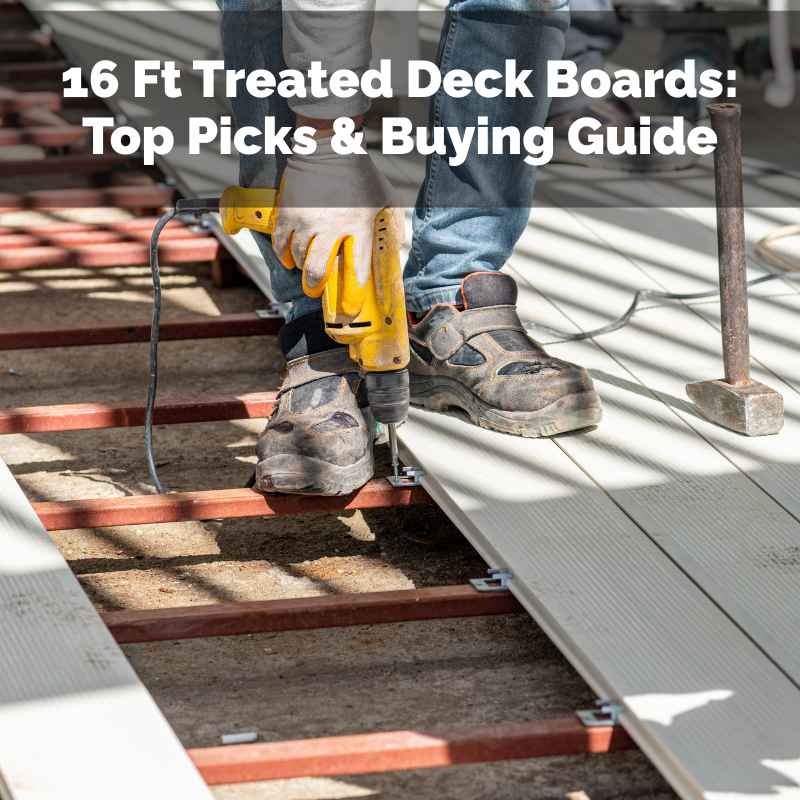
Putting down 16 ft treated deck boards requires a bit of planning. Here are some tips to make the job smoother and your deck last longer.
Plan Your Layout: Before you start, lay out a few boards. See how they fit. Make sure your joist spacing is correct for 16-footers.
You don’t want to get halfway done and realize your joists are too far apart or too close. Mark your layout lines on the joists.
Start Square: It sounds simple, but starting with your first board perfectly square to your house or deck frame is crucial. If your first board is off, every subsequent board will be off too. Use a framing square to ensure the initial board is perfectly aligned.
Use the Right Fasteners: For treated lumber, it’s best to use fasteners that are rated for treated wood. Standard galvanized screws or nails might corrode over time. Look for stainless steel or specialized coated screws.
These resist the chemicals in the treated wood. They won’t rust and stain your deck boards.
Proper Nailing/Screwing: For each board, you’ll typically use two fasteners per joist. Place them about 1 inch from the edge of the board. This helps prevent splitting.
For 16-foot boards, you’ll have a lot of joists. Drive fasteners straight and flush with the surface. Don’t over-drive them, as this can weaken the wood.
Cut Ends Last: If you need to trim your 16-foot boards to fit the ends of your deck, wait until the entire deck surface is laid out. Cut the ends all at once. This ensures a clean, straight edge.
It also allows you to make any last-minute adjustments. Always seal any cut ends of treated lumber. This is vital for maintaining the wood’s protection.
Working with a Helper: 16-foot boards are heavy and awkward. Trying to handle them alone can be dangerous. Having a second person makes a huge difference.
They can help you lift, carry, position, and secure the boards. This speeds up the work and reduces the risk of injury.
Ventilation is Key: Ensure there’s good airflow under your deck. This helps the wood dry out between rains. It prevents moisture from getting trapped, which can lead to rot.
If your deck is close to the ground, consider adding a layer of landscape fabric to prevent weed growth and improve drainage.
Fastener Facts for Treated Wood
Why special fasteners? Treated wood chemicals can corrode regular fasteners.
Best choices: Stainless steel screws, hot-dip galvanized screws, or specialized coated screws.
What to avoid: Standard zinc-plated or uncoated fasteners.
Coating matters: Look for coatings specifically designed for treated lumber. They offer extra protection.
DIY tip: Buy your screws at the same time as your lumber to ensure compatibility.
Maintenance for Longevity
Even the best 16 ft treated deck boards need care to look good and last long. Maintenance isn’t just about aesthetics; it’s about protection.
Cleaning: Regularly sweep your deck to remove dirt, leaves, and debris. This prevents moisture from sitting on the wood. Twice a year, give your deck a good cleaning.
Use a deck cleaner designed for treated wood. Avoid harsh chemicals like bleach, which can damage the wood fibers. A stiff brush and a garden hose are often all you need for light cleaning.
Staining and Sealing: This is probably the most important step for protection and appearance. Treated wood often has a greenish tint from the treatment chemicals. If you want a different color or a more finished look, you’ll want to stain it.
More importantly, a good quality deck sealer will repel water. It will protect the wood from UV rays, which can dry out and fade the wood.
When should you seal or stain? If you bought kiln-dried after treatment (KDAT) lumber, you can usually seal it within a few days. If your lumber is still wet from treatment, you might need to wait several weeks or even months for it to dry out sufficiently.
A simple test is to sprinkle some water on the wood. If it beads up, it’s dry enough to seal. If it soaks in, it’s still too wet.
Apply the stain or sealer according to the manufacturer’s instructions. Usually, this involves applying it evenly with a brush or roller. Work in sections.
Don’t let the product pool. One or two thin coats are usually better than one thick coat. Reapply sealer every one to three years, depending on the product and your climate.
Inspect for Damage: Periodically walk your deck and check for any loose boards, protruding nails or screws, or signs of rot. Pay attention to areas near the ground or in constant shade. Catching small problems early can prevent them from becoming big, expensive ones.
Maintenance Schedule Snapshot
Monthly: Sweep deck surface.
Seasonally (Spring/Fall): Wash deck with a mild cleaner.
Every 1-3 Years: Reapply deck sealer/stain.
Annually: Inspect for loose boards, fasteners, or damage.
When is 16 Ft Treated Deck Board NOT the Best Choice?
While 16-foot boards are great, they aren’t always the perfect fit for every project. It’s good to know when to consider other options.
Very Small Decks: If your deck is only 8 or 10 feet wide, a 16-foot board might be more trouble than it’s worth. You’ll end up cutting off a large portion of the board. This leads to waste.
Shorter boards might be more practical and cost-effective.
Complex Shapes: Decks with many curves, angles, or cutouts can be difficult to build with long, straight boards. You’ll be making many intricate cuts. Sometimes, using shorter, more manageable boards allows for more precise cuts and better fitting around obstacles.
Transportation and Handling Limitations: If you don’t have a long truck, trailer, or a helper strong enough to move them, 16-foot boards can be a logistical nightmare. Transporting them home and getting them onto your building site can be a challenge. Always consider how you’ll get the materials to where you need them.
Budget Constraints: While 16-foot boards can save labor costs, sometimes the per-board price might be higher than shorter lengths. If your budget is extremely tight, you might opt for 8-foot or 10-foot boards to manage upfront material costs, even if it means more cutting and potential waste.
Availability Issues: Depending on where you live and the time of year, 16-foot treated deck boards might not be readily available at your local lumberyard. Sometimes, you have to go with what’s in stock to keep your project moving.
The Environmental Aspect of Treated Wood
It’s natural to wonder about the environmental impact of treated wood. Modern wood preservatives have come a long way. They are designed to be effective while minimizing risk.
Treated Wood is Sustainable: The wood itself often comes from responsibly managed forests. Using treated wood extends its life significantly. This means fewer trees need to be harvested over time compared to using untreated wood that rots quickly.
It’s a way to make wood last longer.
Preservative Safety: The chemicals used in modern treatments are regulated. They are designed to be stable and not leach significantly into the soil under normal conditions. When properly installed and maintained, treated wood is considered safe for residential use.
It’s important to follow disposal guidelines, which usually involve taking it to an approved landfill or recycling facility.
Recycling and Disposal: Never burn treated wood. The chemicals can release harmful fumes. When it’s time to
Eco-Conscious Building
Responsible Forestry: Choose wood from sustainably managed sources when possible.
Longevity Matters: Treated wood’s long lifespan reduces the need for frequent replacement, saving resources.
Proper Handling: Wear gloves when working with treated wood. Avoid direct skin contact for prolonged periods.
Safe Disposal: Never burn treated wood. Follow local guidelines for recycling or landfill disposal.
Cost Considerations for 16 Ft Treated Deck Boards
The price of 16 ft treated deck boards can vary quite a bit. Several factors influence the cost:
Wood Species: As we discussed, Southern Yellow Pine is often the most budget-friendly. Douglas Fir might be a bit more expensive. Spruce-Pine-Fir options are usually the most affordable.
Treatment Type: While most common treatments are similar in price, specialized treatments or higher levels of protection might cost more.
Moisture Content: Kiln-dried after treatment (KDAT) lumber is almost always more expensive than standard wet-treated lumber. The extra drying process adds to the cost, but many builders find it worth it for the stability and ease of use.
Grade of Lumber: Higher grades of lumber with fewer knots and imperfections will cost more than lower grades.
Retailer and Location: Prices can differ between big box stores, local lumberyards, and the specific region you live in. Always shop around for the best deal.
Market Fluctuations: Like most building materials, the price of lumber can fluctuate based on supply and demand, lumber mill production, and even seasonal factors. It’s a good idea to get quotes from a few suppliers.
When comparing prices, remember to factor in the labor savings you might get with longer boards. Sometimes, paying a bit more per board for 16-footers can save you significant money on labor time.
Comparing Treated Wood to Alternatives
16 ft treated deck boards are a popular choice, but they aren’t the only option. Here’s a quick look at common alternatives:
Untreated Wood: Very cheap initially but will rot and degrade quickly. Not recommended for most deck applications in the US.
Cedar and Redwood: Naturally resistant to rot and insects. They are beautiful but significantly more expensive than treated pine. They also tend to be softer and can dent more easily.
Composite Decking: Made from a mix of wood fibers and plastic. It’s very durable, low-maintenance, and comes in many colors. However, it’s the most expensive option upfront and can get very hot in direct sun.
PVC Decking: Pure plastic decking. It’s very strong, lightweight, and completely resistant to rot and insects. It’s also low-maintenance and doesn’t absorb moisture.
Like composite, it’s on the pricier side and can get hot.
For many homeowners, treated lumber strikes the best balance between cost, durability, and availability. It offers good protection against the elements without breaking the bank.
Frequently Asked Questions About 16 Ft Treated Deck Boards
What is the standard spacing for joists when using 16 ft treated deck boards?
The most common joist spacing for deck boards is 16 inches on center. Some builders use 12 inches on center for added strength, especially with longer boards. Always check your local building codes and the manufacturer’s recommendations for your specific deck design and lumber span ratings.
Can I use 16 ft treated deck boards for my deck frame, not just the surface?
While technically possible, it’s generally not recommended to use standard deck boards for your deck frame (joists, beams, posts). Deck boards are designed for surface load and appearance. The structural components of your deck frame should be made from appropriately sized and rated lumber, typically dimensional lumber like 2×6, 2×8, 2×10, or 4×4/6×6 posts, all pressure-treated for their specific application (e.g., ground contact for posts).
How much does a 16 ft treated deck board typically cost?
Prices vary widely, but you can generally expect to pay anywhere from $15 to $30 or more per 16 ft treated deck board. This depends heavily on the wood species, grade, treatment type, and retailer. It’s best to get quotes from several suppliers.
How often do I need to replace 16 ft treated deck boards?
With proper maintenance, 16 ft treated deck boards can last 15 to 25 years or even longer. Replacement is usually due to wear and tear, damage, or if the wood starts to show significant signs of rot or decay, which is rare if maintained. Regular cleaning, sealing, and inspection are key to maximizing their lifespan.
Are there any special considerations for staining or sealing wet treated lumber?
Yes, if your lumber is still wet from the treatment process, you must wait for it to dry before applying stain or sealer. Applying finishes to wet wood can trap moisture, leading to mold, mildew, and poor adhesion of the finish. A simple water bead test can help determine if the wood is dry enough.
Generally, waiting several weeks to months is advised, unless you buy KDAT wood.
Can I mix different lengths of treated deck boards on my deck?
You can mix different lengths of treated deck boards if necessary, but it’s best to keep the boards running in the same direction for a uniform look. If you must mix lengths, try to have the seams line up across the deck surface for a cleaner appearance. Ensure all boards used are of the same type and treatment level to maintain consistency in durability and appearance.
Conclusion
Choosing the right 16 ft treated deck boards is a big step for any deck project. You want wood that’s strong, durable, and looks great. By understanding the types of wood, the importance of treatment, and what to look for in quality boards, you can make a smart choice.
Remember to plan your installation, use the right fasteners, and keep up with maintenance. Your deck will be a beautiful, long-lasting addition to your home. Enjoy your outdoor space!