Round Decking Ideas: The Real Construction Behind Curved Decks
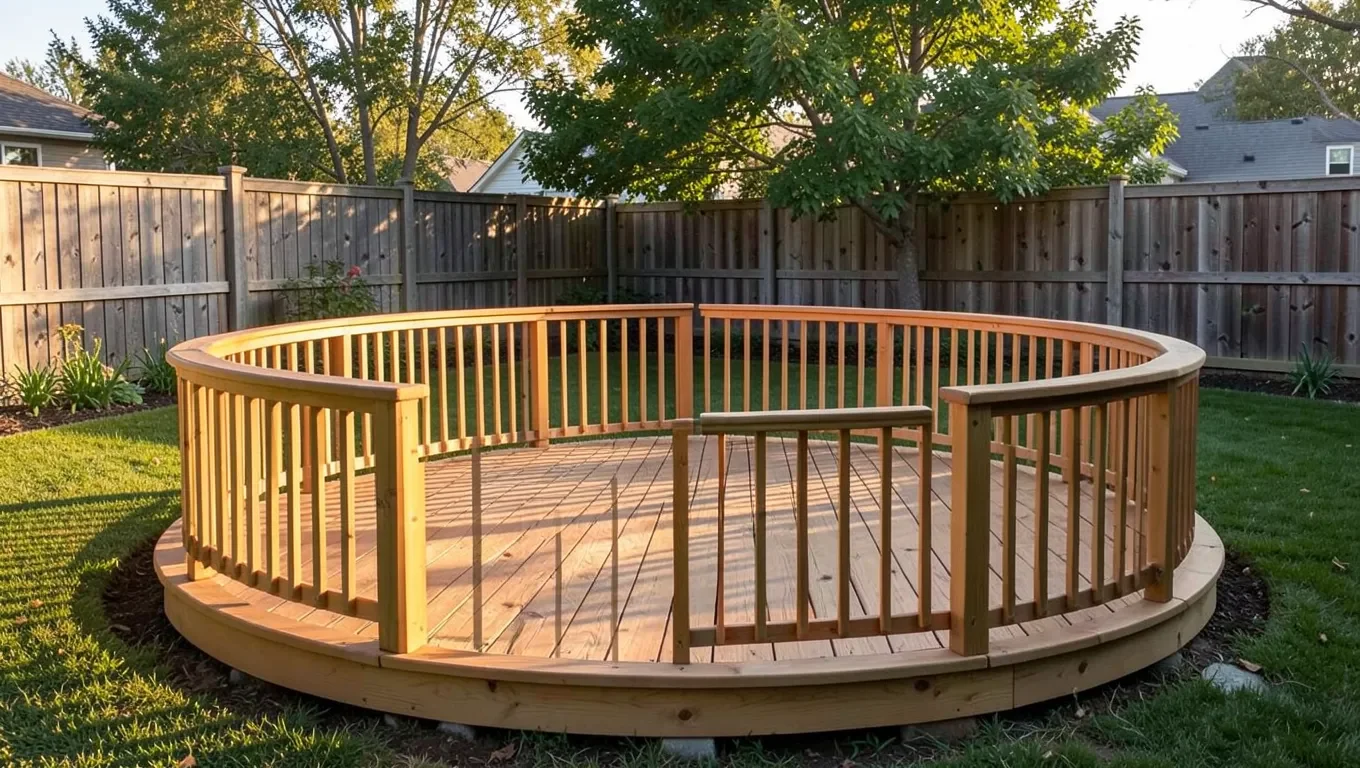
A round or curved deck typically costs 20-30% more than an equivalent rectangular deck, driven by cutting waste (curved cuts leave more scrap than straight rip cuts) and the extra framing labor a curved perimeter requires. The core technique — a curved band joist with deck boards run radially or trimmed flush to a curved edge — is real, buildable carpentry, not just a design idea.
How the Curve Is Actually Framed
The Tool That Actually Cuts the Curve
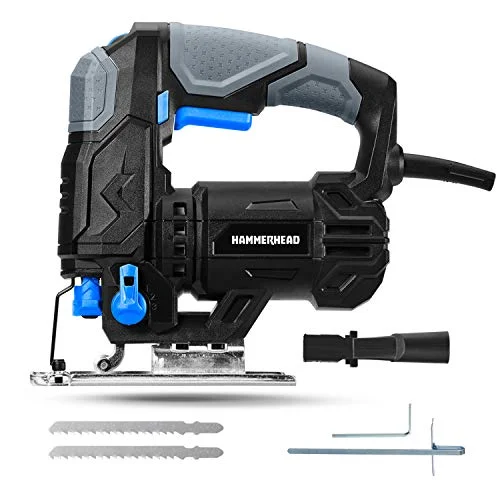 |
Hammerhead 4.8-Amp Jig Saw with Wood Blades – $26.10 A circular saw can’t follow a curve — a jig saw is what actually cuts the radial board ends and curved fascia.
|
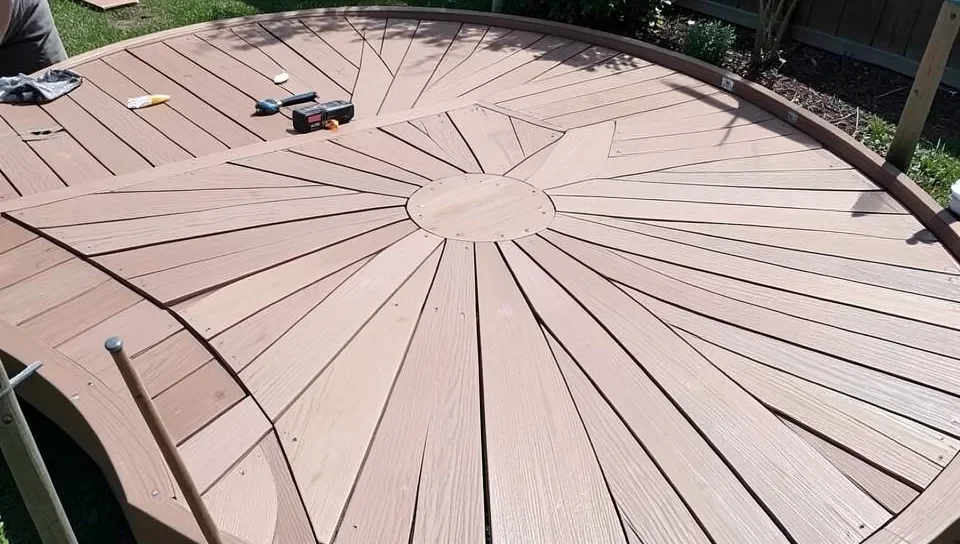
The curved perimeter is usually built from a laminated band joist — several thin strips of plywood or lumber glued and bent around a curved form, since a single solid board can’t bend to a tight radius without breaking. Deck boards then run straight across the frame (most common, with each board’s end trimmed to follow the curve) or are individually cut at an angle for a true radial fan pattern, which uses significantly more material and labor but creates a more distinctly circular visual effect.
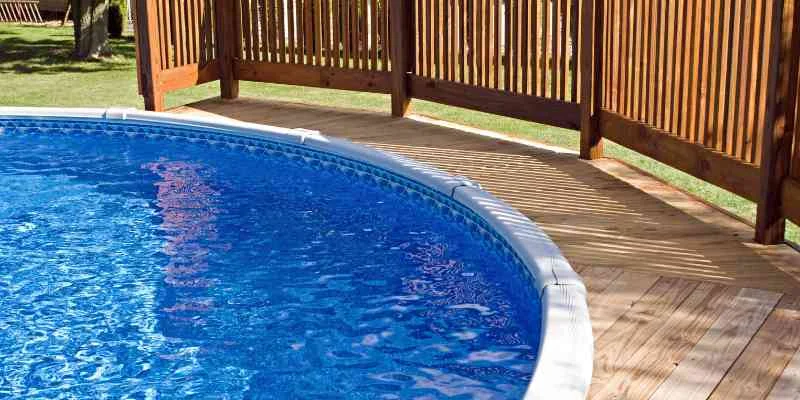
Composite Decking Bends More Easily Than Solid Lumber
Composite decking (wood-plastic composite boards) generally handles a curved layout better than solid pressure-treated lumber, since composite boards can be kerf-cut (a series of shallow parallel cuts on the underside) to bend around a moderate curve without the board actually breaking — solid wood is far more prone to splitting when forced into a bend. For a tight radius, cutting individual boards to length and trimming to the curve (rather than trying to bend a single long board) is generally the more reliable approach regardless of material.
Railing Is Where Curves Get Genuinely Harder
A curved railing requires either bent lamination (the same glue-and-clamp technique as the band joist, applied to the top and bottom rails) or a series of short straight rail segments creating a faceted approximation of a curve — true bent-wood curved railing is a genuine skill-intensive task, and it’s honest to say most DIYers get a better result with the faceted-segment approach or a pre-made curved composite/metal rail system rather than attempting bent lamination on a first project.
Frequently Asked Questions
How much more does a round deck cost than a rectangular one?
Typically 20-30% more, driven by cutting waste from curved cuts and the extra labor a curved frame and railing require compared to straight construction.
Can regular decking lumber bend for a curved deck?
Solid lumber is prone to splitting when forced into a curve. Composite decking handles kerf-cutting for moderate curves better, and for tight radii, trimming individual boards to the curve is more reliable than bending a long board.
Is curved railing hard to build myself?
Yes, genuinely more difficult than straight railing. True bent-lamination curved rails take real skill; most DIYers get a better result with short straight segments approximating the curve, or a pre-made curved rail system.
Conclusion
A round deck is genuinely buildable with a laminated curved band joist and either radial or trimmed-straight decking boards, but budget for real added cost and consider composite decking if a tight curve is part of the design. Curved railing is the hardest part — a faceted straight-segment approach is the practical choice for most DIY builds. For layout and furniture ideas once the structure is planned, see our small curved decking ideas guide.
Sponsored / affiliate links. As an Amazon Associate I earn from qualifying purchases. I may earn additional commission from eligible campaigns.