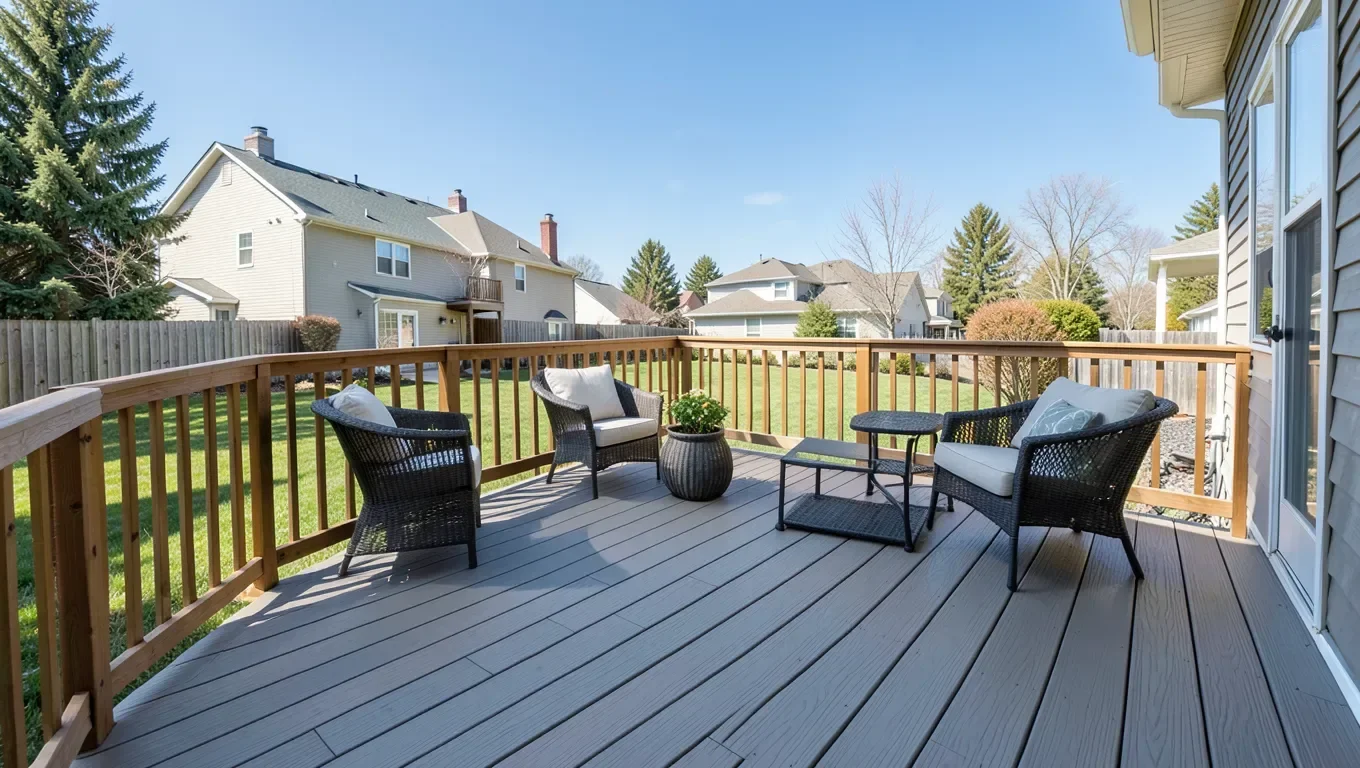
Lumber Liquidators Decking: What Happened to It in 2026
If you’re searching for “Lumber Liquidators decking,” you probably remember the brand from a past renovation, or you saw an old review online and want to know if you can still buy deck boards there. The short answer: not anymore. Lumber Liquidators went through a bankruptcy, a rebrand, a partial shutdown, and a relaunch under its original name, and the company that exists today doesn’t sell decking at all.
Here’s the real, current story of what happened to Lumber Liquidators, plus the composite, PVC, and wood decking facts you actually came here for, and where to buy the materials now.
What Happened to Lumber Liquidators? The Quick Answer
Lumber Liquidators rebranded to “LL Flooring” in 2019, filed for Chapter 11 bankruptcy in August 2024, and came within weeks of liquidating entirely. Founder Tom Sullivan’s investment firm, F9 Investments, then bought roughly 216 of the surviving stores out of bankruptcy, the company dropped the “LL Flooring” name, and it now operates again as Lumber Liquidators. It sells hardwood, vinyl, and laminate flooring, not decking, so if you came here to shop for deck boards, this isn’t your retailer anymore.
Best Hidden Fastener for Grooved Decking
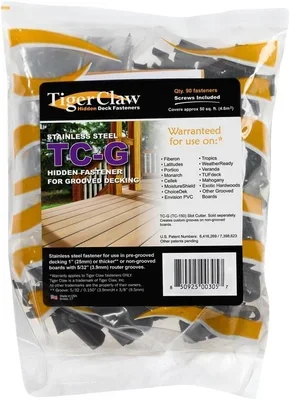 |
Tiger Claw TC-G Hidden Deck Fasteners (90-Pack) – $61.96 Composite and PVC decking (both covered below) install cleanest with a hidden clip system instead of visible screws, and this is the grooved-board fastener kit our installation section points to.
|
From Lumber Liquidators to LL Flooring, and Back Again
Tom Sullivan started the company in 1994, reselling excess wood flooring out of a trucking yard in Stoughton, Massachusetts. It grew into a national chain of several hundred stores under the black-and-yellow Lumber Liquidators name. In 2019, the company rebranded to “LL Flooring,” partly to distance itself from a 2015 formaldehyde scandal involving Chinese-made laminate flooring. For a few years afterward, “LL Flooring” was the accurate current name, which is why you’ll still see it used in older articles and reviews, including the earlier version of this page.
The 2024 Bankruptcy and Store Closures
LL Flooring filed for Chapter 11 bankruptcy on August 11, 2024, citing a slow post-pandemic renovation market and years of declining sales. The original plan was to close a batch of underperforming stores and sell the rest as a going concern. When an outside buyer didn’t materialize in time, the company announced it would wind down and close all of its roughly 424 locations nationwide.
That total shutdown didn’t end up happening. A bankruptcy court approved a last-minute sale to F9 Investments, the firm run by founder Tom Sullivan, covering around 216 stores, the company’s Sandston, Virginia distribution center, and its inventory and intellectual property.
Who Owns Lumber Liquidators Now
With that sale finalized in late 2024, ownership returned to Tom Sullivan, and the retained stores dropped the LL Flooring name and went back to being called Lumber Liquidators. The company has been operating under that original name and branding since, with more than 200 stores open as of 2026, and has even opened at least one new location since the relaunch. It’s a smaller, privately held version of the old public company, not the same corporate entity, and not the same store count.
Does Lumber Liquidators Sell Decking Today? (No, and Here’s Why That Matters)
This is the part most old articles about this brand get wrong: the relaunched Lumber Liquidators is a flooring-only retailer. Its current catalog covers hardwood, waterproof vinyl plank, laminate, carpet tile, bamboo, cork, moldings and trim, butcher block countertops, and installation accessories. There is no composite decking, PVC decking, or outdoor decking category anywhere in its current lineup. Whatever composite or PVC decking lines the old LL Flooring stores may have carried before 2024, they aren’t part of what the relaunched company sells now, which is exactly why the rest of this guide points you to retailers that actually stock decking.
Composite, PVC, and Wood Decking: How They Actually Compare
Your deck is more than a few planks of wood. It’s an extension of your home, where you relax, entertain, and spend a big chunk of the summer. Choosing the right material comes down to three real questions: your climate, how you’ll actually use the deck, and how much maintenance you’re honestly willing to do.
Broadly, you’re choosing between composite decking, PVC decking, and natural wood decking. These aren’t just different names for the same thing; they behave very differently once they’re actually outside.
Composite Decking: The Popular Middle Ground
Composite decking blends wood fibers with plastic, usually recycled polyethylene, and most modern boards add a protective plastic “cap” over that core on some or all sides. That cap is what actually resists fading, staining, and scratching; an uncapped composite board behaves much closer to painted wood over time. You get a warm, wood-like look with no splinters, no annual sealing, and typically a 25 to 50 year manufacturer warranty on the better product lines.
PVC Decking: The Ultimate Low-Maintenance Option
PVC decking is 100% polyvinyl chloride, with no wood fiber in it at all. That makes it essentially immune to moisture, insects, and rot in a way composite can’t fully match, since composite still contains organic material at its core. PVC boards don’t warp or crack, resist stains well, and clean up with a hose. The tradeoff is cost (it’s usually the most expensive option) and a slightly more plastic feel underfoot than a well-made composite board.
Natural Wood Decking: The Classic and Customizable Choice
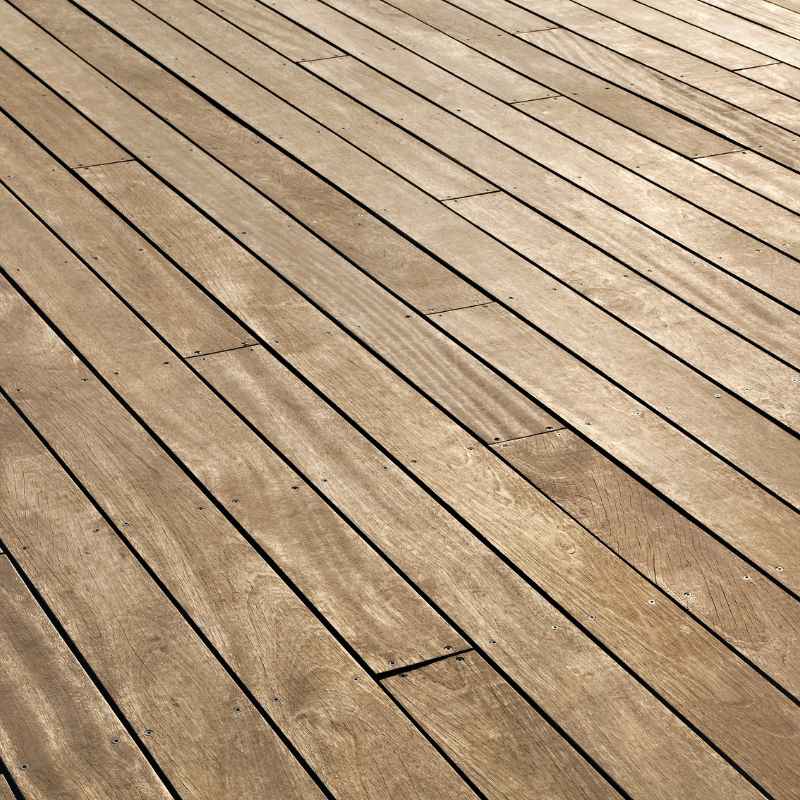
Pressure-treated pine, cedar, and redwood remain the traditional choice, and for good reason: real wood can be stained or painted any color, and nothing fully replicates its grain. The cost is upkeep. Without regular sealing or staining, sun and moisture will fade, warp, and eventually splinter the boards, and insects can become a real problem in humid climates. Wood demands a genuine maintenance commitment that composite and PVC were built to eliminate.
Decking Prices: What to Expect in 2026
Price is a huge factor for most homeowners, and it varies widely by material, brand, and retailer. Since Lumber Liquidators is out of the picture for decking, compare pricing across the retailers in the buying section below rather than assuming any one store’s numbers; always check current pricing before you budget a project. The figures below are per linear foot, which is the standard way to compare decking materials.
Composite Decking Price Ranges
Composite decking typically sits in the mid-to-high price range. Basic composite boards often start around $2 to $4 per linear foot, while premium fully capped boards with realistic grain patterns can run $5 to $10 or more. Factor in the long-term savings on stain, sealant, and labor: a composite deck with a 25 to 50 year lifespan is often a once-in-a-lifetime purchase.
PVC Decking Price Ranges
PVC decking usually sits at the higher end of the spectrum, roughly $5 to $12 per linear foot, with some premium lines going higher still. That cost reflects more advanced manufacturing and the near-zero maintenance it delivers over the life of the deck.
Wood Decking Price Ranges
Pressure-treated pine is usually the cheapest option, often $1 to $3 per linear foot. Cedar and redwood cost more, typically $3 to $8 per linear foot depending on grade and availability. The low sticker price is real, but stains, sealants, tools, and labor add up over the years in a way composite and PVC largely avoid.
Price Comparison: Per Linear Foot (Estimates)
| Material Type | Low End | High End |
|---|---|---|
| Pressure-Treated Pine | $1 – $3 | $3 – $5 |
| Cedar/Redwood | $3 – $6 | $6 – $8+ |
| Basic Composite | $2 – $4 | $4 – $7 |
| Premium Composite (Capped) | $5 – $8 | $8 – $12+ |
| PVC Decking | $5 – $9 | $9 – $15+ |
Note: Prices are approximate and vary by brand, collection, retailer, and region.
Real-World Performance: What Happens Over Time
Materials look great in the showroom. What matters more is how they hold up after a decade outside in real sun, rain, and snow.
Composite Decking: Durability and Aesthetics
Capped composite generally holds its color and resists staining well for the life of the warranty; the cap is doing most of that work. Uncapped or older-generation composite is far more prone to fading and a chalky surface texture over five to ten years. Scratching from dragged furniture is the most common complaint across brands, and darker boards can get noticeably hot in direct summer sun.
PVC Decking: The Low-Maintenance Champion
Because PVC contains no organic material, it doesn’t absorb moisture, so mold and mildew are a non-issue even in damp, shaded spots. It’s also highly resistant to termites and carpenter ants, both of which can seriously damage a wood deck. A soap-and-water wash is typically all it needs. The main downsides reported by owners are a slightly more plastic feel underfoot and, like composite, noticeable heat buildup in darker colors.
Wood Decking: Beauty and the Beast of Maintenance
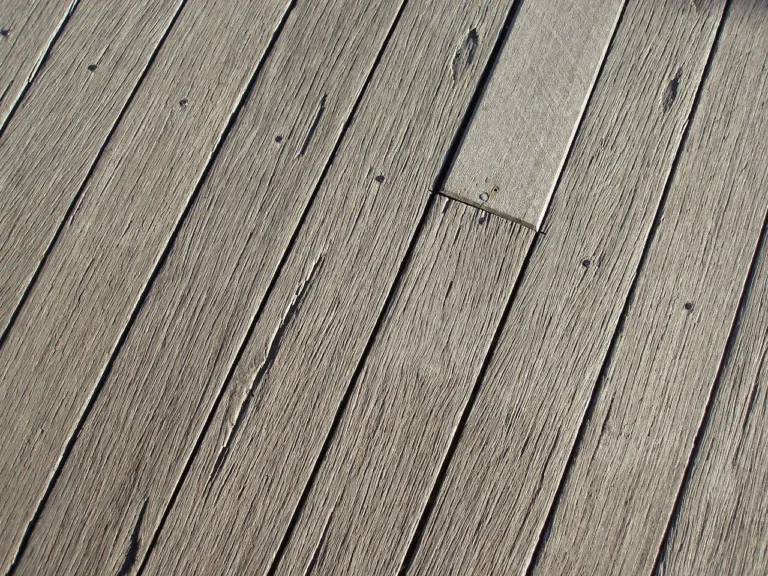
Wood is organic and reacts to its environment: sun fades it, rain and humidity warp it, and insects can eat it. Decks that get stained every one to two years tend to stay attractive and structurally sound for decades. Decks that get neglected commonly turn gray and splintered within five to ten years, with posts and boards eventually rotting at ground contact points. Warping, cracking, splintering, and surface mold in shaded areas are the most common issues homeowners report.
Long-Term Comparison: Wear and Tear
Composite
- Pros: Good fade/stain resistance, durable, low maintenance.
- Cons: Can scratch, may get hot, initial cost higher.
- Lifespan: 25-50 years.
PVC
- Pros: Extreme durability, moisture/insect proof, easiest maintenance.
- Cons: Can get hot, may feel less natural, highest initial cost.
- Lifespan: 30-50+ years.
Wood
- Pros: Natural beauty, customizable, lower initial cost (pine).
- Cons: High maintenance, prone to rot/insects/warping, splinters.
- Lifespan: 10-20 years (with regular maintenance).
Installation Considerations
How your deck is installed matters as much as the material you pick. Poor installation causes premature problems regardless of board quality. A qualified contractor, or the retailer or manufacturer you buy from, can walk you through framing, fastener spacing, and code requirements for your area.
Fastening Systems
How deck boards attach affects both looks and longevity. Traditional wood decks are usually face-screwed, with the screw heads visible on top. Composite and PVC boards more often use a hidden fastener system: clips that lock into a groove on the side of the board, leaving a smooth, screw-free surface (the product above is one widely used example). That also keeps water from pooling in exposed screw holes, which matters for long-term durability.
Ventilation and Drainage
Airflow under the deck matters most for wood, since trapped moisture leads directly to rot and mold, but composite and PVC still need good drainage to avoid standing water. The ground beneath should slope away from the house, and there should be enough gap between deck boards for water to drain freely, especially on low-clearance decks close to the ground.
Warranties: Know Who’s Actually Backing the Product
A decking warranty comes from the board manufacturer, brands like Trex, TimberTech, Fiberon, or MoistureShield, not from whichever store you happened to buy it at. That’s worth knowing now that Lumber Liquidators is out of the decking business entirely: the warranty on a board you already own didn’t disappear with the retailer, since the manufacturer is still the one standing behind it.
Composite and PVC warranties commonly run 25 years to limited lifetime, covering structural defects and often fading or staining. Natural wood warranties, when they exist at all, are usually shorter and limited to structural rot. Read the fine print: most warranties are prorated (they cover less over time) and require installation per the manufacturer’s instructions to stay valid.
Where to Buy Decking Materials Now
Since the relaunched Lumber Liquidators doesn’t stock decking, here’s where that demand has actually gone:
- Home Depot and Lowe’s: Both carry composite, PVC, and pressure-treated wood decking in-store and online, typically from Trex, TimberTech, and their own house composite lines, with the broadest nationwide availability.
- Manufacturer direct (Trex.com, TimberTech.com, Fiberon.com, MoistureShield.com): Useful for ordering free samples, checking exact color availability, and finding a local dealer who stocks that specific line.
- Local lumberyards: Usually the best source for pressure-treated pine, cedar, and redwood, often at better prices than big-box stores, with staff who know regional climate considerations.
- Amazon: Not for the deck boards themselves, but genuinely useful for the hardware: hidden fastener clips, deck screws, joist tape, and similar accessories, like the fastener kit above.
Who Should Choose Which Decking Type?
Deciding between composite, PVC, and wood isn’t just about looks. It’s about your lifestyle and priorities. Here’s who typically benefits most from each type.
For the Busy Homeowner: Composite or PVC
If annual deck maintenance sounds like a chore you’ll never get to, composite or PVC is the better bet. Composite offers a good balance of looks and low upkeep; PVC pushes maintenance to nearly zero. Both let you spend weekends using the deck instead of working on it.
For the Budget-Conscious: Wood (with Caveats)
Pressure-treated wood is usually the cheapest option per square foot up front. If your budget is tight and you’re genuinely willing to stain and seal on schedule, it’s a reasonable way to get a deck built now. Just budget for the ongoing cost of stains, sealants, and your own time, since that’s where wood’s savings tend to disappear.
For the Aesthetic Purist: Natural Wood
If you love the authentic look of real wood and don’t mind the upkeep, wood remains the way to go. The ability to stain wood any color, plus its natural warmth and grain, is genuinely hard to replicate in composite or PVC.
For the Eco-Conscious: It Depends on the Product
Wood is renewable, but sourcing it responsibly matters; look for FSC-certified lumber where available. Composite and PVC are often made with recycled plastics and wood fiber, though manufacturing them is energy-intensive. A deck that lasts 40 years can end up being the more sustainable choice over one that needs full replacement every 10 to 15.
What This Means for Your Deck Project
Knowing the real options, and the real retailers that carry them, helps you make a smart choice instead of chasing a store that no longer sells what you need. For most homeowners weighing beauty against ease of care, composite decking is the sweet spot. If budget is the priority and you’re willing to do the maintenance, pressure-treated wood is a legitimate option. If you want the absolute minimum upkeep and the highest price tag doesn’t scare you off, PVC decking is the premium pick.
Whichever you choose, buy it from one of the retailers above, since Lumber Liquidators isn’t one of them anymore.
Quick Tips for Choosing and Caring for Decking
- Visit a home center or lumberyard in person: See, touch, and walk on the materials. Colors look different online than in daylight.
- Get warranty details in writing: Confirm what’s covered, for how long, and whether it’s prorated, directly from the manufacturer’s documentation.
- Consider your climate: Heat, humidity, snow, and sun all affect materials differently.
- Think about your actual lifestyle: How much time do you realistically have for upkeep, and how will you use the deck?
- Factor in installation: A good installer, and the right fastening hardware, makes a real difference in the finished result.
- Clean regularly: Even low-maintenance decks benefit from an occasional wash.
- Skip harsh chemicals: Use cleaners rated for your specific decking material.
Maintenance Cheat Sheet
Composite & PVC
- Regular Cleaning: Sweep off debris. Wash with mild soap and water annually or as needed.
- Stains: Address spills quickly. Mild detergents usually work.
- Avoid: Abrasive cleaners, pressure washing on high settings (can damage surface).
Natural Wood
- Cleaning: Annual wash with a wood cleaner.
- Sealing/Staining: Every 1-3 years, depending on product and climate.
- Repairs: Address splinters, loose boards, or rot immediately.
- Avoid: Letting debris sit, neglecting cleaning and sealing.
Frequently Asked Questions About Decking
Is Lumber Liquidators still in business?
Yes, but not the same company you may remember. It filed for Chapter 11 bankruptcy in August 2024 under the name LL Flooring, and founder Tom Sullivan’s firm bought roughly 216 of the stores out of bankruptcy. The relaunched company dropped the LL Flooring name and now operates again as Lumber Liquidators, with over 200 stores as of 2026.
Does Lumber Liquidators sell decking?
No. The relaunched Lumber Liquidators sells interior flooring only, hardwood, vinyl, laminate, bamboo, and carpet tile, along with moldings and countertops. Composite, PVC, and outdoor decking are not part of its current product lineup.
What happened to Lumber Liquidators?
It rebranded to LL Flooring in 2019, filed for Chapter 11 bankruptcy in August 2024 after years of declining sales, and initially planned to close all of its roughly 424 stores. A bankruptcy court instead approved a sale of about 216 stores to founder Tom Sullivan’s investment firm, and the company relaunched under its original Lumber Liquidators name.
Is composite decking worth the extra cost compared to wood?
For many homeowners, yes. Composite costs more upfront than basic wood but needs far less maintenance, saving money and time on staining, sealing, and repairs over the years. Its lifespan, often 25 to 50 years, also means you may only install a deck once.
Does composite decking get hot in the sun?
Yes, especially darker colors in direct sunlight. Lighter colors and newer heat-resistant formulations help, but this is a common characteristic of both composite and PVC decking. If your deck gets full sun, consider a lighter color or add shade.
How often do I need to seal a wood deck?
Generally every 1 to 3 years, depending on the wood species and your climate. Areas with harsh sun or heavy rain typically need more frequent sealing. Inspect annually and reseal as soon as water stops beading on the surface.
Can I install composite decking myself?
Many composite systems are designed for DIY installation, with grooved boards and hidden fastener clips that simplify the process. It still requires careful planning, precise cuts, and solid framing knowledge, so if you’re not confident, hire a professional installer.
What are the main differences between composite and PVC decking?
Composite blends wood fibers with plastic, usually under a protective cap. PVC is 100% plastic with no wood fiber at all, making it more resistant to moisture, mold, and insects. Composite tends to offer a slightly more natural look and feel; PVC offers the lowest maintenance of the two.
Final Thoughts on Choosing Your Decking
Choosing decking is an exciting step toward an outdoor space you’ll actually use. Weigh composite, PVC, and wood against your budget, climate, and how much maintenance you’re honestly willing to do. Just leave Lumber Liquidators out of the shopping list; buy from Home Depot, Lowe’s, a manufacturer directly, or a local lumberyard instead, and your dream deck is well within reach.
Sponsored / affiliate links. As an Amazon Associate I earn from qualifying purchases. I may earn additional commission from eligible campaigns.