3/4 Inch Hardwood Flooring: Thickness & Install Guide (2026)
3/4 inch is the standard thickness for traditional solid hardwood flooring — and that number isn’t arbitrary. It’s the thickness that leaves enough wood above the tongue and groove to survive being nailed down, sanded, and refinished multiple times over decades. Thinner engineered hardwood, usually 3/8″ to 1/2″, trades some of that refinishing life for better dimensional stability and the ability to float or glue over concrete. Here’s what the 3/4″ number actually means for your subfloor, your installation method, and how many times you’ll realistically be able to sand and refinish the floor before it’s done.
What 3/4 Inch Actually Means on a Hardwood Plank
Best Nailer For 3/4″ Solid Hardwood
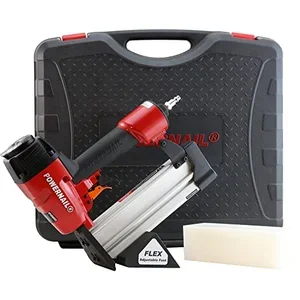 |
Powernail 50F Pneumatic Flooring Nailer – $306.49 Rated specifically for 3/8″ to 3/4″ tongue-and-groove hardwood, the exact thickness range this guide covers.
|
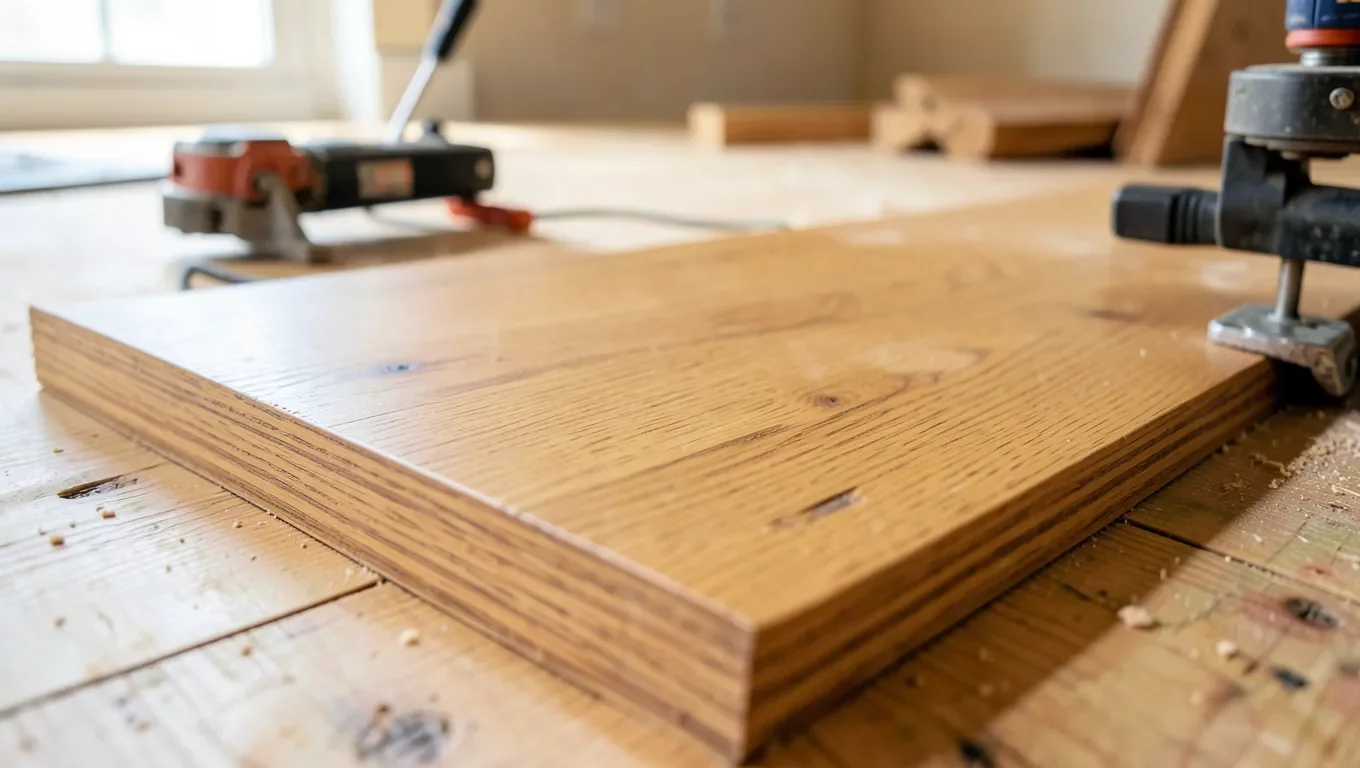
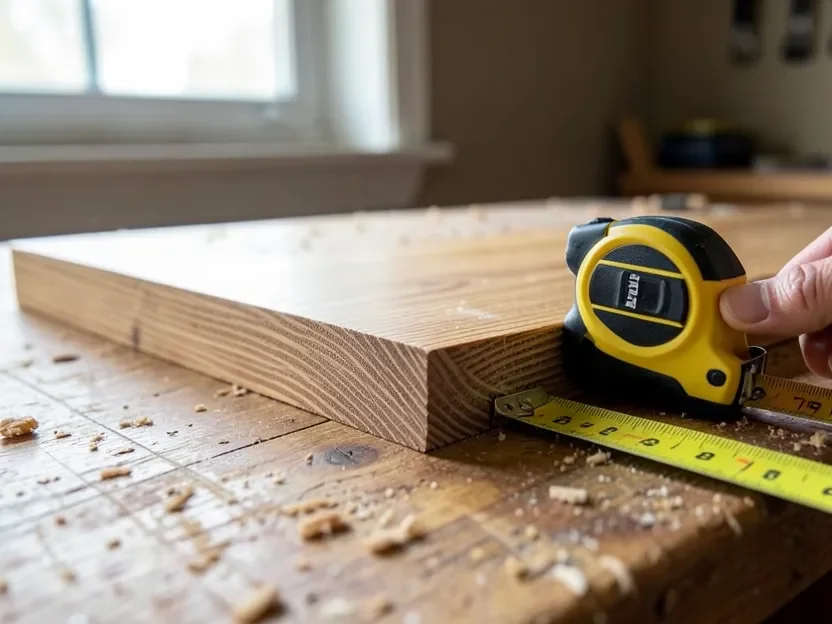
A 3/4″ solid hardwood plank is measured face to back — the full thickness of the milled board, not counting the tongue that locks into the next plank. That’s a full three-quarters of an inch of actual wood, which is why solid hardwood in this thickness has been the default for site-finished floors for most of the last century. Underneath the wear layer sits the tongue and groove itself, typically 1/4″ to 5/16″ from the bottom of the plank, which is where nails or staples get driven during installation.
Above the tongue and groove, a 3/4″ board usually leaves somewhere around 1/8″ to 3/16″ of solid wood before you hit the fastener line. That margin is what determines how many times the floor can be sanded down and refinished — every pass with a drum sander removes roughly 1/32″ of material, so a new 3/4″ floor typically has enough wood for four to eight full refinishing cycles over its lifetime, sometimes more if the early sandings are light “screen and recoat” jobs rather than full strips to bare wood. That’s the real reason 3/4″ became the standard: it’s thick enough to be refinished repeatedly instead of replaced when the finish wears through.
3/4″ Solid Hardwood vs. Thinner Engineered Flooring
Engineered hardwood usually runs 3/8″ to 1/2″ thick, occasionally up to 5/8″, and it’s built differently — a thin layer of real hardwood, sometimes as little as 2mm, bonded over several layers of plywood or high-density fiberboard running in alternating grain directions. That cross-ply construction is what makes engineered boards more dimensionally stable than solid wood; they expand and contract less with humidity swings, which is why engineered is the safer choice over concrete slabs, over radiant heat, or in basements where solid hardwood is genuinely risky.
The tradeoff shows up at refinishing time. An engineered floor with a wear layer under 2mm usually can’t be sanded at all — the finish is meant to last the life of the floor and then the whole plank gets replaced. A thicker wear layer, in the 3mm-4mm range, can usually handle one to three light refinishes before you hit the plywood core. Compare that to the four to eight cycles a 3/4″ solid floor can typically take, and the thickness difference stops being a spec-sheet number and becomes a real decision about how long you expect to own the house and whether you want the option to change the stain color down the road.
Installation: Why 3/4″ Solid Usually Means Nail-Down
Most 3/4″ solid hardwood is installed by nailing or stapling through the tongue at an angle, a method that requires a wood subfloor — plywood or OEM tongue-and-groove subflooring, not a concrete slab. The fasteners need something to bite into below the plank, and a wood subfloor also lets the boards move slightly with seasonal humidity without the whole floor buckling. This is the main reason 3/4″ solid hardwood isn’t recommended for basements or slab-on-grade construction; there’s no wood substrate to nail into, and moisture coming up through concrete is a bigger risk for a thick solid board than for a stable engineered one.
Before any 3/4″ solid hardwood goes down, the subfloor needs to test dry — most installers work to a maximum of 12% wood moisture content and want less than a 2-4 percentage point gap between the subfloor and the flooring itself, checked with a pin-type or pinless moisture meter, not a guess. Skipping that check is one of the most common causes of cupping and gapping in a new 3/4″ floor within the first year. The planks also need to acclimate in the room for several days before installation, and the nailer itself matters: a flooring nailer or stapler rated for 3/4″ stock (see the pick above) drives the cleat at the correct angle and depth without splitting the tongue, which is easy to do with a nailer that’s really sized for thinner engineered boards.
Cost and Long-Term Value of 3/4″ Hardwood
3/4″ solid hardwood typically costs more upfront than engineered flooring in the same species — both for the material and for installation, since nail-down work takes longer than click-lock or floating engineered systems. Where it evens out is over time: because a 3/4″ floor can be refinished several times instead of replaced, the cost per year of ownership over a 30-40 year span is often lower than repeatedly replacing a thin engineered floor once its wear layer is gone. That math changes if you’re renovating a space where solid hardwood genuinely doesn’t fit — over concrete, over radiant heat, or in a basement — where engineered’s stability is worth more than the extra refinishing life you’d never be able to use anyway.
Common Wood Species Available in 3/4″ Solid Thickness
Nearly every domestic hardwood species sold for flooring comes milled to the standard 3/4″ thickness, since that’s what most nail-down installers and manufacturers build around. Red and white oak remain the most common, with a Janka hardness rating in the 1,290-1,360 range and enough refinishing margin at 3/4″ to handle decades of foot traffic. Hard maple (Janka 1,450) and hickory (Janka 1,820) are common step-ups in wear resistance, both widely available at 3/4″ for high-traffic areas. Walnut (Janka 1,010) is softer and shows dents more easily, but many homeowners choose it at 3/4″ specifically because the color runs deep enough into the board that light sanding during refinishing doesn’t wash out the tone the way it can on a stained lighter species. Exotic species like Brazilian cherry or teak are also sold in 3/4″ solid boards, though at a higher price point and often with longer acclimation requirements before installation.
Frequently Asked Questions
Do you need underlayment for 3/4 inch hardwood?
Nail-down 3/4″ solid hardwood typically goes over a layer of asphalt-saturated building paper or a similar thin moisture retarder, not a cushioned underlayment like you’d use under laminate or engineered click-lock flooring. The paper controls minor moisture and reduces squeaking, but the wood subfloor itself is what the nails actually bite into, so a thick foam underlayment isn’t used under a nail-down solid floor the way it is under floating systems.
How thick is 3/4 inch hardwood flooring?
3/4″ is 0.75 inches measured face to back — the full milled thickness of the board, not including the tongue that interlocks with the next plank. That’s the industry-standard thickness for traditional solid hardwood, as opposed to engineered hardwood, which commonly runs 3/8″ to 1/2″ thick.
What is a good thickness for wood flooring?
For solid hardwood, 3/4″ is the standard and gives the most refinishing life. For engineered hardwood, thickness matters less than wear-layer depth — a 3mm-4mm wear layer over a 1/2″-5/8″ engineered board gives you one to three refinishes, while anything under 2mm typically can’t be refinished at all. The right choice depends more on your subfloor (wood vs. concrete) and how many times you expect to want to refinish than on chasing the thickest board available.
Can you glue down 3/4 inch hardwood flooring?
Yes, though nailing or stapling is far more common for 3/4″ solid boards, especially over a wood subfloor. Glue-down installation for solid 3/4″ hardwood is used mainly over concrete, but it requires a moisture barrier and a flooring adhesive rated for solid wood movement, and it’s more failure-prone than nail-down for a board this thick because solid wood expands and contracts more than engineered planks — most installers still recommend nailing 3/4″ solid whenever a wood subfloor is available.
Sponsored / affiliate links. As an Amazon Associate I earn from qualifying purchases. I may earn additional commission from eligible campaigns.
 East West Furniture SP-5HH05 Sango Premier Engineered Hardwood Flooring - European Oak - 1/2 in x 7 in x Random Length Handscraped, 26.24 sqft/box, Shadow Grey
 East West Furniture SP-7HH02 Sango Premier Engineered Hardwood Flooring - European Oak - 1/2 in x 7 in x Random Length Handscraped, 26.24 sqft/box, Special Walnut