How to Remove Adhesive From a Hardwood Floor Without Damage
The fastest way to damage a hardwood floor while removing adhesive is reaching straight for a metal scraper or a bottle of acetone. The better sequence is heat first, a plastic scraper held nearly flat second, and a mild solvent only for what’s left over, since that order lifts glue, tape residue, and old flooring mastic without gouging the wood or stripping the finish. One type of residue, old black mastic under pre-1980s vinyl tile, also comes with a real safety step worth knowing before you touch it.
Start With Heat, Not a Solvent
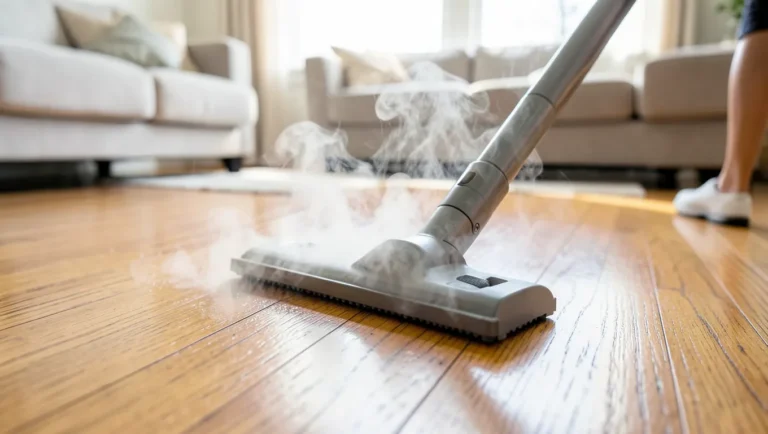
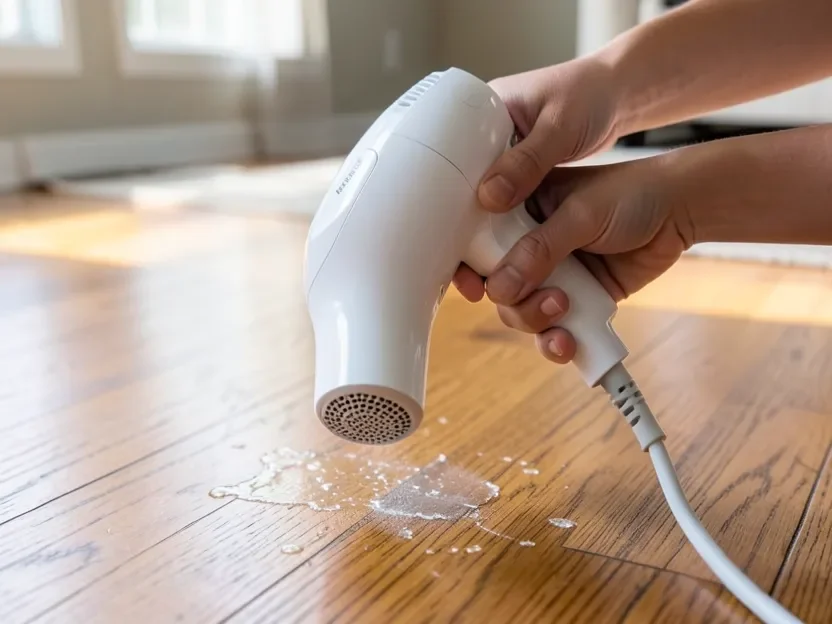
Most household adhesives, carpet glue, tape residue, contact cement, and rug-pad backing, soften well before they dissolve. A hair dryer or a heat gun on its low setting, held four to six inches from the floor and kept moving in small circles, warms the adhesive enough to lift in under a minute in most cases. A warm, damp towel left on the spot for three to five minutes works almost as well if you don’t have a dryer handy. Either way, don’t park the heat source in one spot for long: too much sustained heat can soften the wood finish itself, not just the glue sitting on top of it.
Best Solvent for Stubborn Residue
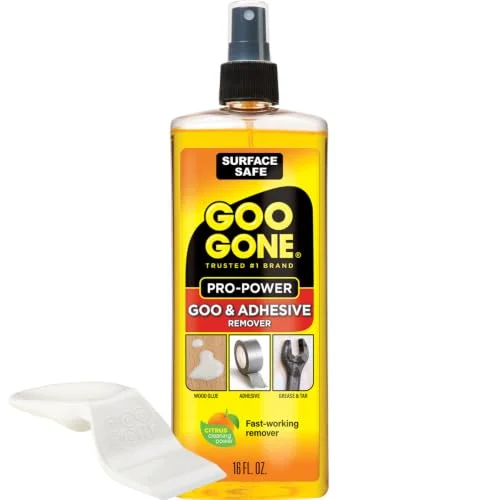 |
Goo Gone Pro-Power Adhesive Remover with Scraper – $19.99 A citrus-based remover for the residue that heat and scraping alone won’t fully clear, with a built-in plastic scraper for the same shallow-angle technique covered above.
|
Matching the Method to the Adhesive Type
Not every sticky spot on a hardwood floor is the same material, and knowing which one you’re looking at saves a lot of trial and error. Carpet glue is usually yellow or tan, water-based, and dries somewhat rubbery. It’s the easiest of the bunch, since heat plus a damp towel softens it in a few minutes and a squirt of warm soapy water finishes the job. Double-sided tape residue and painter’s-tape gum respond almost as well to heat alone, sometimes with no solvent needed at all. Contact cement, the adhesive often found under old parquet tiles or glued-down laminate, is tougher and more petroleum-based; it usually needs the full sequence of heat, scraping, and a citrus-based remover to fully clear. Dried wood glue drips from a furniture repair or DIY project are actually the odd one out: PVA wood glue is water-soluble even after it cures, so a warm, wet cloth left in place for a few minutes and a plastic scraper handle it without any solvent at all.
Scrape at a Shallow Angle, Not a Steep One
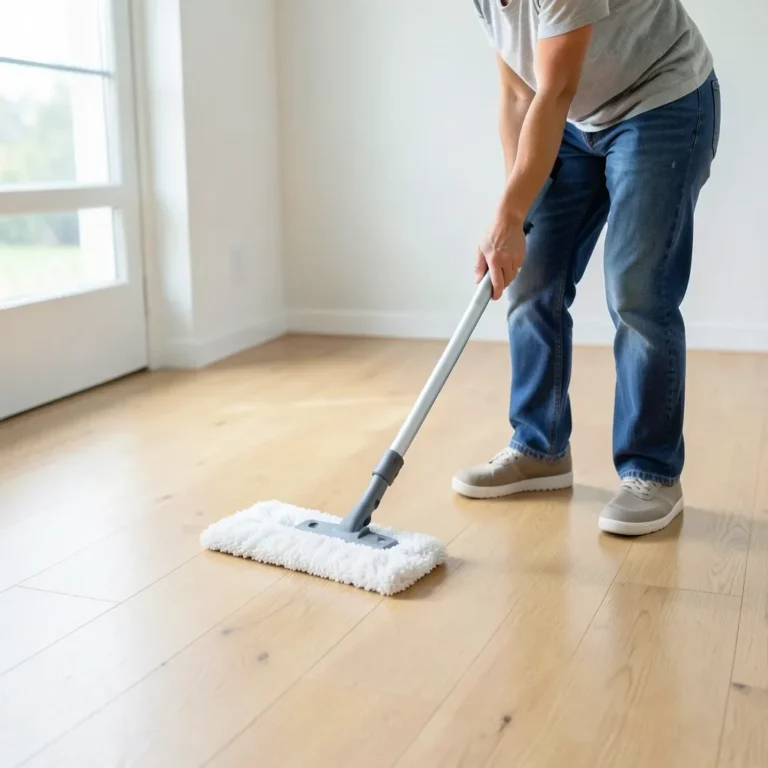
Once the adhesive is warm, a plastic putty knife or a dedicated plastic floor scraper does the actual lifting. Hold the blade almost flat against the floor, closer to parallel than perpendicular, and push with the wood grain rather than across it. A steep angle is what gouges a finish; a shallow one just glides under the softened glue. Metal blades remove tougher adhesive faster, but they’re a real risk on a finished floor in inexperienced hands, so plastic is the safer default unless you’ve done this before. Work in small sections, roughly the size of your palm, rather than trying to clear a whole patch at once. That keeps the adhesive from re-hardening in the areas you haven’t gotten to yet, since heat softening only lasts a couple of minutes before it starts to set back up. Re-warm any spot that’s still resisting rather than pressing harder with the scraper; forcing a dull scraper through cold, hardened adhesive is the single most common way people end up with a small gouge they then have to sand out.
When a Solvent Is Actually Necessary
Heat and scraping clear most residue, but a stubborn patch sometimes needs a solvent. Citrus-based adhesive removers (the Goo Gone-type products) are formulated to be surface-safe on finished wood, but “surface-safe” still means testing first: apply a small amount in a closet or under a rug, wait fifteen minutes, and check for dulling, clouding, or a color change before treating the visible floor. Acetone and straight nail polish remover are worth a caution here, not a recommendation, since acetone can cloud or strip a polyurethane or varnish finish within seconds of contact. Mineral spirits are gentler but still need the same spot test. Whichever product you reach for, apply it to a cloth rather than pouring it straight onto the floor; that limits how long the solvent sits on any one spot and keeps it from pooling into seams between boards, where it can wick underneath and reach unfinished wood. Whatever you use, wipe the area with a barely damp cloth right after the adhesive lifts so the solvent doesn’t sit on the finish any longer than it has to, and keep the room ventilated while you work, both for the fumes and because it helps the finish dry back down evenly instead of hazing over.
Old Black Mastic Under Vinyl Tile: A Real Safety Note
If the adhesive you’re dealing with is black, tar-like, and came from underneath vinyl floor tile in a home built or renovated before 1980, treat it differently than ordinary glue. That type of adhesive, commonly called black cutback mastic, sometimes contains asbestos, and there’s no way to tell just by looking at it. Don’t sand it and don’t dry-scrape it aggressively, since both release fibers into the air, and skip the heat gun too; sustained heat on a genuinely asbestos-containing mastic is another way to release fibers rather than a safer alternative to sanding. The only way to know for certain is to send a small sample to an accredited testing lab, the same kind of lab used for pre-renovation testing in older homes, before doing any removal work at all. Most labs can process a small, carefully bagged sample within a few business days for a modest fee, which is cheap insurance compared with a home’s worth of hardwood floor. If it does test positive, that’s a job for a licensed abatement contractor, not a weekend project, no matter how well the rest of the methods above would otherwise work on ordinary adhesive.
Clean Up and Check the Finish Afterward
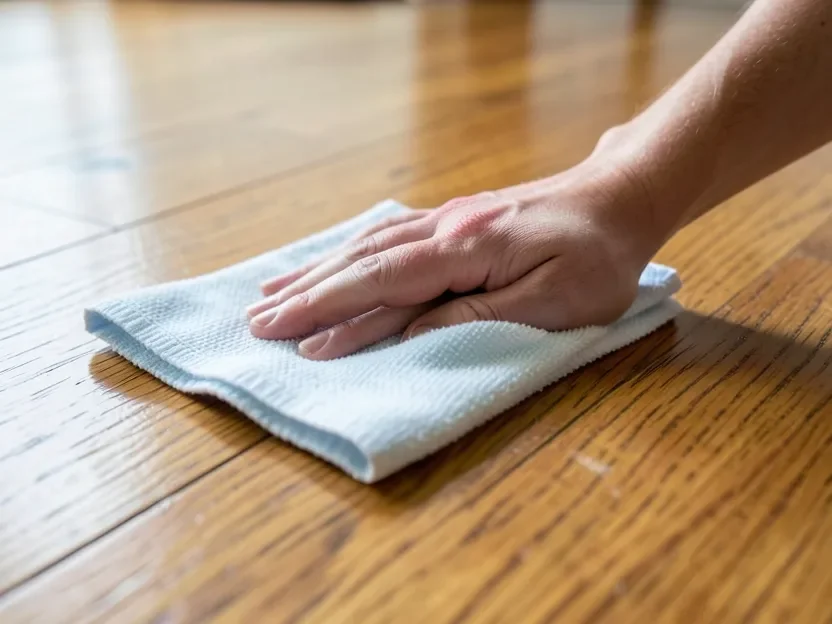
Once the adhesive is gone, wipe the area with a barely damp microfiber cloth and a drop of mild soap, then dry it immediately with a second, dry cloth. Standing water is its own hazard on hardwood, so don’t leave the spot wet or let it air-dry on its own. Step back and check the finish in good light: a solvent-treated area that looks slightly duller than the surrounding floor usually responds to a light coat of floor polish or wax made for that finish type. Water-based polyurethane tends to show solvent dulling faster than an oil-based finish, so if you know which one is on your floor, treat that as a reason to test even a “surface-safe” product first, not skip the test. Going forward, felt pads under furniture and a mat under anything taped or glued down keep the next adhesive job from happening at all.
Frequently Asked Questions
Will a hair dryer really soften adhesive on a wood floor?
Yes. A hair dryer or heat gun set on low, held a few inches from the surface and kept moving, softens most carpet glue, tape residue, and contact cement in under a minute so it lifts with a plastic scraper instead of a chemical remover.
Is acetone safe to use on a hardwood floor?
Not usually. Acetone can dull, cloud, or strip a polyurethane or varnish finish within seconds, so it’s one of the last things to reach for. Spot test any solvent in a hidden corner first and wipe it up the moment the adhesive lifts.
How do I know if old floor mastic contains asbestos?
You can’t tell by looking. Black, tar-like mastic under vinyl tile installed before 1980 is the type most likely to contain asbestos, and the only way to know for certain is to send a sample to an accredited testing lab before sanding or aggressively scraping it.
What’s the safest scraper for a finished wood floor?
A plastic putty knife or scraper held nearly flat against the floor. Metal blades cut faster but can gouge the finish if the angle is too steep, so plastic is the safer default for anyone without flooring experience.
Sponsored / affiliate links. As an Amazon Associate I earn from qualifying purchases. I may earn additional commission from eligible campaigns.