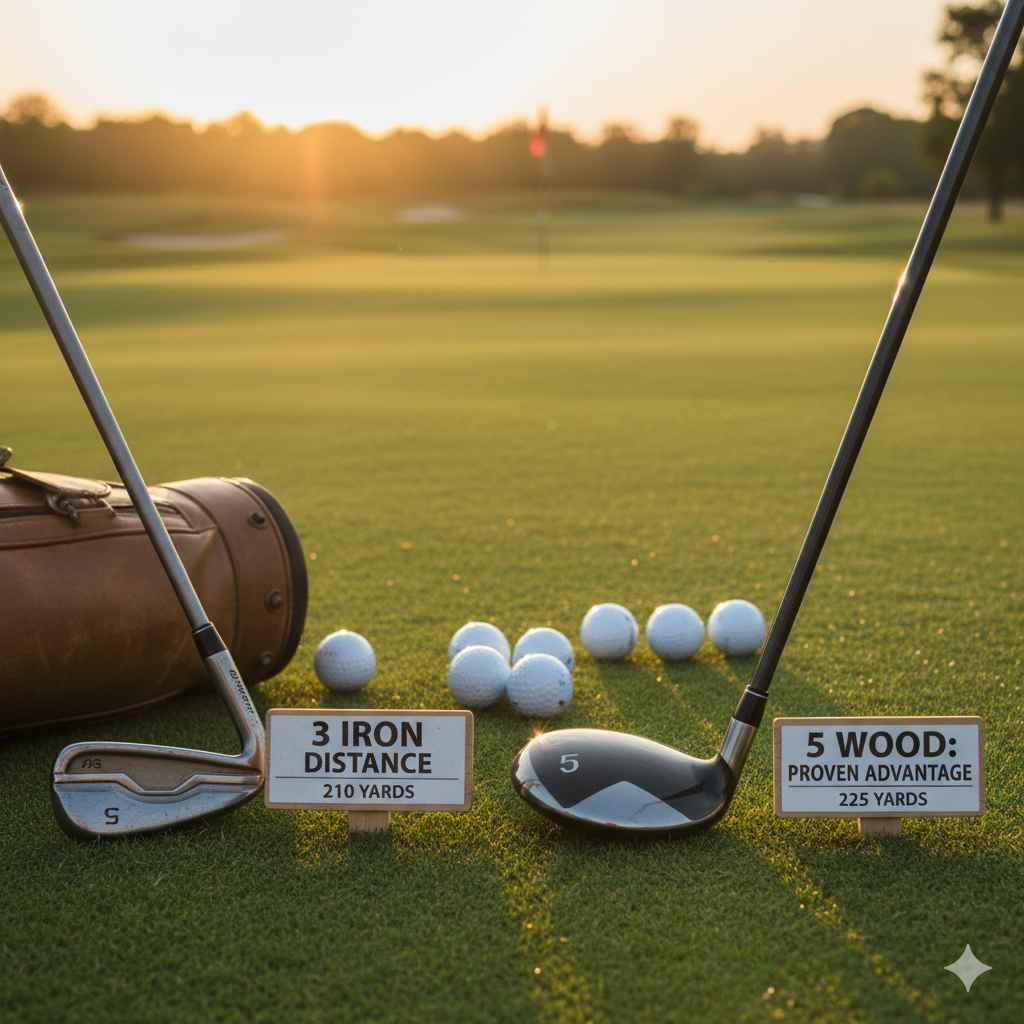
3 Iron Distance vs 5 Wood: Proven Advantage
For many golfers, understanding the difference between a 3 iron and a 5 wood can be a bit confusing. This guide explains which club you should use in different situations so you can hit the ball farther and straighter.
Have you ever stood on the tee box or fairway, pulled out your clubs, and wondered, “Which one should I use here?” It’s a common question, and getting it right makes a big difference in your game. Sometimes a 3 iron feels right, and other times a 5 wood seems like the better choice. We’re here to help clear up any confusion. You’ll learn how these two clubs compare, when to use each one, and how to add power and accuracy to your shots. Let’s get those clubs working for you!
Understanding Your Golf Clubs: The 3 Iron and the 5 Wood
Before we dive into which club is “better” or offers a “proven advantage,” it’s important to understand what makes them different. Think of your golf clubs as a team, each with its own special job. The 3 iron and the 5 wood are often used for similar distances, but they achieve them in very different ways. This difference is key to choosing the right club for the right shot.
The 3 Iron: Precision and Control
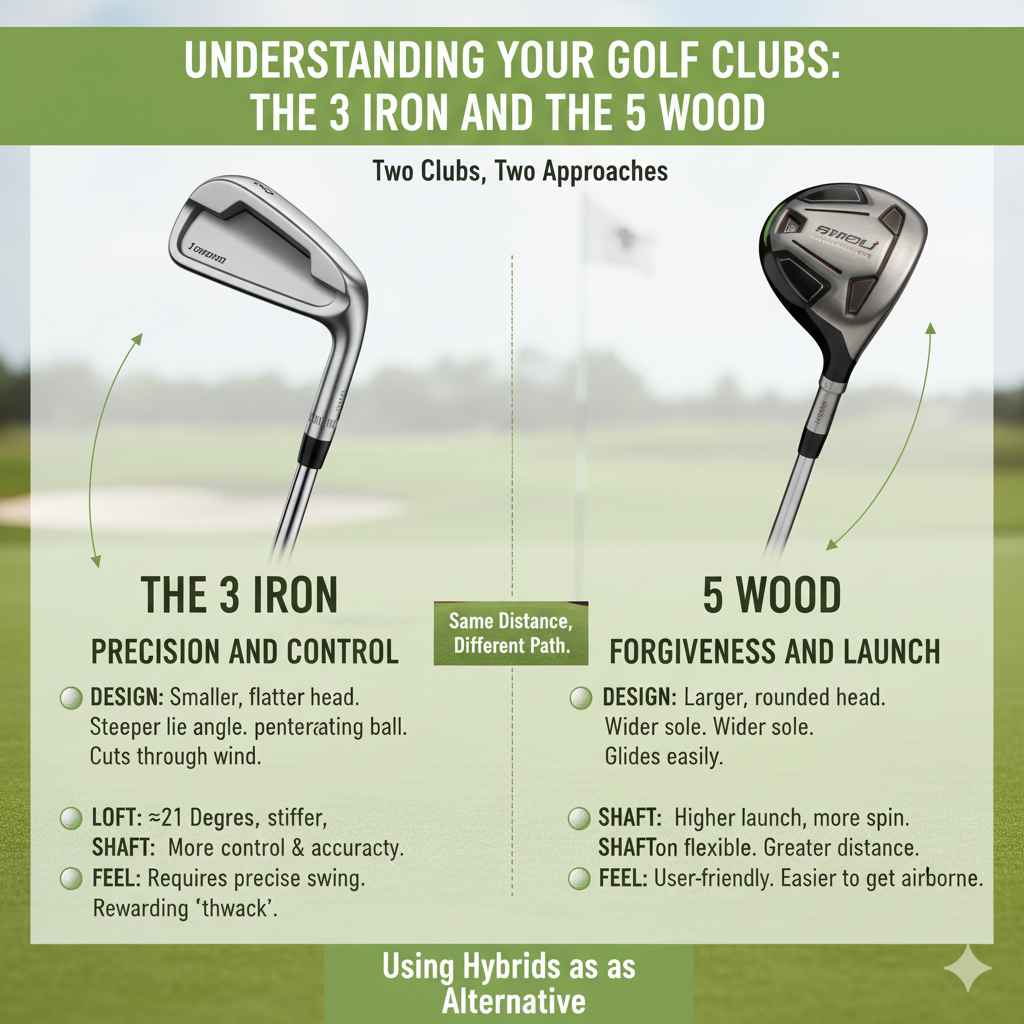
The 3 iron is a member of the iron family. Irons are known for their smaller, flatter club heads and relatively small clubfaces. They have a steeper lie angle and less loft compared to fairway woods.
Design: The clubface of a 3 iron is designed for striking the ball with a descending blow. This generates a lower, more penetrating ball flight, which is excellent for cutting through wind and controlling the ball once it lands.
Loft: A 3 iron typically has a loft of around 21 degrees. This lower loft means the ball won’t launch as high as it would with a more lofted club.
Shaft: Iron shafts are generally shorter and stiffer than those found in fairway woods. This contributes to greater control and accuracy for skilled golfers.
Feel: Hitting a 3 iron well often requires a more precise swing. It’s a club that rewards good technique and can offer a satisfying “thwack” when you connect perfectly.
The 5 Wood: Forgiveness and Launch
The 5 wood belongs to the wood family (though modern ones are often metal). Fairway woods have larger, more rounded clubheads than irons. They are designed to help get the ball up in the air easily and travel a good distance.
Design: The larger head and shallower clubface of a 5 wood make it more forgiving. This means off-center hits can still perform reasonably well. The wider sole helps it glide through longer grass and off the tee smoothly.
Loft: A 5 wood typically has a loft of around 18 degrees. While this might seem similar to a 3 iron, the design of the clubhead means it will launch the ball higher and with more spin.
Shaft: Fairway wood shafts are usually longer and more flexible than iron shafts. This longer shaft can contribute to more clubhead speed, leading to greater distance.
Feel: The 5 wood is often considered a more user-friendly club for many golfers. Its design helps players get the ball airborne with less effort, making it a go-to for many for tee shots and long fairway shots.
3 Iron Distance vs 5 Wood: The Core Differences
The main areas where the 3 iron and 5 wood differ, and which influence their “advantage,” are distance, trajectory, forgiveness, and ease of use. Understanding these will help you decide which club is right for a particular situation.
Distance: Who Goes Further?
This is often the first question beginners ask. In general, a well-struck 5 wood will travel further than a 3 iron for most golfers. Here’s why:
Shaft Length: The longer shaft of a 5 wood allows for a larger swing arc and therefore more clubhead speed. More speed generally equals more distance.
Launch Angle: While the loft numbers might seem close, the design of the 5 wood promotes a higher launch angle. A higher launch angle, up to a certain point, can help the ball carry further before it starts to descend.
Moment of Inertia (MOI): The larger head of the 5 wood typically has a higher MOI, meaning it’s more resistant to twisting on off-center hits. This helps maintain ball speed even when you don’t hit it perfectly on the sweet spot, contributing to more consistent distance. According to USGA Equipment Rules research, clubhead design significantly impacts performance.
However, for very skilled golfers with exceptional swing speed and precision, a perfectly struck 3 iron may rival or even exceed the distance of a 5 wood in specific conditions. But for the average golfer, the 5 wood usually wins the distance contest.
Trajectory: High and Mighty vs. Low and Piercing
Your ball flight, or trajectory, is a critical factor in how your shot performs.
5 Wood: The 5 wood is designed to produce a higher trajectory. The combination of its loft and clubhead design helps the ball get airborne quickly and stay up longer. This is great for carrying hazards like bunkers or water, and for when you need the ball to land softly on the green.
3 Iron: The 3 iron, with its lower loft and steeper angle of attack, produces a lower, more penetrating trajectory. This ball flight is ideal for playing in windy conditions, as it tends to stay lower and is less affected by gusts. It also allows the ball to roll out more upon landing, which can be beneficial on firmer fairways.
Forgiveness: Bailing You Out
When you don’t hit the ball exactly on the sweet spot, forgiveness becomes a huge advantage.
5 Wood: The 5 wood is generally more forgiving than a 3 iron. Its larger head, lower center of gravity, and higher moment of inertia help to minimize the negative effects of off-center hits. You’ll lose less distance and the ball will fly straighter than it might with a mis-hit 3 iron.
3 Iron: The 3 iron, with its smaller clubface and less mass behind the ball, is less forgiving. Off-center hits tend to result in a significant loss of distance and accuracy. Mastering the 3 iron requires a more consistent swing.
Ease of Use: Which is Easier to Hit?
For most amateur golfers, the 5 wood is significantly easier to hit than a 3 iron.
The 5 Wood Advantage: The design of the 5 wood is meant to help you get the ball airborne. It’s easier to get a good launch from the tee or the fairway. Players with slower swing speeds will often find they get more distance and a better result with a 5 wood because it requires less effort to achieve a desired outcome.
The 3 Iron Challenge: The 3 iron demands more from the golfer. You need a steeper angle of attack and good clubface control to hit it consistently. Many golfers find it difficult to get the ball up in the air with a 3 iron without making swing compensations that can lead to poor shots.
When to Choose Which Club: The Proven Advantage
Now let’s put this knowledge into practice. Understanding the strengths of each club allows you to leverage their “proven advantage” in specific on-course scenarios.
Use Your 5 Wood When…
The 5 wood is your friend when you need an easier, more reliable shot that travels a good distance and gets up in the air.
Tee Shots on Shorter Par 4s or Tight Fairways: If you don’t need maximum distance off the tee and prefer accuracy and ease of launch, the 5 wood is a great option. Its forgiveness means even if your driver swing isn’t perfect, you’re likely to get a decent result.
Long Fairway Shots: When you have a long approach shot to the green or need to get over a hazard, the 5 wood’s higher trajectory and distance make it ideal. It helps you carry obstacles and land the ball softly.
When Wind is a Factor (and you need height): While a 3 iron can cut through wind, if you’re struggling to get the ball up and need to carry a hazard, the 5 wood can still be your answer. You’ll need to adjust your swing slightly for wind, but its natural launch is helpful.
Beginner or Mid-Handicapper: If you’re still developing your swing and consistency, the 5 wood offers a significant advantage in terms of hitting the ball well and getting it airborne. It’s a confidence builder!
Use Your 3 Iron When…
The 3 iron is your choice when you need precise control, a lower ball flight, and are confident in your swing.
Playing in Strong Winds: The lower trajectory of the 3 iron is less susceptible to being blown off course by strong winds. This allows for more predictable shots when the weather is against you.
Shaping Shots: Skilled players can use the 3 iron to intentionally shape shots (draws and fades) with greater control than with a fairway wood.
Approach Shots to Firm Greens: The lower flight and less spin of a 3 iron can lead to more roll on landing. If the green is firm and dry, this can help you reach the pin.
When Accuracy is Paramount: For very precise shots where maximizing distance isn’t the primary goal, the control offered by the 3 iron can be invaluable. For example, you might need to hit a specific spot on the fairway or avoid a hazard that requires pinpoint accuracy.
Long Carry on a Hard Surface: If you need to carry a ball a long way and have a surface that will allow significant roll out, the 3 iron can be effective.
Here’s a comparison table to help visualize the key differences:
| Feature | 3 Iron | 5 Wood |
|---|---|---|
| Typical Loft | 21 degrees | 18 degrees |
| Clubhead Size | Small, compact | Larger, rounded |
| Shaft Length | Shorter | Longer |
| Ball Flight | Lower, penetrating | Higher, more lofted |
| Distance (Average Golfer) | Shorter | Longer |
| Forgiveness | Less forgiving | More forgiving |
| Ease of Use | More difficult | Easier |
| Best for Wind | Strong winds | Moderate wind (if height needed) |
Advanced Considerations for the 3 Iron vs. 5 Wood Debate
While the general guidance above works for most golfers, there are nuances that can further refine your club selection. These involve understanding your swing characteristics and how different course conditions can influence club choice.
Your Swing Speed Matters
A golfer’s swing speed is a primary determinant of which club will perform better for them. According to GolfWRX, a leading golf equipment publication, swing speed is a crucial factor in club fitting.
Slower Swing Speeds: Golfers with slower swing speeds often benefit more from the 5 wood. The longer, more flexible shaft can help generate more clubhead speed, and the design makes it easier to achieve a good launch, leading to greater distance than they might get from a 3 iron.
Faster Swing Speeds: Golfers with faster swing speeds might find they can hit a 3 iron just as far, if not further, than a 5 wood. Their ability to generate speed with a shorter, stiffer shaft allows for excellent control and distance. However, they might still choose the 5 wood for its increased forgiveness and higher trajectory.
Course Conditions and Terrain
The environment you’re playing in can dramatically affect your club choice.
Firm Fairways & Fast Greens: On courses with very firm fairways and fast, sloping greens, the lower, more controlled flight of a 3 iron can be advantageous. It allows for more roll on the fairway and gives you a better chance of stopping a lower-flying ball on the green, or even a slight chip-and-run off the green.
Soft Fairways & Soft Greens: When the ground is soft, the higher launch of a 5 wood is more beneficial. It helps the ball carry further on soft fairways and land with a softer bounce on receptive greens, reducing the chance of the ball bouncing off or rolling too far.
Wind: As mentioned, strong headwinds favor the lower trajectory of a 3 iron, as it cuts through the wind more effectively. A strong crosswind can be tricky for both clubs, but the 5 wood’s higher flight might make it more susceptible to being pushed off-course.
Club Fitting: The Ultimate Solution
The best way to truly understand the “proven advantage” for your* game is through professional club fitting. A fitter can analyze your swing, measure your speed and launch angles, and help you determine which specific 3 iron and 5 wood, or even alternative clubs like hybrids, will perform best for your unique game. Reputable custom club fitting services ensure equipment complements your abilities.
Using Hybrids as an Alternative
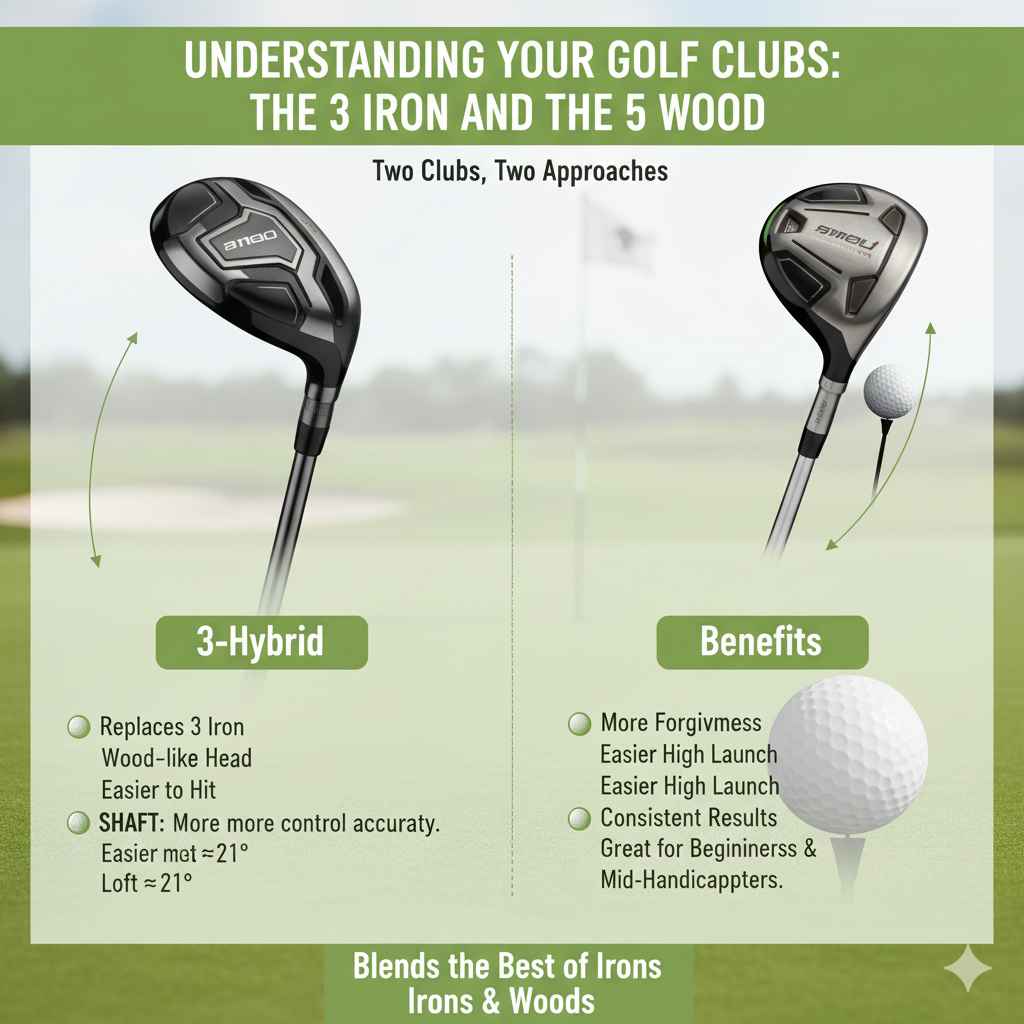
It’s worth noting that for many golfers, especially those struggling with long irons, the modern hybrid golf club has become a popular alternative to the 3 iron and sometimes even the 5 wood. Hybrids are designed to blend the best aspects of woods and irons, offering more forgiveness and easier launch than a traditional long iron, while still providing good control.
A 3-hybrid, for instance, often replaces the 3 iron in a golfer’s bag. It typically has a loft similar to a 3 iron but features a larger, wood-like head that makes it easier to hit. This can be a fantastic way for beginners and mid-handicappers to achieve more consistent results on shots where they might traditionally use a 3 iron.
Frequently Asked Questions (FAQ) about 3 Iron vs. 5 Wood
Here are answers to some common questions beginners have about these clubs.
Q1: Which club should I use off the tee for maximum distance?
A1: For most golfers, the 5 wood will offer more distance off the tee than a 3 iron due to its longer shaft and easier launch characteristics.
Q2: I slice the ball. Which club is better for me?
A2: If you slice the ball, you might find the 5 wood more forgiving. Its design can help reduce the severity of a slice compared to a less forgiving 3 iron. However, addressing the slice directly through lessons or practice is the best long-term solution.
Q3: Can I use a 3 iron to chip around the green?
A3: Yes, skilled golfers can use a 3 iron for chipping, especially if they want the ball to roll out. However, for most beginners, clubs with more loft like a pitching wedge or sand wedge are easier to use for chipping.
Q4: How do I know if my 3 iron distance is good?
A4: Average 3 iron distance for men typically ranges from 160-190 yards, and for women, it’s around 120-150 yards. This varies greatly with age, swing speed, and skill level. It’s more important that your 3 iron performs consistently for you.
Q5: Is a 3 wood better than a 5 wood?
A5: A 3 wood generally has less loft (around 15 degrees) than a 5 wood, meaning it’s designed for more distance and a lower ball flight than a 5 wood. The 5 wood is easier to hit for more golfers and provides a higher trajectory for easier carry.
Q6: Should I carry both a 3 iron and a 5 wood?
A6: Many golfers choose to carry both, especially if they have filled their driver and fairway wood slots. They offer distinct advantages for different situations. However, if you struggle with long irons, consider replacing the 3 iron with a hybrid.
Q7: How can I get more distance with my 3 iron?
A7: To get more distance with a 3 iron, focus on a fluid swing, hitting the ball on a downward strike, and ensuring proper contact on the clubface. Club fitting can also help ensure your 3 iron shaft is optimized for your swing speed.
Conclusion: Finding Your “Proven Advantage”
Deciding between a 3 iron and a 5 wood isn’t about declaring one club definitively superior to the other. Instead, it’s about understanding their unique characteristics and knowing when to deploy each one to gain a “proven advantage” on the course.
For many amateurs, the 5 wood offers a more forgiving and user-friendly way to achieve good distance and a welcome high trajectory, making it a fantastic club for tee shots and long approaches. Its design is built to help you get the ball airborne with less effort. The 3 iron, on the other hand, is a precision tool. It excels in challenging conditions like strong winds or when a controlled, penetrating ball flight is needed. It rewards a well-executed swing with accuracy and distance, though it’s less forgiving of errors.
By considering your own swing speed, the course conditions, and the specific shot you face, you can confidently select the club that will best serve you. Don’t be afraid to experiment and see which club feels and performs better for your game. And remember, if long irons are a struggle, a hybrid could be the perfect