4-Foot Wood Fence Ideas: Best Styles for Front-Yard Height Limits
Four feet is not an arbitrary number. It is the height most U.S. cities actually allow for a front-yard fence, while backyards and side yards are usually capped closer to six feet. If you are planning a fence at this height, you are working inside a real code constraint, not just picking a “shorter” look, and that changes which styles make sense. Picket, horizontal-slat, lattice-top, and split-rail all work well at 4 feet; a solid board-on-board privacy fence really does not, since most of its point is the extra height you are not allowed to build here.
Why 4 Feet? The Front-Yard Height Rule Most People Do Not Know About
The 4-foot number comes up so often because it is close to a de facto national standard. Most municipal codes cap front-yard fences at 3 to 4 feet while allowing 6 feet or more in backyards and side yards. The reasoning is about sightlines, not aesthetics: a tall solid fence near the street or a driveway can block a driver’s view of pedestrians, cyclists, and cross traffic, and many cities write that safety concern directly into the ordinance, especially near corner lots and intersections. A backyard fence does not sit next to a street, so the same rule does not apply there. Before you build, check your specific city or county code and your HOA’s own rules if you have one, since exact limits (and how they treat corner-lot “sight triangles”) vary by jurisdiction. Building over the limit is a common reason homeowners end up tearing out a brand-new fence.
Best Finishing Touch for 4×4 Fence Posts
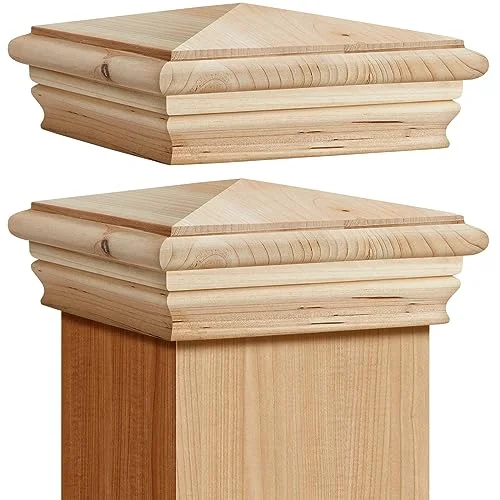 |
Geetery 2-Pack Cedar Wood Post Caps for 4×4 Posts – $25.64 A low fence puts every post top at eye level, so a simple cedar cap turns an exposed cut end into a finished detail on a picket or ranch-rail style fence.
|
With the code question and that finishing detail out of the way, here are the four styles that actually work well at this height.
1. Picket Fence: The Classic 4-Foot Choice
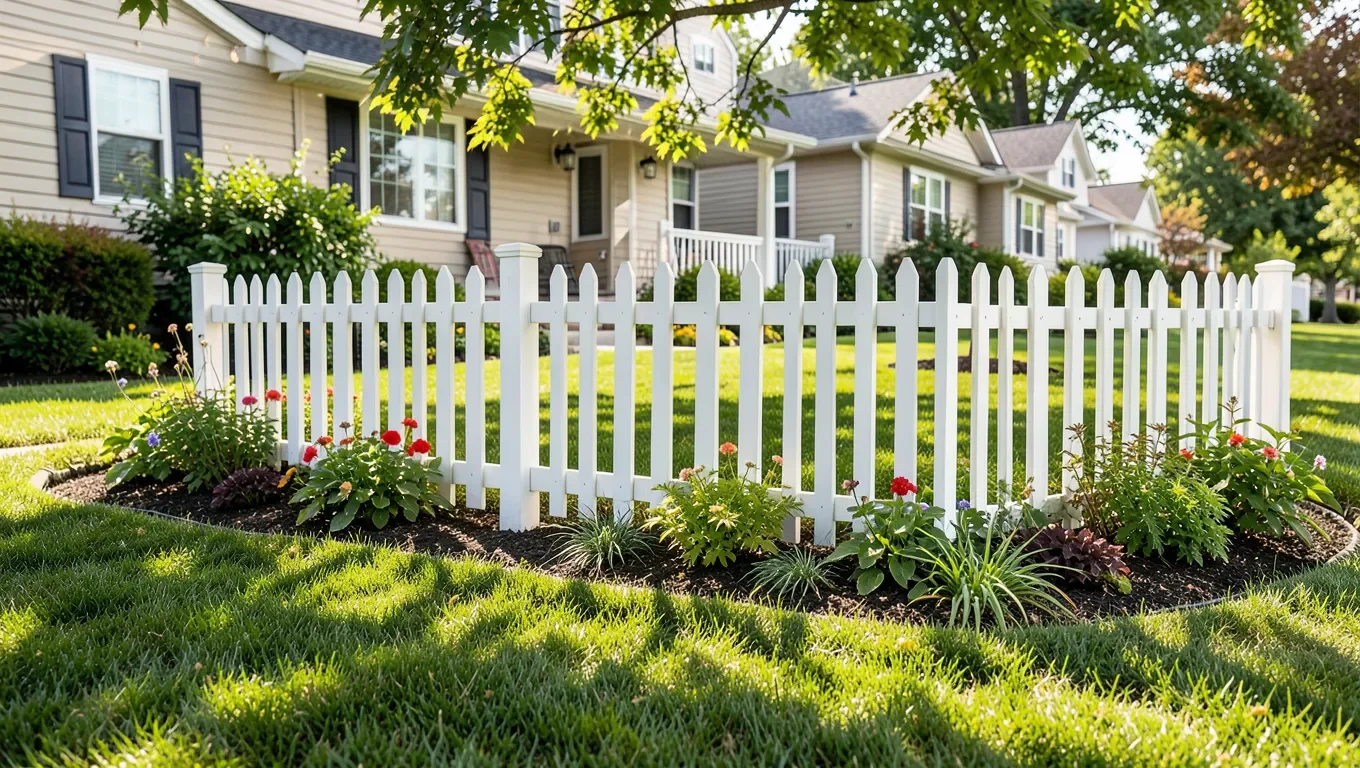
The picket fence is the style most people picture when they hear “4-foot wood fence,” and there is a good reason it has stuck around since Colonial-era architecture: it was built for exactly this height and this job. Pickets are typically 1×4 or 1×6 boards spaced 2 to 3 inches apart and topped with a decorative shape, most often a dog-ear, gothic point, or French gothic. That spacing keeps the fence open enough to see through while still marking a clear property line, which is precisely what a front yard usually needs since full privacy is not the goal there.
- Typical cost: One of the more budget-friendly styles per linear foot, since pickets use less lumber than a solid privacy panel.
- Best for: Front yards, cottage or farmhouse-style homes, marking a boundary without blocking the view.
- Tradeoff: Little to no privacy and minimal wind resistance, since the gaps let air (and sightlines) pass straight through.
- Typical cost: Moderate, generally in line with or slightly above a picket fence depending on board width and spacing.
- Best for: Modern or farmhouse-style curb appeal, defining a yard without the “traditional white picket” look.
- Tradeoff: Horizontal boards show sag over long, unsupported spans more noticeably than vertical pickets do, so posts need to be set closer together (commonly every 6 to 8 feet) than a taller privacy version of this style might use.
- Typical cost: Similar to or slightly higher than picket, since lattice panels require more precise joinery than simple vertical boards.
- Best for: Cottage-garden yards, homeowners who want to train climbing plants along the fence line.
- Tradeoff: Thin lattice strips are more prone to cracking or splitting than solid boards, and they offer essentially no privacy or wind blocking.
- Typical cost: Usually the lowest per linear foot of the four styles, since it uses only a few rails and widely spaced posts.
- Best for: Rural or large front-yard lots, a simple boundary marker rather than containment.
- Tradeoff: No privacy, no wind blocking, and it will not physically stop a dog, small child, or foot traffic from crossing through the gaps.
2. Horizontal-Slat (Ranch-Rail) Style
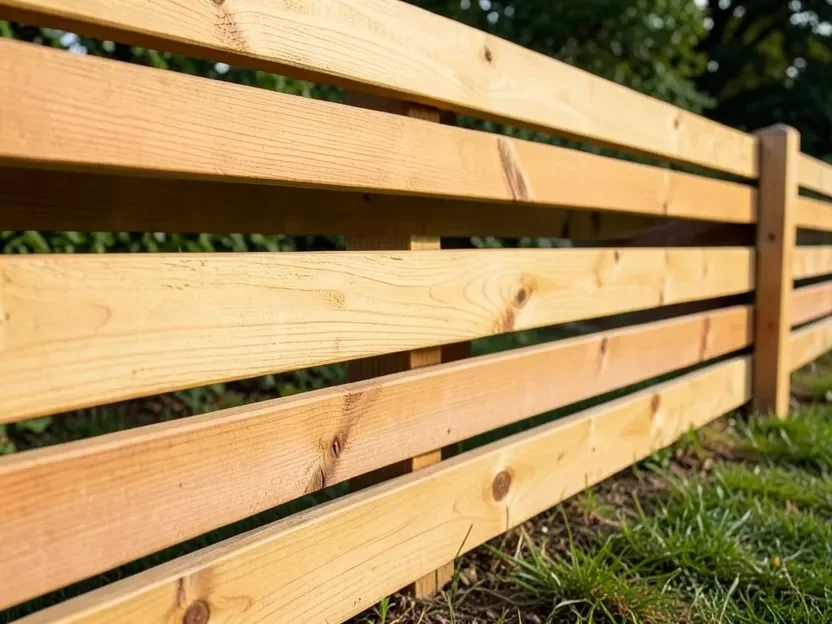
Instead of vertical pickets, a horizontal-slat fence runs flat boards side to side between the posts, usually 2 to 4 rails stacked with a visible gap between each one. It reads as more modern than a picket fence and pairs especially well with contemporary or modern-farmhouse homes. At 4 feet, this style typically needs only 2 to 3 horizontal rails to fill the height, which keeps material cost and installation time down compared to a taller version of the same design.
3. Lattice-Top Fence
A lattice-top design uses a crosshatch pattern, either for the entire 4-foot height or as a decorative cap over a shorter solid or picket base. Because lattice is mostly open space, it softens what would otherwise be a fairly plain low fence and adds a visual sense of height without actually exceeding the code limit, the crosshatch pattern draws the eye upward even though the fence itself stops at 4 feet. It is a common choice for homeowners who want a more decorative front-yard boundary, especially if they plan to grow a climbing vine or rose through it.
4. Split-Rail Fence
The split-rail fence is the most open of the four, just 2 or 3 horizontal rails threaded through mortised posts, with no boards filling the gaps at all. It has a rural, ranch-style look that suits larger lots, farmhouse properties, or a front yard where the goal is simply to mark a boundary rather than screen anything. Split-rail is usually the cheapest of these four styles per linear foot since it uses the least lumber by far, but that same openness means it will not contain a dog or keep foot traffic out, it is a visual boundary, not a physical barrier.
Cedar or Pressure-Treated Pine: Which Makes Sense at This Height?
At 4 feet, either common material works structurally, so the choice mostly comes down to budget and upkeep tolerance. Cedar carries a natural warm color and real rot and insect resistance thanks to its natural oils, but it costs more upfront and needs resealing every 1 to 3 years if you want to keep that color instead of letting it weather to gray. Pressure-treated pine costs less and is widely available, but it typically has a greenish tint when new, can warp slightly as it dries, and needs sealing of its own to look its best long-term.
One detail worth knowing before you commit to cedar: the height of the fence above ground does not change how the posts behave below it. Cedar posts set in soil or concrete still decay faster than pressure-treated posts in the same ground contact, typically 15 to 20 years for cedar versus 20 to 25 years or more for pressure-treated, since constant soil moisture uses up cedar’s protective oils faster underground than it does above it. That is true whether the fence stands 4 feet or 6 feet tall. We cover this in more depth, including why many builders mix materials on purpose, in our guide on the disadvantages of a cedar fence. A practical middle ground many homeowners use at any height: pressure-treated posts below grade, cedar boards or pickets above it, where the appearance actually matters.
If you are still weighing styles beyond these four, our full wood fence designs guide compares 10 options by privacy level, cost per linear foot, and DIY difficulty, useful if a taller backyard section is also part of your project.
Frequently Asked Questions About 4-Foot Wood Fences
How tall can a front-yard fence be without a permit or variance?
Most U.S. cities cap front-yard fences at 3 to 4 feet, while backyard and side-yard fences are commonly allowed up to 6 feet or more, sometimes 8 feet with a permit. Exact limits, and how corner lots and sight triangles are handled, vary by city and HOA, so always confirm with your local building or zoning department before you build.
What is the cheapest style for a 4-foot wood fence?
Split-rail is typically the least expensive per linear foot, since it uses only 2 or 3 rails and widely spaced posts with no infill boards at all. Picket is usually the next most budget-friendly option among the four styles covered here.
Does a 4-foot fence need to be built as sturdily as a 6-foot privacy fence?
It needs less structural bracing against wind load, since a shorter fence catches less wind and open styles like picket, lattice, and split-rail let air pass through rather than pushing against a solid panel. Posts still need to be set to the same frost-line depth in cold climates regardless of the fence’s above-ground height.
Cedar or pressure-treated pine for a 4-foot fence?
Both work structurally at this height. Cedar looks better out of the box and resists rot and insects naturally but costs more and needs periodic resealing to keep its color. Pressure-treated pine costs less and actually outlasts cedar below the soil line, but typically needs its own sealing to look its best and can have a greenish tint when new.
Will a 4-foot fence keep a dog contained in the yard?
It depends on the style and the dog. A solid-boarded 4-foot style can contain most small to medium dogs that are not determined jumpers, but open styles like split-rail or lattice will not stop a dog from squeezing through or over the gaps. Large or athletic breeds can clear 4 feet without much effort, so a taller backyard fence is usually the better containment choice if that is the primary goal.
Sponsored / affiliate links. As an Amazon Associate I earn from qualifying purchases. I may earn additional commission from eligible campaigns.