4 Wood Vs 7 Wood: Essential Guide
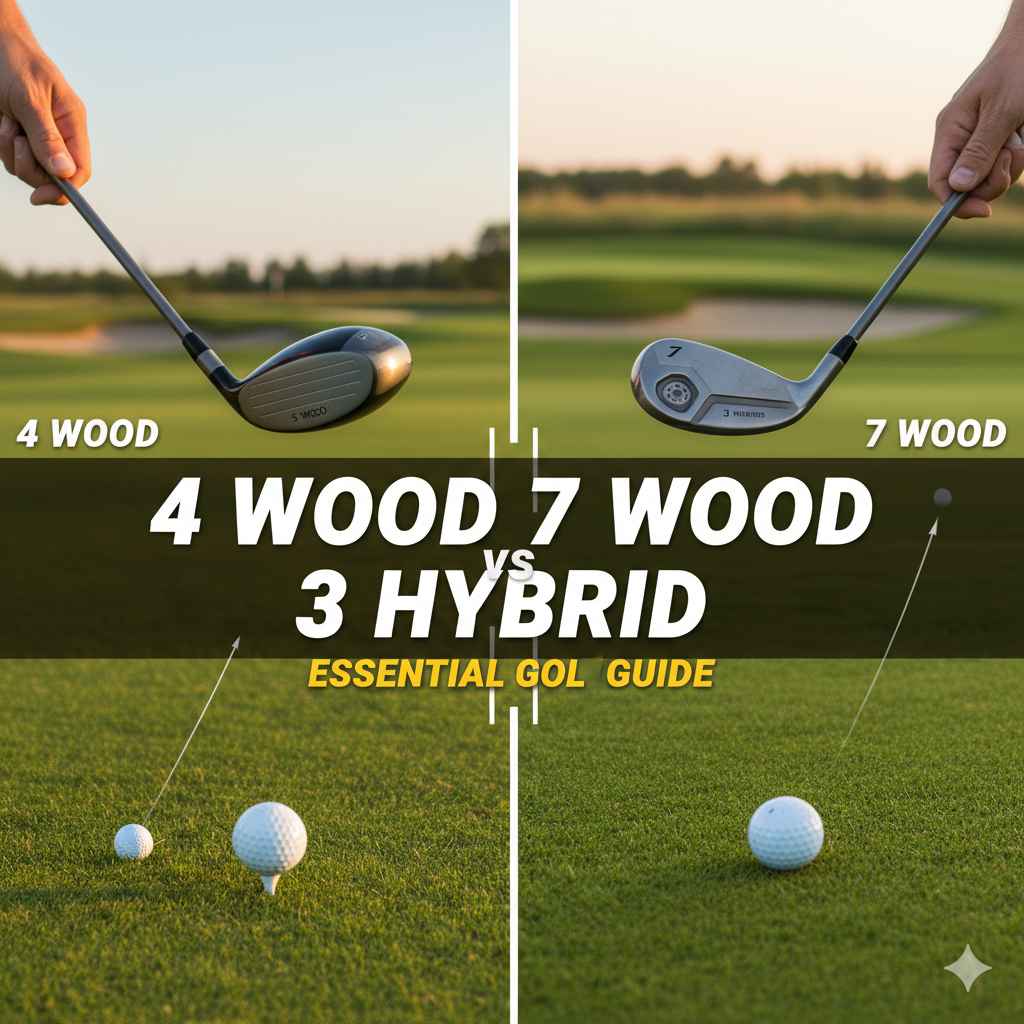
4 wood vs 7 wood: A 4 wood usually offers more versatility for shots requiring a lower, more penetrating flight and consistent roll. A 7 wood offers a higher trajectory and is easier to get airborne, making it ideal for players who struggle with lift and need more loft for longer approach shots. This straightforward guide will clarify their differences and help you choose the right one!
Hey there, fellow woodworkers and DIY enthusiasts! Md Meraj here. Ever stood on the golf course, that moment of truth arriving, and felt completely baffled by the choice between a 4 wood and a 7 wood? It’s a common puzzle, even for seasoned players. These clubs often get mixed up with drivers or fairway woods that are much lower lofted, leading to frustration and less-than-ideal shots. But don’t worry, understanding the difference isn’t rocket science. We’ll break down what each club is designed for, how they perform differently, and most importantly, how to pick the perfect one for your game. Get ready to simplify your club selection and boost your confidence on the course!
Understanding Fairway Woods: The Basics
Fairway woods are a vital part of any golfer’s bag, designed to deliver distance off the tee and on the fairway. Unlike drivers, which are optimized purely for maximum distance and typically have less loft, fairway woods offer a blend of distance and control. They are called “fairway woods” because they were traditionally made with wooden club heads, though modern ones are now made from metal (like titanium or stainless steel). Their primary purpose is to hit the ball a long way, but with more accuracy and a higher ball flight than a driver, making them more forgiving and easier to manage on various lies.
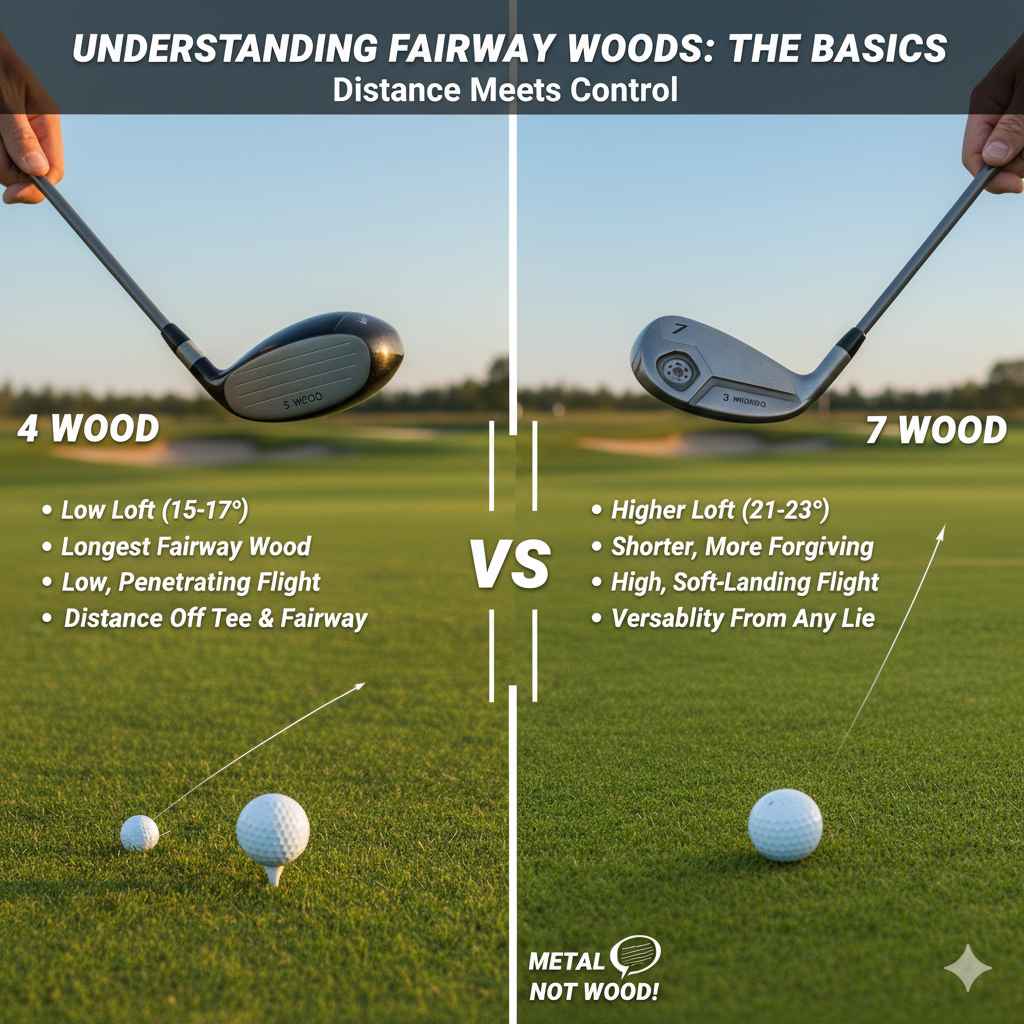
Within the fairway wood family, the numbers indicate the loft of the clubface and, generally, the length of the shaft. A lower number means less loft and a longer shaft, while a higher number means more loft and a shorter shaft. This fundamental relationship is key to understanding the differences between a 4 wood and a 7 wood.
The 4 Wood: Your Distance and Versatility Champion
The 4 wood is often considered a workhorse club, bridging the gap between your longest irons and your big driver. It boasts a lower loft compared to higher-numbered fairway woods, typically ranging from 16 to 18 degrees. This lower loft, combined with a slightly longer shaft than a 7 wood, allows for a more penetrating ball flight.
What does a “penetrating ball flight” mean for you? It means the ball travels lower and faster through the air, often with less spin. This characteristic is fantastic for attacking tight fairways and rolling the ball out on firm grounds. It’s a club that, when struck well, can yield impressive distances, rivaling many drivers for shorter hitters. Think of it as a more controllable, slightly less powerful alternative to your driver, or a long-distance bomber when you need it most.
Key Characteristics of a 4 Wood:
- Loft: Approximately 16-18 degrees.
- Shaft Length: Generally longer than a 7 wood.
- Ball Flight: Lower, more penetrating trajectory with less spin.
- Roll: Tends to roll out more upon landing, especially on firm surfaces.
- Versatility: Excellent for tee shots and long fairway shots from the light rough or well-maintained turf.
When to Choose a 4 Wood:
- You need a reliable club for tee shots when precision is more important than maximum distance.
- You want a club that can get you out of moderate rough and allow the ball to roll towards the green.
- You’re looking for a club with good distance that’s more forgiving than your longest irons.
- You prefer a lower, more driven ball flight that cuts through wind effectively.
- You are looking for a club that offers a good blend of distance and control for specific course situations.
The 7 Wood: Your High-Flying Confidence Booster
Now, let’s talk about the 7 wood. This club brings a higher loft to the table, usually in the range of 20 to 22 degrees. Coupled with a shorter shaft than a 4 wood, this higher loft makes the 7 wood significantly easier to hit consistently and get up in the air. For many golfers, especially those who struggle with lifting the ball or have slower swing speeds, the 7 wood is a game-changer.
The higher loft means the ball will launch higher and with more spin than with a 4 wood. This greater spin helps the ball stop more quickly when it lands, which is invaluable for approach shots to greens, especially if they are firm or have slopes. Think of the 7 wood as your reliable tool for those longer approach shots where getting the ball airborne and landing softly is paramount. It’s often easier to get airborne from the fairway, light rough, or even from a divot compared to a 4 wood.
Key Characteristics of a 7 Wood:
- Loft: Approximately 20-22 degrees.
- Shaft Length: Generally shorter than a 4 wood.
- Ball Flight: Higher trajectory with more spin.
- Landing: Ball tends to stop more quickly upon landing.
- Forgiveness: Often more forgiving and easier to get airborne than a 4 wood.
When to Choose a 7 Wood:
- You struggle to get your longer clubs (like hybrids or 4 woods) airborne consistently.
- You need a club that helps your ball stop quickly on the green from a longer distance.
- You are looking for a reliable club for approach shots to elevated greens or greens with tricky pin positions.
- You play courses where the ground is often softer, and you need the ball to land and stick.
- You are a beginner or intermediate golfer seeking a more forgiving option for longer shots off the fairway or light rough.
Direct Comparison: 4 Wood vs. 7 Wood
To truly grasp the differences, let’s put them side-by-side. The core distinctions lie in their loft, shaft length, and the resulting ball flight and performance characteristics. While both are fairway woods, they cater to slightly different needs and preferences in a golfer’s game.
Performance Metrics Table
| Feature | 4 Wood | 7 Wood |
|---|---|---|
| Typical Loft | 16° – 18° | 20° – 22° |
| Typical Shaft Length | Longer | Shorter |
| Ball Flight | Lower, penetrating | Higher, soaring |
| Spin Rate | Lower | Higher |
| Distance Potential | Higher (with favorable roll) | Slightly lower (less roll) |
| Forgiveness | Good, but less than 7 wood for some | Excellent, easier to launch |
| Best For | Long drives, fairway shots needing roll, windy conditions | Approach shots, landing softly, players needing lift |
Notice how the loft angle is the primary driver of performance. A few degrees can make a significant difference in trajectory and how the ball interacts with the ground. This is why selecting the right wood isn’t just about picking a number; it’s about understanding what impact that number has on your game. For more insights into loft and its effect on golf clubs, you can explore resources from organizations like the USGA (United States Golf Association), which provides extensive information on equipment standards and testing.
Who Should Carry a 4 Wood?
The 4 wood is an excellent choice for the golfer who wants that extra bit of distance and control. If you find yourself consistently out-driving your ability to hit a controlled approach shot with your longer irons, a 4 wood can be the perfect solution. It’s ideal for:
- Off the Tee: When accuracy is more critical than absolute maximum distance that a driver provides. Many golfers find a 4 wood more reliable than a driver on tighter holes.
- Long Par 5s: For players who can reach par-5s in two if they hit a precise second shot. The 4 wood can offer the distance without the extreme risk of a driver.
- Favorable Lies: Excellent when the ball is sitting up nicely on a fairway or in light, fluffy rough.
- Windy Conditions: The lower flight path is less susceptible to being knocked around by the wind compared to higher-lofted clubs.
- Stronger Swings: Golfers with a faster swing speed will experience the full distance potential of the 4 wood.
Who Should Carry a 7 Wood?
The 7 wood is often lauded for its ease of use and its ability to deliver a high, soft-landing shot. This makes it a favorite for golfers who prioritize getting the ball airborne and stopping it on the green. It’s particularly beneficial for:
- Beginners: Its higher loft makes it far more forgiving and easier to launch than a 4 wood, helping to build confidence early on.
- Slower Swing Speeds: Players who don’t generate a lot of clubhead speed will find the 7 wood helps them achieve adequate distance with a much easier swing.
- Approach Shots: This is where the 7 wood truly shines. If you need to hit a long shot into a green and have it stop quickly, the 7 wood is your best bet.
- Tees in Light Rough: Similar to the 4 wood, it can get you out of trouble, but the higher loft makes it much easier if the ball is slightly below your feet or in a divot.
- Firm Greens: The increased spin helps the ball check up, preventing it from rolling off the back of a firm putting surface.
- Players who struggle with hybrids: Many golfers find the larger head and longer shaft of a 7 wood more comforting and easier to strike than a hybrid.
Can You Carry Both?
Absolutely! For many golfers, especially those with a more extensive set of clubs or those who play a variety of courses, carrying both a 4 wood and a 7 wood can be a strategic advantage. It allows for a wider range of shot-making capabilities. For instance, you might use the 4 wood off the tee on a shorter, tighter hole for control, but carry the 7 wood for those longer approach shots that demand height and a soft landing. The key is to have a logical gapping of distances in your bag. If the distance between your longest iron (e.g., 5-iron) and your 4 wood is too large, a 7 wood can fill that gap effectively.
Modern golf equipment often allows for adjustable features, which can further fine-tune the performance of these clubs. While less common on traditional fairway woods than drivers, some manufacturers offer adjustable hosels that can slightly alter loft and face angle. For further reading on club fitting and its importance, consider looking into guides from reputable golf associations like the PGA of America.
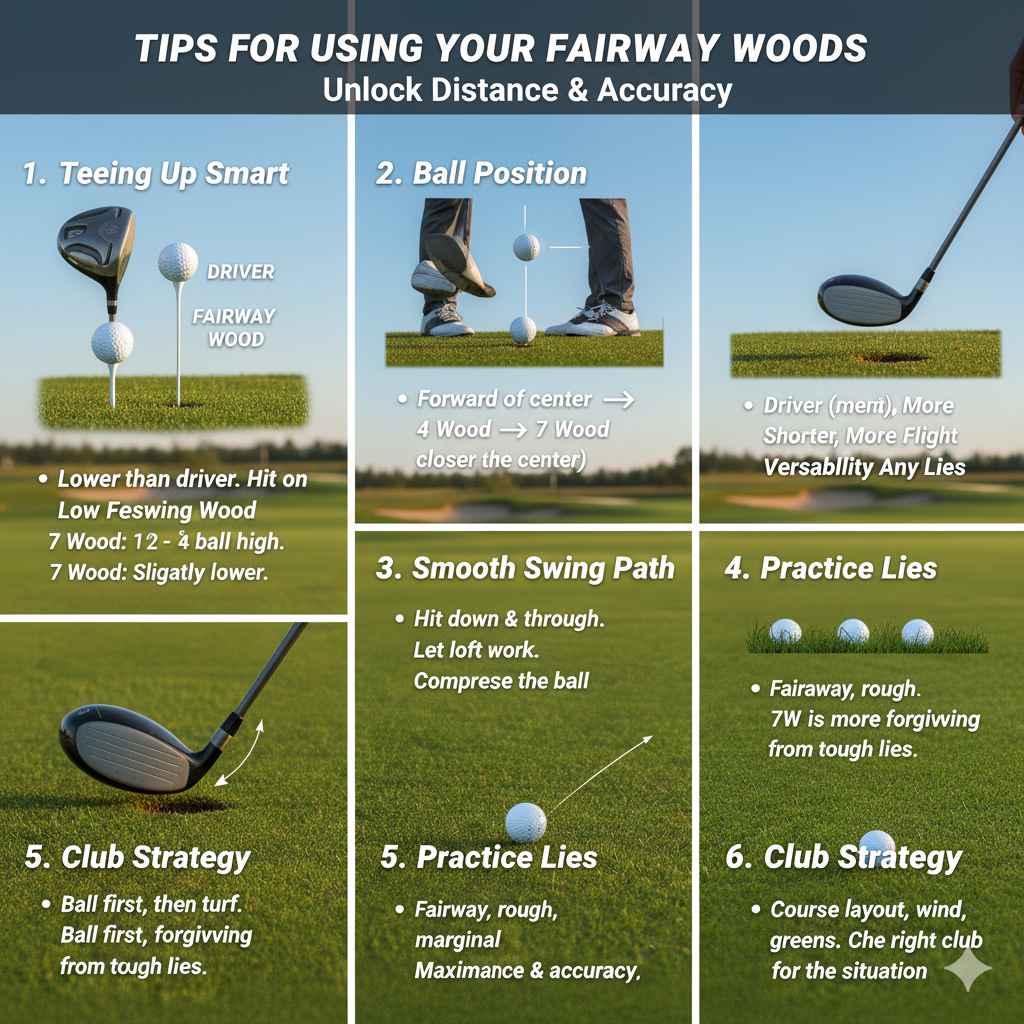
Tips for Using Your Fairway Woods
Whether you choose a 4 wood, a 7 wood, or both, mastering their use is crucial. Here are some tips to help you get the most out of these clubs:
- Teeing Up for Fairway Woods: When hitting a fairway wood off the tee, tee the ball up lower than you would for a driver. The goal is to hit the ball on the upswing, which a lower tee height helps facilitate. For a 4 wood, tee it about half to three-quarters of the ball’s height above the ground. For a 7 wood, you might tee it slightly lower, if at all, depending on the lie.
- Ball Position: For fairway woods, position the ball slightly forward of the center of your stance. A progression from driver (farther forward) to 4 wood (slightly less forward) to 7 wood (closer to center) is common as the clubs get shorter and loft increases.
- Swing Path: Aim for a smooth, balanced swing. With fairway woods, especially off the fairway, you want to hit down and through the ball. Avoid trying to “scoop” it up; let the loft of the club do the work. For shots from the fairway, a slight descending blow is ideal to compress the ball against the turf.
- Practice Different Lies: Practice hitting from the fairway, light rough, and marginal lies. Understand how the club performs differently in each scenario. A 7 wood is typically more forgiving from a less-than-perfect lie than a 4 wood.
- Focus on Contact: Solid contact is key. Ensure you’re hitting the ball first, followed by the turf (if hitting off the ground). This will give you the best combination of distance and accuracy.
- Club Selection Strategy: Before your round, consider the course layout, typical wind conditions, and the firmness of the greens. This will help you decide which club to reach for in different situations.
Frequently Asked Questions (FAQ) About 4 Wood vs. 7 Wood
What is the main difference between a 4 wood and a 7 wood?
The main difference is the loft. A 4 wood has less loft (around 16-18 degrees) and a longer shaft, resulting in a lower, more penetrating ball flight. A 7 wood has more loft (around 20-22 degrees) and a shorter shaft, producing a higher ball flight that stops more quickly.
Which club is easier to hit for a beginner, a 4 wood or a 7 wood?
The 7 wood is generally easier for beginners to hit. Its higher loft makes it simpler to get the ball airborne consistently, and its shorter shaft often leads to better control and confidence.
When would I choose a 4 wood over a driver?
You would choose a 4 wood over a driver when you need more control and accuracy off the tee, or when the hole requires a shot with less height and more roll. It’s also a good option if you find your driver difficult to manage consistently.
What distance can I expect from a 4 wood and a 7 wood?
Distances vary greatly based on the golfer’s swing speed, technique, and the specific club model. However, generally, a 4 wood will go further than a 7 wood due to its lower loft and longer shaft. For an average amateur male golfer, a 4 wood might travel 190-210 yards, while a 7 wood might travel 170-190 yards. These are rough estimates; getting custom fitted is the best way to know your actual distances.
Is a 7 wood a good replacement for a long iron like a 3 or 4 iron?
Yes, a 7 wood is an excellent replacement for a 3 or 4 iron for many golfers. It offers a similar or greater distance with significantly more forgiveness and ease of launching the ball in the air. This is why many players opt for a 7 wood over traditional long irons.
Can a 7 wood be used effectively from the fairway?
Absolutely! The 7 wood is superb for approach shots from the fairway. Its higher loft helps the ball get up quickly and land softly, making it ideal for hitting greens from longer distances, especially on courses with firmer greens.
Should I be concerned about shaft flex when choosing between a 4 wood and a 7 wood?
Yes, shaft flex is crucial. The shaft’s flex (e.g., Ladies, Senior, Regular, Stiff, Extra Stiff) should match your swing speed. A club with the wrong flex can negatively impact your distance, accuracy, and consistency. It’s essential to have the shaft flex appropriate for your game, regardless of whether it’s a 4 wood or a 7 wood.
Conclusion: Finding Your Perfect Fairway Wood
So there you have it – the essential guide to understanding the 4 wood versus the 7 wood. Remember, the “better” club is entirely personal, depending on your swing, your game, and the demands of the course you’re playing. The 4 wood offers a lower, more penetrating flight with more roll, perfect for distance and control off the tee or on wide fairways. On the other hand, the 7 wood is your go-to for a higher, softer-landing shot, making it a confidence booster for approach shots and for those who need help getting the ball airborne.
Don’t be afraid to experiment. If possible, take both clubs to the driving range or a simulator. Feel the difference in your hands, watch the ball flight, and see which truly complements your existing set. Consider talking to a golf professional or a club fitter; they can provide personalized advice based on your specific needs and abilities.